


More news on this day
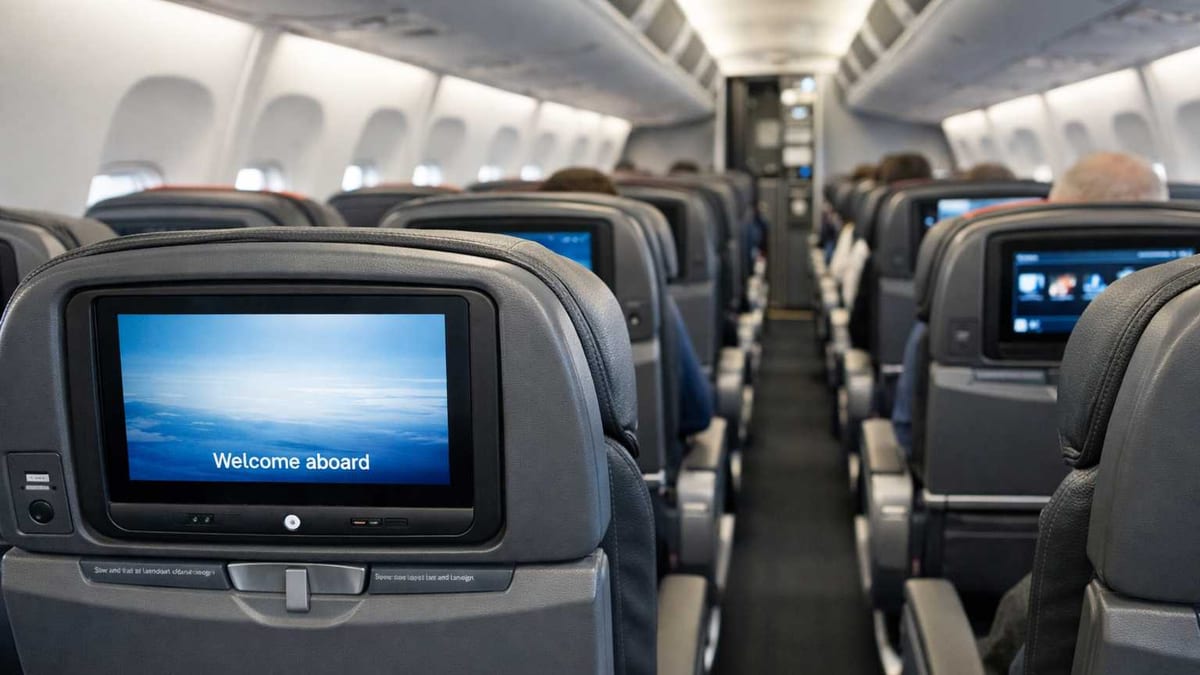
American Airlines is set to reintroduce seatback entertainment screens across its narrowbody fleet beginning in 2028, marking a significant reversal of its yearslong shift toward a streaming-only model and sharpening the competitive race with Delta Air Lines and United Airlines for tech-focused travelers.
Get the latest news straight to your inbox!
A Strategic Pivot After Years of Screen Removals
For much of the past decade, American Airlines aligned its domestic strategy around personal devices, removing most seatback screens from Boeing 737 and Airbus A320 family aircraft while investing heavily in high speed Wi Fi and free onboard streaming. The carrier positioned its approach as more flexible and cost efficient, arguing that most customers preferred to watch content on their own phones and tablets.
That strategy left American increasingly out of step with two of its largest competitors. Delta has worked to maintain or expand embedded entertainment across the bulk of its mainline fleet, and United has used new deliveries and cabin refreshes to promote seatback screens as a core element of a more premium experience. As those airlines highlighted built in 4K displays and personalized interfaces, American relied mainly on connectivity and content accessed through browsers and its mobile app.
The newly announced plan to return seatback screens to narrowbody cabins signals a recognition that the in flight experience has become a key battleground in the large network carrier market. It also reflects growing expectations among travelers that a full service airline will bundle reliable connectivity with a visible, dedicated entertainment option at each seat.
American’s widebody jets used on long haul international routes already feature embedded entertainment, so the latest decision largely affects domestic and short haul flying where the airline had previously moved furthest away from screens.
New 4K Screens and Retrofits Starting in 2028
According to public materials describing the refreshed onboard experience, American plans to install state of the art 4K seatback screens across its narrowbody fleet beginning in 2028. The rollout will cover both new deliveries from Airbus and Boeing and a retrofit program on existing aircraft, creating a more consistent product for passengers on domestic and short haul international routes.
The new screens are described as supporting high resolution video, Bluetooth connectivity for personal headphones and integrated power options such as USB C charging. The interface is expected to offer an expanded catalog of films, television, music and games, as well as an interactive moving map and flight information designed to update in real time.
Industry analysis notes that this approach brings American into closer alignment with Delta and United, which have framed modern seatback systems as more than just entertainment. The latest platforms can support retailing, tailored recommendations and potentially new forms of advertising and loyalty engagement, creating additional revenue opportunities beyond basic content viewing.
American has not publicly detailed the full retrofit schedule, but the 2028 start date suggests a multiyear implementation window. Narrowbody fleets at large US airlines typically number in the hundreds of aircraft, requiring coordinated installation alongside heavy maintenance events to limit aircraft downtime.
Balancing Wi Fi Investments With Customer Expectations
The reversal on screens does not represent a retreat from connectivity. In recent years, American has promoted the breadth of its high speed Wi Fi coverage, highlighting streaming capable service across its mainline fleet and plans to extend upgraded connections to hundreds of regional jets. Publicly available information shows that the airline continues to add new content and curated channels to its wireless entertainment portal, with customers able to access movies, shows and music on their own devices.
Rather than replacing that model, the reintroduction of seatback systems appears aimed at offering more choice. Travelers who prefer to use their phones and tablets can continue to do so, while those who value a dedicated screen, adjustable viewing angles and a persistent flight map will have a built in option at every seat on retrofitted aircraft.
Passenger discussions on frequent flyer forums and social media over the past several years have repeatedly contrasted American’s streaming only domestic cabins with the screen heavy layouts at Delta and the growing number of United aircraft equipped with embedded displays. Some travelers have argued that screens remain especially valuable on longer domestic sectors and routes where connectivity can be inconsistent, such as over water segments to Hawaii.
By pairing upgraded seatback technology with its existing Wi Fi backbone, American is positioning the onboard experience as a hybrid model designed to accommodate differing preferences and device habits among leisure and business customers.
Implications for the Competitive Landscape
The move has wide implications for how the three largest US network carriers differentiate themselves. Delta has long marketed its seatback screens as a signature of a more hospitality driven approach, while United has used its latest narrowbody interiors to signal a shift away from its past image and toward a more passenger friendly product. American’s earlier decision to remove most domestic screens helped those narratives stand out.
Reintroducing embedded entertainment narrows that gap and may reduce one of the most visible points of comparison for travelers who choose airlines based on cabin features. Industry observers suggest that as American upgrades its narrowbodies with 4K displays and additional power options, the differences among the big three on core hardware may increasingly come down to seat density, legroom and service elements rather than the presence or absence of screens.
The timing also coincides with broader fleet renewal and cabin investment across the sector. American is already updating long haul aircraft with new premium cabins and has highlighted forthcoming Airbus A321XLR and Boeing 787 deliveries as part of a more globally competitive product. Integrating advanced seatback systems into high utilization domestic aircraft extends that refresh to the bulk of its network.
For travelers, the changes are likely to roll out gradually. Until retrofits are complete, customers will continue to see a mix of cabins, with some aircraft offering only personal device streaming and others equipped with the next generation screens. As the 2028 program begins, tracking aircraft types and configuration details is expected to remain a key strategy for passengers who prioritize specific onboard amenities.
What It Means for Everyday Flyers
For many passengers, the most immediate impact of American’s policy shift will be felt in the way time passes on board. The combination of a dedicated screen, Bluetooth support for wireless headphones and an expanded entertainment library can make even shorter flights feel more productive or relaxing, particularly when paired with gate to gate connectivity on compatible aircraft.
The return of seatback systems also has practical benefits for families and infrequent travelers. Embedded screens remove the need to prop up personal devices on tray tables, conserve phone battery life and reduce the risk of running into compatibility issues with streaming portals or apps. For younger travelers, curated children’s programming and easy to navigate menus can simplify the experience.
From a competitive standpoint, the change underscores how quickly passenger expectations have evolved. A decade ago, many airlines framed the removal of heavy, maintenance intensive screens as a progressive move in line with broader consumer technology trends. Today, as hardware has become lighter and more capable and as rivals showcase 4K content at every seat, customers increasingly view seatback entertainment as a hallmark of a full service carrier rather than a dated legacy amenity.
Whether American’s renewed focus on screens will materially shift traveler loyalty remains to be seen, but the decision places the airline back in direct contention with Delta and United on one of the most visible elements of the onboard product. For now, the announcement signals that the race to define the next generation domestic cabin will feature both connectivity and built in entertainment as core components.