


More news on this day
American Airlines is set to restore seatback entertainment screens and add more premium seating across much of its narrowbody fleet, marking a notable reversal of its previous bring-your-own-device strategy as the carrier seeks to close a multibillion-dollar profit gap with rivals.
Get the latest news straight to your inbox!
Reversing Course on Inflight Entertainment
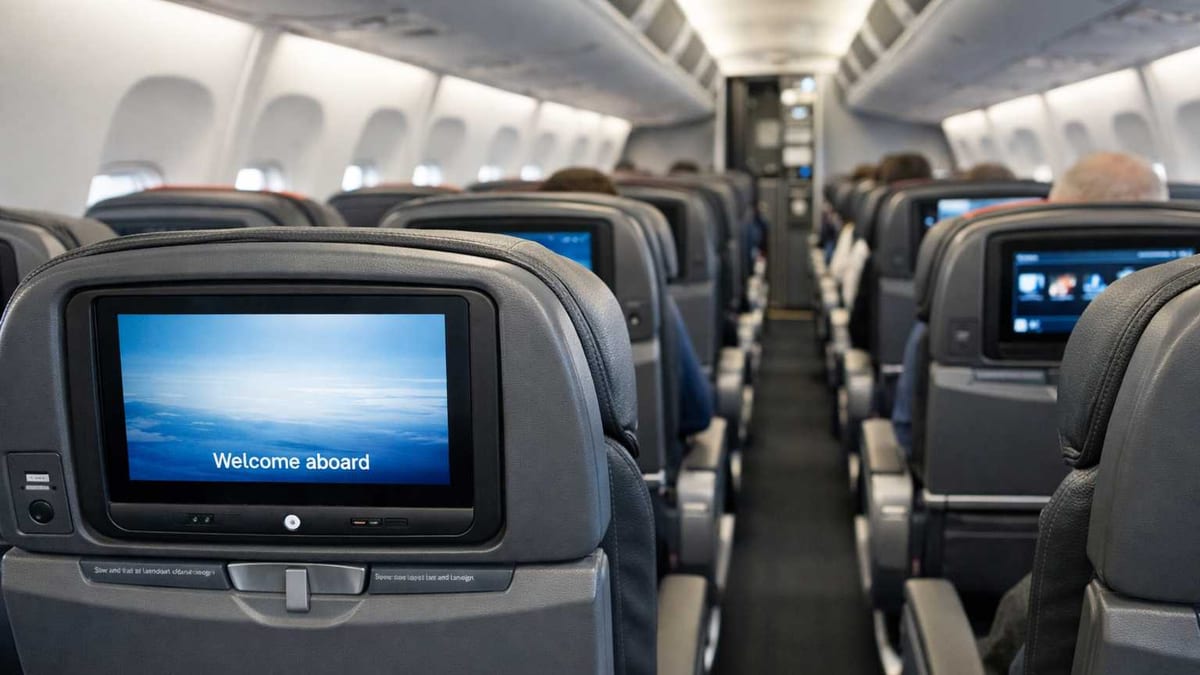
American Airlines is preparing to reintroduce seatback entertainment screens on its narrowbody aircraft after years of prioritizing personal devices and streaming. Publicly available information indicates that the airline plans to install modern in-seat systems across upcoming Boeing and Airbus deliveries, as well as retrofitted jets, positioning the move as part of a broader push to enhance the onboard experience.
The return of embedded screens represents a strategic shift. American had previously removed or skipped seatback systems on many domestic aircraft, arguing that passengers preferred to stream content on their own phones and tablets. However, industry coverage shows that competitors with extensive seatback entertainment, particularly on domestic routes, tend to report stronger customer satisfaction metrics and higher unit revenue, exerting pressure on American to match those offerings.
Reports on the new systems describe large-format, high-resolution displays with 4K capability, Bluetooth connectivity for personal headphones and upgraded power options such as USB-C charging. The hardware is being positioned not only as an amenity for passengers but also as a potential digital platform, giving the airline opportunities for targeted advertising, branded content and retail partnerships that can generate ancillary revenue.
Implementation is expected to be gradual, aligned with aircraft deliveries and planned cabin refurbishments. Industry analysts note that the long timeline will mean a mix of cabin experiences for several years, with some aircraft offering traditional bring-your-own-device streaming while others debut the new embedded systems.
More Premium Seats to Lift Revenue
Alongside new seatback screens, American is moving to increase the number of premium seats across its fleet. Company earnings materials and investor presentations in 2024 and 2026 highlight a strategy to grow the share of first class, business class and premium economy seating through both new aircraft deliveries and cabin retrofits.
Recent financial disclosures show that lie-flat and premium economy seats have been expanding at more than twice the pace of main cabin seating, reflecting an emphasis on higher-yield customers. Additional Main Cabin Extra seating on domestic aircraft is also being marketed as a key lever for premium revenue, giving frequent flyers and corporate travelers more options for extra legroom and priority services.
Configuration plans reported for certain narrowbody models, including Boeing 737 MAX and Airbus A321neo aircraft, indicate a rise in domestic first class seat counts and a denser layout of extra-legroom rows. These changes are intended to capture more willingness to pay from travelers who are upgrading from basic economy or standard coach, particularly on routes where American faces strong competition from Delta Air Lines and United Airlines.
Academic and industry research on airline economics suggests that premium cabins can subsidize lower fares in the main cabin by boosting overall revenue per flight. By adding more high-yield seats, American aims to strengthen margins while preserving price-sensitive demand in the back of the aircraft.
Chasing a Profit Gap With Delta and United
The renewed focus on inflight product is unfolding against a backdrop of intense financial pressure. Public filings and executive presentations over the past year have acknowledged that American lags Delta and United by billions of dollars annually in operating profit, even as domestic demand remains robust.
Leadership has framed 2026 as a pivotal year, with a stated goal of returning to solid profitability through a combination of cost discipline and revenue initiatives. Enhancing the onboard experience for high-value travelers is one of the pillars of this strategy, alongside improvements in reliability, digital tools, loyalty program monetization and corporate sales.
According to widely circulated transcripts of recent earnings calls, American is leaning heavily into premium revenue growth, reporting rising paid load factors in business and premium economy cabins versus 2019 levels and greater customer buy-up from basic economy. Increasing premium seating density and restoring seatback screens are being presented as natural extensions of that momentum, intended to make the product more competitive with higher-margin peers.
Industry commentary suggests that the airline is also responding to reputational concerns. Over the last decade, American’s domestic cabins have often been viewed as more utilitarian compared with competitors that maintained or expanded inflight entertainment, mood lighting and upgraded soft products. A visible investment in hard product can serve as a signal to both customers and investors that the carrier is serious about repositioning itself as a premium global airline.
Customer Experience, Technology and Monetization
The next generation of seatback systems is emerging as a technology and data platform as much as an entertainment amenity. Coverage of recent airline retrofits indicates that modern inflight entertainment suites can support personalized recommendations, dynamically targeted advertising, retail offers and real-time flight information tailored to individual passengers.
For American, that opens up new ways to monetize time onboard. Advertising slots on the home screen, pre-roll spots before movies, co-branded credit card promotions and integrated shopping experiences could all contribute incremental revenue on top of ticket sales. At the same time, improved connectivity and synchronized seatback and mobile interfaces can deepen engagement with the AAdvantage loyalty program.
However, reactions from frequent flyers illustrate that there is a balance to strike. Commentary in aviation forums shows enthusiasm for the return of dedicated screens, particularly among travelers who prefer not to hold personal devices for long flights or who value interactive flight maps. At the same time, some passengers express concern about intrusive advertising or screens that cannot be dimmed or disabled easily.
American’s investment in free high-speed Wi-Fi for loyalty members, launched earlier in 2026, is expected to complement the return of seatback entertainment rather than replace it. Industry observers note that the most competitive cabins now combine robust connectivity, quality embedded screens and reliable power, allowing different types of travelers to choose how they spend time in the air.
Long Road to a Transformed Narrowbody Fleet
Transforming a large narrowbody fleet is a multi-year effort, and the benefits will not appear overnight. American operates hundreds of single-aisle jets across its domestic and short-haul international network, many of which have already undergone previous densification or interior refresh programs centered on extra seats and slimline designs.
Reports on the new initiative suggest that the latest round of modifications will be phased in alongside scheduled heavy maintenance checks and new aircraft arrivals to limit disruption. That approach can help manage capital expenditure and reduce the need to pull additional aircraft out of service, but it also means passengers will encounter a mix of cabin standards for some time.
Analysts say the success of the strategy will ultimately be measured not only in customer satisfaction scores but in unit revenue and margin expansion. If the added premium seating and enhanced inflight product allow American to narrow its revenue gap with top-performing competitors, the investment could be seen as a key turning point in the carrier’s post-pandemic restructuring story.
For now, the decision to restore seatback screens and grow premium capacity signals that the basic, no-frills narrowbody cabin is falling out of favor at one of the largest U.S. airlines. As the retrofit program progresses, travelers can expect a more segmented set of choices on board and a cabin environment that reflects both evolving passenger expectations and the financial realities of modern air travel.