


More news on this day
Copenhagen’s Nordhavn waterfront, once dominated by container terminals and cruise ships, is rapidly emerging as a testbed for low-carbon urban living and a new focal point for Denmark’s sustainable hospitality growth.
Get the latest news straight to your inbox!
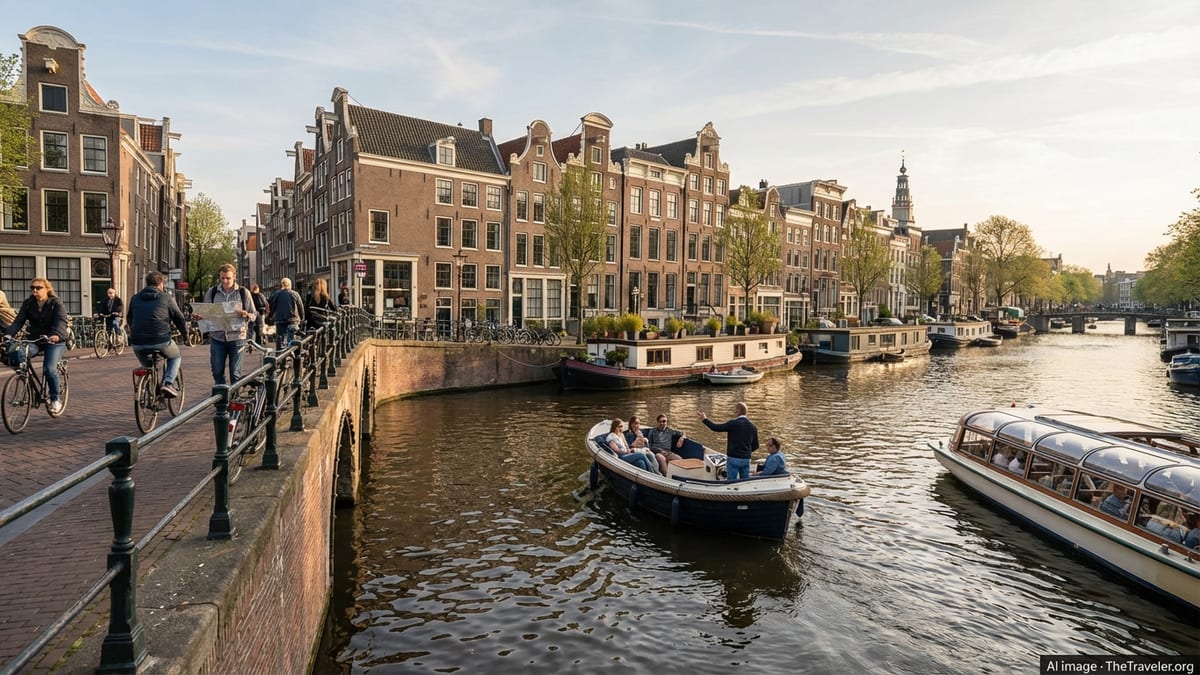
A Former Harbour Recast as a Low-Carbon Urban Showcase
Nordhavn sits on a redeveloped peninsula north of central Copenhagen, where long-term masterplans seek to turn one of Northern Europe’s largest harbour regeneration projects into a dense, transit-oriented district with a markedly lower carbon footprint than traditional city extensions. The area is framed in municipal and regional planning documents as a model for mixed-use growth that prioritises public transport, cycling and walkability over private cars.
Publicly available planning material describes Nordhavn as a “five-minute city,” where daily needs are intended to be met within a short walk of homes, offices and public spaces. Rail-based links and harbour buses are playing a central role, with metro extensions and commuter train connections designed to plug the district directly into Greater Copenhagen’s established transit network. This approach is credited in recent urban studies with raising the share of journeys made by bicycle and public transport, while supporting higher residential and commercial densities than previous harbourfront projects.
Architecture and urban development guides highlight Nordhavn’s integrated “blue-green” infrastructure, where promenades, harbour baths and rainwater-management features are combined with pocket parks, green roofs and biodiversity corridors. The district has achieved high scores under the DGNB sustainability certification system, which evaluates energy performance, materials, mobility and social factors. This recognition is helping position Nordhavn as a European reference point for climate-conscious waterfront regeneration.
Academic and policy reports also note that Nordhavn is being used as a living laboratory for resilient design, with experiences from the area feeding into wider projects such as the planned Lynetteholmen artificial island. That link underlines how the former industrial harbour has become central to Copenhagen’s strategy for accommodating population growth, managing flood risk and meeting long-range climate targets while still attracting private investment.
Core Hospitality Anchors a New Hotel Cluster
As the urban transformation gathers pace, hotel operators are moving in to serve both business travellers and leisure visitors drawn to Nordhavn’s emerging waterfront lifestyle. Among the most active players is Core Hospitality, a Scandinavian white-label operator that manages multi-brand hotels across the Nordic region. Company information lists Residence Inn Copenhagen Nordhavn as part of its portfolio, signalling a deliberate push into extended-stay and serviced-apartment products tailored to the area’s mixed residential and commercial profile.
Core Hospitality’s model focuses on operating international brands under management agreements rather than developing properties directly. This strategy allows it to match specific concepts to evolving neighbourhoods, with lifestyle, select-service and extended-stay brands deployed in locations where demand is still ramping up. In Nordhavn, the Residence Inn flag, part of the Marriott stable, aligns with longer-stay guests linked to office tenancies, maritime businesses, architecture and design firms, and the growing cluster of international organisations and start-ups in the district.
Industry coverage of Core Hospitality’s pipeline suggests that the operator is increasingly concentrating on urban nodes connected to rail and airport links, reflecting both guest preferences and corporate sustainability targets. Nordhavn’s role as a rail-based corridor node within Copenhagen’s updated “Finger Plan” supports that strategy, giving managed hotels direct access to the city centre and the wider Øresund region while reinforcing the district’s low-car ambitions.
Analysts following the Nordic hotel market note that third-party operators like Core Hospitality are helping institutional owners and investors gain exposure to Copenhagen’s growth without building in-house operating platforms. In Nordhavn, this management-led approach appears to be accelerating the arrival of international brands, consolidating the area’s position as a new hospitality quarter alongside more established central-city hotel zones.
Sustainable Design, Branded Living and Visitor Demand
Nordhavn’s appeal to global hotel brands rests heavily on its sustainability credentials. Tourism and investment materials emphasise highly energy-efficient buildings, district heating solutions and smart-grid pilots that aim to cut operational emissions. Many new-build hotels and serviced-apartment schemes in the area are being marketed with low-energy envelopes, extensive use of recycled or upcycled materials, and design features intended to reduce water consumption and food waste.
At the same time, Nordhavn is attracting branded residential and co-living concepts that blur the line between hospitality and housing. Serviced apartments, student residences and long-stay units are being integrated into mixed-use blocks with ground-floor retail, cafés and community amenities. This combination supports a higher intensity of urban life throughout the day and week, which hotel operators see as vital for occupancy outside peak tourist seasons.
Recent guides produced in conjunction with Copenhagen’s designation as a World Capital of Architecture underscore Nordhavn’s role as a showcase for experimental housing projects and adaptive reuse of industrial heritage, including the conversion of grain silos into landmark residential towers. These architectural draws, combined with harbour baths, waterfront promenades and emerging cultural venues, are helping turn the district into a destination in its own right, rather than simply an overflow area for the historic centre.
Travel features and opinion pieces also point to tensions beneath the sustainability narrative, raising concerns about gentrification, affordability and the carbon impact of increased visitor numbers. Critics question whether large-scale concrete construction and rising cruise and air traffic can be reconciled with the city’s climate goals. For hotel investors and operators, this debate increases pressure to document lifecycle emissions, prioritise refurbishment over demolition where possible, and align guest experiences with genuine low-impact mobility and consumption patterns.
Balancing Green Growth With Local Livability
Nordhavn is frequently cited in European planning literature as a leading case of “green growth,” in which environmental initiatives are expected to drive economic development and property values. Quantitative indicators from recent research show significant increases in green space access, high cycling mode shares and notable rises in real estate prices within the district, suggesting that the sustainable branding is closely tied to market uplift.
However, academic studies and local commentary warn that such profiling can lead to uneven distribution of benefits. While Nordhavn’s new hotels, offices and high-spec housing attract international capital and skilled workers, questions remain about the availability of affordable units and the extent to which existing Copenhagen residents, including lower-income groups, participate in the district’s amenities. Some analyses argue that the focus on flagship sustainable neighbourhoods risks diverting attention and resources from retrofitting older, less affluent areas.
This tension is particularly visible in hospitality development. On one hand, green-certified hotels and serviced apartments in Nordhavn are framed as exemplars of low-carbon accommodation, drawing visitors interested in architecture, design and climate solutions. On the other, critics highlight that tourism growth itself carries environmental costs and can contribute to rising local prices. Industry observers suggest that operators in Nordhavn will face increasing expectations around transparent reporting of emissions, circular resource use and community engagement.
For city planners and regional authorities, Nordhavn’s trajectory raises broader questions about how to replicate successful sustainability measures without replicating social imbalances. Current debates in planning forums examine how lessons from the district’s transit-first design, energy systems and public-space strategies might inform interventions in more mature neighbourhoods, where the urban fabric is less flexible but the need for climate adaptation is just as pressing.
Nordhavn’s Next Phase: From Flagship to Blueprint
As construction cranes continue to dominate parts of the skyline, Nordhavn is moving from early flagship projects into a more mature phase of development. Key parcels are transitioning from heavy infrastructure and backbone utilities to finer-grained infill, including smaller commercial units, cultural facilities and additional hospitality offerings. Market watchers anticipate that this will diversify the visitor base, shifting the emphasis from early adopters and architecture enthusiasts to a broader mix of city-break tourists and regional business travellers.
Reports on European urban regeneration trends increasingly reference Nordhavn alongside other model districts in cities such as Malmö and Hamburg, noting that international delegations and professional study tours regularly use the area as a case study. For Copenhagen’s tourism and investment agencies, this attention reinforces the city’s positioning as a laboratory for sustainable living, with Nordhavn’s hotels, serviced apartments and conference spaces acting as both accommodation and exhibition venues for green solutions.
Looking ahead, analysts suggest that Core Hospitality and comparable operators will continue to play a pivotal role in shaping Nordhavn’s hospitality landscape. Their ability to switch between brand families and adapt operating models to evolving demand can support a more flexible response to shifts in business travel, hybrid working patterns and regulatory changes on building performance.
In parallel, the district’s experience is feeding into long-term strategic thinking about new land reclamation and waterfront protection projects around Copenhagen. As climate adaptation and net-zero targets become stricter over the coming decade, Nordhavn’s combination of high-density living, transit integration and energy-efficient hospitality is likely to serve as both an inspiration and a cautionary tale for cities worldwide exploring how to align growth with genuine sustainability.