


More news on this day
Hazardous materials teams and emergency responders converged on a freight train derailment in Bensalem, Bucks County, on Tuesday afternoon, prompting temporary shelter-in-place alerts for nearby neighborhoods while crews evaluated several damaged tank cars.
Get the latest news straight to your inbox!
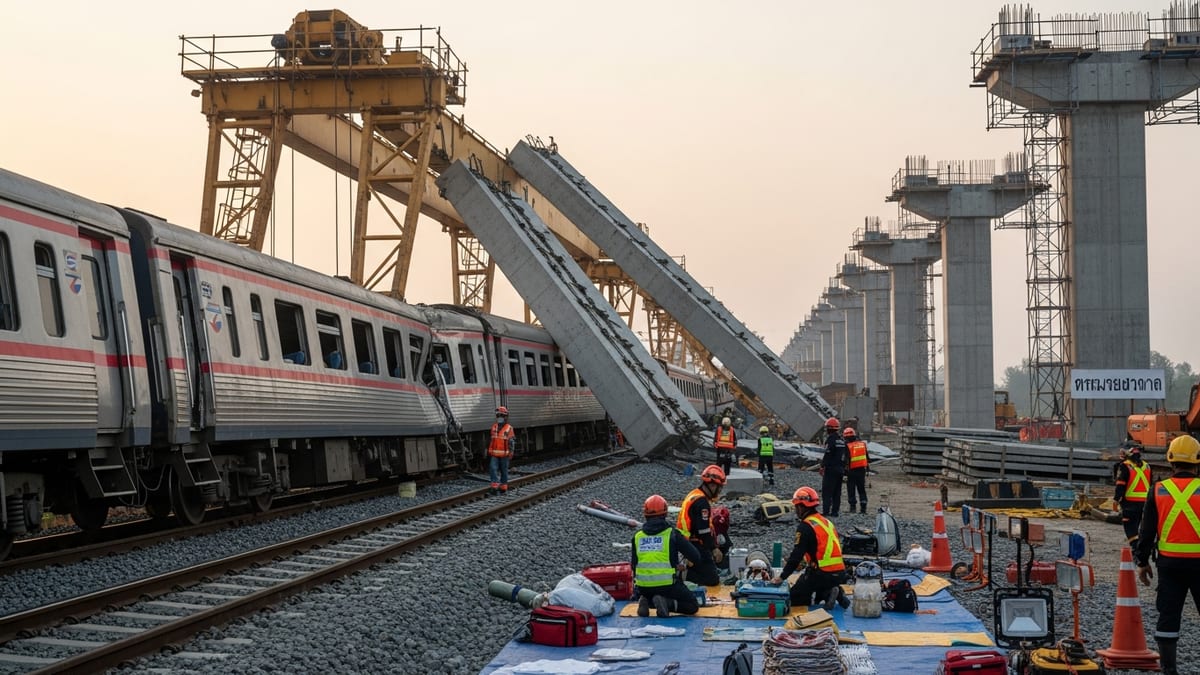
Freight train jumps the tracks near Neshaminy Falls
Publicly available information indicates that the derailment occurred shortly before 2 p.m. on June 30 near the Neshaminy Falls station area between Street Road and Old Lincoln Highway in Bensalem Township. Local outlets describe a CSX freight consist with more than a dozen cars leaving the tracks, with several tank cars and boxcars ending up at angles or on their sides along the right of way.
Images and video from the scene show railcars crumpled and stacked at awkward angles beside the tracks, with debris spread along a stretch of line that parallels residential streets and commercial properties. Aerial footage published by regional broadcasters highlights how close the derailment came to nearby homes, parking lots, and busy commuter routes.
Early reports suggest that roughly 15 to 16 cars were affected in total, including at least two tank cars labeled as carrying hazardous materials. The exact sequence of events leading to the derailment has not yet been detailed, and coverage notes that an investigation into the cause is expected to continue in the coming days.
Hazmat teams assess risk from tank cars
Because some derailed cars were marked as containing hazardous products, specialized hazmat teams from Bucks County and surrounding jurisdictions were dispatched alongside local fire, police, and EMS crews. According to regional news reports, personnel in protective gear established a perimeter around the damaged tank cars and began air monitoring and visual inspections as a precaution.
Coverage from Philadelphia-area broadcasters states that at least two freight cars were identified as hauling hazardous materials, with one widely reported to contain isopropyl alcohol. This classification prompted a cautious response due to the substance’s flammability and potential to create vapors if released in significant quantities.
By late evening, multiple outlets reported that crews on site had not detected any active leaks or air-quality issues from the derailed tank cars. Officials referenced in published reports indicated that monitoring would continue while the rail operator’s contractors worked on stabilizing and eventually removing the affected cars from the scene.
Shelter-in-place alerts and local disruption
Shortly after the derailment, residents in nearby neighborhoods received shelter-in-place instructions through local alert systems and social media posts from public agencies. These advisories urged people to stay indoors, keep windows closed, and avoid the immediate area around the tracks until hazmat assessments could better define any potential risk.
News organizations in the Philadelphia region report that the alerts covered parts of Bensalem and the Feasterville-Trevose area where the rail line runs close to residential blocks, small businesses, and roadways. Some residents described seeing helicopters overhead and a heavy presence of fire trucks, specialized hazmat vehicles, and police units converging on access points along the tracks.
As air monitoring continued to show no hazardous releases, coverage indicates that shelter-in-place recommendations were gradually lifted later in the day, and traffic restrictions began to ease. However, roads closest to the derailment site remained limited to emergency and railroad vehicles while recovery operations ramped up.
Rail operator and cleanup efforts
Reports from regional outlets identify CSX as the freight operator involved in the Bucks County derailment. Company statements cited in published coverage indicate that railroad crews and contractors arrived to work alongside local responders, with priorities including securing the derailed cars, confirming product integrity, and preparing heavy equipment for rerailing or cutting up damaged rolling stock.
Recovery efforts are expected to take several days, based on similar derailments along busy freight corridors. Nearby residents can anticipate continued noise, lighting, and truck traffic as crews move in cranes, excavators, and replacement track materials to restore the damaged section of line. Local coverage notes that some commuter routes running parallel to the tracks may experience intermittent closures while this work proceeds.
Environmental and transportation officials referenced in media reports are expected to review the incident once the site is stabilized, looking at track conditions, train speed, and any mechanical factors that may have contributed. Such evaluations typically inform recommendations aimed at preventing similar incidents in other communities situated close to major rail freight lines.
Travel implications for visitors in the Philadelphia suburbs
For travelers staying or driving through the northeastern suburbs of Philadelphia, the derailment underscores how rail incidents can quickly affect local mobility and trip planning even when passenger trains are not involved. Sections of Old Lincoln Highway, Street Road, and smaller connecting streets near the Neshaminy Falls area may experience congestion, detours, and periodic closures as cleanup continues.
Published reports indicate that regional passenger rail services on separate tracks have not experienced long-term shutdowns, but schedules may be adjusted while crews and equipment operate nearby. Visitors using rental cars or rideshare services to reach hotels, casinos, or shopping destinations in Bensalem and surrounding townships may want to allow extra time and check for updated traffic advisories through local news and navigation apps.
In the broader context, the Bucks County derailment adds to a series of rail incidents across the United States that have brought renewed attention to hazardous-materials routing and the proximity of freight corridors to densely populated areas. For travelers and residents alike, the scene of hazmat trucks and emergency crews along the tracks in Bensalem serves as a reminder that rail safety issues increasingly intersect with everyday mobility in many American communities.