


More news on this day
An intense early-summer heatwave in Hungary has forced dozens of modern electric trains out of service, causing delays and crowding on key commuter routes and highlighting how even newly built rolling stock is struggling to cope with rapidly warming summers.
Get the latest news straight to your inbox!
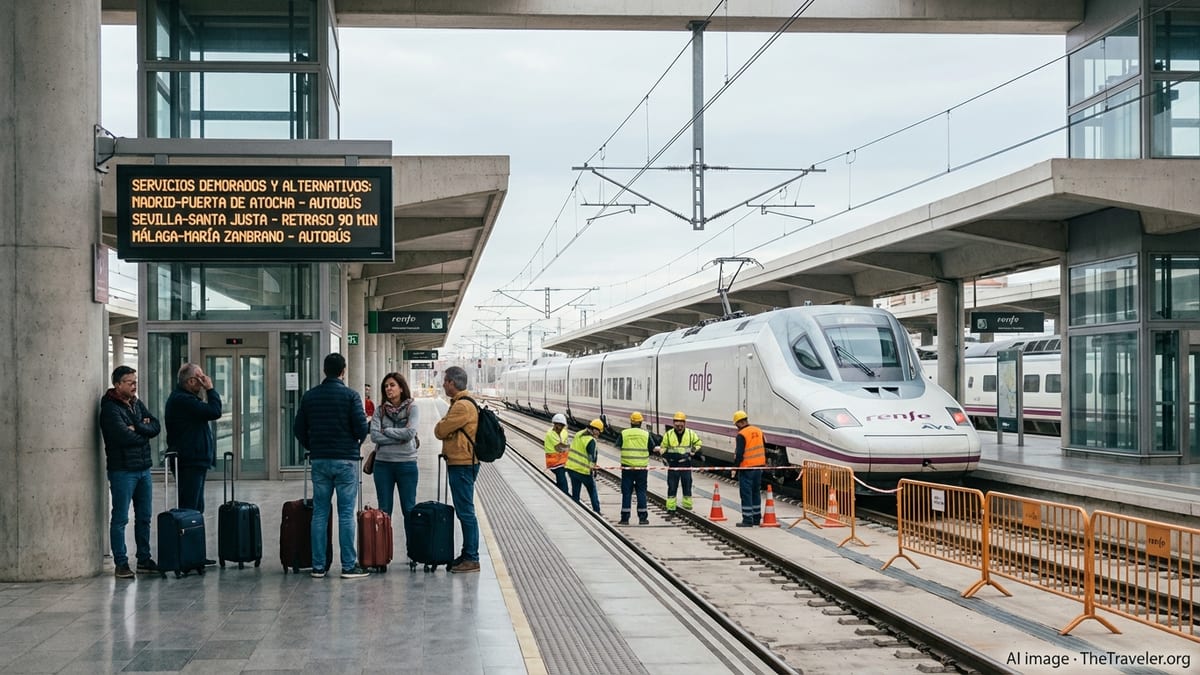
Modern Fleet Falters in Temperatures Near 40 Degrees
According to Hungarian and regional news coverage, parts of the country’s modern electric fleet, including Stadler FLIRT multiple units used on busy suburban and intercity lines, have been temporarily withdrawn from service after on-board systems overheated during several days of extreme heat. Reports indicate that around 30 units became inoperable at the peak of the heatwave, forcing the national operator to reshuffle its fleet and reduce capacity on certain routes.
Publicly available technical information shows that many contemporary European passenger trains were originally specified for reliable operation up to roughly 35 degrees Celsius in ambient temperatures. During the current heatwave, daytime air temperatures in parts of Hungary have reached 38 to 40 degrees, while metal roofs and equipment compartments exposed to full sun can climb far higher than the air temperature. Hungarian outlets report that components in the traction and air-conditioning systems have been particularly affected.
Coverage on Hungarian transport platforms and local media describes significant disruption on Budapest’s commuter network as the heat intensified earlier this week. Passengers on affected routes encountered cancellations, short-formed trains and crowding, while replacement sets from older fleets were brought in where possible. The operator has characterized the withdrawals as a safety measure and has begun returning units to service as temperatures ease, but further interruptions remain possible with more hot days forecast.
Commentary in the domestic press notes that the incident follows a series of weather-related rail disruptions in recent years, including snow events that slowed or halted traffic on key corridors. Together, these episodes have fed public concern that the system is not keeping pace with fast-changing climatic conditions.
Heatwave Adds Strain to an Already Stretched Network
The train outages have arrived during a broader period of stress for Hungary’s rail system. In recent months, the network has faced capacity constraints around Budapest, large-scale construction projects and periodic infrastructure failures. When multiple modern multiple units are sidelined simultaneously, these underlying weaknesses become more visible to passengers.
Published coverage from Hungarian outlets describes delays on main radial lines into the capital, with some services replaced by older locomotive-hauled sets and, on certain sections, by buses. On the most heavily used commuter corridors, the loss of high-frequency modern trains that offer rapid acceleration has reduced the operator’s flexibility to recover from knock-on delays once the immediate technical failures are resolved.
Rail observers note that the incident comes only months after a separate episode in which severe winter weather led to a temporary suspension of freight services to keep the reduced-capacity network free for passenger trains. In that case, as in the current heatwave, the priority was to simplify operations to avoid cascading failures across an already congested system.
Domestic commentators have linked the recurring crises to long-running underinvestment in both rolling stock resilience and core infrastructure such as power supply, signaling and track geometry. While Hungary has purchased a substantial number of modern trains in the past two decades, critics argue that upgrades to depots, substations and maintenance capacity have lagged behind.
European Context: Trains Across the Continent Struggle in the Heat
The Hungarian disruption is unfolding amid a wider European heatwave that has affected rail operations in several countries. European meteorological briefings and international media reports describe temperatures above 35 degrees across swathes of Central and Eastern Europe, including Hungary, Serbia, Romania, Croatia and parts of Austria and Poland.
In other European networks, high temperatures have triggered speed restrictions to reduce the risk of track buckling, while operators have warned of possible air-conditioning failures on older rolling stock. In recent years, heatwaves have forced reductions or cancellations of services in western Europe as well, including on routes where older cars or legacy infrastructure were not designed for prolonged periods near or above 40 degrees.
Climate specialists quoted in European coverage stress that while the underlying engineering of tracks, overhead lines and power systems remains robust within design limits, those limits were often defined for a climate in which such temperatures were rare. As hotter summers become more frequent and prolonged, the probability of multiple components simultaneously operating near their maximum tolerances increases, making outages like those seen in Hungary more likely.
Analysts point out that railways are not alone in this challenge. The same heatwave is straining power grids, industrial plants and urban cooling systems across the continent. However, rail disruptions are particularly visible to the public, because they affect daily commutes and holiday travel at short notice.
Passenger Experience and Emergency Measures
On the ground, Hungarian passengers have been contending with crowded trains, platform waits and, in some cases, vehicles with limited or no air-conditioning. Social media posts and local reporting describe peak-hour services where passengers stand in packed carriages as operators attempt to keep basic frequencies running, despite having fewer modern trainsets available.
Publicly available announcements from the rail company and national media indicate that, as in previous heat events, staff have been distributing bottled water at major stations during the hottest parts of the day. These measures are intended to reduce health risks for passengers stuck on delayed or overcrowded trains, particularly older people and families traveling with children.
Travel advisories in Hungarian and international outlets have encouraged passengers to carry water, check service updates before departing and allow extra time for journeys on days when temperatures are forecast to spike. Some regional operators in neighboring countries have also warned of potential cross-border delays, as rolling stock and crews are shared across certain international routes.
Despite the disruption, rail advocates in Hungary emphasize that trains remain one of the safest modes of transport in extreme weather, provided operators slow or suspend services when equipment shows signs of overheating or when infrastructure limits are approached. The current episode, they argue, underscores the importance of clear communication and contingency planning rather than a shift away from rail travel.
Climate Adaptation Challenge for Central European Rail
For policy makers and rail managers, the sudden unavailability of some of Hungary’s most modern trains has become a case study in climate adaptation. Commentaries in Hungarian and regional media argue that, as heatwaves grow more intense and frequent, specifications for new rolling stock and infrastructure on Central European networks may need to be revised upward to account for higher design temperatures.
Possible technical responses under discussion in industry circles include reinforcing cooling systems for traction equipment, enhancing insulation and ventilation of roof-mounted components and expanding condition monitoring so that minor overheating is detected before it leads to full train failures. On the infrastructure side, operators across Europe are examining options such as revised track-stressing regimes, additional shading and improved resilience of overhead power lines.
The incident also feeds into a broader political debate about transport investment priorities in Hungary. Commentators linking the heatwave disruption to long-term funding decisions argue that, if rail is to play a central role in meeting climate targets and providing a low-carbon alternative to car and air travel, it must be robust in the very conditions that climate change is intensifying.
For now, forecasts suggest a temporary easing of temperatures over Hungary at the start of July, offering operators a window to return sidelined trains to service and assess any lasting damage. With meteorologists warning of the likelihood of further hot spells later in the summer, however, the performance of those same modern trains in the next heatwave will be closely watched by passengers and industry observers alike.