


More news on this day
Heavy rain and thunderstorms sweeping through the Chicago area disrupted operations at O’Hare International Airport over the weekend, leading to hundreds of flight cancellations and lengthy delays at one of the nation’s busiest air hubs.
Get the latest news straight to your inbox!
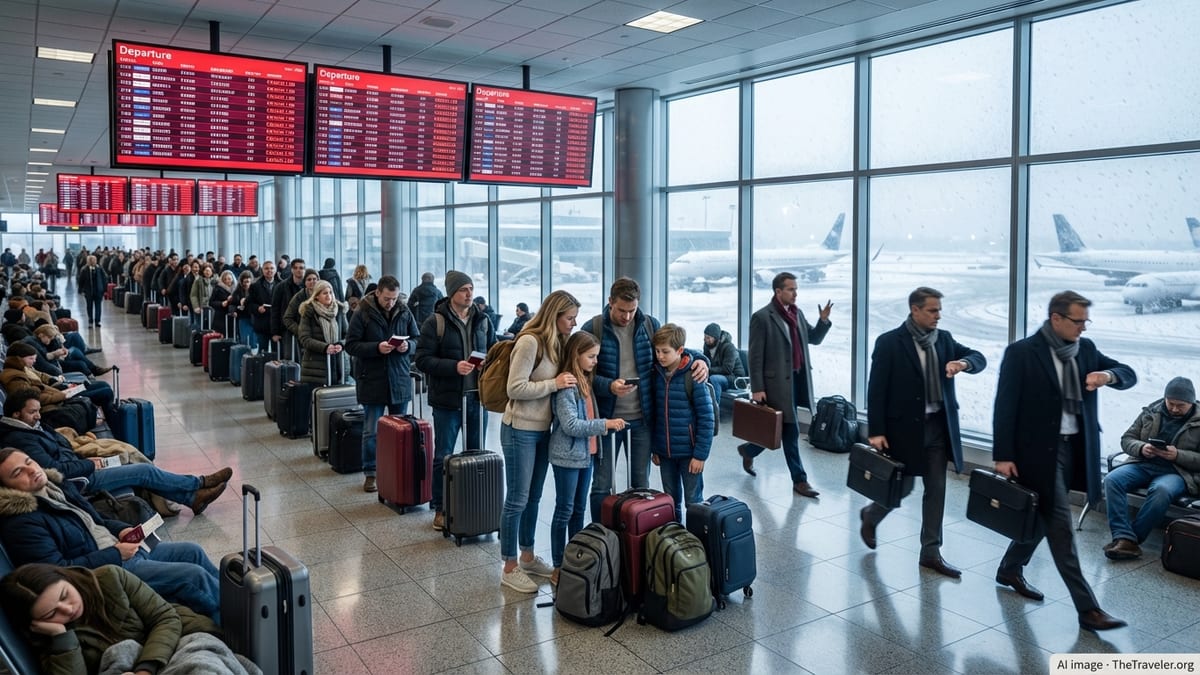
What’s happening at O’Hare, and how big the disruption is
Published coverage and flight-tracking data show a concentrated wave of cancellations at Chicago O’Hare (ORD) on Saturday, September 19, 2026, as repeated rounds of heavy rain and thunderstorms moved across the metro area. The impacts extended beyond isolated late departures, with inbound arrivals also affected as aircraft and crews fell out of position.
Local reporting based on the Chicago Department of Aviation’s public flight information showed more than 300 cancellations by mid-afternoon Saturday, along with average delays around an hour for flights still operating. With O’Hare’s role as a major connecting hub, disruptions at ORD can cascade quickly into missed connections and rebookings across the U.S. network.
Flight-tracking pages for ORD reflected rapidly changing totals throughout the day as airlines adjusted schedules, consolidated aircraft rotations, and removed flights from the board to stabilize operations. Travelers checking status in the morning often saw materially different cancellation counts by midday.
Why storms and heavy rain can shut down a major hub quickly
O’Hare’s airfield configuration and traffic volume make it especially sensitive to convective weather. Thunderstorms can reduce arrival rates due to lightning risk on the ramp, changing wind direction, and the need to keep aircraft separated when storm cells sit near approach paths.
Heavy rain adds additional constraints: braking action on runways can be reduced, visibility may deteriorate under downpours, and ground crews may pause certain outdoor tasks when lightning is present. Even when the airport remains technically “open,” the practical flow rate can drop enough that cancellations become the fastest way for airlines to recover schedule integrity.
Separately, low ceilings and reduced visibility can trigger instrument procedures that slow arrivals and departures. Publicly available FAA delay-status tools frequently categorize these situations broadly as weather-related, even when multiple factors combine during a long, stormy day.
Flood watch coverage and the weekend weather backdrop
National Weather Service forecasts for the O’Hare area showed a Flood Watch in effect early Saturday, with the alert window covering the morning into early afternoon. The watch timing aligned with the period when flight cancellations mounted fastest and when rain bands were moving through the region.
Forecast information for the weekend indicated multiple rounds of showers and thunderstorms rather than a single brief line, a pattern that complicates airline recovery. A short storm can be “waited out,” but repeated waves force recurring ramp pauses and renewed arrival metering, which can reset delays just as operations begin to normalize.
For travelers, that matters because the most visible weather at the terminal may not match what’s affecting the airfield and the broader route structure. Flights can be delayed due to air-traffic management constraints over a wide region, not only the immediate conditions over the airport.
What travelers should do right now if their ORD flight is affected
Travelers with flights to, from, or through O’Hare should prioritize verifying status directly with their airline and the airport departure/arrival boards before leaving for the terminal. Day-of weather disruptions often produce rolling changes, including cancellations that appear after an initial delay or aircraft swaps that alter seat assignments.
When cancellations spike, rebooking queues can become the main bottleneck. If a flight is canceled, using the airline’s app or website to select an alternate itinerary can be faster than waiting in line at the airport, especially for connecting travelers trying to protect onward segments.
Passengers should also check whether their airline has issued a weather-related travel waiver for Chicago area airports, which can allow rebooking to a different flight date or routing without typical change fees or fare differences, depending on the ticket type and waiver terms. Because waiver eligibility can be time-bound and airport-specific, travelers benefit from confirming the exact covered travel dates and eligible airports before making changes.
How long the ripple effects can last across the national network
Even after rain bands move east, the operational hangover at O’Hare can persist into the evening and the following day. Aircraft and crews may be out of sequence, and planes that were meant to overnight in Chicago may instead be parked elsewhere, leaving gaps in the next morning’s schedule.
O’Hare is also a major transfer point for coast-to-coast flying. When a large block of flights is canceled in Chicago, the effects can surface as delays or misconnections at airports far from Illinois, particularly for travelers connecting between regional flights and long-haul domestic routes.
For travelers planning to fly through ORD during a wet pattern, the most practical strategy is to monitor conditions and airline operations early, consider longer connection times when possible, and be prepared for same-day reroutes through alternate hubs if seats open up as carriers rebalance their networks.