


More news on this day
President Donald Trump returned to the White House a day earlier than scheduled from Camp David as the U.S. State Department renewed region-wide security messaging for Americans in the Middle East, urging heightened vigilance and warning of possible travel disruptions following new attacks tied to Yemen’s Houthi movement.
Get the latest news straight to your inbox!
What happened at Camp David, and why it matters for travelers
Published coverage described Trump’s early departure from the presidential retreat in Maryland on Saturday, September 19, 2026, as State Department security alerts circulated across multiple U.S. diplomatic posts in the Middle East. Separate reports indicated the White House travel change came as the regional security environment drew fresh attention after cross-border strikes and attempted attacks involving the Houthis and Saudi Arabia.
For travelers, the timing is notable less for the presidential schedule itself than for what the accompanying U.S. government messaging signals: elevated risk of sudden operational changes affecting air travel, border movements, and consular support across a wide stretch of the region. U.S. advisories and embassy alerts are often followed closely by airlines, insurers, corporate security teams, and tour operators when assessing whether to reroute, suspend service, or adjust duty-of-care planning.
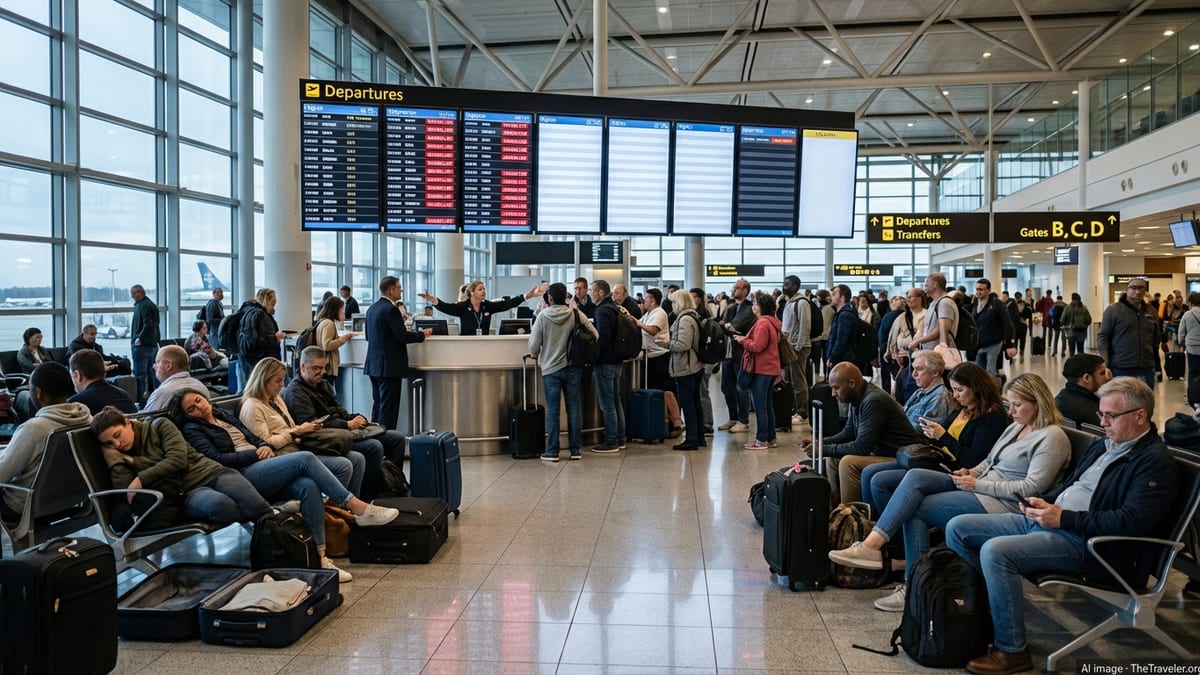
Recent alerts have emphasized that conditions can shift rapidly, and that disruptions may occur with limited warning. That includes airport access restrictions, last-minute flight cancellations, periodic airspace closures, and changes to embassy operating posture that can affect routine services.
Security alerts: what the U.S. is warning about right now
In recent Middle East security messaging, the State Department and U.S. embassies have urged Americans in the region to exercise heightened vigilance and to be prepared for travel disruptions, including flight cancellations and airspace closures. The guidance has also encouraged travelers to monitor airline and airport operations closely, especially for itineraries that connect through major Gulf hubs.
News coverage over the weekend tied the renewed wave of alerts to the regional fallout from Houthi operations targeting Saudi Arabia, including an attempted ballistic missile strike toward Riyadh that Saudi Arabia publicly acknowledged on Saturday, September 19, 2026. Reports also noted heightened concerns about escalation pathways linked to the broader U.S.-Iran conflict environment and the potential for spillover affecting transportation and infrastructure.
Separately, the State Department’s standing country-by-country travel advisories remain in place and can differ sharply across the region. For example, publicly available advisories list Lebanon at Level 4 (Do Not Travel) as of August 21, 2026, Israel at Level 3 (Reconsider Travel) as of August 26, 2026, and Saudi Arabia at Level 3 (Reconsider Travel) with an update dated September 15, 2026. Iraq is listed at Level 4 (Do Not Travel) with a September 10, 2026 update.
Air travel impacts: routes, airspace notices, and what could change fast
One of the most immediate traveler-facing consequences of heightened regional tensions is how airlines and regulators manage airspace risk. The U.S. Federal Aviation Administration maintains notices and restrictions related to conflict-adjacent airspace in the broader Middle East and Eastern Mediterranean, and such guidance can influence flight planning for U.S. carriers and code-share partners.
Travelers should be prepared for schedule volatility on routes that pass near sensitive corridors, including segments over the Eastern Mediterranean, Red Sea approaches, and Gulf routing. Even when departures remain on time, carriers may adjust flight paths to avoid specific airspace, which can increase flying time and complicate connections.
For passengers, the practical takeaway is to build more buffer into itineraries, especially on multi-leg trips through the Gulf and the Eastern Mediterranean. When tensions rise, rebooking pressure can cascade quickly across networks, leading to longer call-center waits, reduced award availability, and fewer same-day alternatives for missed connections.
Practical guidance for Americans traveling to or through the region
U.S. government messaging has repeatedly pointed travelers to monitor embassy security alerts and to keep up with destination-specific advisories, since these can be updated on short notice. Travelers already in the region may benefit from enrolling in the Smart Traveler Enrollment Program (STEP) so they can receive location-relevant messages from the nearest U.S. embassy or consulate.
Given the possibility of abrupt flight changes, travelers can reduce disruption by keeping passport validity and visa documentation in order, maintaining offline copies of key documents, and confirming airline contact details are correct in reservations. For those on tours or business trips, it can help to confirm who is responsible for rebooking logistics if a route is canceled or a connection becomes infeasible.
Travelers planning near-term trips should also check the advisories for transit points, not only the final destination. A route that connects through one airport may become operationally difficult if airspace constraints increase, even if the destination itself remains open to routine travel.
What to watch next: diplomatic calendar and regional security signals
Published reporting suggests the alerts come amid an evolving diplomatic and military backdrop, including shifting activity related to the U.S.-Iran conflict and broader regional dynamics. Coverage in recent days has highlighted how quickly policy and operational decisions can move, with travel guidance sometimes serving as an early indicator of heightened concern.
For travelers, the most important developments to watch are those that affect transportation and access: new embassy security alerts, changes in country-specific advisory levels, updates to aviation risk notices, and airline schedule adjustments. In periods like this, the most reliable travel decisions often come from combining official advisories with real-time airline operations information for the exact flight numbers and dates on a ticket.