


More news on this day
The U.S. State Department has issued a fresh, region-wide security alert for the Middle East, urging U.S. citizens to exercise heightened vigilance as tensions tied to the Iran conflict and related proxy activity continue to create fast-changing risks for travelers.
Get the latest news straight to your inbox!
What the new alert says and why it matters now
Publicly available State Department guidance frames the latest Middle East security alert as a region-wide warning: the security environment remains complex, and the potential for rapid escalation can create sudden disruptions for Americans traveling in or through the region.
While the State Department’s broader “Worldwide Caution” advisory has been in place since July 22, 2026, it specifically flags the Middle East as a current hotspot and advises travelers to be prepared for flight cancellations, periodic airspace closures, and other travel disruptions. The same guidance also notes that U.S.-linked locations, including businesses and institutions, may be targeted outside the region as well.
In the past week, published coverage has pointed to intensified hostilities affecting key travel and shipping corridors around the Arabian Peninsula, including renewed Houthi attacks involving Saudi Arabia and rising volatility around the Strait of Hormuz. That backdrop helps explain why a broad regional alert can appear even when specific countries are not newly re-rated.
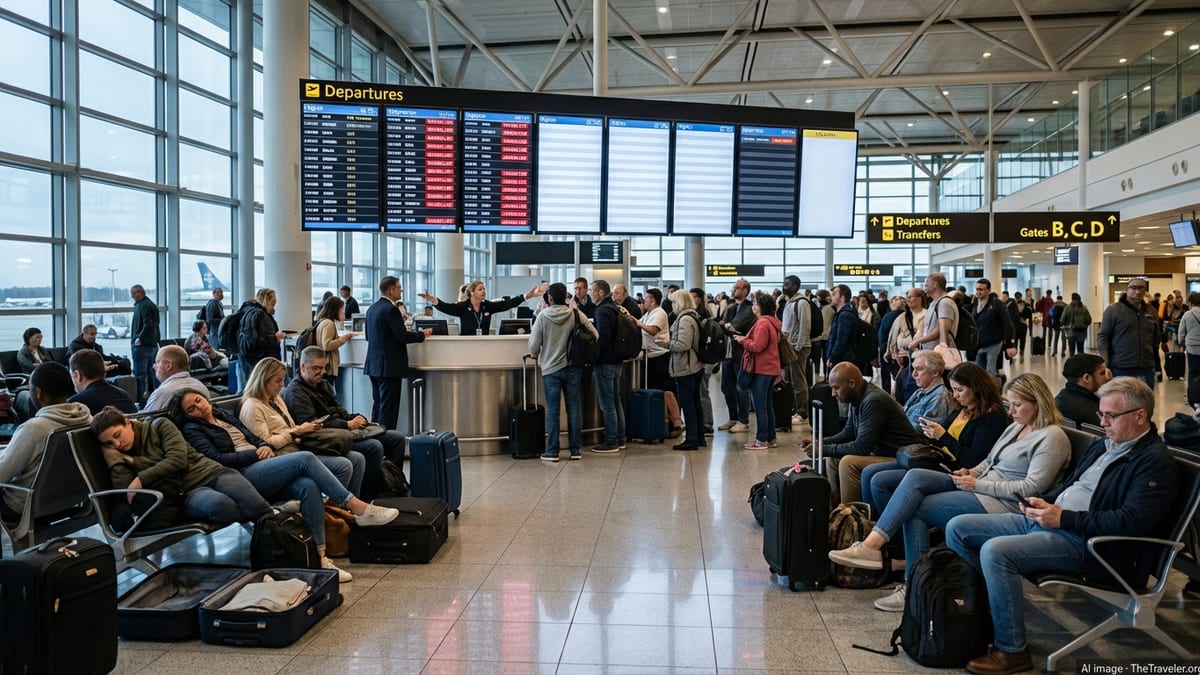
Flight cancellations, airspace closures, and transit disruptions
For travelers, the most immediate takeaway is operational: even if your destination airport is open, schedules can shift quickly when airspace restrictions change or when carriers adjust routes for safety. The State Department’s guidance advises travelers to check directly with airlines to confirm flight status and rebooking options if itineraries are affected.
Beyond cancellations, disruptions can include diversions to alternate airports, longer routings that avoid certain airspace, and last-minute changes to connection times. That matters for U.S. travelers transiting major Gulf hubs, where a disruption in one corridor can cascade into missed onward connections across Europe, Africa, and Asia.
Because the warning is region-wide, travelers with multi-country itineraries should consider each leg separately, including overflight routes, stopovers, and ground transfers. The State Department’s public guidance also encourages monitoring airport operating updates and local instructions as conditions change.
How to read Travel Advisory levels across the region
A security alert is not the same thing as a country’s standing Travel Advisory level. Travel Advisories are the State Department’s longer-form, destination-specific guidance, while security alerts are time-sensitive notices intended to highlight immediate risks or disruptions.
Current Travel Advisories show sharp differences across the Middle East. Iraq, for example, is listed at Level 4 “Do not travel,” with publicly available guidance citing terrorism, kidnapping risk, armed conflict, and limited U.S. government ability to provide emergency services. The advisory also references aviation restrictions tied to regional risks for civil aviation.
Saudi Arabia is currently listed at Level 3 “Reconsider travel” (dated September 15, 2026). The advisory cites risks that include missile and drone threats, terrorism concerns, possible exit bans, and local laws that can carry severe penalties for certain social media activity. It also notes that travel can be disrupted at times even when commercial flights are operating.
For travelers, the practical step is to look up your exact destination’s Travel Advisory and recent security alerts, and then evaluate whether your itinerary is concentrated in higher-risk areas, relies on tight connections, or involves large public venues that could face heightened security concerns.
What travelers should do before departure and while on the ground
The State Department’s public guidance emphasizes preparation and situational awareness rather than a one-size-fits-all instruction to leave. Travelers are encouraged to enroll in the Smart Traveler Enrollment Program (STEP) to receive location-specific updates from the nearest U.S. embassy or consulate and to help consular staff reach you in an emergency.
Another recurring theme in current guidance is communications and redundancy. Travelers should keep critical documents accessible, share itineraries with trusted contacts, and consider flexible reservations where possible, especially when a trip depends on specific flight corridors that could be affected by airspace changes.
For Americans already in the region, the State Department’s Middle East consular information page highlights official channels for security updates and lists the department’s emergency contact numbers: +1-202-501-4444 from abroad and +1-888-407-4747 from the U.S. and Canada. Travelers can also monitor U.S. embassy and consulate security alerts for their specific location.
Finally, travelers should avoid assuming stability based on conditions earlier in the day. In a rapidly changing environment, the most useful routine is to recheck airline status, local guidance, and embassy security messaging at least daily, and more often when news coverage indicates fresh incidents affecting aviation or cross-border movement.