


More news on this day
Air traffic at Helsinki Airport has returned to normal after an early-morning drone alert on May 15 temporarily halted departures and arrivals, disrupting passengers on Finnair and a wide range of European and Gulf carriers.
Get the latest news straight to your inbox!
Operations Normalized After Short but Widespread Disruption
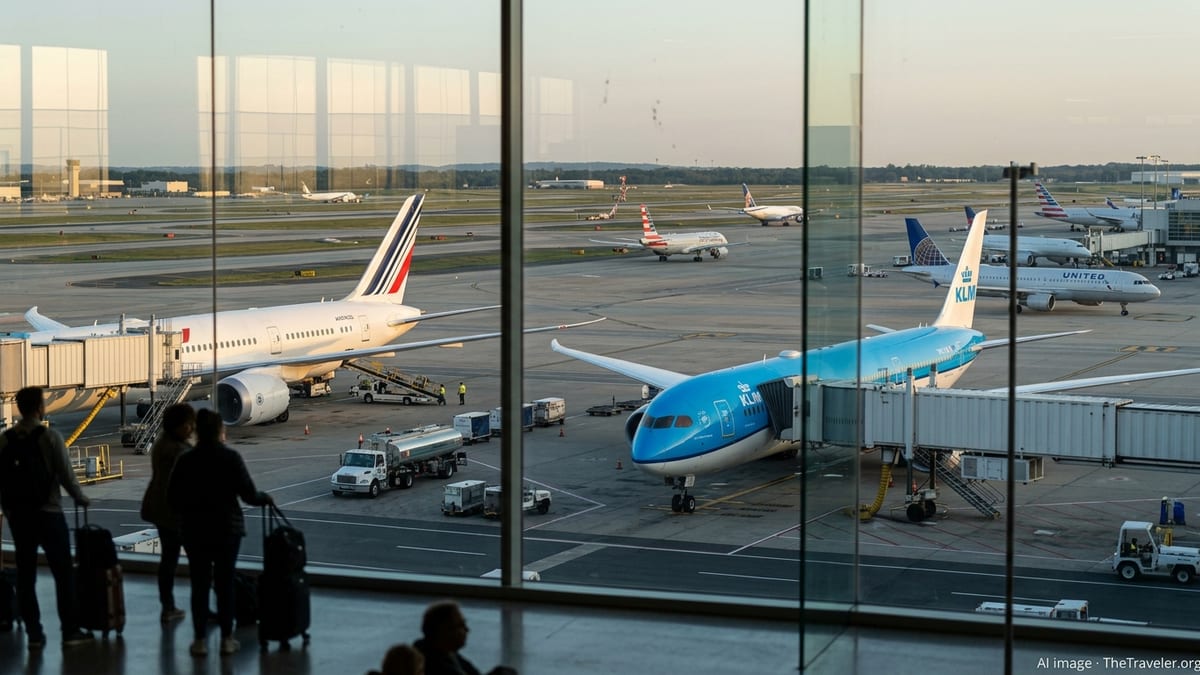
According to airport operator updates, Helsinki Airport suspended air traffic shortly after 4:00 a.m. local time on May 15 following reports of a suspicious unmanned aircraft in Finnish airspace. The pause affected both departures and arrivals during the morning peak, including services operated by Finnair, Lufthansa, British Airways, Air France, KLM, SAS and Emirates.
Finavia, which manages the country’s airports, reported that air traffic was gradually restarted once the situation was assessed as safe, with normal runway operations resuming within a few hours. Publicly available flight tracking data shows a wave of delays and a limited number of cancellations concentrated in the early part of the day, followed by a progressive return to the published timetable.
Although the interruption was relatively brief, Helsinki is a key hub for traffic between Europe, Asia and North America, so the knock-on effects were felt across multiple networks. Long-haul connections, particularly overnight services linking Helsinki with major European capitals and onward destinations, experienced schedule changes as aircraft and crews were repositioned.
By mid-morning, most airlines using the airport were operating close to their planned schedules, with residual delays mainly affecting passengers whose aircraft had been diverted or who had missed early connecting flights.
Major Carriers Restore Schedules And Reaccommodate Passengers
Finnair, the largest operator at Helsinki Airport, moved quickly to stabilize its hub schedule. Publicly available information on booking platforms indicates that the carrier prioritized rebooking disrupted customers on later Helsinki departures and, where necessary, via partner hubs in northern and central Europe.
Network carriers such as Lufthansa, British Airways, Air France, KLM and SAS also restored normal operations through the morning, adjusting aircraft rotations to keep key business and leisure routes open. Online timetables show that many flights between Helsinki and hubs such as Frankfurt, Munich, London Heathrow, Paris Charles de Gaulle, Amsterdam Schiphol and Copenhagen were able to operate on the same day, albeit with delay.
Emirates services linking Helsinki with Dubai, an important connection point for Asia, Africa and Australia, also returned to normal schedules. Aviation industry monitoring indicates that airlines used standard disruption tools, including flexible rebooking options, to move passengers onto later departures from Helsinki and alternative routings via other European gateways.
Travel agents and online travel platforms report that most affected travelers were offered same-day or next-day alternatives, especially on routes with multiple daily frequencies. This helped limit the number of stranded passengers and kept holiday and business itineraries broadly intact.
Finland Tightens Airspace Protection After Drone Incidents
The latest disruption followed a series of recent drone-related airspace concerns in Finland and the wider Baltic region, which have drawn heightened attention to unmanned aircraft near critical infrastructure. Publicly available coverage describes earlier incidents in southeastern Finland and near the Russian border, where unidentified drones entered or were suspected of entering Finnish airspace.
In response, Finland has been updating its regulatory and technical framework for unmanned aircraft. The national transport and communications agency has recently revised rules governing UAS airspace zones around sensitive locations, including airports, diplomatic premises and test areas, introducing more detailed restricted and permitted zones for drone operators.
Specialist Finnish technology companies have also been investing in advanced drone detection and countermeasure systems. Corporate announcements indicate that airspace security solutions originally developed for defense and prison environments are increasingly being adapted for use at major airports in Europe, adding additional layers of monitoring above and beyond conventional radar and visual control.
While the exact nature and origin of the unmanned aircraft that triggered the May 15 alert remain under investigation, aviation safety plans published by Finnish authorities emphasize a precautionary approach. The framework favors temporary airspace closures or traffic suspensions when unidentified objects are detected, with the priority placed on passenger safety and controlled resumption of flights.
Tourists From UK, Germany And US Rebook With Growing Confidence
Helsinki’s role as a transfer point and city-break destination means that travelers from the United Kingdom, Germany and the United States were among those affected by the disruption. Early-morning flights from London, Frankfurt, Munich and other European hubs feed transatlantic and Nordic connections through Helsinki, amplifying the impact of any shutdown in the early hours.
Travel platforms monitoring booking patterns indicate, however, that demand from these markets has remained resilient. After airlines reinstated flights and clarified rebooking options, searches and reservations for near-term travel to Finland appeared to hold steady, with many passengers accepting revised itineraries by a few hours rather than cancelling altogether.
Consumer-facing information from major European carriers highlights flexible change policies that allow passengers to modify dates or routes in the event of operational disruptions. Industry analysts note that such flexibility, combined with the relatively swift resolution of the drone alert, has supported traveler confidence and encouraged visitors to keep plans for Helsinki and other Finnish destinations.
Tourism organizations have continued to promote Finland as a safe and accessible destination, pointing to stable visitor numbers in recent seasons and to the country’s strong reputation for infrastructure reliability. For many travelers from the UK, Germany and the US, the May 15 episode is being seen as a short-lived interruption rather than a reason to avoid Finland’s airports.
Resilient Nordic Hub Underscores Emerging Drone Reality
The events at Helsinki Airport underline how Europe’s aviation system is adapting to a new era in which unmanned aircraft are an everyday reality. Reports from across the continent in recent years have documented multiple cases of airports temporarily halting movements after drone sightings, prompting similar short suspensions at hubs from the Nordic region to western Europe.
Industry observers suggest that Finland’s handling of the May 15 incident fits into a broader pattern of rapid, safety-first responses followed by equally rapid recoveries. For passengers, the immediate effect is often an unexpected delay or rebooking, yet the long-term impact has so far been limited, with air traffic volume and connectivity continuing to grow.
Published aviation safety plans for the current decade highlight continued investment in surveillance systems, data-sharing between civil and military aviation stakeholders, and clearer rules for both recreational and commercial drone users. Helsinki’s experience is likely to feed into wider European discussions about how best to integrate drones into shared airspace while keeping disruption for travelers to a minimum.
For now, with runways active, schedules largely restored and rebooked passengers back in the air, Helsinki Airport is once again operating as the main gateway to Finland. The brief early-morning standstill has already transitioned into a case study in how a modern hub can pause, verify and then quickly restart operations in the face of emerging airspace challenges.