


More news on this day
Kazakhstan and the United Arab Emirates are quietly knitting together a more seamless travel and digital services corridor, combining visa free entry, e government platforms and joint technology projects that are reshaping regional tourism and business mobility.
Get the latest news straight to your inbox!
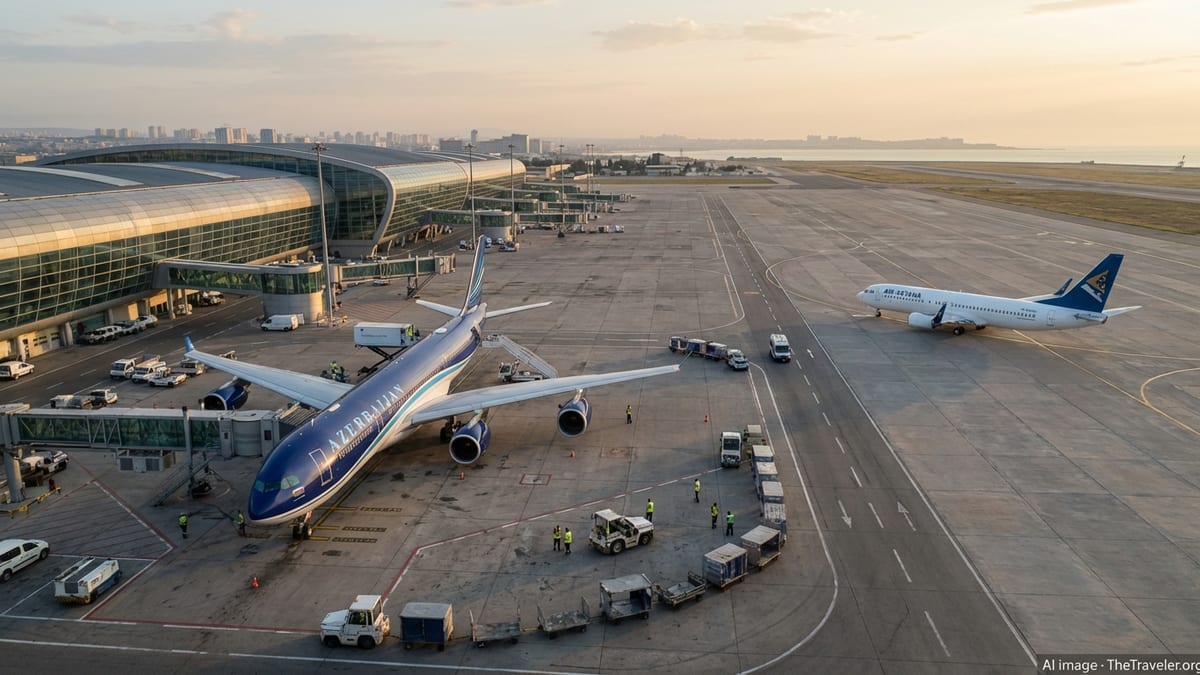
Visa Free Stays Strengthen Two Way Travel
Publicly available government information shows that Kazakhstan and the United Arab Emirates maintain reciprocal visa free entry for ordinary passport holders, a policy that has become a cornerstone of their growing tourism and business links. Citizens of Kazakhstan are listed among nationalities who can enter the UAE without obtaining a visa in advance, typically receiving a 30 day entry stamp on arrival. Airline guidance for travelers indicates that this can often be extended within an overall 90 day window in any 180 day period, provided visitors comply with immigration rules.
On the Kazakh side, official migration digests and foreign ministry circulars identify the United Arab Emirates among countries whose citizens may enter Kazakhstan visa free for short stays. Recent summaries of Kazakhstan’s visa regime indicate that Emirati visitors are generally allowed up to 30 days per visit, with a broader cap of around 90 days of stay over a defined reference period. These rules mirror Kazakhstan’s wider strategy of granting visa free access to investors and key economic partners, using relaxed entry policies as a tool to attract visitors and capital.
Specialist visa advisory platforms tracking 2025 and 2026 entry rules report that this reciprocal regime remains in force, describing a stable pattern of 30 day visa free entries for both Kazakh and Emirati travelers. For international passengers connecting through Dubai or Astana, this predictability has turned the pair into convenient gateways for regional multi stop itineraries, particularly for travelers combining Central Asia with the Gulf.
Analysts of passport mobility note that Emirati citizens already enjoy high global visa free access, while Kazakhstan has steadily expanded its own network of waivers. The bilateral arrangement between the two countries fits into this wider picture, signaling a shared interest in keeping cross border movement relatively frictionless for tourists, entrepreneurs and government delegations.
Digital Consular Services Move Online
Alongside relaxed entry rules, both countries are investing in digital tools that reshape the way travelers obtain consular support and manage documentation. Kazakhstan’s e government portal describes how visa issuance and migration services are increasingly handled through integrated online systems, using electronic records instead of traditional paper stamps. Foreign visitors are gradually being funneled into digital workflows for invitations, registrations and status updates, reducing the need for in person consular contact.
Reports from regional travel communities in early 2026 highlight Kazakhstan’s rollout of an electronic travel authorization platform known as QazETA. While the new system is being introduced in phases, it is described as a single digital hub where foreigners can submit basic data, track entry permissions and access related public services. Commentators compare it to similar authorization schemes seen in other visa free destinations, suggesting that even travelers exempt from classic visas may increasingly be asked to complete light touch online pre clearance before boarding.
The United Arab Emirates has followed a parallel path, placing much of its consular and immigration interaction on national smart services portals. Public information from carriers and government platforms shows that many travelers now complete pre arranged electronic visas, residency processes and document verification entirely online. Even for visa free nationalities, digital channels are used to manage extensions, long term tourism permits and residence linked services, reinforcing the UAE’s wider strategy of becoming a fully digital government.
This shift toward online consular and border services means that for international travelers, traditional embassy visits are giving way to app based interactions and automated risk checks. For those moving between Kazakhstan and the UAE, the practical experience is increasingly defined by how well each traveler navigates the relevant portals, uploads documents and tracks stay limits rather than by paper forms at consulates.
Smart Government Partnerships Underpin Travel Links
Beneath these visible policy changes is a deeper layer of cooperation on digital infrastructure and smart government. In January 2024, coverage in regional business media described a memorandum of understanding between the UAE Ministry of Investment, Kazakhstan’s Ministry of Digital Development, and sovereign wealth fund Samruk Kazyna to develop data center and artificial intelligence projects in Kazakhstan. The agreement was presented as a framework for long term investment in digital infrastructure to support cloud services, analytics and advanced e government capabilities.
According to Kazakh government press releases, subsequent high level meetings in Abu Dhabi and Astana have consistently highlighted digitalization, innovation and smart city solutions as shared priorities. Discussions on strategic investment projects frequently reference cooperation in fields such as secure data storage, cross border digital identity, and the modernization of public service delivery platforms. These initiatives form the technological backbone that makes digital consular services and friction light travel administration possible.
For the United Arab Emirates, which promotes its own experience in smart government platforms and paperless public services, Kazakhstan represents both a partner market and a testbed for exporting expertise. For Kazakhstan, the partnership offers access to Gulf capital and know how as it races to digitize state functions and position itself as a regional logistics and services hub connecting Europe, Asia and the Middle East.
Travel industry observers note that as data centers, cloud platforms and identity systems are standardized across borders, the management of mobility becomes more seamless. Airline apps, hotel systems and government portals can synchronize information more effectively, reducing duplication and creating a smoother journey for passengers flying between Nur Sultan and Gulf hubs.
What International Travelers Should Watch
For international tourists and business travelers who are not Kazakh or Emirati citizens, the deepening ties between Kazakhstan and the UAE have several practical implications. First, both countries are using visa free corridors and digital platforms as showcases of their broader openness to investment and high value tourism. This means that entry rules for many third country nationals are also being updated, sometimes becoming more flexible, other times shifting to new digital pre clearances that travelers must complete before boarding.
Recent updates to Kazakhstan’s visa free lists show a growing roster of countries now eligible for 30 day stays without a visa, subject to cumulative limits over a set period. At the same time, advisory notes emphasize that overstays or multiple back to back visits can trigger additional scrutiny, particularly as border systems become more data driven. Travelers planning extended itineraries that combine Kazakhstan with other Central Asian states are increasingly advised by regional experts to track days carefully and confirm their status through official portals before attempting to reset their stay by briefly leaving the country.
In the United Arab Emirates, expanded long term visitor categories and multi year tourist visas coexist with strict enforcement of stay limits for those entering visa free or on short term permits. Online government platforms and airline guidance are becoming the primary reference points for understanding which nationalities can enter without prior visas, which require pre arranged electronic documents, and which may obtain visas on arrival under specific conditions such as holding certain residence permits.
Given the pace of regulatory change, observers recommend that travelers consult the latest information from official consular pages or national e government portals shortly before departure, rather than relying solely on older printed guidance or third party blogs. The trend in both countries is toward more convenient, digital and often visa free entry for many travelers, but the details can change quickly as new systems like electronic travel authorizations are rolled out and fine tuned.
Implications for Regional Tourism and Business Mobility
The combination of visa free access and digital consular services is already reshaping tourism flows across the corridor linking Central Asia and the Gulf. Tourism boards report rising visitor numbers from the United Arab Emirates to Kazakhstan, particularly for adventure tourism, nature trips and summer getaways in contrast to the Gulf’s hotter climate. At the same time, Kazakhstan’s growing middle class is increasingly using Dubai and other Emirati cities as shopping, leisure and transit destinations on the way to longer haul markets.
For business travelers, the simplified entry regimes and online documentation are especially significant. Companies involved in logistics, energy, construction and technology projects can rotate staff and experts more easily between the two countries, reducing delays caused by traditional visa processing. Business associations in both Kazakhstan and the UAE have publicly welcomed these measures as supportive of broader trade targets and investment initiatives announced in recent years.
Industry analysts also point to the symbolic impact of the partnership on the wider region. By positioning themselves as digitally connected, visa friendly hubs, Kazakhstan and the UAE are competing for transit traffic, conferences and corporate headquarters that could otherwise gravitate toward more established centers. The alignment of consular and digital policies sends a message that both governments view openness to people, data and capital as key to their economic strategies.
For international travelers looking ahead to 2026 and beyond, the Kazakhstan UAE corridor is likely to become an increasingly important axis for exploring Central Asia and the Gulf in a single trip. The combination of visa free stays, expanding flight links and rapidly evolving digital services creates a travel environment where planning, compliance and convenience are shaped as much by smartphone portals and data centers as by traditional paper visas and border stamps.