


Hilton Grand Vacations markets the idea of “owning your vacations” with condo-style resorts, familiar hotel brands, and a flexible points system. What often gets less attention during the sales presentation is the full cost of that ownership over time. From the initial purchase price to annual maintenance fees and smaller recurring charges, Hilton Grand Vacations ownership can feel confusing until you break the numbers down. This guide walks through each major cost category in clear, practical terms so you can decide whether membership fits your travel style and budget.
Get the latest updates straight to your inbox!
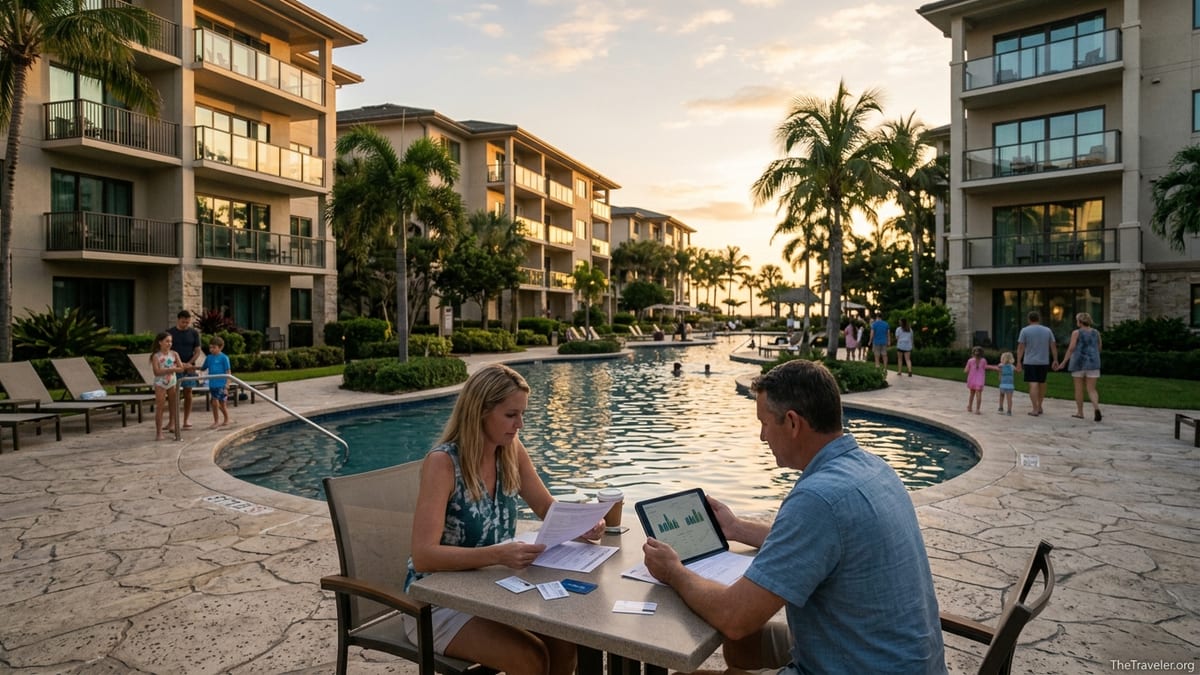
How Hilton Grand Vacations Ownership Works
Hilton Grand Vacations is a points-based vacation ownership program rather than a traditional fixed-week timeshare. When you buy in, you are purchasing a deeded interest or trust interest that is associated with a specific resort or collection, and that ownership gives you a certain number of Hilton Grand Vacations points each year. You then spend those points to book stays at Hilton Grand Vacations, Hilton Vacation Club, and affiliated resorts, with options that range from studios in Orlando to multi-bedroom villas in Hawaii or European city properties.
Points are the core currency. A typical offer might be 5,000 to 8,000 points per year, which can cover a week in a one-bedroom unit in shoulder season at many resorts or a shorter stay in a larger unit at peak times. For instance, a two-bedroom unit for a full week in platinum season at popular resorts can require more than 11,000 points, so a 5,000-point package might be better suited to long weekends or off-peak travel. Understanding how many nights you realistically take each year and where you want to go is essential before committing to a package.
Ownership is long term. In most cases, you are buying a real estate interest that can last for decades, often as long as 30 to 40 years or more, unless you own in a location with a specific end date set by the property’s governing documents. That long time horizon is what sales teams lean on when they talk about “locking in” future vacation costs. The flip side is that you are also committing to ongoing annual fees for as long as you own, regardless of how often you actually travel.
Finally, Hilton Grand Vacations is part of a much larger ecosystem of brands and acquisitions. Over the past several years, Hilton Grand Vacations has absorbed other vacation ownership companies such as Diamond Resorts and Bluegreen, and launched HGV Max to connect many of these portfolios. That can increase flexibility and the number of properties you can book, but it also introduces extra layers of fees and rules that new buyers need to understand before signing.
Upfront Purchase Price: Retail vs Resale
The most visible cost is the upfront purchase price. When you buy directly from Hilton Grand Vacations at a sales center, you are paying what is effectively the retail price for points. Company materials and recent owner offers suggest that new points typically cost somewhere in the range of about 4 to 10 dollars per point, depending on the resort, season, and size of package. A minimum buy-in is usually 4,000 points, and common offers involve 5,000, 8,000 or 12,000 points per year.
In practice, that means a 5,000-point annual package might be priced around 20,000 to 30,000 dollars. One real-world example shared by a new buyer involved 12,000 lifetime points for roughly 45,000 dollars, putting the price per point just under 4 dollars. Another couple reported an offer for 8,000 points every other year for about 14,000 dollars, which would be similar to buying 4,000 annual points for 14,000 dollars when averaged out. While exact pricing varies by resort and incentives, it is common to see offers that place a standard family-size package in the 20,000 to 40,000 dollar range before financing costs.
Resale is where the numbers look very different. Owners who no longer want their timeshare often list their Hilton Grand Vacations deeds on independent marketplaces and specialist brokers. There, it is common to see contracts advertised for only a fraction of the original purchase price, sometimes a few thousand dollars or even a token amount such as 1 dollar plus closing costs to take over the annual fees. Some owners report purchasing resale packages in the ballpark of 20 to 50 cents per point, and there are occasional offers where the seller covers closing costs just to be free of future fees.
The catch is that resale buyers usually do not receive all of the same benefits that direct purchasers get, especially with newer programs like HGV Max. Certain elite benefits, access to particular collections, or promotional uses of points may be restricted. Still, the raw price gap is substantial. If a 5,000-point package costs 25,000 dollars when purchased from Hilton Grand Vacations but around 3,000 dollars on the resale market, that difference alone will dominate the financial picture for many travelers, even before looking at ongoing fees.
Annual Maintenance Fees and Club Dues
After the initial purchase, annual maintenance fees and club dues are the largest recurring costs. These fees are assessed each year to cover property operations, staffing, insurance, utilities, taxes, and long-term reserves for major refurbishment such as roofs, elevators, and room renovations. Every resort association sets its own budget, so the amount you pay depends on where your ownership is based and how many points you hold.
Owner statements and fee schedules show that maintenance fees for a moderate-size package often fall somewhere in the range of 800 to 1,800 dollars per year, though high-demand properties, especially in Hawaii or major cities, can cost more. One owner with around 5,500 points reported an annual maintenance fee of roughly 1,000 dollars. Another example from a recent new-owner offer involved 8,000 points every other year tied to a Las Vegas resort, with maintenance fees quoted at just under 1,000 dollars per year once they fully phased in. For many buyers, a reasonable ballpark is that each 1,000 points will cost somewhere around 100 to 200 dollars annually in maintenance and property-related charges, depending on resort and season.
On top of maintenance fees, members pay annual club dues to Hilton Grand Vacations for access to the points system, reservation services, and technology platforms. Fee schedules indicate that these club dues are generally a few hundred dollars per year for a typical membership. One 2026 example from a new owner noted future club dues of about 329 dollars per year for HGV Max membership. These dues are separate from maintenance fees and are owed as long as you remain a member of the club, even if your underlying property fees are relatively low.
It is also worth noting that maintenance fees almost always rise over time. Inflation, higher labor costs, property insurance increases in coastal or wildfire-prone areas, and major renovation cycles all flow through to owners via annual budgets. Historical fee schedules for Hilton Grand Vacations and other timeshare brands show incremental increases most years. When you model the long-term cost of ownership, it is prudent to assume your maintenance bill will climb gradually rather than stay flat, so a 1,000 dollar fee today could be several hundred dollars higher a decade from now.
Other Recurring and One-off Charges
Beyond the headline maintenance fees and club dues, owners often encounter a series of smaller but important charges that can add up over the life of the contract. One of the first is the membership activation fee or transfer fee that applies when a new owner’s account is set up or when a resale transaction is processed. Official materials list activation fees in the hundreds of dollars. A common figure cited is a little over 600 dollars per timeshare interest for activation when a new member takes ownership, although exact amounts can change over time.
If you finance your purchase, interest is another major cost. Sales presentations may highlight low monthly payments without focusing on the total interest paid over a 10- or 15-year loan term. For example, an owner who finances a 25,000 dollar package at a double-digit interest rate over 10 years could easily pay many thousands of dollars in finance charges on top of the principal. That increases the effective cost per point well beyond the sticker price quoted at the table. Travelers who are debating ownership should always compare a financed timeshare purchase with simply saving for and booking cash stays at similar hotels or vacation rentals.
Other fees tend to be smaller individually but still matter. These can include reservation change fees if you adjust your travel plans close to arrival, late-payment fees on maintenance accounts, internal or external exchange fees if you trade into partner networks, and sometimes parking or resort fees on arrival, depending on the property. While some Hilton Grand Vacations resorts include parking at no extra charge for owners, others align more with standard city-hotel practices, which can mean nightly parking that is not covered by your points.
There are also optional add-ons promoted to owners over time. For instance, some Hilton Grand Vacations marketing materials and owner anecdotes reference programs that allow members to convert points into hotel loyalty points, use points toward partner experiences, or buy additional “bonus” or “one-time” use points to top up a balance for a specific trip. These options usually carry fixed conversion rates or extra fees that make them less valuable than simply using points for resort stays. They can be useful in narrow situations, but owners should view them as convenience products rather than core value drivers.
Real-world Cost per Night Examples
To understand whether Hilton Grand Vacations ownership is good value, it helps to translate the various fees and the purchase price into an approximate cost per night in real-world scenarios. Start with a simple case: imagine a 5,000-point annual package purchased on the resale market for 3,000 dollars, with annual maintenance and club costs of 1,100 dollars combined. If that owner uses all 5,000 points each year to book a week in a one-bedroom unit that requires 5,000 points, and the resale purchase cost is spread over 15 years, the math looks like this: about 200 dollars per year for the amortized purchase price plus 1,100 dollars per year in fees, or around 1,300 dollars total. For a seven-night stay, that equals roughly 185 dollars per night.
Compare that to booking a similar one-bedroom suite in a resort area directly with Hilton or another hotel brand. In peak season, nightly rates for a one-bedroom condo-style unit in Orlando or Las Vegas can often range from 200 to 300 dollars before taxes and resort fees, and holiday weeks or special events can push prices higher. In this example, resale ownership could come out slightly cheaper per night in exchange for the commitment to ongoing fees and the loss of some flexibility. However, the owner’s savings depend heavily on steady use of all points every year and on having bought at a deep resale discount.
Now consider a retail purchase. Take an 8,000-point annual package bought directly from Hilton Grand Vacations for 30,000 dollars, financed over 10 years. Suppose the combined annual maintenance, property taxes, and club dues total 1,600 dollars today, and interest over the loan term adds another 10,000 dollars in finance charges. Amortized over 15 years, the effective annual cost becomes roughly 2,600 dollars per year (loan principal and interest) plus 1,600 dollars in fees, or about 4,200 dollars annually. If the owner uses all 8,000 points for a two-bedroom unit requiring 8,000 points for a week, the cost per night would be about 600 dollars.
In some markets, 600 dollars per night might be comparable to high-end hotel suites during peak holidays. In others, particularly shoulder seasons or destinations with heavy competition from vacation rentals, that same level of accommodation might be bookable in the 300 to 400 dollar range. In other words, a full-retail, fully financed purchase can easily produce a cost per night that is similar to or even higher than booking cash stays, while locking you into a permanent stream of annual fees. This is why many experienced owners and industry watchers urge prospective buyers to treat timeshares as a lifestyle choice rather than a pure investment.
Hidden and Overlooked Expenses
Even travelers who carefully study purchase prices and published fee schedules can be surprised by what feel like hidden costs once they become owners. One subtle category is opportunity cost. If you put 25,000 or 40,000 dollars into a timeshare, that is money you are not using for other travel, paying down debt, or investing. If you would otherwise invest that capital or even just keep it as a flexible travel fund, the lost investment return or flexibility is an invisible but very real expense associated with ownership.
Another common surprise relates to availability and the extra cash outlays that follow. Sales presentations frequently highlight flexible booking windows and the ability to travel nearly anywhere. However, popular resorts and dates, such as ski weeks, school holidays, or Hawaii in winter, can book up quickly. Owners who cannot secure their first-choice resort sometimes end up paying cash for alternative accommodations or using external booking sites when their points are not practical for the trips they actually want to take. In effect, they are paying both the timeshare’s annual fees and regular travel costs in the same year.
Resale and exit costs are another under-discussed area. While Hilton Grand Vacations maintains a resale assistance program and works with affiliated brokers, owners who choose to sell typically face brokerage commissions that can run around a quarter of the sale price, closing costs, and in some cases transfer or recording fees. Because resale values are often much lower than original purchase prices, especially for older resorts or less in-demand locations, owners may recover only a fraction of what they paid, or even nothing after transaction costs. That financial loss is effectively a hidden expense that becomes visible only when you try to leave the system.
Finally, there is the soft cost of ongoing sales pressure. Owners frequently report being invited to “owner update” meetings or breakfast presentations during their stays, which often turn into pitches for upgrades or additional points. These sessions are marketed as educational and sometimes come with modest incentives such as gift cards or extra points. While there is no financial requirement to attend, the constant pressure to “optimize” or “expand” your membership can lead to incremental purchases that materially increase your total outlay over time. Travelers who prefer a simple, pay-as-you-go approach may find this aspect of ownership as draining as the actual monetary charges.
Who Might Benefit and Who Should Be Cautious
Hilton Grand Vacations ownership can make sense for a specific type of traveler. Couples or families who already vacation regularly at upscale resorts, prefer condo-style accommodations with kitchens and separate bedrooms, and value returning to familiar destinations may find that a reasonably priced resale package lowers their effective nightly cost over the long term. This is especially true if they pay cash up front, avoid high-interest financing, and consistently use all of their points every year in high-value ways such as booking peak-season stays at in-demand resorts.
Ownership can also appeal to people who enjoy structure. Knowing that maintenance fees are due each year and that points will expire if not used creates a built-in nudge to plan vacations rather than postponing them. Some owners like the psychological effect of “prepaying” for lodging in the form of maintenance fees and view their annual trips as a reward for that commitment. In those cases, even a neutral or slightly negative financial comparison to cash stays might be acceptable because the timeshare helps them prioritize vacation time.
On the other hand, travelers who prize flexibility or whose life circumstances may change significantly over the next decade should be cautious. If your work hours, family situation, or health might make it hard to travel every year or to the same destinations, the obligation of annual fees can quickly feel like a burden. Occasional travelers or those who favor spontaneous, off-the-beaten-path trips are often better served by paying cash for hotels and vacation rentals as needed, using loyalty programs for added value rather than committing to a single vacation ownership system.
Prospective buyers should also be wary of treating Hilton Grand Vacations as a financial investment. Resale values for most timeshares, including Hilton Grand Vacations, tend to be far below the original purchase price, and there is no guarantee of appreciation or even easy resale. A more realistic framing is to think of ownership as prepaying for a particular style of vacation with limited flexibility. If you like the idea of returning to Hilton-branded resorts, feel confident you will travel often, and can secure a good value per point, ownership might align with your goals. If not, the same money can usually buy many nights at hotels without the long-term commitment.
The Takeaway
Hilton Grand Vacations offers attractive resorts and the familiar comfort of a global hotel brand, but the true cost of ownership is more complex than a quick tour and free breakfast might suggest. The upfront purchase price, especially when buying directly from Hilton Grand Vacations, can run tens of thousands of dollars before financing costs. Annual maintenance fees and club dues add a recurring obligation that typically rises over time, and there are additional charges for activation, exchanges, financing, and optional add-ons that many owners do not fully appreciate until after they sign.
For disciplined, frequent travelers who buy smart, often on the resale market, and who consistently use their points in high-value ways, Hilton Grand Vacations can deliver comfortable vacations at a reasonable effective cost per night. For others, particularly those who value maximum flexibility or who are tempted into large, financed purchases at retail prices, the combination of sinking resale values and rising annual fees can make ownership an expensive way to travel.
Before committing, take the time to run your own numbers using real examples based on the destinations and unit types you actually prefer. Compare the all-in cost per night, including interest and rising maintenance fees, with what you would pay for equivalent hotel or vacation rental stays. If the math and the lifestyle both make sense for you, Hilton Grand Vacations may be a useful tool in your travel plan. If not, you can still enjoy Hilton hotels and vacation rentals worldwide on a pay-as-you-go basis without the long-term financial strings.
FAQ
Q1. How much does a typical Hilton Grand Vacations package cost to buy?
New packages purchased directly from Hilton Grand Vacations commonly range from around 20,000 to 40,000 dollars for a family-size annual points allotment, while similar contracts on the resale market can sometimes be found for a few thousand dollars or less, plus closing and activation fees.
Q2. What are normal annual maintenance fees for Hilton Grand Vacations?
Many owners of moderate-size packages report annual maintenance and property-related fees in the range of roughly 800 to 1,800 dollars, with higher amounts at premium locations such as Hawaii or major city properties, and those figures tend to increase gradually over time.
Q3. What are club dues and how much do they add to my costs?
Club dues are separate annual charges that pay for Hilton Grand Vacations’ reservation systems and program administration. They are typically a few hundred dollars per year for a standard membership and are due in addition to resort maintenance fees as long as you remain in the club.
Q4. Is it cheaper to buy Hilton Grand Vacations on the resale market?
Resale prices are often dramatically lower than developer prices, sometimes only a small fraction of what the first owner paid, so buying resale can significantly reduce your upfront cost, although you may give up eligibility for certain benefits and newer program tiers such as some HGV Max features.
Q5. Can I finance my Hilton Grand Vacations purchase and is that a good idea?
Hilton Grand Vacations and outside lenders offer financing, but the interest rates are often higher than standard home or auto loans, which can add many thousands of dollars in finance charges; travelers who do finance should carefully compare the total loan cost with simply paying cash for future hotel stays instead.
Q6. Do Hilton Grand Vacations fees stay the same every year?
No, maintenance fees and sometimes club dues usually rise over time as property operating costs, insurance, and renovation expenses increase, so it is wise to plan for gradual annual fee increases rather than expecting your bill to remain flat throughout your ownership.
Q7. What happens if I cannot use my Hilton Grand Vacations points one year?
Depending on the program rules and deadlines in effect, you may be able to bank points into the following year or borrow from a future year, but unused points can eventually expire, so if you regularly skip vacations you may end up paying annual fees without receiving full value.
Q8. Are there extra fees when I book, change, or cancel reservations?
Hilton Grand Vacations may charge modest transaction fees for certain reservation changes, late cancellations, or exchanges through partner networks, and some resorts also have separate parking or resort fees that are not covered by your points, so it is important to check the fee schedule before finalizing plans.
Q9. Is Hilton Grand Vacations a good financial investment?
Most industry data and resale listings suggest that Hilton Grand Vacations ownership should be viewed as a lifestyle purchase rather than a traditional investment, since resale values are typically well below the original purchase price and there is no expectation of financial appreciation.
Q10. How can I tell if Hilton Grand Vacations is right for my travel style?
Ask yourself whether you reliably take resort-based vacations every year, prefer condo-style accommodations in Hilton-branded properties, can afford the annual fees even in lean years, and would be comfortable committing to a long-term program; if your answer is not a confident yes, paying cash for hotels and rentals may be a safer and more flexible choice.