


More news on this day
HK Express has completed the relocation of its check in and bag drop services to the revamped Terminal 2 at Hong Kong International Airport, a significant step that consolidates the low cost carrier’s presence at its home hub and supports the city’s wider three runway expansion plan.
Get the latest news straight to your inbox!
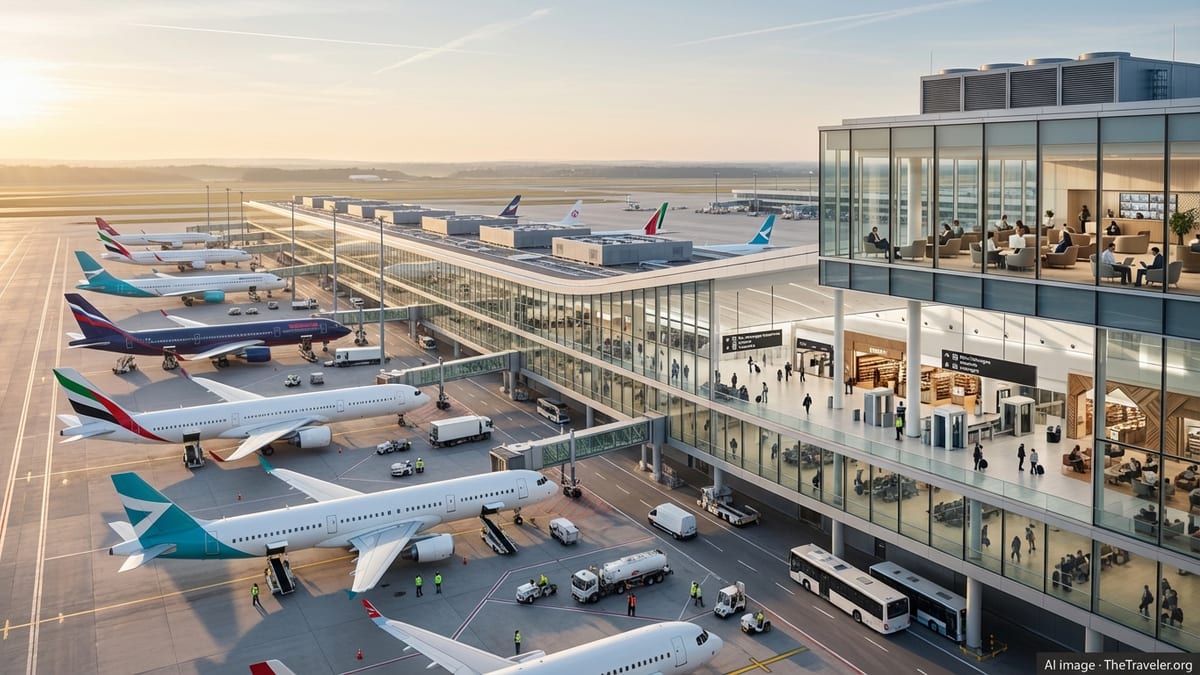
A new chapter at Hong Kong International Airport
According to publicly available information from the airline, HK Express shifted its departure operations to Terminal 2 on 10 June 2026 at 4 a.m. local time. All check in and bag drop counters are now concentrated at Aisle U in the new departures hall, while legacy counters in Terminal 1 have ceased handling HK Express passengers. The move coincides with the full reopening of Terminal 2 after a multiyear expansion tied to Hong Kong International Airport’s three runway system.
Reports indicate that HK Express flights will continue to arrive at Terminal 1 for the time being. Arrival immigration, customs, baggage reclaim and landside transport arrangements remain unchanged, meaning passengers collect luggage and exit through the familiar Terminal 1 hall. The split arrangement allows the carrier to tap into Terminal 2’s new processing capacity without disrupting established arrival flows.
The shift places HK Express among a group of 15 mostly regional and low cost airlines that are relocating departures to the rebuilt facility in phases from late May. Airport information shows that the clustering of value focused carriers in Terminal 2 is intended to relieve congestion in Terminal 1 and create a clearer layout for different airline segments at one of Asia’s busiest international hubs.
Strengthening Hong Kong’s low cost hub strategy
HK Express is the only dedicated low cost carrier based in Hong Kong and forms part of the Cathay Group. Company disclosures describe a network geared toward short and medium haul leisure traffic across North and Southeast Asia, making efficient use of airport infrastructure a central part of its business model. The relocation to Terminal 2 is being positioned as a way to streamline ground operations while giving the airline more room to grow schedules as demand recovers.
Industry coverage of the Terminal 2 reopening notes that the refurbished building has been designed around fast, high throughput processing with expanded check in areas and direct links to the driverless Automated People Mover that carries passengers to the main concourses and midfield gates. For carriers such as HK Express, that layout supports quick turnarounds and high aircraft utilisation, both of which are critical to keeping fares competitive.
Publicly available airport planning documents suggest that moving a cluster of regional airlines to Terminal 2 could also shave several minutes from minimum connection times for some itineraries. That is particularly relevant for passengers using Hong Kong as a transit point between mainland China, Japan, Korea and Southeast Asia, a flow that HK Express has been targeting with an expanding set of point to point and self connection options.
What passengers can expect at Terminal 2
Information released by HK Express and Hong Kong International Airport outlines a relatively straightforward experience for departing passengers under the new arrangement. Travellers are instructed to proceed directly to Terminal 2 for all HK Express flights, using Airport Express, buses, taxis or private vehicles to reach the new departure drop off. Inside, check in and bag drop are handled at the designated Aisle U counters before travellers pass through security and immigration located within the same building.
After clearing formalities, passengers use the Automated People Mover system to reach the departure gates in the main concourse areas, similar to the process previously used when Terminal 2 functioned as a departures only check in facility. Airport guidance indicates that wayfinding signage has been updated throughout the station and terminal complex to highlight the new routing for airlines that have migrated to Terminal 2, including HK Express.
Arriving HK Express customers will see little operational change in the short term. Flights still park at existing gates served by Terminal 1, and passengers disembark into the established arrivals channel. Baggage reclaim belts, customs checkpoints and ground transport links remain in their current locations. The continuity is expected to ease the transition period while travellers become familiar with the new departure arrangements.
Operational context and capacity considerations
The relocation comes against a backdrop of careful capacity management by the Cathay Group and its subsidiaries. Recent travel alerts from HK Express indicate that the carrier has implemented limited schedule adjustments between mid May and late June 2026, citing the need to manage operations prudently amid fuel cost pressures while maintaining overall network stability. Positioning the airline in the upgraded Terminal 2 gives planners additional flexibility as traffic through Hong Kong continues to rebuild.
Industry reports on the Terminal 2 project highlight its role in lifting Hong Kong International Airport’s overall passenger handling capacity as the three runway system comes on line. Prior to its closure for expansion in 2019, the original Terminal 2 mainly served as a landside check in hall feeding passengers to gates in Terminal 1. The rebuilt facility is intended to operate as a fully fledged terminal integrated with new airside infrastructure, with HK Express among the prominent tenants.
Analysts following the region’s aviation recovery note that low cost carriers are increasingly important in driving volume growth from secondary cities in Asia. Having a modern, purpose designed terminal for these airlines at Hong Kong International Airport aligns with the government’s goal of reinforcing the city’s status as a super connector for both business and leisure travel. HK Express, which has been expanding its route map into Japan, Korea and Southeast Asia, stands to benefit from this structural upgrade.
Implications for travellers and the wider market
For passengers, the most immediate impact of HK Express’s move to Terminal 2 is the need to verify departure terminal information before travelling to the airport. Travel agents and booking platforms have begun flagging the new check in location, and airport signage is being updated, but mixed terminal operations during the phased migration of multiple airlines may still cause confusion in the early weeks. Observers recommend that passengers allow additional time before departure while getting used to the new layout.
Over the medium term, smoother passenger flows and reduced congestion in Terminal 1 could enhance the overall travel experience at Hong Kong International Airport. With regional and low cost flights consolidated in Terminal 2 and many long haul and full service operations remaining in Terminal 1, the airport is moving toward a clearer division of functions that may simplify wayfinding and transfer planning for frequent flyers.
The completion of HK Express’s relocation is also a visible marker of Hong Kong’s broader aviation recovery. As more carriers return capacity and new infrastructure opens, the city is working to reassert its role as a leading Asian hub after several challenging years. The decision to anchor its homegrown low cost carrier in the renewed Terminal 2 underscores how airport planners and airline groups are aligning network strategies with the physical redesign of the hub.