


More news on this day
Ho Chi Minh City is moving to dramatically scale up its urban rail network, with planning documents and recent local coverage indicating that construction on four new metro and urban railway lines is targeted to begin between now and the end of 2026.
Get the latest news straight to your inbox!
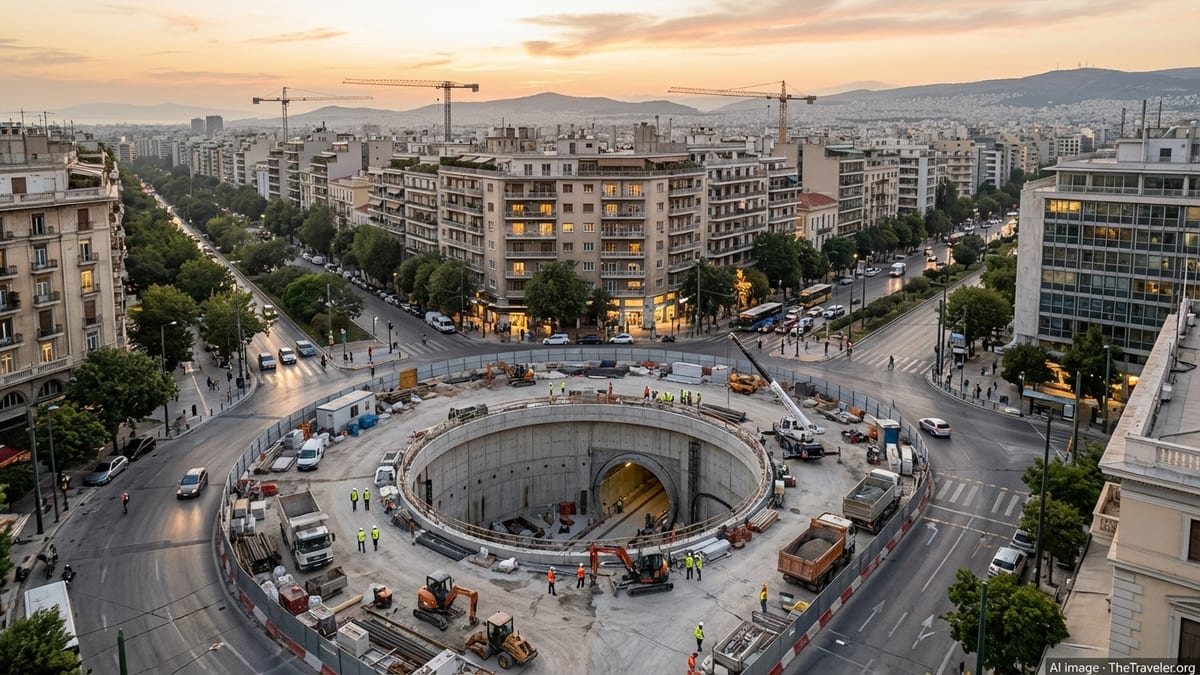
Four New Lines At The Heart Of HCMC’s Next Metro Phase
Recent planning updates describe an ambitious next phase for Ho Chi Minh City’s rail system, centered on launching construction for four additional lines by late 2026. Publicly available information outlines a package that includes the Ben Thanh – Thu Thiem metro link across the Saigon River, key sections of Metro Line 2, and new corridors intended to strengthen connections to neighboring provinces and outlying districts.
Local business and infrastructure press report that city authorities are accelerating investment procedures so the four lines can move from pre-feasibility and feasibility studies into the groundbreaking stage within the 2024 to 2026 window. The goal is to have these lines under construction in time to support targets set for the 2025 to 2030 period, when Ho Chi Minh City plans to operate a significantly expanded rapid transit network.
These new projects will build on Metro Line 1, which has been under construction for more than a decade and is nearing full completion. With just one line in advanced stages today, the decision to prepare four more for simultaneous starts highlights the scale of the city’s pivot toward rail-based mass transit.
Reports in Vietnamese-language outlets indicate that together with existing projects, the new lines are intended to form the core of a 200-kilometer urban railway grid by 2030, marking a major shift in how residents and commuters are expected to move around the southern metropolis.
Target Timeline: Groundbreaking By Late 2026, Operations After 2030
According to recent coverage, Ho Chi Minh City is aligning multiple railway investment procedures to converge around a milestone at the end of 2026. One widely cited roadmap describes plans to start work on several projects close to April 30, 2026, a date that has become a symbolic target for launching new strategic infrastructure.
Among the most closely watched projects is the Ben Thanh – Thu Thiem metro link, envisaged as a short but critical cross-river connection between the historic city center and the emerging financial and administrative district in Thu Thiem. Local reports suggest this line is slated to commence construction around April 30, 2026, positioning it as one of the flagship undertakings in the four-line package.
In parallel, published planning documents and news articles reference a broader urban railway program in which three further lines or line segments would break ground by December 2026. These include sections of Metro Line 2, an extended corridor toward Binh Duong Province, and at least one new north–south axis designed to feed into the central Ben Thanh hub and future interchange stations.
While the near-term focus is on starting work, operational timelines are longer. Local coverage of city planning targets indicates that Ho Chi Minh City is aiming to complete and put into service six metro and urban railway lines by around 2030, with the four new projects contributing significantly to that total once construction is underway.
Network Vision: From Single Line To 200 Kilometers Of Track
The planned four-line construction push fits into a vision of Ho Chi Minh City as a regional megacity with a dense rapid transit backbone. Officially approved planning documents highlight a long-term network of at least 10 metro and urban railway routes, along with additional light rail and suburban rail links extending toward Long Thanh International Airport and coastal districts.
Recent analyses of the network in specialist and real estate media describe a phased build-out, in which trunk lines are prioritized by 2030 and the full system is to be realized closer to 2050. Under that scenario, lines starting construction by 2026 would form the early spine of an eventual system projected to stretch several hundred kilometers, reaching new urban areas such as Thu Duc City, Binh Chanh, and the Can Gio coastal zone.
The short-term goal, highlighted in recent Vietnamese press coverage, is to reach approximately 200 kilometers of completed urban railway by 2030. Achieving that benchmark requires overlapping construction schedules and a move away from the sequential, one-line-at-a-time approach that characterized the lengthy build of Metro Line 1.
Proposals for additional corridors, including the Ben Thanh – Can Gio line and orbital routes such as Metro Line 6, are being advanced in parallel through studies and early-stage planning. Even if these later projects do not fall within the four-line construction package targeted for 2026, they illustrate the breadth of the city’s long-term metro ambitions.
Financing, Partners And Technical Preparation
Turning four new lines from plans into construction sites within roughly two years will require substantial capital and complex coordination among domestic and international partners. Recent business news reports from Ho Chi Minh City point to a mix of funding sources, including state budget allocations, official development assistance, and private capital under various partnership models.
Some published coverage notes interest from major Vietnamese conglomerates in investing in specific lines, particularly those with strong real estate or tourism potential. For example, earlier reports linked private investors to north–south corridors such as the planned Metro Line 4, although more recent updates suggest that its construction start may fall just after the 2026 window as studies and approvals continue.
Technical preparation is also being rethought in light of experience from Metro Line 1. Ministry-level publications and local reports describe efforts to streamline design, land clearance, and procurement, as well as to increase the number of tunnel-boring machines and work fronts operating simultaneously. The objective is to shorten construction timelines and reduce the risk of prolonged delays and cost overruns.
At the same time, planning documents emphasize the need to synchronize metro construction with station-area development and underground space planning, particularly around major interchanges such as Ben Thanh and key transfer points along Lines 2, 4, and 6.
Implications For Mobility, Urban Form And Investment
If Ho Chi Minh City succeeds in starting four metro and urban railway lines by 2026, the impact on mobility and urban development is expected to be far-reaching. Transport planners have long identified chronic congestion, limited public transport capacity, and rapid suburban growth as constraints on the city’s economic potential.
By providing high-capacity rail links between the historic core, new growth poles like Thu Duc City, and neighboring provinces, the planned lines are intended to shift a portion of daily travel away from private motorbikes and cars. Analysts note that even partial operation of multiple lines could sharply increase the share of trips made by public transport compared with today’s levels.
There are also broader implications for real estate and industrial investment. Coverage in local business media has already highlighted rising interest along planned corridor alignments, with developers and logistics operators positioning projects near future stations. The scheduled start of construction on four lines by 2026 may reinforce this trend, particularly in districts that will gain direct rail access for the first time.
Observers caution, however, that the ambitious timetable will test Ho Chi Minh City’s institutional capacity, financing arrangements, and coordination with national authorities. The coming two years will therefore be pivotal in determining whether the metro network can transition from a single showcase line to a multi-line system under construction across the city’s rapidly changing urban landscape.