


Holiday prices rarely stop at the headline fare. By the time you add checked bags, seat selection, resort fees, airport parking and a handful of mysterious service charges, the cost of a simple getaway can jump by hundreds of dollars. Understanding how these extras work is the single best way to keep control of your budget and avoid feeling stung at checkout or check‑in.
Get the latest updates straight to your inbox!
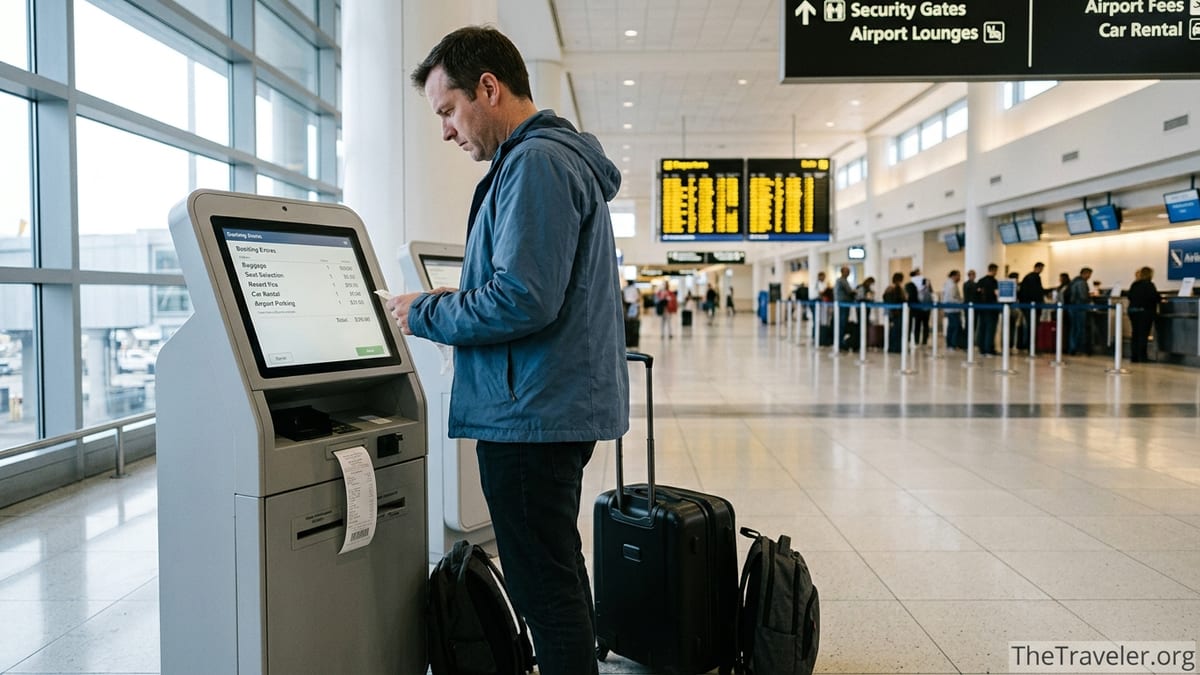
What Travel Companies Mean By “Holiday Extras”
The phrase “holiday extras” sounds harmless, even helpful. Airlines, hotels and travel intermediaries use it to describe anything that sits on top of the basic product: the plane seat, the room, or the rental car. In practice this can include baggage, priority boarding, resort and destination fees, airport parking, lounge access, fast‑track security, insurance, transfers and more. Some of these are genuinely optional comforts. Others are mandatory charges that are simply not baked into the first price you see.
On a typical three‑night city break for two, extras can be the difference between a trip that looks like 900 dollars when you first search and 1,300 dollars by the time you finish booking. For example, a low‑cost airline fare advertised at 79 dollars each way between New York and Miami can easily grow to more than 150 dollars each way once you add one checked bag, an advance seat and priority boarding per person. A hotel that appears at 160 dollars a night might add a 35 dollar nightly “destination fee,” raising the real nightly cost by more than 20 percent.
Travel companies know many people sort by lowest price and look only at the first figure. Extras are part of a broader strategy often called “drip pricing,” where unavoidable fees appear later in the process. In the United States and Europe, regulators have started to tighten rules around how these prices are displayed, especially for hotels, but plenty of room remains for confusion. The safest approach is to assume the first price is not the final price and to look closely at every page of the booking flow.
Not all extras are bad. Paying for a quiet room, early check‑in after an overnight flight, or guaranteed overhead space can be good value for some travelers. The key is distinguishing between add‑ons that genuinely improve your trip and those that simply pad out the provider’s revenue without delivering anything you need.
Airline Extras: Baggage, Seats and “Convenience” Fees
Airline fees are often the first extras travelers encounter. Most major U.S. airlines charge for checked baggage on domestic economy tickets, and low‑cost carriers also charge for larger carry‑ons or even printing a boarding pass at the airport. A typical domestic checked bag fee is around 35 dollars for the first bag and 45 dollars for the second each way. On a family trip for four, checking one bag per person can add roughly 280 dollars to a simple return ticket.
Seat selection is another big source of ancillary revenue. Many airlines offer standard economy seats for a modest fee, say 15 to 40 dollars per flight segment, and “preferred” or extra‑legroom seats for significantly more. A long‑haul economy flight from Chicago to London might present standard seats at 29 dollars each way and extra‑legroom options at 120 dollars or more. On some budget carriers in Europe, like Wizz Air, standard seat selection can range from free for random assignments at check‑in to around 30 euros for specific seats on busy routes, meaning a couple booking both ways could spend over 100 euros just sitting together.
Then come the small but irritating line items: booking fees for paying by credit card, charges for changing a name or correcting a spelling, and “service” fees for booking through a call center. A low‑cost carrier may tack on a 15 dollar “payment handling” fee per person, each way, that appears only late in the purchase process. On a return trip for four, that is another 120 dollars for something that does not change the flight at all.
To stay ahead of airline extras, build the full journey in the airline’s booking engine before you pay and compare the “trip total” between airlines, not just the base fare. If you know you need bags and seats together, it can be cheaper to buy a bundled fare that includes them instead of adding each fee a la carte. Also check whether your credit card or frequent flyer status already covers some charges, such as one free checked bag or priority check‑in.
Hotel Resort, Destination and Cleaning Fees
Hotel fees have been under special scrutiny in recent years because many of them are mandatory but not always obvious at first glance. Resort fees, destination fees and amenity fees are common in parts of the United States, especially in cities like Las Vegas, New York and Orlando, as well as at beach resorts. These charges, often described as covering Wi‑Fi, pool access or “local experiences,” can range from about 20 dollars to over 60 dollars per room per night. In some cases the fee is calculated as a percentage of the room rate, such as 10 percent on top of the nightly price.
In May 2025, a federal rule in the United States began requiring hotels and booking sites to display the total price including all mandatory fees at the first point a price is shown, not just at the final checkout page. Recent guidance and industry commentary in 2026 indicates that major chains have updated their websites so that when you search for a room, the nightly rate you see should already include any daily resort or destination fee. However, not every global booking platform is perfectly consistent yet, and smaller independent properties can still use confusing language, so it remains important to read the price breakdown on the final page before entering payment details.
Consider a weekend in Las Vegas. A large Strip hotel might advertise a base room at 89 dollars on a Saturday. A resort fee of 45 dollars per night is then added at checkout, along with local taxes. The real nightly cost before tax is therefore 134 dollars, more than 50 percent higher than the first number. In New York, a mid‑range hotel could show 210 dollars a night plus a 30 dollar “destination fee” that includes gym access and a daily 10 dollar snack credit. If you never use the gym or forget to redeem the snack, the entire fee is pure extra revenue for the hotel.
Short‑term rentals and aparthotels add another twist: cleaning and service fees. A three‑night apartment stay listed at 150 dollars per night can have a one‑time cleaning fee of 120 dollars and a service fee of 60 dollars, bringing the total nightly cost to effectively 210 dollars. This can make a hotel with transparent pricing comparatively better value, but only if you actually compare the final totals. Always click through every step of the booking flow and look for lines labeled “fee,” “surcharge” or “service” before confirming.
Car Rental Charges: From Airport Concession Fees to Fuel Policies
Car rental contracts are notorious for long receipts filled with small print. Beyond the daily base rate, you may encounter airport concession recovery fees, customer facility charges, vehicle license recovery fees, energy surcharges, and local tourism or transit taxes. Investigations and consumer reports in late 2025 highlighted examples at U.S. airports such as Nashville and Phoenix where renters discovered that extras like concession recovery fees of around 10 to 12 percent, daily customer facility charges of 5 to 7 dollars, and vehicle license fees of a few dollars a day collectively added more than 25 percent to the original quote.
Airport concession recovery fees exist because rental companies pay the airport to operate on site and pass that cost on to customers, often as a percentage of the base rental amount. Customer facility charges are usually flat daily amounts that fund the construction and upkeep of rental car centers and shuttle systems. On a five‑day compact rental quoted at 60 dollars per day at a major U.S. airport, these extras can easily add 70 to 120 dollars before normal state and local sales taxes are even applied. A local news report from late 2025 showed renters at Nashville International Airport paying hundreds of dollars more than expected once these separate line items were added to their bills.
Fuel policies are another area where extras creep in. Many rental companies promote a “fuel service option” where you prepay for a full tank at a price per gallon that seems close to local pump prices. The catch is that you rarely return the car completely empty, so you end up paying for fuel you never use. On the other side, if you decline the option and bring the car back less than full, refueling charges can be significantly above local rates, sometimes double, and can include additional service fees. Similarly, add‑on insurance or collision damage waivers sold at the counter can run 13 to 30 dollars per day and, for travelers who already have coverage through a credit card or personal auto policy, may be unnecessary.
To reduce rental car extras, start by pricing both airport and off‑airport locations, keeping in mind the cost of a taxi or rideshare to pick up the car if you choose an off‑airport branch. Look closely at the fee breakdown on the quote, not just the total. Before traveling, check what coverage your credit card and personal car insurance already provide, so you can confidently accept or decline the waivers offered at the counter. Finally, always return the tank full and keep the fuel receipt until your credit card statement closes, in case of disputes.
Third‑Party Holiday Extras: Parking, Lounges and Transfers
Beyond airlines and hotels, a growing ecosystem of companies focuses specifically on holiday extras: airport parking, airport hotels, meet‑and‑greet services, lounge access, fast‑track security and transfers. In the United Kingdom, for example, a well‑known brand offers bundled airport parking and hotel deals as well as standalone services like meet‑and‑greet parking at London Gatwick or Luton. Prices can look attractive compared to official on‑airport parking, especially when booked in advance, but travelers should still pay attention to service fees, amendment charges and conditions for late arrivals or flight delays.
Recent customer reviews in 2026 highlight issues such as extra charges for overstays, additional amounts requested when flights return late at night, or confusion over who is responsible when a third‑party parking operator fails to meet a driver on time. In one case at Luton, a traveler reported being asked to pay roughly 9 to 10 pounds extra to exit the car park because the valet company was late collecting the vehicle. At Heathrow, another customer complained that after a mix‑up with a meet‑and‑greet operator holding their prepaid exit ticket, they were asked to pay again at the barrier and struggled to obtain a refund.
Airport lounges and fast‑track security passes are also sold as extras through airlines, banks and specialist providers. A single‑visit lounge pass at a busy European airport might cost 40 to 60 euros per person, and fast‑track security access can range from about 6 to 20 euros depending on the airport. Travelers sometimes buy both, only to find that security lines were short that day or that the lounge was overcrowded. Similarly, private transfers promoted as “from 35 dollars per car” can rise significantly once night surcharges, tolls, and baggage supplements are added at checkout.
When booking through third‑party extras companies, the safest strategy is to read recent reviews, look for clear statements about what happens if your flight is delayed, and confirm whether prices are fixed or variable. Check cancellation terms carefully: some promotional rates are non‑refundable and may include amendment fees if your plans shift. Where possible, use payment methods that offer strong dispute rights so you have recourse if the service delivered does not match the description or the final amount charged differs from the confirmed booking.
How To Compare “Real” Prices Before You Book
Comparing holiday prices across airlines, hotels and intermediaries is harder than it seems because each one may present extras differently. Some hotel chains now show “total price per night including mandatory fees,” while many flight search tools still list base fares without bags or seats. Vacation package sites sometimes bundle flights and hotels but leave resort fees, transfers, parking and city taxes out of the headline figure. To avoid surprise costs, you need to create your own like‑for‑like comparison.
A practical method is to sketch a simple trip scenario and build it out fully on each provider’s website. For flights, that means selecting the same times and fare category, then adding the number of checked bags and seats you realistically need. For hotels or rentals, go all the way to the final payment page, where taxes and fees are itemized, and note the total. For rental cars, repeat the process with and without optional extras like satellite navigation or prepaid fuel, and check one or two alternative pickup locations away from the airport to see if concession and facility fees drop.
For example, imagine a long weekend in Barcelona for two people departing from a major U.S. hub. Airline A advertises 450 dollars return in basic economy, while Airline B shows 520 dollars in standard economy. Once you add one checked bag each way per person and choose seats together, Airline A rises to 640 dollars while Airline B increases only slightly to 580 dollars because bags are included. Similarly, Hotel X lists 180 dollars per night plus a 25 dollar amenity fee and 15 percent tax, while Hotel Y lists 230 dollars per night with no additional fees besides tax. Over three nights, Hotel X totals roughly 720 dollars and Hotel Y about 795 dollars, so the cheaper‑looking option remains better value, but only by around 75 dollars, not the dramatic difference the first glance suggested.
Remember that time and flexibility also have value. A slightly more expensive fare that includes free changes or a hotel rate with free cancellation can be worth paying for if your plans are uncertain. Rather than simply choosing the lowest possible number, decide what level of flexibility, comfort and service you want, and then hunt for the combination of base price plus extras that matches that standard at the lowest total cost.
The Takeaway
With regulators paying more attention to junk fees and deceptive pricing, the most egregious practices around holiday extras are gradually being reined in, especially in the hotel sector. Yet even with clearer disclosure rules, airlines, rental car companies and third‑party providers still rely heavily on add‑on charges to keep headline prices low. For travelers, this means that careful reading, a bit of arithmetic and the willingness to click through every step of a booking are essential habits, not optional ones.
Before you book, mentally add a buffer of 20 to 30 percent on top of the first price you see, then work backward. Ask yourself which extras genuinely matter for this particular trip and which ones you can safely decline. Check what your credit cards and loyalty programs already include so you do not pay twice for the same benefit. Where fees feel unreasonable or mandatory but poorly justified, consider alternative providers or locations that use more transparent pricing.
Ultimately, holiday extras are not going away. But they do not have to derail your budget. By understanding how common fees are structured, recognizing where real value lies, and planning with the total cost in mind, you can still score good deals and arrive at your destination feeling satisfied rather than short‑changed.
FAQ
Q1. What are the most common holiday extras I should budget for?
Common extras include airline baggage and seat selection fees, hotel resort or destination fees, rental car airport and facility charges, cleaning fees for apartments, airport parking, lounge access, fast‑track security and private transfers. Which ones you face will depend on your destination and how you travel, but it is sensible to expect that the initial headline price will not include everything.
Q2. Are hotel resort and destination fees still allowed in 2026?
Yes, many hotels in the United States and some other markets still charge resort or destination fees in 2026. A federal rule that took effect in 2025 requires hotels and major booking sites to show the total price including these mandatory fees upfront, but it does not ban the fees themselves. You should still read the breakdown carefully to see how much of the nightly cost comes from fees and whether what is offered in return is valuable to you.
Q3. How can I avoid paying high airline baggage fees?
You can often reduce baggage costs by traveling with carry‑on only where allowed, choosing fare bundles that include a checked bag, or using an airline or credit card that offers free checked bags as a benefit. On some routes, upgrading from basic economy to a standard economy fare that includes a bag can be cheaper than paying for baggage separately. Always check the airline’s baggage rules before booking because they vary significantly between carriers and even between routes.
Q4. Are car rental insurance extras really necessary?
It depends on your situation. If you have a personal auto policy that covers rentals and a credit card that offers primary or secondary rental coverage, you may not need every waiver offered at the counter. However, if you do not have other coverage, declining all protection can expose you to large repair or loss‑of‑use bills if something goes wrong. The safest option is to confirm your existing coverage with your insurer and card issuer before traveling so you can make an informed decision at the rental desk.
Q5. Is it cheaper to rent a car at the airport or in town?
Airport rentals are more convenient but often more expensive because they typically include concession recovery fees and customer facility charges. Renting from a neighborhood location a few miles away can reduce or eliminate some of these extras, but you must factor in the cost and time of getting to and from that location. For longer rentals, the savings from avoiding airport fees can be substantial; for very short rentals, the convenience of staying at the airport may be worth the extra cost.
Q6. How can I tell if a hotel’s added fees make it bad value?
Focus on the total nightly price, not just the base rate. Compare one property with resort or destination fees against another where the rate includes everything except normal taxes. If two hotels end up with similar totals but one charges a big fee for amenities you will not use, you might prefer the more transparent option. If a property’s resort fee is very high relative to the room rate or what it provides, that is a sign you may get better value elsewhere.
Q7. Are airport lounges and fast‑track security worth paying for?
They can be, but value depends on how busy the airport is, how early you arrive, and how much you value comfort. Paying around 40 to 60 dollars for lounge access can make sense on a long layover with time to eat and work in peace. Fast‑track security might be useful at airports known for long lines at peak times. However, if you have short check‑in times or travel during quiet periods, you might walk straight through regular security and find the lounge crowded, in which case the extra cost brings limited benefit.
Q8. What should I watch for when booking airport parking or meet‑and‑greet services?
Check whether the quoted price includes all charges, including any exit fees from the car park, late return charges, or supplements for oversize vehicles. Read recent reviews to see how reliably the operator meets drivers and how they handle delays or schedule changes. Confirm whether your booking is flexible and what happens if your flight is delayed beyond the booked return time. If terms are vague or complaints about surprise extras are common, consider a different provider or official airport parking.
Q9. Is it safer to book directly with airlines and hotels to avoid hidden fees?
Booking direct can make it easier to resolve problems and sometimes provides clearer information about extras, but it does not guarantee that all fees disappear. Airlines and hotels themselves still charge for bags, seats, resort fees and other add‑ons. Using comparison sites is still useful for getting a sense of the market, but you should always click through to the final price breakdown, whether you book direct or via an intermediary, to see the full cost.
Q10. What is the single best way to protect my budget from holiday extras?
The most effective step is to always compare total trip cost rather than headline prices. For every major element of your trip, go all the way to the payment page and review each line item: base price, taxes and every fee. Only then decide whether the deal is good value. Combined with checking what benefits your cards and loyalty programs already provide, this habit will help you avoid paying for unnecessary extras and keep your holiday budget under control.