


Hollywood is one of the most famous names in travel, yet first-time visitors are often surprised by how different the real neighborhood feels from the red-carpet fantasy. Set in Central Los Angeles, a short ride on the Metro B Line from Downtown and just over the hills from Universal City, Hollywood mixes marquee movie landmarks with busy traffic, mixed street life and pockets of nightlife and creativity. This guide is designed to help you decide if Hollywood is the right base for your trip, understand what is actually here, and plan a realistic one to three day visit.
Get the latest updates straight to your inbox!
Getting Oriented: What Hollywood Really Is Today
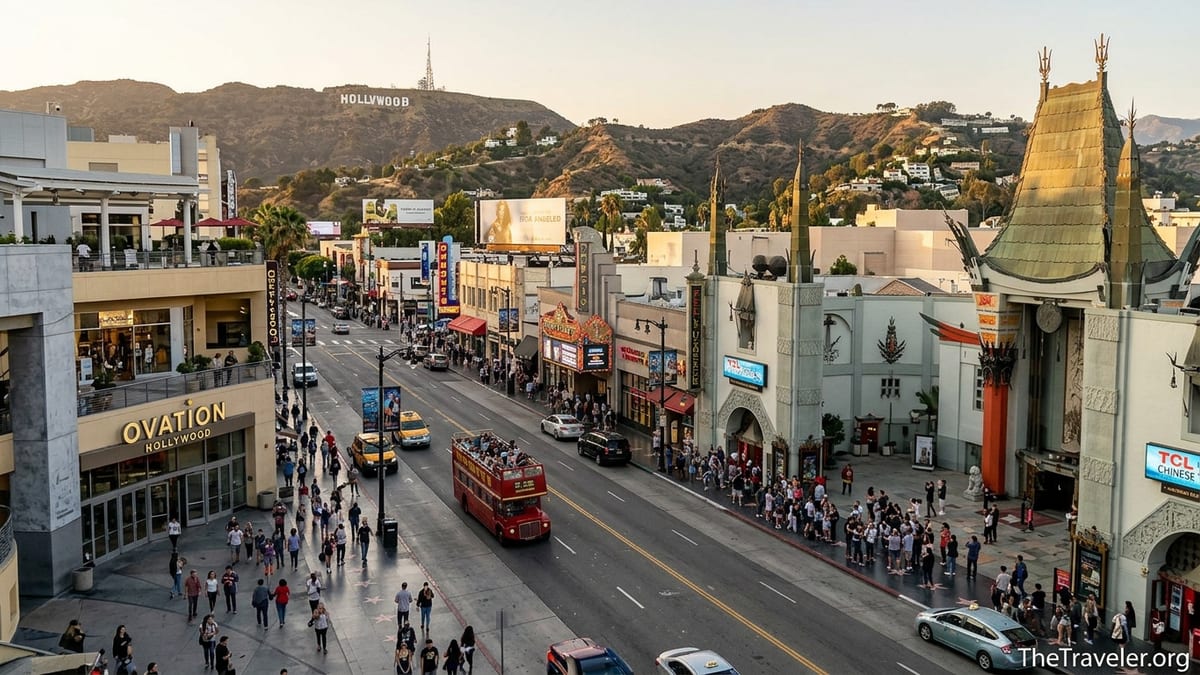
Hollywood is a defined neighborhood in the city of Los Angeles, bordered roughly by the Hollywood Hills to the north and Melrose Avenue to the south, between Western Avenue and the West Hollywood city line. The core visitor strip runs along Hollywood Boulevard, especially around Highland Avenue and Vine Street, where the Walk of Fame, TCL Chinese Theatre, Dolby Theatre and large shopping and entertainment complex now branded Ovation Hollywood cluster together. This is the dense, tourist-oriented Hollywood most visitors picture when they think of stars in the sidewalk and bright billboards.
Just uphill from this core, the Hollywood Hills contain winding residential streets, viewpoints and trailheads that look back over the city and toward the Hollywood Sign on Mount Lee. South of the Boulevard, Sunset Boulevard runs parallel with a more local mix of music venues, bars and dining, gradually blending into the separate city of West Hollywood further west. To the north through the Cahuenga Pass lie Universal City and Universal Studios Hollywood, which are separate from Hollywood proper even though they are often bundled together in visitor marketing.
The on-the-ground experience today is a mix of spectacle and everyday city realities. Around Hollywood and Highland you will find costumed characters offering photos for tips, aggressive sales pitches for tours and comedy shows, and dense crowds around the most famous sidewalk stars. Step a few blocks away and the scene quickly becomes more typical urban Los Angeles, with older buildings, working film-related businesses, apartments, and some blocks that feel worn and less polished than many visitors expect.
For first-timers, it helps to think of Hollywood as an entertainment district within a large, spread-out city rather than a self-contained resort area. It works best when you combine its big-name landmarks with forays to other parts of Los Angeles such as Griffith Park, Downtown and the beaches, using Hollywood as either a convenient base or a focused one-day highlight.
Iconic Hollywood Sights and How Much Time They Take
The marquee attractions of Hollywood sit within a walkable stretch of Hollywood Boulevard centered on Ovation Hollywood at Hollywood and Highland. Here you can spend one to two hours taking in the Hollywood Walk of Fame, which runs for miles along Hollywood Boulevard and Vine Street and features more than 2,700 terrazzo and brass stars dedicated to figures in film, television, music and other entertainment fields. Most visitors concentrate on the densest section between La Brea Avenue and Vine Street, where names are more familiar and the sidewalks are busiest.
At street level outside the TCL Chinese Theatre, the famous forecourt preserves handprints, footprints and signatures of film stars in concrete. Browsing these slabs and the ornate exterior of the 1927 movie palace takes another 30 to 60 minutes, more if you opt for a paid tour or watch a film in its modern IMAX auditorium. Nearby historic venues such as the El Capitan Theatre and the Hollywood Pantages Theatre sit along the same boulevard or just beyond the main cluster and are celebrated more for their architecture and live events than for standard daytime tours, so they typically figure into an evening plan rather than a daytime checklist.
Inside Ovation Hollywood, the Dolby Theatre is the modern home of the Academy Awards and hosts touring stage productions and special events. Guided tours usually last about 30 minutes and provide a look at the lobby, auditorium and awards-related displays, but timings and availability change with performance schedules, so visitors should confirm schedules and ticket prices shortly before visiting. With a combined stroll along the Walk of Fame, photos at the Chinese Theatre, and a Dolby Theatre tour, many travelers find that two to four hours is enough to cover the quintessential Hollywood Boulevard landmarks at a comfortable pace.
Rounding out the core, the Hollywood Museum near Hollywood and Highland displays film props, costumes and memorabilia inside the historic Max Factor Building, while several smaller themed museums and experiences, such as wax museums and illusion or selfie-oriented spaces, line the Boulevard. Individually, each takes roughly one hour, and many visitors pick one or two that match their interests rather than attempting to see them all. Because admission charges and featured exhibits change, it is best to check current pricing and opening hours close to your travel dates.
Views, the Hollywood Sign and Nearby Hikes
Although the Hollywood Sign itself sits in Griffith Park above the neighborhood of Beachwood Canyon rather than directly above Hollywood Boulevard, Hollywood remains one of the most convenient bases for seeing it. From the upper levels and viewing terraces of Ovation Hollywood and from various points along Hollywood Boulevard, you can see the sign at a distance, which is enough for many visitors wanting a quick photo. For closer viewpoints, travelers typically ride-share or drive into the hills toward designated lookout points or Griffith Observatory, being mindful of local parking restrictions and residential concerns.
Runyon Canyon Park lies in the Hollywood Hills just north of the neighborhood core and is one of the most popular urban hikes for visitors and locals. The park is managed by the City of Los Angeles and typically opens one hour after sunrise and closes one hour before sunset, with no internal parking lot, so visitors must use limited street parking at trailheads or arrive by ride-share and on foot. Trails range from wide fire roads to steeper dirt paths, and on clear days they offer excellent views over Hollywood, Downtown and the wider Los Angeles Basin. Allow two to three hours for a relaxed out-and-back hike including time for photos, and carry water and sun protection year-round.
Griffith Park, which lies technically east and northeast of Hollywood rather than in the neighborhood itself, is another popular choice when combining Hollywood with outdoor time. From a Hollywood base, visitors can reach Griffith Observatory, hiking trails and viewpoints for the Hollywood Sign with a short drive or ride-share. Because the roads and parking lots around the sign and observatory can become very congested at peak times and some access points have been restricted in recent years, planning ahead and allowing extra time is important.
For a compact one-day plan, many travelers pair a half-day on Hollywood Boulevard with either a morning hike in Runyon Canyon or an afternoon and evening at Griffith Observatory. For a two or three day stay in Hollywood, you can easily dedicate one full day to urban sightseeing, another to hiking and Griffith Park, and a third to a studio or theme park experience in nearby Universal City or Burbank.
Studios, Theme Parks and What Counts as “Nearby”
One of the biggest misconceptions about Hollywood is that major working film studios sit directly behind the Walk of Fame. In reality, large studio lots are mostly in adjacent areas such as Universal City and Burbank. Universal Studios Hollywood and its attached theme park are in Universal City, over the hill via the Cahuenga Pass and served by the Universal City / Studio City station on the Metro B Line as well as dedicated shuttles. From Hollywood / Highland or Hollywood / Vine, it is a quick subway ride of one or two stops to reach Universal City, where visitors can combine a backlot-style studio tour with a full-scale theme park day.
To the northeast in Burbank, studio tours at Warner Bros. and other lots offer more in-depth looks at soundstages, backlot streets and production facilities. These tours are not in Hollywood proper, and they generally require advance reservations, specific tour time slots and travel by car or rideshare from Hollywood that can take anywhere from 20 to 45 minutes each way depending on traffic. For planning purposes, expect a studio tour to occupy at least half a day door to door, especially if you add time in studio visitor centers or cafes.
Within Hollywood itself, many smaller production offices, casting agencies and postproduction facilities operate out of low-rise buildings that most visitors simply pass by. For travelers, the more accessible experiences tend to be studio-themed exhibits, multi-media attractions and walking tours that capitalize on the neighborhood’s film heritage. These are far more compact than a full studio visit, usually taking one to two hours, and can be slotted between landmark sightseeing and an evening show or dinner.
If your main priority is a major studio tour or a full day at Universal Studios Hollywood, it often makes sense to treat Hollywood as a base or evening destination rather than trying to pack everything into a single ultra-long day. A balanced first-timer itinerary might include one Hollywood Boulevard day, one studio or theme park day in Universal City or Burbank, and one day focused on another part of Los Angeles such as Santa Monica, Venice or Downtown.
Who Hollywood Suits, How Long to Stay and Where Else to Base
Hollywood is best suited to visitors who want to be in the middle of the classic Los Angeles imagery, with easy access to major landmarks, nightlife and public transport. Travelers who like to stay out late, attend concerts or comedy shows, and use rideshare, subway and walking for short hops often appreciate Hollywood as a hub. The neighborhood’s Metro B Line stations connect directly to Universal City, Downtown Los Angeles and transfer points for lines heading toward Koreatown, Santa Monica by bus and other districts, which can simplify a car-light trip if you prefer not to drive everywhere.
On the other hand, families with young children, light sleepers, or travelers whose priority is beach time and relaxed resort-style stays may find Hollywood less appealing as a base. The streets around Hollywood Boulevard can be noisy late into the night, and visitor and local commentary frequently notes a mix of aggressive sales pitches, visible homelessness and some rougher-feeling blocks once you move away from the most heavily patrolled tourist stretches. Those seeking a more polished dining scene focused on high-end restaurants and bars often gravitate instead to West Hollywood, Beverly Hills or coastal areas like Santa Monica.
In terms of timing, many visitors treat Hollywood as a one-day highlight within a longer Los Angeles itinerary, spending half a day around Hollywood and Highland and another half day at a hike or observatory. Others base themselves in or near Hollywood for three or four nights, using the central location to explore Downtown, Griffith Park and the eastside one day, Universal City or Burbank another, and the beaches on a day trip. Because Greater Los Angeles is so spread out, staying in one place and accepting some longer cross-town journeys is often more realistic than changing hotels frequently.
If you choose not to stay in Hollywood, it still fits logically into broader plans. From Downtown you can ride the Metro B Line for a straightforward half-day visit. From coastal bases you might combine Hollywood with a stop in Beverly Hills or West Hollywood on a loop back to the beach. Framing Hollywood as one of several distinct “chapters” in your Los Angeles trip keeps expectations in check and helps you enjoy what it does best rather than seeking everything in one neighborhood.
Getting Around: Metro, Buses, Rideshare and Driving
Hollywood is one of the few parts of Los Angeles with direct access to the city’s heavy-rail subway network. The Metro B Line runs underground between North Hollywood and Union Station in Downtown Los Angeles, with key stops at Hollywood / Highland, Hollywood / Vine and Hollywood / Western within the neighborhood, and Universal City / Studio City just over the hill. Current timetables indicate trains starting in the early morning, around 4:30 am at Hollywood stations, and running roughly every 10 to 20 minutes during most of the day, with less frequent service late at night. Maintenance work can temporarily reduce frequencies, so checking an updated schedule or trip planner for your specific dates is essential.
In addition to the subway, multiple Metro Bus routes and neighborhood DASH shuttles run along Hollywood Boulevard, Sunset Boulevard and major north-south streets. These services typically operate from early morning until late evening, with reduced frequencies overnight. Most transit lines do not run 24 hours, though some major bus routes operate through the night, so travelers planning late nights should confirm last train and bus times or budget for rideshare. Fares and passes change periodically, but recent practice has been to offer flat fares on buses and rail with fare capping over a day or week once a spending threshold is met.
Driving remains common, and many visitors either rent a car or rely on rideshare. The upside is door-to-door convenience and faster trips to areas with limited transit coverage, particularly the beaches and some parts of the hills. The tradeoffs are heavy traffic at peak times, sometimes expensive and time-limited parking around Hollywood Boulevard and in the hills, and the mental load of navigating unfamiliar, congested streets. Parking garages at complexes like Ovation Hollywood typically charge by the hour with daily maximums, and posted rates can change, so it is wise to confirm current prices and validation policies when you arrive.
For most first-timers, a hybrid approach works best. Use the B Line for predictable hops between Hollywood, Downtown and Universal City, supplement with rideshare for late nights or hilltop viewpoints, and consider a rental car only if you plan substantial side trips to more distant areas such as Malibu, Orange County or desert destinations. Keeping your daily plans geographically clustered reduces time in transit and makes Hollywood feel like a practical, connected base rather than an isolated tourist bubble.
Where to Stay and What It Costs
Accommodation in Hollywood runs the gamut from historic landmark hotels right on Hollywood Boulevard to contemporary lifestyle properties and simpler motels on nearby side streets. Staying directly on or adjacent to the Boulevard puts you within a short walk of the major attractions and the Hollywood / Highland or Hollywood / Vine Metro stations, but it also exposes you to more street noise, late-night activity and crowds. Upper-floor rooms and properties set slightly back from the busiest intersections tend to feel quieter, though they can come at higher nightly rates.
Just south or north of Hollywood Boulevard, and along parallel streets like Franklin Avenue or Sunset Boulevard, you will find a mix of mid-range hotels, boutique properties and older motels. These often strike a balance between access and relative calm, offering a short walk or quick rideshare to the main tourist core while feeling more like a typical urban neighborhood. Perceptions of safety can shift block by block, so it is worth consulting very recent traveler reviews and neighborhood feedback when choosing a specific address.
Nearby alternatives include West Hollywood to the west, which is a separate city with a dense restaurant and nightlife scene, and the cluster of hotels around Universal City that cater heavily to theme park visitors. West Hollywood generally offers a more upscale, design-conscious atmosphere and can command higher prices, while Universal City hotels emphasize convenience to the park and easier freeway access. Both options trade immediate proximity to the Walk of Fame for a different ambiance and, in some cases, quieter surroundings.
Typical mid-range hotel rates in and around Hollywood fluctuate widely by season and event calendar, but travelers can expect that summer, major award periods and weekends often bring higher prices. As a broad guideline, mid-range rooms commonly fall somewhere in the moderate to high three-figure range per night before taxes and fees, with budget motels occasionally coming in lower and full-service or luxury properties higher. Because dynamic pricing is standard and special events can drive spikes, it is important to check current rates and cancellation policies for your specific dates.
Costs, Seasons and Practical Tips
Daily budgets in Hollywood depend heavily on accommodation choice and how many paid attractions you include. Mid-range travelers might budget for a centrally located hotel, several cafe or casual restaurant meals, and one or two paid admissions or tours per day, with additional room for rideshare and parking if driving. Admissions to museums, studio tours and major attractions such as Universal Studios Hollywood or themed experiences can be among the largest line items and are subject to regular updates, seasonal pricing and online promotions, so the most reliable approach is to check official operators close to your travel dates.
Los Angeles has a Mediterranean-influenced climate with generally mild, dry weather. In Hollywood, that translates to warm, often hot afternoons from late spring through early autumn, with daytime highs commonly in the upper 70s to 80s Fahrenheit and hotter spells in midsummer. Winters are cooler and can bring rain, but daytime temperatures still often sit in the 60s. For walking Hollywood Boulevard and hiking in nearby hills, mornings from late spring into autumn are usually the most comfortable, with strong sun and heat building later in the day. Lightweight layers, sunscreen and plenty of water remain important year-round.
Peak tourism periods include school summer holidays, major winter holiday weeks and times around large award shows and premieres, when red carpets and events cluster at venues like the Dolby Theatre and TCL Chinese Theatre. During these windows, sidewalks and observation points can become very crowded and hotel prices tend to rise. Shoulder seasons in spring and autumn often offer a pleasant balance of manageable crowds and good weather, though Los Angeles’ event calendar increasingly keeps some part of the city busy year-round.
Everyday practicalities in Hollywood are similar to other big-city entertainment districts. Public restrooms are most reliably found inside shopping centers such as Ovation Hollywood and larger stores. ATMs are widespread. Many visitor services, from tour operators to smaller museums, keep variable hours and may close on certain weekdays, so confirming opening times in advance helps avoid surprises. If your plans rely on public transit, checking for planned maintenance or service changes on the Metro network before each travel day is a smart habit.
Safety, Street Conditions and Setting Expectations
Hollywood is one of Los Angeles’ most heavily visited areas and benefits from a visible mix of police presence, private security and business improvement district ambassadors along its busiest blocks. At the same time, visitors frequently note that some surrounding streets feel worn, with visible homelessness, loitering and occasional open-air disorder, especially late at night or on less-trafficked side streets. Crime statistics for the broader Hollywood area reflect typical big-city challenges, with a mix of property crimes, car break-ins and some violent incidents, and trends can shift from year to year.
For most travelers, standard big-city street smarts are sufficient. That means keeping valuables out of sight, avoiding leaving anything in parked cars, staying aware of your surroundings, and favoring well-lit, busier streets at night. On Hollywood Boulevard around the main attractions, you should expect frequent approaches from costumed characters, ticket sellers and promoters who may be persistent. Photos with performers usually come with an expectation of cash tips, so it is best to clarify before posing or politely decline and keep moving.
In the Hollywood Hills and residential areas near popular viewpoints, visitor numbers and vehicle traffic have occasionally strained narrow streets, prompting calls from residents for stronger regulation. Respect posted signs about parking and access, avoid blocking driveways or fire lanes, and follow any temporary restrictions intended to protect emergency access and reduce congestion. If you feel uncomfortable navigating tight hillside streets on your own, consider using authorized tour operators or ride-share drop-offs at designated points rather than chasing the closest possible view.
Staying informed using recent local news, city resources and up-to-date traveler reports can provide a clearer picture of current conditions when you plan your trip. Conditions can change, and what feels safe or comfortable can be subjective, so building flexibility into your plans and being willing to shift from walking to rideshare, or to an alternative viewpoint or neighborhood, will help you adapt smoothly.
Making Hollywood Work in Your Los Angeles Itinerary
Used thoughtfully, Hollywood can be a rewarding centerpiece or anchor for a first visit to Los Angeles. Travelers most likely to enjoy it are those who value seeing famous film landmarks in person, want straightforward transit links to Downtown and Universal City, and appreciate being able to walk between multiple attractions, restaurants and nightlife spots in a city that is otherwise very car-oriented. If your dream Los Angeles trip is all about studio tours, movie history, comedy clubs and rooftop bars, Hollywood fits that picture well.
By contrast, if your ideal stay focuses on long beach days, quiet evenings, luxury shopping or secluded boutique hotels, it may make more sense to base in Santa Monica, the coastal strip or select parts of West Hollywood or Beverly Hills and treat Hollywood as a day or evening excursion. In either case, planning with realistic travel times, clear expectations about street life, and an understanding of what is and is not in Hollywood proper will help you avoid disappointment.
A simple first-timer framework is to allocate at least one dedicated Hollywood day for the core sights, ideally paired with a nearby hike or viewpoint, then weave in additional Hollywood evenings for shows or dinners as your schedule allows. Surround those days with time in other distinct parts of greater Los Angeles, from the arts and architecture of Downtown to the canyons and coastline to the west. Approached in this way, Hollywood becomes one iconic piece of a larger, varied itinerary rather than the whole story, and its mix of history, spectacle and urban energy can be appreciated on its own terms.