


Hotel booking engines often tempt travelers with breakfast-inclusive rates only a few clicks above room-only prices. The real question is not how much the breakfast buffet costs on the menu, but how much extra you actually pay once you compare an otherwise identical room-only rate. Across cities like Paris, Rome, London, Lisbon and Amsterdam, that incremental difference can mean the choice between a good-value hot buffet and an unnecessary daily surcharge that far exceeds what you would spend at a nearby bakery or supermarket.
Get the latest updates straight to your inbox!
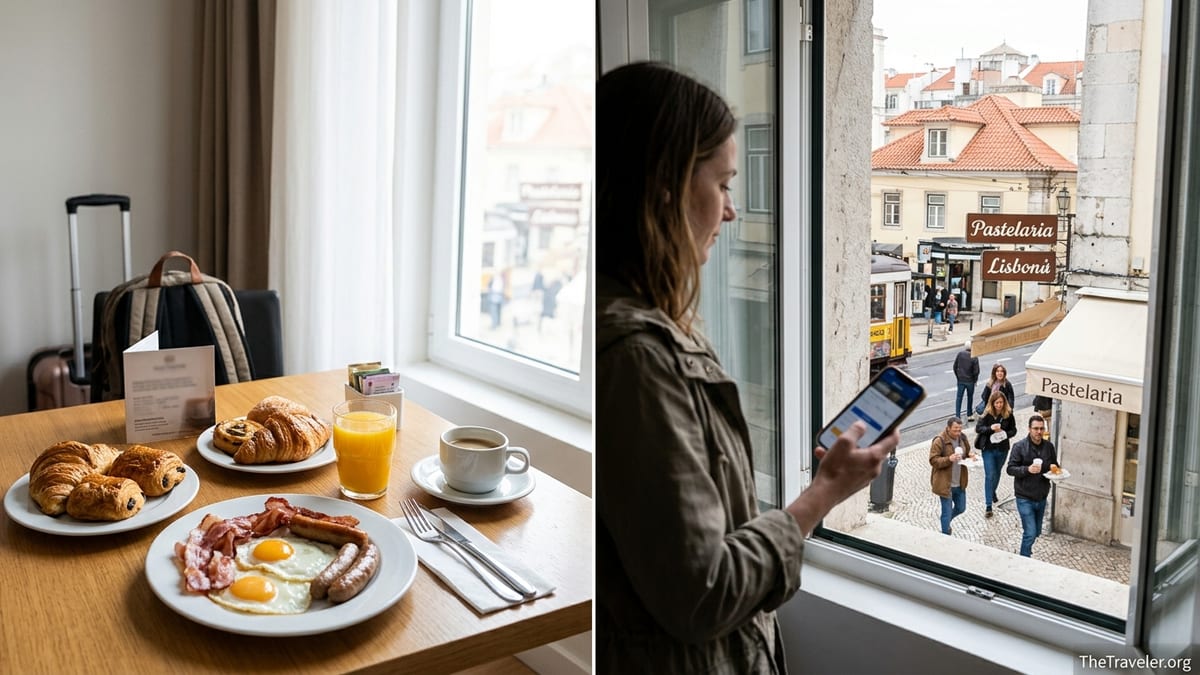
How to calculate the real cost of hotel breakfast
The only breakfast price that matters for travelers is the gap between a room-only rate and the exact same room with breakfast included. Many hotels advertise a buffet at, for example, 24 or 30 euros per person while quietly offering an inclusive rate that adds 12 to 18 euros per guest compared with room-only when you price the same dates, room type, guest count and cancellation policy. Travelers who simply look at the stand-alone buffet price risk overestimating what they are paying for breakfast when it is packaged into a rate.
In Amsterdam, one central four-star property lists its breakfast buffet at about 24.50 euros for walk-in guests, yet the difference between room-only and “breakfast included” on common dates can be lower once promotions and loyalty discounts apply. Similar patterns show up in Paris and London, where mid-range hotels often quote buffet prices around 20 to 35 euros per person but sell inclusive rates that add closer to 15 to 25 euros per person per night compared with room-only when matched precisely on conditions. Calculating value means checking those live rate differences, not the menu board at the restaurant.
The matching step is crucial. A flexible room-only rate that can be cancelled the day before arrival is not equivalent to a nonrefundable breakfast package that locks you in weeks ahead. When comparing, travelers should ensure the same cancellation terms, payment rules, bed type and occupancy. If the only breakfast-inclusive option is nonrefundable and the flexible room-only rate is significantly higher, part of the gap reflects reduced flexibility rather than the food itself. Treat that loss of flexibility as a hidden cost of breakfast.
Separate breakfast menu prices still matter as a sanity check. If a hotel buffet is advertised at 25 to 30 euros and the inclusive rate is only 10 to 12 euros more than room-only for one guest, that suggests a heavy discount on the meal and can be good value for big eaters. If, on the other hand, the inclusive rate is 30 euros higher and nearby cafés serve satisfying breakfasts for 8 to 10 euros, you are likely overpaying for the convenience of eating in the hotel.
What hotel breakfasts actually include
Hotel breakfast offers across European cities range from a basic continental spread of bread, jam and coffee to elaborate buffets with hot dishes, fresh juice and cooked-to-order eggs. In Amsterdam, canal-side boutique hotels advertise breakfast buffets around 29 euros per person that include pastries, cold cuts, cheeses, fruit and hot dishes, often with unlimited coffee and juice. Larger city hotels describe “extensive breakfast buffets” with plated hot items, gluten-free bread on request and self-serve coffee machines or pots, all designed to encourage guests to eat enough to cover both breakfast and a light early lunch.
London hotels highlight everything from grab-and-go counters at business properties to destination brunch rooms in luxury addresses where non-guests can book breakfast separately. Menus in 2026 show flat white coffees in central cafés priced around 4 to 4.50 pounds, while hotel restaurants serving outside guests often charge upwards of 20 pounds for full cooked breakfasts, plus a discretionary service charge. Inclusive packages at such hotels usually cover coffee, tea and basic juices but may exclude specialty coffees such as oat milk lattes or fresh pressed juices, which are billed separately.
Continental and buffet offerings are common in Paris and Lisbon mid-range hotels. Paris properties with strong breakfast reputations typically price their buffets between about 20 and 35 euros, which include viennoiseries, eggs, charcuterie and fruit, often served in dining rooms overlooking courtyards or historic streets. Lisbon chain hotels publish breakfast surcharges and room service breakfast trays where coffee, pastries and bread selections are bundled, sometimes with a separate service charge added on top. In many cases, children below a certain age eat free or at a reduced rate when adults purchase full breakfast.
Not every hotel breakfast is an open buffet. Some boutique hotels in Paris or Rome sell an à la carte breakfast, where guests order individual dishes and drinks. Others push a grab-and-go model with prepacked pastries, fruit and filter coffee included in lower-tier rates, hoping to satisfy rushed business travelers and guests catching early trains. These formats matter because the value equation changes depending on whether you can eat to appetite in a buffet or are effectively paying restaurant prices for each coffee and dish.
City snapshots: hotel buffet vs local cafés and supermarkets
In Rome, the classic budget-friendly option is the bar counter breakfast. Central cafés a short walk from major hotels still sell cappuccino and a fresh cornetto for roughly 3 to 4 euros when taken standing at the bar, with prices usually rising if you sit at a table. Recent visitor reports in 2026 describe paying about 3.50 euros for a cappuccino and pastry near popular sights, with a seated version closer to 6 or 7 euros for two drinks and two pastries. Against this backdrop, a hotel charging a 15 euros surcharge for breakfast-inclusive rates offers convenience but is rarely the cheapest choice for a solo traveler who only wants something light.
Lisbon offers similar contrasts. Large chain hotels near the city center and business districts advertise buffet breakfasts and room-service trays. One Lisbon property’s room service breakfast menu lists coffee or tea, bread and pastry selections plus a service fee of around 6 euros added to the food price. Meanwhile, neighborhood pastelarias in areas like Baixa and Campo de Ourique still sell an espresso and pastel de nata for only a few euros. A traveler can often leave a Lisbon bakery comfortably fed for 4 to 6 euros per person, making a 15 to 20 euro daily room-rate premium for hotel breakfast hard to justify unless hot dishes and time savings are priorities.
In Amsterdam, central hotels such as canal-side boutiques or mid-range chains often charge buffet prices starting around 24 to 29 euros per person, describing extensive spreads with hot and cold options, fresh orange juice and pastries. Outside the hotel, local bakeries and coffee bars serve croissants, sandwiches and specialty coffee; ordering a croissant from a high quality bakery and a cappuccino from a specialty coffee bar can easily total 8 to 12 euros, more in trendy neighborhoods. Supermarkets add another layer of choice: a carton of orange juice, a pack of yoghurt and a bag of fresh rolls can feed several people for roughly the price of one hotel buffet.
Paris and London, with their dense café cultures, give travelers ample alternatives as well. In Paris, corner boulangeries remain highly competitive, with a coffee and croissant breakfast often falling under 7 to 8 euros at the counter. London high-street chains and independent cafés provide porridge, pastries and filter coffee for similar amounts in pounds. Travelers staying near Gare du Nord, King’s Cross or other hubs can walk to multiple cafés opening early enough to rival hotel service times, making it straightforward to save money by skipping the in-house buffet if their appetite is modest.
Three worked scenarios: solo, couple and family
Consider a solo traveler in Rome staying three nights in a mid-range hotel. The flexible room-only rate is, for example, 150 euros per night, while the same flexible room with breakfast included prices at 165 euros per night. The incremental breakfast cost is therefore 15 euros per day. Over three nights, the traveler is paying 45 euros for breakfast if they choose the inclusive rate. If they prefer a quick coffee and pastry at a nearby bar, ordering a cappuccino and cornetto at the counter for about 3.50 euros each morning, the three-day total is roughly 10.50 euros. Even allowing extra for the occasional juice or second pastry, the outside total might reach 15 to 18 euros, yielding a saving of well over 20 euros versus the hotel breakfast package.
Now take a couple on a city break in Amsterdam for three nights, staying at a four-star hotel that lists a breakfast buffet at 24.50 euros per person for non-residents. The flexible room-only rate comes up at 220 euros per night, while the same room with breakfast for two is 260 euros per night. The incremental breakfast cost is 40 euros per day, or 120 euros across the stay, compared with paying 24.50 euros each per morning at the door. If they walk to a nearby bakery and coffee bar, two croissants and two cappuccinos might total 20 to 24 euros per day. Over three mornings, they would spend around 60 to 70 euros, compared with 120 euros built into the rate, saving roughly 50 to 60 euros while still enjoying fresh local food.
Finally, imagine a family of four with two school-age children spending five nights in Lisbon at a suburban chain hotel. The room-only rate is 140 euros per night, while the family breakfast package is 175 euros per night including buffet breakfast, with children under 12 eating free. The incremental cost for breakfast is 35 euros per day, or 175 euros over the stay, covering two adults and two children. Eating outside, the parents buy coffee and pastries in a pastelaria for about 5 euros per adult and simpler items for 3 to 4 euros per child. A realistic family bill at a café could reach 20 to 24 euros per morning, or about 100 to 120 euros over five days. In this scenario, the inclusive breakfast costs roughly 55 to 75 euros more than the cafés, but it offers a hot buffet, extra drinks and the convenience of eating in the hotel with children. For some families, that premium may feel reasonable, especially when early departures or picky eaters make supermarkets and bakeries less practical.
Across all scenarios, the key is to total the incremental hotel breakfast charge over the entire stay and compare it with plausible daily café or supermarket spending based on visible prices in the neighborhood. A solo light eater nearly always saves by going outside in café-rich areas, while couples and families sometimes find that a modest inclusive premium buys enough convenience, hot options and child discounts to justify itself, particularly when children eat free or at half price.
Timing, location and practicality can outweigh pure price
Even when café breakfasts are cheaper on paper, practical constraints can tilt the value equation in favor of hotel breakfast. Early departures for airport transfers, guided tours or long-distance trains often mean leaving the hotel before most neighborhood cafés open their doors. In Paris and Lisbon, many independent bakeries open around 7:30 or 8:00 in the morning, while group tours may require guests to be at a pickup point by that time. Hotels that start breakfast at 6:30 or 7:00 provide a reliable option when you cannot afford to roam around looking for an open café.
Queues and crowding also affect the perceived value. Popular brunch cafés in London’s Soho or Amsterdam’s trendier districts can develop lines on weekend mornings, turning a simple breakfast into a 60-minute wait. For business travelers who have meetings scheduled or families trying to get to theme parks early, the certainty of walking downstairs to a buffet at a set time may be worth paying more than a bakery breakfast. Conversely, hotels that suffer from peak-hour crowds at breakfast can make the experience stressful, with buffet lines and difficulty finding seating, reducing the appeal of paying extra.
Location matters in another way when comparing central and suburban hotels. A centrally located hotel in Rome or Paris might have multiple cafés and supermarkets within a five-minute walk, while a suburban hotel near a ring road or airport can be surrounded by offices and parking lots instead of bakeries. In those areas, eating outside can involve a tram or bus ride, extra walking alongside busy roads or paying higher prices at service-station cafés with limited choice. Suburban hotels sometimes pitch breakfast packages as part of park-and-stay or park-and-fly deals, and in those circumstances the lack of alternatives makes the in-house buffet substantially more valuable.
Weather and personal mobility further influence practicality. In winter in Amsterdam or London, heavy rain, cold winds and dark mornings can make stepping outside for breakfast unappealing, particularly for older travelers or families with small children. A modest daily premium for the ability to eat indoors without bundling up, navigating icy pavements or hunting for space in crowded cafés can be easier to justify than it looks in a purely numerical comparison.
Dietary needs, food quality and children’s pricing
Dietary restrictions change the equation again. Many hotel buffets now advertise gluten-free bread, plant-based milks and vegetarian hot dishes on request, but an advertised “international buffet” is not automatically safe for guests with celiac disease, nut allergies or strict halal requirements. Allergen information sheets and clearly labeled dishes help, yet cross-contamination can remain a concern. Travelers with severe allergies often find it easier to source sealed products from supermarkets or cafés that specialize in gluten-free or vegan baking, even if that means skipping the prepaid hotel buffet.
In Amsterdam and other major cities, breakfast menus and allergen charts now note which buffet items contain gluten, nuts, dairy or other common allergens. Some hotels specify that gluten-free options are available on request, which might involve staff bringing sealed bread or preparing certain dishes separately. While this is positive, such arrangements often work best when guests inform the hotel in advance and confirm details at check-in. For strict halal or kosher diets, mainstream hotel buffets rarely provide fully compliant meat and preparation areas, so outside cafés or self-catered breakfasts from supermarkets may be more reliable.
Quality and freshness vary widely between properties. At the upper end, Paris palace hotels and luxury London addresses turn breakfast into an experience, with pastries baked in-house, eggs cooked to order and elegant rooms where breakfast can last an hour. Reviews and curated lists of top breakfast hotels in Paris highlight properties where guests repeatedly praise the quality of the spread and the service, making high buffet prices more palatable. At the lower end, there are hotels where scrambled eggs come from powdered mixes, fruit is tinned and pastries are industrially produced, leaving guests feeling that a 20 or 25 euro surcharge is poor value compared with a 6 euro bakery meal.
Families should pay close attention to child pricing rules. Many international chains allow children up to a certain age to eat free when sharing a room with paying adults on breakfast-inclusive rates. A family where two adults pay full breakfast but two children eat free can find that the incremental cost per person drops significantly. If the same family tries to replicate a similar amount of food in cafés, the final bill may approach or even exceed the inclusive rate, especially when children demand juices, hot chocolate and extra pastries. In those cases a modest inclusive-rate premium can be advantageous, both financially and in terms of convenience.
When to pay for hotel breakfast and when to skip it
Putting the pieces together, a 20 euro hotel breakfast is poor value when the incremental room-rate premium is roughly that amount per person and viable outside options exist within a short walk. In central Lisbon or Rome, where a satisfying bar or bakery breakfast can cost 4 to 7 euros, paying 20 euros extra daily just to eat in the hotel yields limited upside unless you particularly value buffet variety, refillable drinks and avoiding decision-making each morning. The same holds in Amsterdam or Paris neighborhoods rich in cafés and supermarkets, where a combination of supermarket yoghurt, fruit and a bakery pastry can easily undercut hotel pricing.
The picture changes as inclusive premiums fall or as families enter the frame. If the room-only rate is, for instance, 200 euros and the breakfast-inclusive rate for two adults is 220 euros, the incremental cost is only 10 euros per person. In that case a generous buffet with fresh fruit, eggs, charcuterie and unlimited coffee may represent excellent value, especially in high-cost cities such as London, where similar portions in independent cafés plus coffee and juice might push per-person costs well beyond 10 pounds. Add children who eat free or at reduced prices, and the effective cost per diner can drop further, making the inclusive rate attractive even for travelers who usually prefer local cafés.
Travelers should also factor in personal routines. Guests who enjoy leisurely, substantial breakfasts that effectively replace lunch will extract much more value from a buffet than those who nibble on one croissant and a coffee. Those who plan to start sightseeing early every day or who have multiple mornings with pre-dawn departures might find that flexibility and local cafés serve them better on some days. Booking room-only and buying hotel breakfast selectively on days with later starts can sometimes be the most efficient compromise.
From a food-waste perspective, buffets present another challenge. Abundant displays encourage overloading plates, but much of the food that sits out during service cannot be reused. Travelers concerned about sustainability may prefer smaller, targeted café breakfasts or supermarket purchases, even when a buffet is available. Some hotels are responding with made-to-order formats or smaller buffets to reduce waste, yet the basic tension between variety and waste remains.
A simple comparison checklist and final recommendations
An auditable comparison starts with three numbers: the flexible room-only rate, the equivalent breakfast-inclusive rate and the stand-alone buffet price, all for the same dates, room type and cancellation policy. From there, travelers should multiply the incremental daily breakfast cost by the number of nights and guests to arrive at the true package cost. Next, they can walk through nearby streets on an online map, identify at least two cafés or bakeries and a supermarket, and note approximate prices for coffee, pastries, yoghurt and fruit based on published menus or recent traveler reports. Summing realistic outside costs over the stay will quickly show whether the hotel premium is justified.
Different traveler types face different conclusions. Budget travelers and solo guests in café-rich central districts almost always save by booking room-only and eating outside, especially in Rome, Lisbon and Paris neighborhoods dense with boulangeries or pastelarias. Couples who enjoy long breakfasts should compare inclusive premiums carefully; if the gap falls under 10 to 12 euros per person in expensive cities like London or Amsterdam, a high-quality buffet can be a strong value. Families with young children should scrutinize child pricing and free-meal policies; where two children can eat for free alongside paying adults, an inclusive rate can quickly become the most economical and least stressful option.
Travelers leaving early for excursions or staying in suburban hotels with few nearby cafés have additional reasons to favor breakfast-inclusive rates. In such settings, the convenience of reliable early service, the avoidance of transport for food and the assurance that everyone can eat quickly often outweigh the numerical savings of self-arranged breakfasts. Those with strict dietary needs or concerns about food quality, on the other hand, may prefer the control of supermarket purchases or carefully chosen specialist cafés over a buffet that is not tailored to their requirements.
In the end, the best strategy is flexible. Rather than assuming hotel breakfast is either always a rip-off or always a bargain, travelers can run the numbers city by city, hotel by hotel. By focusing on the incremental cost between room-only and breakfast-inclusive rates, cross-checking against local café and supermarket prices, and weighing convenience, dietary needs and family dynamics, it becomes clear when that tempting “breakfast included” label represents smart value and when a simple coffee and pastry outside will leave both stomachs and wallets feeling better.