


More news on this day
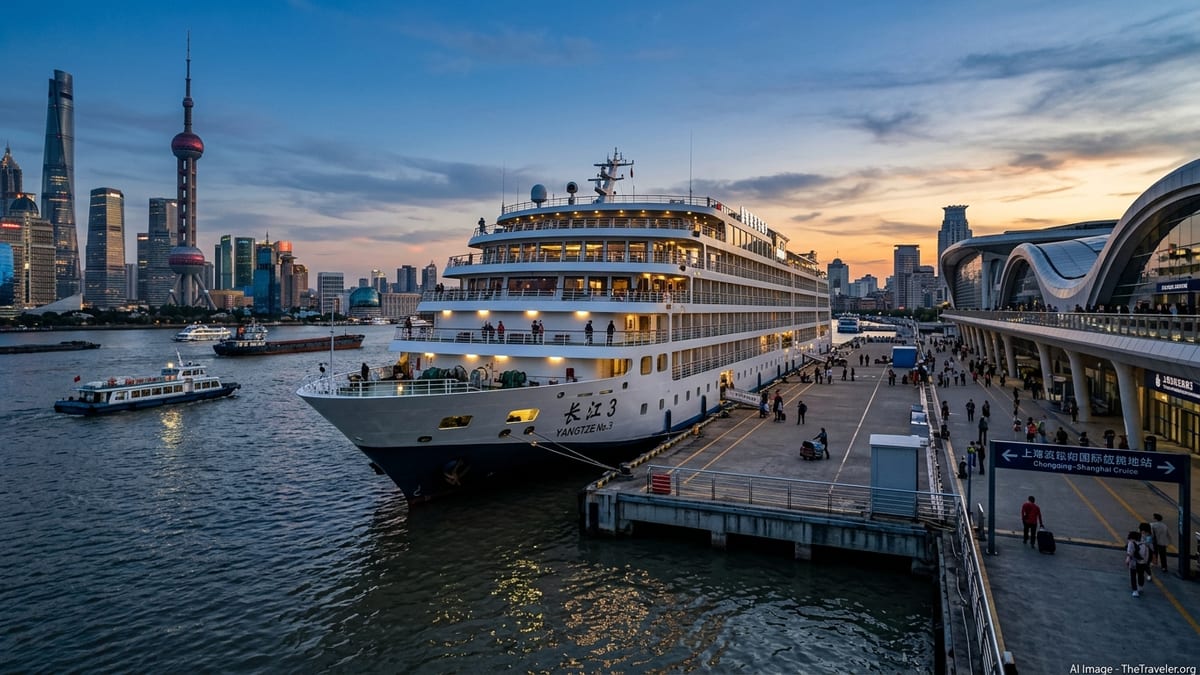
Shanghai has begun turning its main cruise port into a bridge between inland and ocean cruising, as a new premium Chongqing–Shanghai Yangtze River route operated by China Yangtze Shipping Group’s Yangtze 3 made Wusongkou International Cruise Terminal an official turnaround point from July 8, 2026, giving international travelers a practical way to sail the Yangtze all the way to or from Shanghai.
Get the latest news straight to your inbox!
First Yangtze cruise to call at Wusongkou
According to Shanghai’s municipal government, the Chongqing–Shanghai itinerary with Yangtze 3, also branded in English as Yangtze No. 3, began regular operations on July 8, 2026 and is the first Yangtze River cruise to use Shanghai Wusongkou International Cruise Terminal in Baoshan for turnarounds. The initial published schedule had the ship depart Chongqing’s Chaotianmen port on October 30 and arrive at Wusongkou on November 8 before sailing back upstream the following day, illustrating how the new route is being slotted into the wider cruise calendar rather than operating as a daily shuttle.
The voyage runs the length of the upper, middle and lower Yangtze, linking well known points such as the Three Gorges region, Jingzhou’s historic city and Wuhan’s Yellow Crane Tower. Municipal information describes it as a “Yangtze River civilization” journey rather than a simple long river transfer, positioning Shanghai as one end of a multi‑day cultural itinerary that previously tended to terminate further inland.
Shanghai officials present Yangtze 3 as a new‑generation inland cruise ship that combines elements of ocean vessels and traditional riverboats, with all‑inclusive fares and butler service. Onboard, the operator highlights exclusive performances arranged with Chongqing folk arts troupes and workshops themed around Yangtze culture, details that align the product with the premium river cruising model already familiar to many European travelers.
“Three‑Cruise Synergy” aims to connect river, sea and city
The July launch ties directly into Shanghai’s wider cruise‑economy policies, which call for using the Yangtze estuary and Baoshan’s waterfront to develop river–sea routes and multi‑port itineraries that include Shanghai alongside other Yangtze River Delta cities. At the 2026 Wusongkou Forum in Baoshan on November 8, local authorities introduced a “Three‑Cruise Synergy · A New Voyage from River to Sea” framework that explicitly links inland Yangtze cruises such as Yangtze 3 with international sea cruises and shorter sightseeing trips on the Huangpu within the city.
Baoshan district markets the surrounding Shanghai International Cruise Tourism Resort, built around Wusongkou, as a node where the Yangtze, Huangpu and coastal waters meet. The area already concentrates one of Asia’s largest cruise ports, new hotels and waterfront leisure facilities, and municipal planning documents identify it as a strategic “gateway to the Yangtze” that should better serve both domestic and inbound cruise travelers.
Although the synergy program is in its early stages, Baoshan data show Wusongkou handling the majority of China’s cruise calls and passenger movements in the first nine months of 2026, and the district has been rolling out more short sea itineraries and local shore‑excursion products. The stated aim is not just to grow ship calls but to lengthen stays around the terminal by weaving river journeys, ocean voyages and city touring into more coherent packages.
What the new route changes for international travelers
For overseas visitors, the key shift is that Shanghai can now function as a start or end point for a through Yangtze cruise all the way to or from Chongqing, rather than only as a gateway to shorter middle‑river segments around Yichang or Wuhan. In practical terms, this means a traveler could arrive on an international ocean cruise or long‑haul flight in Shanghai, transfer to Yangtze 3 at Wusongkou, and continue inland via the Three Gorges to southwestern China on a single continuous river itinerary.
China’s 15‑day visa‑free policy for foreign cruise tour groups, which took effect in May 2024, and existing 144‑ and 240‑hour transit arrangements through Shanghai further reduce barriers for some passengers using the city as a cruise gateway. These schemes apply under specific conditions, including arriving on an international cruise and remaining within approved regions for limited stays, so they can make the new Chongqing–Shanghai cruise more accessible but do not cover all traveler types or itineraries.
At the same time, the new river link does not mean that all Yangtze cruises will start or finish in Shanghai. Many itineraries continue to focus on classic stretches between Chongqing, Yichang and Wuhan. Current English‑language booking information for Yangtze No. 3 shows the long Chongqing–Shanghai and Shanghai–Chongqing segments available in product descriptions but with limited publicly listed sailings, suggesting that departure frequency, seasonality and the mix of group versus individual bookings may still be evolving.
Details still emerging on frequency and booking
As of November 2026, official notices confirm that China Yangtze Shipping Group plans regular Shanghai–Chongqing operations with Yangtze 3, but detailed 2026–27 schedules and pricing remain fragmented across Chinese‑language channels and are subject to change. Some third‑party sites list sailing dates for shorter Chongqing–Yichang runs on the ship more consistently than for the full Chongqing–Shanghai journey, underscoring that the long route is still a flagship offering rather than a high‑frequency corridor.
Information on cabin categories and service levels indicates a mix of standard cabins and suites with all‑inclusive dining, along with cultural programming in Chinese. However, it is not yet clear from current public sources whether dedicated foreign‑language guiding or daily English‑language briefings are guaranteed on every Chongqing–Shanghai departure, or whether one‑way segments such as Shanghai–Wuhan or Shanghai–Yichang are routinely sold to independent foreign travelers instead of only to organized groups.
Prospective passengers should therefore confirm, at the time of booking, the exact departure dates, whether the sailing covers the full Chongqing–Shanghai route, what languages are supported onboard and during shore excursions, and which visa or entry arrangements apply to their nationality and cruise pattern. As Shanghai develops its “Three‑Cruise Synergy” program and expands the International Cruise Tourism Resort, more integrated river–sea products for the Yangtze River Delta are expected, but for now the Chongqing–Shanghai Yangtze 3 itinerary remains an early example of how the city is trying to link inland river cruising with its established blue‑water cruise hub.