


For many visitors to Los Angeles, “going to Hollywood” really means spending a few hours on Hollywood Boulevard’s Walk of Fame. Yet first-timers are often surprised by how spread out the stars are, how busy the sidewalks can feel, and how many ticketed attractions cluster around a relatively compact stretch of boulevard. This guide focuses on that core corridor so you can experience the Walk of Fame and nearby highlights in a single, well-planned visit without confusion or unrealistic expectations.
Get the latest updates straight to your inbox!
Understanding the Walk of Fame Corridor
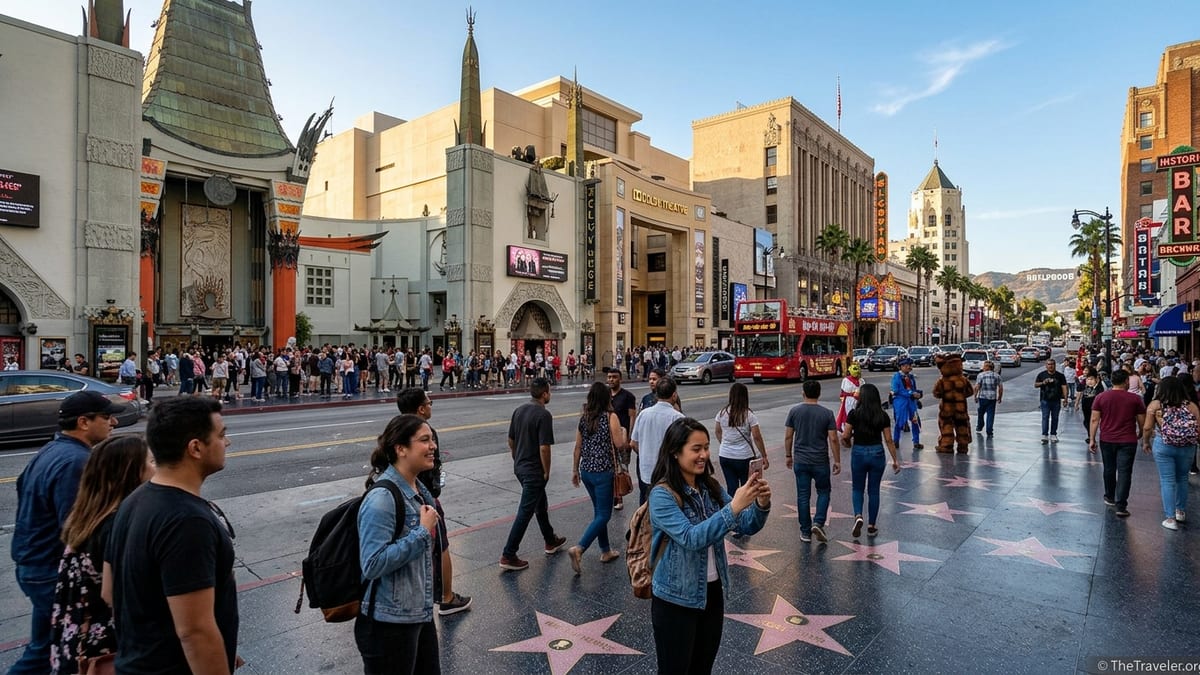
The Hollywood Walk of Fame is not a single plaza but a series of sidewalks embedded with more than 2,800 terrazzo and brass stars along roughly fifteen blocks of Hollywood Boulevard and three blocks of Vine Street. The stretch most visitors picture when they say “Hollywood” runs along Hollywood Boulevard between La Brea Avenue on the west and Gower Street on the east, with a dense concentration between the Hollywood/Highland area, now branded as Ovation Hollywood, and the famous intersection of Hollywood and Vine. Additional stars line both sides of Vine Street from Sunset Boulevard to Yucca Street, so you will see stars if you turn onto Vine, not just on the main boulevard.
For practical purposes, most short visits focus on the portion between Ovation Hollywood at Hollywood and Highland and the Hollywood and Vine intersection. This is where you find some of the most photographed theatres and attractions, including the TCL Chinese Theatre, the Dolby Theatre, El Capitan Theatre, the Hollywood Wax Museum and several pop-culture museums and experiences. City planning documents and local tourism maps describe this broader area as part of the Hollywood Boulevard Commercial and Entertainment District, encompassing addresses roughly from the 6200 block to the 7000 block of Hollywood Boulevard, plus sections of Highland Avenue and Vine Street.
It is worth knowing that the Walk of Fame continues beyond what most visitors cover on foot. Stars extend west of La Brea and east of Gower, and there are gaps where the sidewalk turns more residential or commercial. For a first visit, however, concentrating on the Highland-to-Vine section gives you the classic “star under your feet, neon over your head” experience in a compact, walkable route that pairs well with a single museum visit, movie screening or observation deck stop.
Side streets immediately off the boulevard, especially around Highland Avenue, also feature a scattering of stars, but they are fewer and not essential unless you are seeking a specific celebrity located just off the main drag. If time is limited, focus on the sidewalks directly along Hollywood Boulevard and, if you wish, a short detour up or down Vine Street.
How the Stars Are Organized and How to Find Specific Names
Each star on the Hollywood Walk of Fame honors a figure from the entertainment world, set into the sidewalk as a pink terrazzo five-pointed star edged in brass. Under the honoree’s name, a small emblem indicates the category for which they were recognized: motion pictures, television, audio recording, radio, live theater and performance, or more recently sports entertainment. The stars are not grouped strictly by category, so you will see different emblems mixed together as you walk.
The stars are also not arranged alphabetically along the street. Their locations are tied to specific street numbers and blocks, and in some cases are placed with symbolic intent near a relevant venue or business. For instance, some performers are positioned close to theatres they were associated with or to studios and record labels once based along the boulevard. This means that simply wandering is a fun way to spot familiar names, but it is not efficient if you are determined to find one or two particular celebrities.
To pinpoint exact locations, use the official Walk of Fame online star search and map rather than relying on printed lists or third-party compilations that may be out of date. The official database allows you to search by name and provides the street address or block number associated with that star, often noting the nearest cross street or landmark. This is the most reliable way to know, for example, that a given actor is in front of a specific theatre entrance or that a musician’s star lies on a particular block east of Highland.
Because new stars are added regularly and some details can change, it is smarter to look up your must-see names shortly before you visit instead of printing an old list. You can then plug those addresses into a map app or simply note the nearest intersections. Several independent apps and printable maps also pull information from the same official database and can overlay honorees on a walking map, but you should always confirm any crucial information with the official star directory.
Suggested Walking Route for First-Time Visitors
A straightforward way to structure your visit is to start at a major transit and parking hub and walk a loop that hits key sights while following a dense stretch of stars. The Hollywood/Highland Metro station on the B Line sits at 6815 Hollywood Boulevard, directly underneath Ovation Hollywood, which includes the Dolby Theatre, shops, restaurants and a popular terrace with views of the Hollywood Sign. Many visitors also use Ovation’s large underground parking garage, which offers hourly parking and validation deals through on-site cinemas and restaurants.
From Hollywood/Highland, begin at street level and step out onto the boulevard. Immediately outside, you will see stars underfoot and the entrance to the Dolby Theatre, home to the Academy Awards, along with the TCL Chinese Theatre just to the west. Budget 20 to 30 minutes to explore the Chinese Theatre forecourt, where you can see concrete handprints and footprints of classic and contemporary stars. If you want a deeper look inside, the theatre typically offers paid guided tours and regular movie screenings for a separate ticket; verify hours, tour schedules, ticket prices and photography rules directly with the theatre before committing, as offerings can shift seasonally.
For a basic loop of about 1.5 to 2 kilometers, or roughly 1 to 1.25 miles, walk east on Hollywood Boulevard from Highland toward Vine, staying mostly on the south side of the street, and then return on the north side. At a moderate sightseeing pace, with quick photo stops but no long museum visits, this circuit usually takes about 45 to 75 minutes. Add more time if you tend to browse shops, pause for snacks or stop to examine individual stars closely. Crowd density, street performances and signal timing at intersections can all slow your progress.
For an extended version, continue beyond Vine Street a few extra blocks, or include short detours such as stepping a block up Vine to see additional stars and the broader Hollywood and Vine intersection area. Combining the boulevard walk with one major attraction, such as a wax museum, a movie at TCL Chinese Theatre or a visit to a nearby museum-style experience, generally makes this an easy half-day outing. Always factor in queuing and entry time at paid attractions if you plan to attend more than one in the same visit.
Key Attractions, Tickets and When to Go
The Walk of Fame itself is free to access at all hours because it is part of the public sidewalk, but many of the most popular experiences along Hollywood Boulevard require tickets. These include the TCL Chinese Theatre’s interior tours and screenings, the Dolby Theatre’s backstage or architecture tours when offered, and museum-style attractions such as wax museums, movie memorabilia collections, oddity museums and immersive selfie exhibits. Opening hours and ticket formats can change, and some attractions use timed-entry bookings, so always check each venue’s official site or customer service line shortly before visiting.
Ovation Hollywood functions as the central complex for many visitors, combining the Dolby Theatre with a shopping mall, restaurants, family-friendly chain eateries and an elevated viewing deck used informally for glimpses of the Hollywood Sign. Many of these businesses validate parking for limited hours. Across the street and along nearby blocks you will find historic theatres like El Capitan, which is associated with Disney productions, and other cinema and stage venues. If you intend to see a film or attend a live show, purchase tickets in advance where possible, since special screenings, premieres and fan events can sell out quickly or affect normal operating hours.
Time of day matters for your experience. Midday and early evening are typically the busiest, especially on weekends and during school holidays, when tour groups, performers and costumed characters crowd the sidewalks. Early morning, particularly before 10 a.m., often feels calmer, with fewer touts and smaller crowds photographed around the major theatres. Late evening can be lively but may not be ideal for families with young children, both because of adult-oriented nightlife and because some attractions will have already closed.
For photography, aim for early morning or late afternoon when light is softer and shadows on the sidewalk stars are less harsh. If your priority is simply to collect a few classic shots of the boulevard, the Chinese Theatre forecourt and a couple of favorite names, planning a visit that starts around opening time for major attractions and finishing by early afternoon often provides a good balance of open venues and manageable crowds.
Navigating Crowds, Touts and Street Life
Hollywood Boulevard’s Walk of Fame corridor is an energetic, sometimes chaotic urban environment. At busy times the sidewalks can feel congested, with clusters of visitors stopping abruptly to photograph stars or pose for pictures, and with street performers, costumed characters and buskers working for tips. Souvenir sellers, CD hawkers and promoters for bus tours or comedy shows may approach you with offers, hand you a flyer or try to start a conversation. It is common, and you can usually decline politely and keep walking if you are not interested.
A useful rule of thumb is that if you engage with a costumed character, pose for a photo or accept a performance directed at you personally, a tip is expected. To minimize awkwardness, decide beforehand whether you want that type of interaction. Keep smaller bills handy if you plan to tip, and avoid taking photos of performers up close without permission. If you prefer a lower-pressure environment, aim for earlier hours, when many performers have not yet set up for the day, or focus on the blocks immediately around major theatres, which are better policed and somewhat more orderly.
As with any crowded tourist area, petty theft such as pickpocketing and opportunistic bag snatching occasionally occurs. Basic precautions go a long way: keep bags zipped and worn in front of you, avoid displaying large amounts of cash or leaving phones on café tables, and be cautious if a stranger creates a distraction while someone else moves very close to you. The area is also home to unhoused individuals and people experiencing visible mental health or substance-use issues. Most keep to themselves, but you may hear loud conversations or be asked for money. A simple “no, thank you” and moving along is usually sufficient.
Law enforcement and private security have a visible presence along the busiest blocks, particularly near Ovation Hollywood and the major theatres. However, it is sensible to stay aware of your surroundings, especially after dark, stick to well-lit areas, and consider using reputable ride-hail or public transit instead of walking long distances late at night. Calm, practical awareness tends to be more useful here than alarm; millions of visitors walk this corridor every year without major incident.
Accessibility, Comfort and Family Considerations
The Walk of Fame route along Hollywood Boulevard and Vine Street uses standard city sidewalks with curb ramps at intersections. Surfaces can be uneven in spots due to heavy use and ongoing repairs, and crowds sometimes make it challenging to maintain a straight line when using mobility aids. If you or someone in your group uses a wheelchair or stroller, visiting earlier in the day or on weekdays may make maneuvering easier. Before traveling, consult current accessibility information from the city and from the Los Angeles Metro system, which notes elevator locations and any temporary outages affecting stations like Hollywood/Highland and Hollywood/Vine.
Accessible parking spaces are available in major garages such as the Ovation Hollywood structure, along with elevators that connect parking levels and the Metro station to the street and shopping levels. When arriving by transit, elevators from the subway platforms typically open directly into the mall or onto the boulevard, eliminating the need to use long stairways. Weather in Los Angeles can be hot and sunny for much of the year, so hats, sunscreen and water are advisable, especially because much of the route offers limited shade and you will likely be outdoors for an hour or more.
For families, Hollywood Boulevard offers a mix of child-friendly fun and potentially overwhelming elements. Many children enjoy spotting familiar names, posing with superhero or cartoon-character lookalikes, and visiting interactive museums such as wax attractions or film-themed exhibits. The handprints and footprints at the TCL Chinese Theatre forecourt are particularly engaging, allowing kids to compare their own hand sizes to those of famous actors and musicians. Some attractions cater directly to younger visitors with colorful props, movie tie-ins and souvenir shops.
On the other hand, the sheer volume of people, noise from street performers and traffic, and occasional adult-themed content in shop windows or attraction advertising can be intense for sensitive children. Certain museums and retail shops along the boulevard highlight horror, oddities or risqué humor that may not suit all ages. Parents may want to research specific venues ahead of time, decide which to enter and set expectations with children about staying close in the crowds. Planning a relatively short boulevard walk coupled with a clearly kid-focused stop, such as a wax museum or a family-friendly film screening, usually works well.
Star Unveiling Ceremonies: What to Expect
One of the most uniquely Hollywood experiences you can have along the Walk of Fame is attending a star unveiling ceremony. These events celebrate new honorees with a short program at the location of the new star, typically featuring the recipient, invited guests and media. The official Walk of Fame organization notes that ceremonies are free, open to the public and held at the specific sidewalk spot where the star will remain. There are no public tickets or reserved seats; instead, a portion of the street and sidewalk is sectioned off for press, VIPs and a general viewing area.
Ceremonies are usually scheduled on weekday mornings and, according to official instructions, tend to start at 11:30 a.m. and last around 30 to 45 minutes. Dates and times are announced in advance on the Walk of Fame’s official channels, often with a list of upcoming honorees for the year and specific ceremony dates confirmed closer to each event. Schedules can shift and some ceremonies may be adjusted or postponed, so anyone planning around a particular unveiling should verify the latest information a day or two before, either through the official website or published information line.
If you hope to watch a ceremony, plan to arrive well before the start time, as fans often gather early to secure a reasonable view over the crowd. There is no seating in the public area and chairs or step ladders are not permitted, so expect to stand in close quarters in direct sun for the duration. Comfortable shoes, sun protection and water are important. Once the ceremony ends, organizers typically ask the crowd to disperse quickly so the street and sidewalk can reopen to normal use.
Even if you do not attend in person, recordings of ceremonies are usually made available through official Walk of Fame channels after the event. This can be a convenient way to experience the atmosphere if your visit does not coincide with a live unveiling or if crowds feel like too much for your group.
How Much Time to Allow and Tying Hollywood into a Wider LA Day
Visitors are often unsure how much time to allocate to Hollywood Boulevard itself. If your goal is a quick taste of the Walk of Fame, a glance at the TCL Chinese Theatre forecourt and a few photos of the stars and neon signage, you can accomplish this in about one hour starting and ending at Hollywood/Highland. This assumes no museum visits and only brief stops. It can work well as a short detour on a transit-based day exploring multiple neighborhoods.
A more relaxed visit that includes walking from Highland to Vine and back, lingering over the more famous stars, browsing a few souvenir shops and spending time in the Chinese Theatre forecourt typically takes 2 to 3 hours. Add another hour or two if you incorporate a single major attraction, such as a wax museum visit or a guided tour of the Dolby or Chinese Theatre. This turns your Walk of Fame outing into a comfortable half-day destination with time for a sit-down meal at Ovation Hollywood or a nearby restaurant.
To extend your day, Hollywood’s transit connections make it easy to pair the boulevard with other Los Angeles highlights. The B Line from Hollywood/Highland or Hollywood/Vine runs south to downtown Los Angeles, where you can connect to museums, historic districts and venues around the civic center. Buses and rideshares link Hollywood quickly with Griffith Park and the Griffith Observatory area, or with the Miracle Mile corridor and its cluster of major museums. Many visitors also combine a Hollywood morning with an afternoon studio tour elsewhere in the city.
Whatever your broader plan, approach the Walk of Fame as one lively piece of a larger Los Angeles itinerary rather than the city’s single defining attraction. With realistic expectations, a focused walking route and a clear sense of which nearby experiences matter most to you, Hollywood Boulevard’s star-lined sidewalks can be a fun, memorable stop that fits neatly into your overall trip.