


More news on this day
Hong Kong is moving to blunt the impact of the war in the Middle East on global air travel by adding 820 extra passenger flights over the coming months, aiming to capture rerouted traffic and stabilise connections between Asia, Europe and North America.
Get the latest news straight to your inbox!
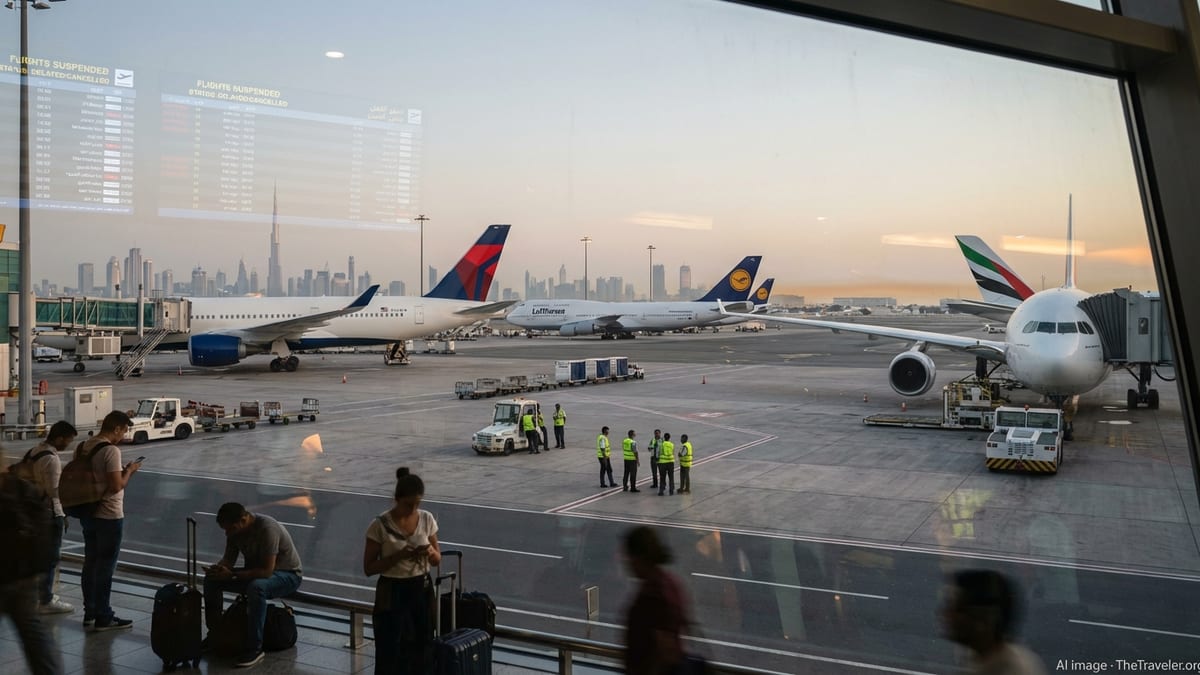
Surge in rerouted demand reshapes Hong Kong’s skies
According to recent coverage in regional business media, Hong Kong authorities have agreed with airlines on a package of 820 additional flights scheduled between late May and the end of October, on top of existing services. The added capacity targets routes most affected by the closure or restriction of airspace over parts of the Middle East, which has disrupted traditional corridors between Europe and Asia.
Published reporting indicates that the new flights are concentrated on long haul services to key European gateways such as London, Paris and Zurich, as well as selected North American destinations that typically relied on Middle Eastern hubs for connecting traffic. By funnelling passengers through Hong Kong instead, airlines hope to offer more predictable schedules while avoiding conflict affected regions.
The adjustments come as Hong Kong International Airport continues a strong post pandemic recovery. Recent traffic figures show passenger throughput rising at double digit rates year on year, with transit and transfer volumes climbing sharply as travelers look for alternatives to Middle Eastern connections. Airport data suggests that the rerouting trend has already lifted Europe related traffic, a pattern the extra 820 flights are designed to reinforce.
Industry analysis notes that Hong Kong’s geographic position on the great circle routes between Northeast Asia and Europe gives it an advantage when airlines are forced to redraw flight paths. With carriers now diverting south of the Gulf or via Central Asia to avoid high risk airspace, Hong Kong can serve as a stable pivot point for itineraries that previously connected in Dubai, Doha or Abu Dhabi.
From flight cancellations to capacity crunch
The decision to add hundreds of flights follows weeks of upheaval across the Middle East, where missile and drone attacks, airspace closures and shifting risk assessments have repeatedly disrupted operations at major Gulf hubs. Publicly available summaries from aviation trackers and news outlets describe days when hundreds of flights were cancelled or severely delayed, leaving long haul passengers scrambling for alternatives.
For Hong Kong based and Asian carriers, the first phase of the crisis was marked by suspensions of direct services to Dubai, Riyadh and other regional cities, along with cargo rerouting and temporary reductions in frequencies. As the conflict dragged on, airlines confronted higher jet fuel prices, steeper insurance and war risk premiums, and longer flight times on detour routes that skirted the hottest conflict zones.
Reports indicate that once basic safety measures and alternative routings were established, attention shifted from pure disruption management to capacity planning. Airlines and policymakers began examining where displaced passengers from Middle Eastern hubs might be redirected, and how to maintain network connectivity without overburdening any single airport. It is in this context that Hong Kong’s 820 flight expansion has emerged, framed as both a contingency measure and a strategic opportunity.
Travel industry commentary suggests that capacity on some Europe Asia corridors has tightened considerably, especially during peak travel weeks. By locking in additional flights months ahead, Hong Kong aligned airlines aim to smooth out bottlenecks that might otherwise appear in late summer and early autumn, when leisure and business demand typically remain robust.
Reinforcing Hong Kong’s hub ambitions
The newly announced flights also dovetail with Hong Kong’s longer term ambition to reassert itself as a premier aviation hub in the wake of the pandemic. Government statements and airport authority briefings in recent months have stressed the importance of maintaining competitive connectivity, particularly as rival gateways in the region race to rebuild their networks.
According to published government documents, officials have been in close communication with local airlines to encourage flexible deployment of aircraft and crew, urging carriers to increase frequencies on routes with strong potential and on city pairs currently underserved because of the Middle East conflict. Examples already cited include extra round trip services to Paris and Zurich, and higher seat capacity on multiple London flights.
By committing to 820 additional flights explicitly tied to conflict related disruptions, Hong Kong is signaling to airlines and passengers that it intends to play a stabilising role in global aviation during a period of uncertainty. Analysts note that every rerouted itinerary that touches Hong Kong not only supports airline yields but also feeds spending in airport retail, hospitality and the broader visitor economy.
At the same time, the strategy carries operational risks. Handling more long haul flights requires careful management of runway slots, ground handling resources and air traffic control capacity, especially if weather events or further geopolitical shocks trigger new waves of disruption. Observers point out that the success of the expansion will depend on how resilient Hong Kong International Airport proves during peak traffic surges.
What the added flights mean for travelers
For passengers, the headline effect of Hong Kong’s 820 extra flights is a larger menu of options that avoid transiting active conflict zones. Travel agents and booking platforms have already flagged a rise in itineraries that route European and North American journeys via Hong Kong instead of the Gulf, particularly for travelers starting in or heading to East and Southeast Asia.
Pricing patterns, however, remain complex. Reports from fare comparison sites show that while some rerouted journeys have become more expensive because of longer flight times and higher operating costs, added capacity on certain Hong Kong routes is helping to moderate price spikes. Economy class seats on newly boosted European services, for example, have in some cases undercut equivalent itineraries via remaining Middle Eastern hubs.
Travel advisories from industry bodies continue to recommend that passengers build additional flexibility into their plans, arrive earlier at airports, and monitor flight status closely in the days and hours before departure. Even with more capacity through Hong Kong, knock on effects from sudden airspace changes or renewed hostilities in the Middle East could ripple across global networks with little warning.
For frequent flyers and corporate travel managers, Hong Kong’s expanded schedule may offer a way to rebuild predictable routing patterns that were upended when the conflict intensified. With more banks of long haul departures clustered through the day, it becomes easier to construct round the world and multi stop itineraries anchored on a single, relatively stable hub.
Outlook for the rest of 2026
How transformative the 820 extra flights ultimately prove will depend heavily on the trajectory of the conflict itself. If ceasefire efforts gain traction and airspace restrictions ease, some airlines may gradually restore direct links through the Gulf, reducing the pressure on alternative hubs. In that scenario, Hong Kong’s additional capacity could be repurposed toward growth markets identified before the latest crisis.
Conversely, if instability persists or worsens, Hong Kong’s bet on expansion could solidify its position as a primary bridge between Asia and Europe, even after the immediate emergency fades. Several aviation analysts have drawn comparisons with earlier periods when geopolitical shocks temporarily redrew global route maps, only for some of the new patterns to endure long after the original trigger had passed.
For now, public data on bookings and airport throughput suggests that demand for Hong Kong routed itineraries is strong and likely to remain so through at least the northern summer. Airlines are monitoring load factors on the new flights closely and retaining the option to upgauge aircraft types or add further rotations if conditions warrant.
What remains clear is that the Middle East war has reshaped expectations about the resilience of long haul networks. Hong Kong’s decision to inject 820 additional flights into the system illustrates how one major hub is attempting to turn crisis driven detours into a more permanent role at the center of global air travel.