


More news on this day
Regional carrier SkyWest has faced significant operational disruptions at two of its most important hubs, Dallas and Chicago, prompting waves of regional flight cancellations and severe knock-on delays for travelers across the United States this week.
Get the latest news straight to your inbox!
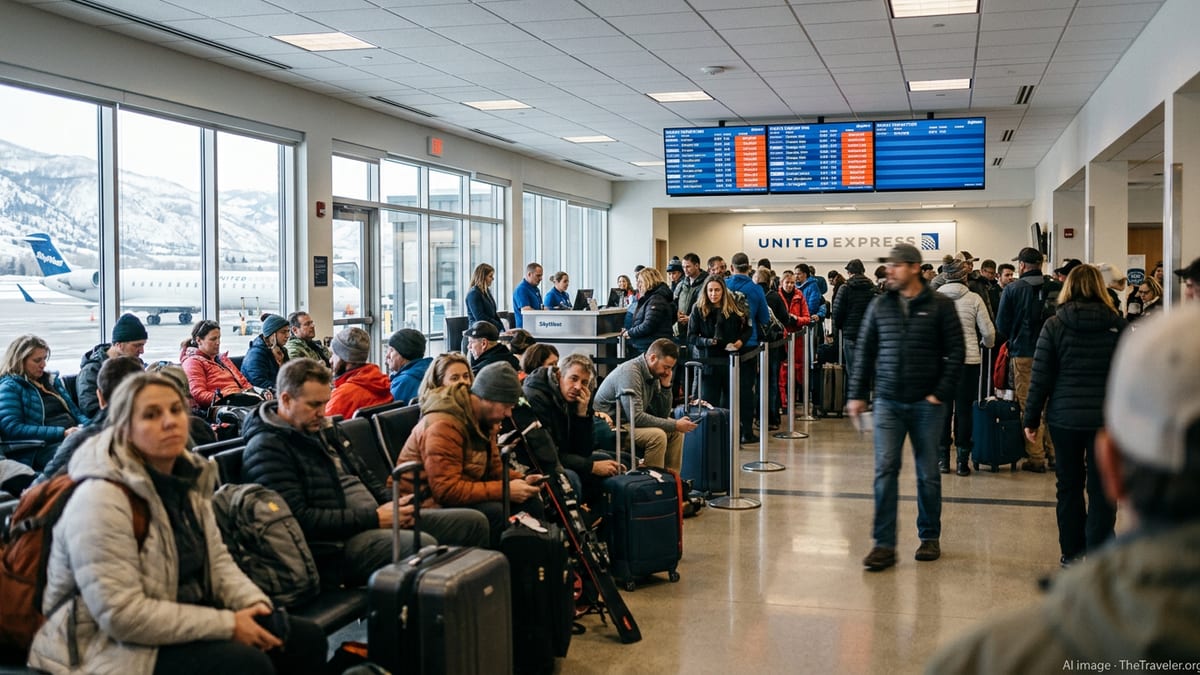
Regional Backbone Under Strain at Major Hubs
SkyWest operates as a key regional backbone for several large U.S. airlines, flying under brands such as American Eagle and United Express and feeding passengers through major hubs including Dallas Fort Worth International Airport and Chicago O’Hare. Publicly available company materials describe Dallas and Chicago as central nodes in an extensive network of regional jets linking smaller communities to long-haul routes.
When operations seize up at these hubs, the impact ripples far beyond Texas and Illinois. Dozens of spoke routes rely on short-haul SkyWest services to connect travelers from smaller cities to transcontinental and international flights. Disruptions at Dallas and Chicago therefore translate quickly into missed connections, mispositioned aircraft, and escalating schedule imbalances across multiple partner airlines.
Recent days have brought renewed scrutiny of the fragility of that regional system. Flight-tracking boards have shown clusters of SkyWest-operated cancellations and long delays on partner-coded flights in and out of Dallas and Chicago, while anecdotal accounts from travelers describe abrupt schedule changes on short notice and limited rebooking options from smaller airports dependent on regional service.
Because SkyWest’s flights are often marketed under the codes of its major partners, many affected passengers first see the disruption as an American Airlines or United problem, only later discovering that the operating carrier is the regional airline. That code-share structure can add confusion when cancellations mount, particularly at crowded hubs where multiple partners are simultaneously adjusting schedules in response to weather, congestion, or staffing constraints.
Dallas Bottlenecks Amplify Regional Cancellations
Dallas Fort Worth International Airport has experienced recurring operational pressure this spring, with publicly available tracking data recently recording hundreds of cancellations and extensive departure delays in a single day during a ground-stop event. While American’s mainline operation attracts much of the attention, regional partners, including SkyWest, have also seen significant day-of-travel disruption on routes feeding into DFW.
Regional jets are especially vulnerable in these conditions because they often sit lower in the priority stack when airspace capacity is restricted. When ground stops, thunderstorms, or traffic-management initiatives compress the number of available takeoff and landing slots, airlines frequently preserve long-haul and high-demand trunk routes first. Shorter regional segments, many flown by SkyWest, are more likely to be delayed or canceled outright.
Travelers on routes such as Durango to Dallas, operated on partner codes but flown by SkyWest aircraft, have seen cancellations and reschedules reflected in public flight-status tools in recent days. For a single point-to-point flight, the immediate inconvenience is clear, but the knock-on effects can be wider: misaligned inbound aircraft, crews timing out, and passengers missing onward flights to other domestic or international destinations.
Once cancellations start to accumulate at a hub like Dallas, recovery can take more than a single news cycle. Aircraft and crew rotations that rely on tight turn times quickly fall out of sync, forcing airlines and their regional partners to make further schedule changes in subsequent days. Smaller cities served only a few times daily are at particular risk of being left with no same-day alternatives when a single regional leg is removed from the schedule.
Chicago Weather and Congestion Feed a Chain Reaction
Chicago’s major airports have also been grappling with weather-related disruption and congestion that disproportionately affect regional operations. Publicly available status boards at Chicago hubs recently showed several hundred delayed flights and dozens of cancellations in a single day, with SkyWest appearing among the carriers experiencing the highest levels of disruption alongside larger mainline airlines.
Thunderstorms, low ceilings, and traffic-management constraints at Chicago O’Hare can rapidly create a domino effect for regional services. SkyWest’s role as a feeder for United and American means that many of its flights are scheduled at peak connection banks, precisely when air traffic control restrictions are most likely to bite. When arrival or departure rates are cut, regional flights often bear the brunt of last-minute schedule triage.
The result can be a cascade of missed connections radiating outward from Chicago. Passengers traveling from smaller Midwest communities who rely on a single daily regional leg into O’Hare can find themselves stranded when that flight is canceled, with limited options to reroute. Downline flights that depend on the same aircraft may then be delayed or scrubbed, spreading the disruption to additional cities.
Operational challenges at Chicago also coincide with broader structural shifts in Midwestern air service. Capacity caps, runway work, and competitive schedule changes by other carriers have tightened available slots, leaving less room for recovery when an airline or regional partner faces an acute disruption period. In that environment, even a relatively contained spike in SkyWest cancellations can translate into system-wide stress.
Systemic Vulnerabilities in the Regional Model
The turbulence facing SkyWest at Dallas and Chicago highlights broader vulnerabilities in the U.S. regional airline model. Regional carriers operate under capacity and scope constraints tied to pilot contracts at their mainline partners, using smaller aircraft with tighter economics and thinner staffing buffers. These structures can magnify the impact of any disruption, from weather to IT issues, because there is limited spare capacity to absorb shocks.
Public filings and fact sheets indicate that SkyWest manages hundreds of regional jets and an expansive route network built around partner hubs, including Dallas Fort Worth and Chicago O’Hare. That scale brings efficiency in normal conditions but also means that a localized disruption at a single hub can rapidly ripple through dozens of dependent routes and multiple partner brands.
Industry observers note that pilot availability, crew duty-time rules, and aircraft maintenance schedules add further constraints. Once a set of flights is delayed or canceled at a hub, crews can quickly run up against regulatory limits on working hours, forcing carriers to cancel later segments that might otherwise have operated. Regional airlines, which often run tight rosters, can find it especially difficult to source replacement crews on short notice.
These systemic factors help explain why regional flights are frequently overrepresented in cancellation statistics during major disruption events, even when the initial trigger is weather or airspace congestion affecting all carriers. For travelers passing through Dallas and Chicago this week, those structural pressures have translated into prolonged queues, rebooked itineraries, and, in many cases, unplanned overnight stays far from their final destinations.
What Travelers Can Expect in the Coming Days
Although operational conditions can improve quickly once storms clear or ground restrictions are lifted, recovery in the regional system often lags behind headline indicators. Mispositioned aircraft and crews, along with residual backlogs of displaced passengers, can keep pressure on SkyWest’s Dallas and Chicago operations for several days after the most acute disruptions subside.
Publicly available planning tools and schedule data suggest that both hubs are likely to remain busy and capacity constrained through the current travel period, particularly around afternoon and evening peak banks. Travelers booked on regional flights into or out of Dallas Fort Worth or Chicago O’Hare may continue to see schedule adjustments, aircraft swaps, or longer-than-normal connection times as airlines and their regional partners work through the backlog.
Passenger advocates generally recommend building additional buffer time into itineraries involving regional connections at these hubs, particularly when traveling from or to smaller communities with limited daily service. Monitoring flight status frequently on the day of travel and being prepared with alternative connection options can help mitigate the impact if another round of cancellations materializes.
For now, SkyWest’s experience at Dallas and Chicago underscores how central regional carriers have become to the functioning of the U.S. air travel network, and how quickly their operations can be overwhelmed when a combination of weather, congestion, and structural constraints converge on key hub airports.