


More news on this day
Passengers travelling through London Gatwick on Wednesday, 20 May are encountering a patchy but noticeable level of disruption, with a mixture of delayed departures, late-arriving aircraft and scattered cancellations affecting both short-haul and long-haul services.
Get the latest news straight to your inbox!
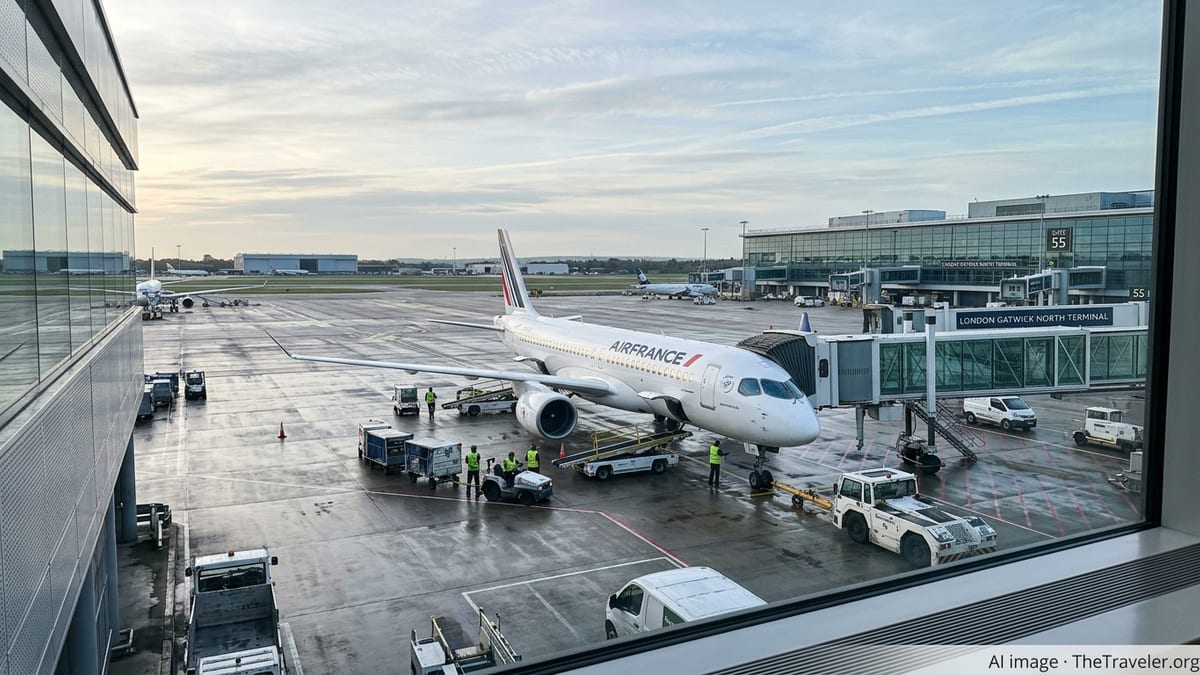
Overall picture of delays at Gatwick today
Live flight boards and tracking services for London Gatwick on Wednesday, 20 May indicate that operations are broadly stable but far from perfectly on time, with an elevated number of services running behind schedule and a smaller number cancelled outright. Data collated from multiple real-time trackers shows average delays around the 15 to 25 minute mark for departing flights during the busiest parts of the morning and early afternoon, with some individual services running significantly later.
Publicly available monitoring tools that aggregate airport performance list Gatwick in a "busy" operational state today, with security queues building at peaks and departure punctuality clearly below ideal levels. One live dashboard tracking global airport performance reports Gatwick’s average departure delay at around 20 minutes for the current trading period, placing it among the more affected major European hubs on the day.
While these delays are inconvenient, they are a level below the severe disruption occasionally seen in previous years when air traffic control failures or weather systems forced widespread ground stops. Flights are taking off and landing on both of Gatwick’s runways in a largely continuous flow, but passengers are being advised by airlines to keep a close eye on updated departure times and gate changes.
Cancellations remain limited but targeted
Despite the uptick in late-running services, the number of outright cancellations at Gatwick so far today remains relatively contained. Flight-status feeds show a handful of departures scrubbed across the schedule, affecting a mix of European city links and leisure destinations served largely by low-cost and charter airlines. The pattern suggests that airlines are selectively trimming rotations where aircraft and crew availability are tightest or where demand can be consolidated onto remaining flights.
Comparative data from recent weeks shows that Gatwick-based carriers have occasionally resorted to similar tactical cancellations when the wider European network has been under strain from weather or staffing issues. Network reports for March and April highlighted London Gatwick among the region’s more delay-prone airports, citing a combination of traffic growth, air traffic control complexity and operational bottlenecks in surrounding airspace. Those background pressures appear to be continuing into late May, meaning even modest additional strain can tip marginal flights into cancellation.
For affected passengers, airline policies vary, but standard options commonly include rebooking on the next available service or on an alternative routing via another UK or European hub, as well as statutory compensation where consumer-rights rules apply and the cause is judged to be within the carrier’s control. Travellers with fixed connections or onward ground transport are being urged to allow generous buffers and to check digital notifications from their airline before heading to the airport.
Knock-on effects from rail and road disruption
The picture in the air at Gatwick today is being complicated by residual disruption on the ground. National Rail information issued on Tuesday, 19 May confirms that a technical fault affecting communications between train drivers and signallers caused widespread delays and cancellations across multiple operators, including the Gatwick Express, Southern and Thameslink services that provide key rail links to the airport. Although the underlying fault has been resolved, rail operators have warned that services may continue to be delayed or revised while the network recovers.
Industry coverage of the incident describes a network-wide challenge, with services in southern England among those particularly affected. Travel advisories note that passengers heading for airports, including Gatwick, have faced extended journey times and altered timetables, with some travellers diverted onto slower alternative routes or forced to switch to road transport at short notice. Those knock-on effects can contribute to missed check-in windows and late arrivals at the terminal, even when flights themselves remain scheduled.
Road access around the wider Gatwick corridor has also faced intermittent pressure. Highway bulletins for the M25, which carries a significant share of airport traffic, highlight overnight works and lane closures near the Gatwick junction in the early hours of 20 May. While those works are scheduled outside normal daytime peaks, any overruns or residual congestion can add to journey-time uncertainty for early morning departures.
European airspace and seasonal pressure
The disruption at Gatwick today is unfolding against a backdrop of sustained strain on European airspace as the continent gears up for the peak summer travel season. Recent network operations reports from European aviation bodies show London Gatwick among the region’s top reference points for departure delays, reflecting strong traffic growth combined with complex air traffic management and variable weather across the London terminal area.
In recent weeks, industry briefings and analytics have pointed to recurring bottlenecks driven by convective weather, staffing constraints in some control centres and the increasing density of short-haul traffic in key corridors. Gatwick, which serves a high volume of point-to-point leisure flights as well as business routes, is particularly sensitive to small disturbances in aircraft and crew rotations, since many operators run tight turnarounds throughout the day.
Travel data providers have also reported several Europe-wide delay episodes this spring, with thousands of flights affected on peak days and both Gatwick and Heathrow regularly appearing in listings of the most delay-impacted airports. While there is no evidence of a single major trigger event for today’s disruption, the pattern of scattered delays and modest cancellations at Gatwick is consistent with this broader picture of a system running close to capacity as volumes rise.
What passengers at Gatwick should expect for the rest of the day
Based on current schedules and operational data, publicly available information suggests that Gatwick is likely to continue experiencing modest departure and arrival delays through the remainder of Wednesday, 20 May, particularly around traditional peak waves in the late afternoon and evening. Airlines are continuing to turn aircraft around at the airport, but any fresh weather or air traffic restrictions in the London area or at destination airports could extend hold times or force further adjustments.
Passenger-facing guidance from airlines and travel agents emphasises the importance of checking in online where possible, monitoring flight-status tools closely and allowing extra time to reach the airport given the recent rail disruption. Those already at Gatwick are being encouraged, via airport and airline channels, to pay attention to terminal and gate displays, as some services are being re-timed or re-gated within relatively short windows.
For now, the situation at Gatwick remains one of manageable but noticeable disruption rather than full-scale turmoil. However, with the airport already identified in recent studies as one of the UK’s more delay-prone hubs, today’s pattern of late departures and scattered cancellations underlines how quickly pressure can build when airspace, ground access and airline operations all face concurrent strains.