


More news on this day
Thunderstorms sweeping across the Houston area on Monday triggered ground stops at both George Bush Intercontinental and William P. Hobby airports, disrupting departures and rippling delays across the domestic air network.
Get the latest news straight to your inbox!
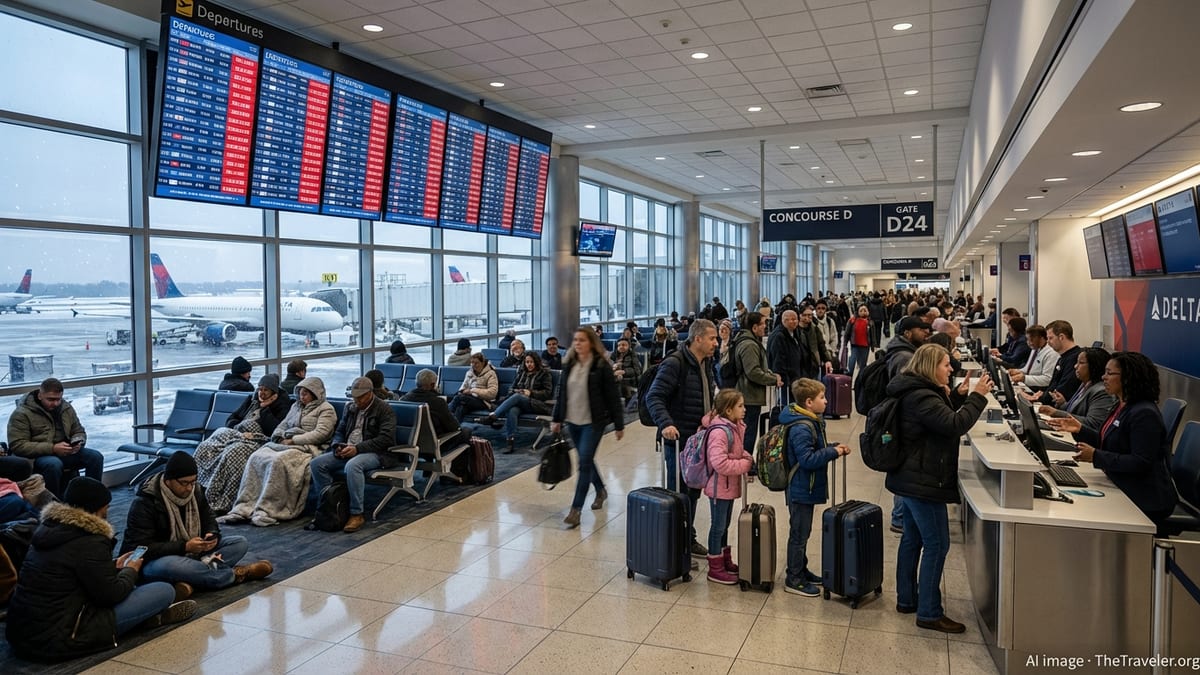
Storms halt departures at Bush Intercontinental and Hobby
Publicly available data from the Federal Aviation Administration’s National Airspace System Status showed ground stops in place Monday morning, July 13, at Houston’s two major commercial airfields, George Bush Intercontinental Airport and William P. Hobby Airport. Departing flights were temporarily held at both facilities as thunderstorms built over the metro area and reduced visibility.
Information posted by the FAA indicated that departures from Hobby were paused until early afternoon, with the ground stop initially listed until about 1 p.m. local time. At Bush Intercontinental, departing traffic was scheduled to resume slightly earlier, with the pause in effect until around 12:45 p.m., though the agency noted the potential for extensions depending on how the storms evolved.
Operations data showed that Bush Intercontinental, the larger of the two airports and a key domestic and international hub, was also coping with average departure delays of around 30 minutes even as flights continued to taxi and position. The combination of active thunderstorms, ground holds and slower departure rates created early bottlenecks for airlines and passengers starting the workweek.
Reports from aviation tracking services and local media described a familiar summer pattern across Texas, with isolated but intense storm cells forming near major hubs and prompting rapid changes to flight schedules. In Houston, the simultaneous ground stops at both airports underscored how quickly severe weather can disrupt a busy regional air corridor.
Passengers face delays as disruption spreads across the network
While the ground stops were focused on Houston-area departures, the impact extended well beyond the city. Carriers adjusted schedules across their networks as aircraft and crews were delayed in Houston, a critical connecting point for domestic routes and long-haul operations alike.
Tracking tools showed departure banks slowing or temporarily thinning out as airlines waited for the all clear to resume normal flow. Even once the formal ground stops are lifted, delayed pushbacks and takeoffs often cascade into missed connections later in the day, particularly for travelers relying on tight layovers through Houston.
Airlines typically respond to this kind of weather event by issuing rolling delay advisories and, in some cases, travel waivers that allow passengers to rebook without standard change fees. Recent storm-related waivers used during other Texas and Gulf Coast weather events offer a template for how carriers may manage today’s disruptions if conditions persist through the afternoon and evening peak periods.
Travelers already en route to the airports are likely to encounter longer lines at check-in and security as departure times shift, and some flights could be rerouted or canceled if thunderstorms remain slow-moving. For those connecting through Houston, updated itineraries and same-day standby options will play a central role in keeping trips on track.
Summer thunderstorm pattern raises broader reliability concerns
The storms affecting Houston on Monday fit into a broader pattern of weather-driven disruption at major U.S. hubs this summer. Recent days have brought ground stops or significant weather delays at airports including Charlotte Douglas International, Phoenix Sky Harbor and Hartsfield-Jackson Atlanta International, as storm systems have repeatedly intersected with peak travel periods.
Forecast discussions from meteorologists tracking the Houston region called for a continuation of near-daily storm chances, with pockets of heavy rain and localized flooding risk. That outlook suggests that Monday’s delays may not be a one-off event and that travelers using Houston’s airports over the coming days could face intermittent interruptions.
Research into extreme weather and aviation performance has shown that even short-lived convective storms can create substantial delays once they intersect with concentrated departure and arrival banks. Houston’s role as a major hub means that ground stops there are felt not only by local origin and destination passengers but also by travelers connecting between regions such as the West Coast, Midwest, Gulf Coast and Latin America.
Aviation analysts note that while airlines and airports have become more adept at pre-emptively adjusting schedules, the intensity and frequency of summer storm systems continue to test network resilience. The situation in Houston illustrates how quickly conditions can shift from routine operations to widespread delays once thunderstorm activity begins to encroach on airfields and departure corridors.
What travelers through Houston should expect next
With storms still in the forecast, travelers scheduled to fly into or out of Houston on Monday and through the week can expect ongoing schedule adjustments. Publicly available flight-tracking data typically shows a lag between the lifting of a ground stop and the return to normal operations, as airlines work through backlogs of delayed aircraft and reposition crews.
Once departures resume, departure boards at both Bush Intercontinental and Hobby are likely to feature a mix of delayed, rescheduled and, in some instances, canceled flights as carriers decide which routes to prioritize. Short-haul flights within Texas and nearby states are often used to help restore network balance because aircraft can complete multiple segments in a single day, restoring connections that were lost earlier.
Passengers planning trips in or out of Houston in the coming days may benefit from allowing additional time for connections, especially on itineraries that pass through multiple storm-prone hubs. Contingency steps such as monitoring flight status frequently and being prepared for gate or time changes can help mitigate some of the uncertainty created by fast-developing weather systems.
For the broader travel industry, Monday’s disruption in Houston adds to a mounting list of weather-related complications in a peak summer season already marked by high passenger volumes. As storms continue to flare along the Gulf Coast and across the central United States, Houston’s latest round of delays highlights how closely air travel reliability is tied to the atmosphere above.