


More news on this day
Across the United States, families of children with autism are finding it a little easier to take to the skies in 2026, as American Airlines expands practice flights, airport tours and autism-aware customer service intended to reduce the stress of air travel for neurodiverse young passengers.
Get the latest news straight to your inbox!
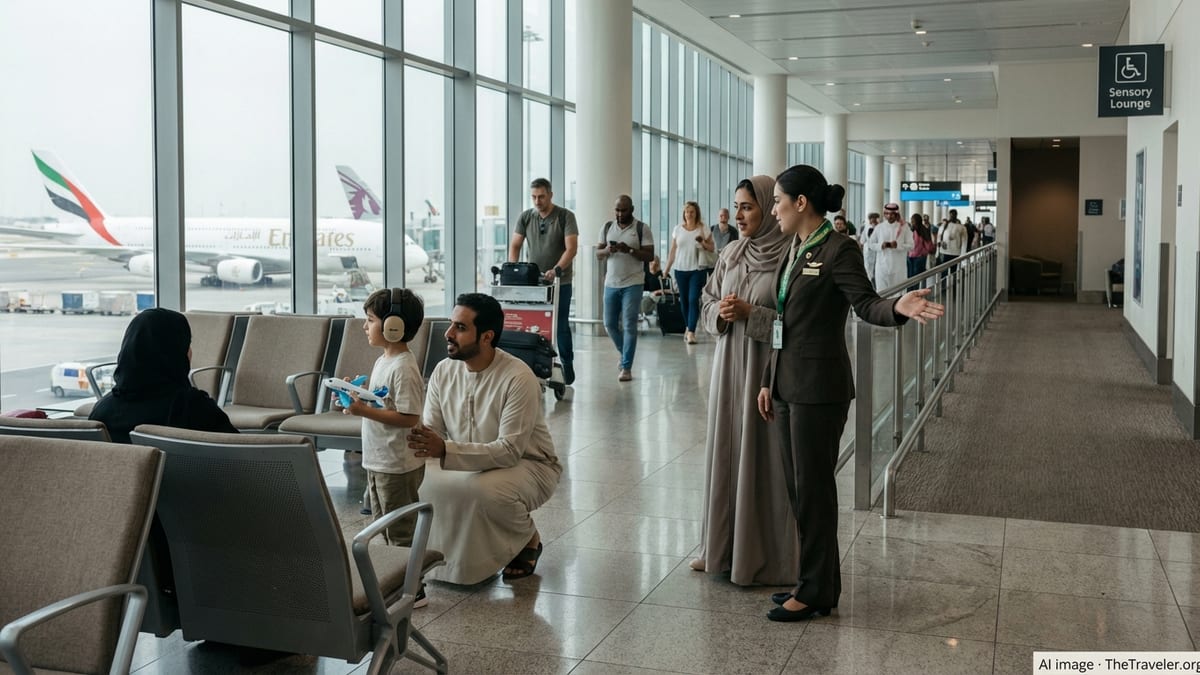
Inclusive Travel Becomes a 2026 Priority
In recent years, air travel accessibility has shifted from a niche concern to a core part of customer experience, and 2026 is shaping up as a pivotal moment in that trend. Publicly available information shows that travelers with autism and other sensory differences are an increasingly visible segment of family travel, prompting airlines and airports to redesign services with neurodiverse needs in mind.
Research published by travel and hospitality groups in 2024 highlighted how strongly parents of autistic children factor airport environments, staff training and sensory accommodations into their choice of airline. Analysts note that this pressure, combined with tighter federal requirements on training and disability support rolling out through 2026, is nudging major carriers to formalize autism-focused initiatives rather than relying on ad hoc assistance.
American Airlines has emerged as one of the US carriers using structured programs and long-running community partnerships to address these needs. From practice flights that simulate the full airport journey to collaborations with local schools and disability organizations, the airline is positioning autism support as part of a broader accessibility agenda for families.
Industry observers point out that these efforts also reflect a competitive landscape in which international airlines are promoting autism certifications and sensory-friendly branding. American Airlines’ recent activities suggest that US-based carriers are working to keep pace with those global benchmarks while tailoring programs to local airports and communities.
“It’s Cool to Fly American” Expands Its Reach
At the center of American Airlines’ approach is its “It’s Cool to Fly American” program, a mock-flight experience that has been running for several years and continues to feature prominently in the company’s latest sustainability and community reports. Publicly available information describes the initiative as a ground-based practice journey that walks families through check-in, security, boarding and time on the aircraft without an actual takeoff.
During these events, children on the autism spectrum and other young travelers with sensory sensitivities can experience crowds, announcements, seatbelts and cabin lighting in a lower-pressure setting. Reports indicate that the program has operated at hubs such as Chicago O’Hare and Charlotte Douglas, with local volunteers and airport partners helping recreate the full travel sequence, including taxiing on the tarmac in some cases.
Documentation from American Airlines’ 2024 sustainability reporting notes that the airline’s Abilities employee business resource group plays a key role in organizing these sessions and coordinating with nonprofit partners. The program is framed there as both a community outreach initiative and a way to familiarize frontline staff with the needs of neurodiverse travelers.
Coverage from travel trade outlets in April 2026 points to renewed visibility for “It’s Cool to Fly American,” particularly at Charlotte Douglas International Airport, where recent events have underscored the program’s role in giving families a trial run before booking actual itineraries. Observers say this formula of repetition and exposure is especially valuable for children who struggle with unfamiliar environments.
Airport Tours and Practice Days Offer Step-by-Step Exposure
Beyond its proprietary mock-flight events, American Airlines is increasingly visible in airport-run practice programs that break down the journey into manageable steps. At Miami International Airport, for example, the carrier has taken part in MIAair, a tour designed for travelers with a range of disabilities that includes check-in, security screening and boarding an American aircraft as part of a controlled, instructional visit.
Reports on recent MIAair tours in 2025 describe groups of students and their caregivers moving through the terminal with American Airlines staff, using real boarding passes and interacting with gate agents and crew members. The emphasis is on repetition and predictability, giving children who might be overwhelmed by noise, queues or security procedures a chance to rehearse the experience ahead of an actual trip.
Similar practice-day formats are appearing at other US airports, often in collaboration with autism advocacy organizations and local school districts. While specific branding and schedules vary, American Airlines is frequently listed among participating carriers providing aircraft access, check-in counters or volunteer staff to support the simulations.
Observers note that these events dovetail with a wider movement toward airport sensory rooms, visual guides and quiet spaces. When practice tours are paired with designated retreat areas in terminals, families of autistic children can plan both rehearsal and in-journey decompression, reducing the risk of meltdowns on crowded concourses.
Training, Policy Changes and the Regulatory Backdrop
American Airlines’ front-facing programs sit against a broader backdrop of regulatory and policy change affecting all major carriers. Disability advocacy updates in early 2026 highlight the ongoing implementation of a United States Department of Transportation rule finalized in 2024 that tightens requirements around training for airline staff, particularly on developmental disabilities and in-flight assistance.
According to publicly available guidance, carriers are expected to complete phased training updates by mid-2026, covering topics such as communication with autistic passengers, de-escalation strategies and respectful handling of assistive devices. Analysts suggest that airlines investing early in autism-focused initiatives may find it easier to meet or exceed these new baselines.
Separate from regulatory shifts, industry groups such as the International Board of Credentialing and Continuing Education Standards have developed autism certification frameworks for airlines and airports. While American Airlines is not singled out as an autism-certified carrier in public listings at the time of writing, its practice-flight and community programs align with many of the recommended elements, including staff training, pre-travel supports and partnerships with autism organizations.
For families of children with autism, these developments translate into more consistent expectations around pre-boarding, seating flexibility and assistance at key stress points such as security checkpoints and boarding queues. Travel guidance platforms increasingly advise parents to contact airlines before travel to note sensory needs, with American Airlines commonly cited among the carriers that can flag such information for airport and cabin crews.
A Growing Ecosystem of Autism-Friendly Travel Services
American Airlines’ programs are emerging within a wider ecosystem of autism-friendly travel options that includes airports, security agencies and competing airlines. TSA Cares, a long-standing assistance service operated by the Transportation Security Administration, continues to be promoted in 2026 as a resource for families seeking help with security lines and checkpoint navigation for autistic children.
At the same time, more airports are rolling out sensory rooms, visual storyboards and Sunflower Lanyard schemes to discreetly identify passengers with non-visible disabilities. These changes can amplify the benefits of American Airlines’ practice events by ensuring that families who rehearse a trip with the carrier also encounter supportive infrastructure when they return for a real departure.
Other airlines, including domestic competitors and international carriers, have introduced their own practice flights, autism certifications or sensory guides, creating what analysts describe as a “rising tide” of inclusion-focused services. Within that field, American Airlines’ decade-long investment in mock flights and airport tours stands out as an example of how sustained community partnerships can evolve into a recognizable brand attribute for families with special needs.
Travel experts suggest that as more families of autistic children consider vacations and visits that were previously out of reach, American Airlines and its peers are likely to continue scaling programs that demystify the journey. Practice flights, autism-aware staff training and airport collaborations are increasingly framed not only as acts of corporate responsibility but also as practical tools to unlock a growing, underserved segment of air travel demand.