


Trillium Gap Trail in Great Smoky Mountains National Park has a friendly, almost whimsical reputation thanks to its waterfall, llamas, and lush forest. In reality, its difficulty varies dramatically depending on how far you go. A family stroll to Grotto Falls is a very different experience from a full ascent to Mount LeConte. Understanding what the trail is really like, and who it is best suited for, will help you choose the right objective for your fitness, time, and comfort level in the mountains.
Get the latest updates straight to your inbox!
Where Trillium Gap Trail Is and What Makes It Unique
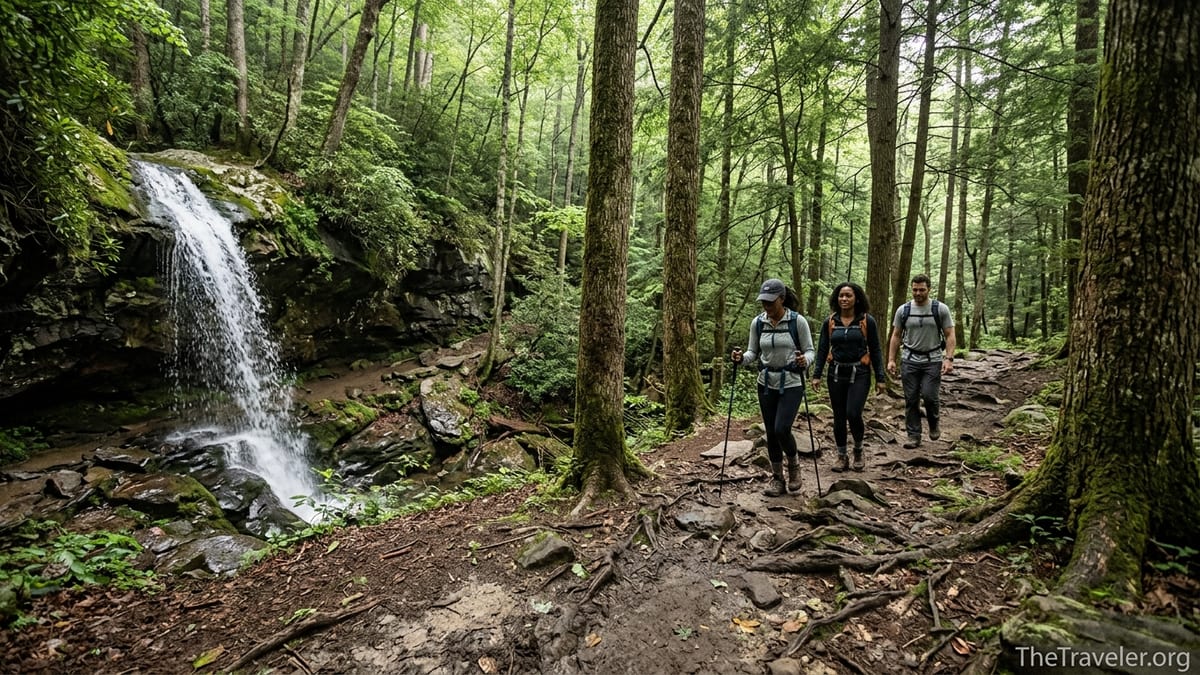
Trillium Gap Trail sits on the Tennessee side of Great Smoky Mountains National Park, above Gatlinburg. The main trailhead is on the one-way Roaring Fork Motor Nature Trail, a narrow, winding scenic road that typically opens from spring through late fall. About two miles after you enter the motor trail, a small parking area on the right marks the start of Trillium Gap, which quickly disappears into dense cove hardwood forest. Because Roaring Fork closes in winter and sometimes during storms or for maintenance, access to Trillium Gap can be seasonal, something to check on the National Park Service site before committing to the hike.
The trail is best known for Grotto Falls, a roughly 25-foot waterfall that you can walk behind. The falls sit about 1.3 miles from the trailhead, making them one of the most accessible waterfall objectives in the park. On busy summer weekends, the first section of the trail can feel more like a promenade than a wilderness hike, with families, photographers, and visitors in sandals all sharing the path. For many, this short outing is all they do, and that colors how they describe the trail’s difficulty.
Beyond Grotto Falls, however, Trillium Gap becomes a much more serious undertaking, eventually reaching Trillium Gap proper at around 2.9 miles and continuing another 3.6 miles to Mount LeConte. Mount LeConte is one of the park’s signature summits and home to rustic LeConte Lodge, which is supplied by pack llamas that regularly travel the upper section of Trillium Gap. Encountering the llamas on a misty morning is a highlight for many hikers, but their presence also signals that you are now on a long, high-elevation mountain trail rather than a casual stroll to a waterfall.
Because the trail offers such different experiences at different distances, any conversation about “how difficult” Trillium Gap is has to start by clarifying how far you plan to go. A family with grade-school kids going to Grotto Falls and back will have a very different day than a hiker pushing for Mount LeConte and descending in the late afternoon.
Breaking Down the Route: Grotto Falls vs Mount LeConte
From the trailhead to Grotto Falls, Trillium Gap is about 1.3 miles one way, or roughly 2.6 miles round trip. Most guidebooks and hiking sites describe this section as easy to moderate, with a steady but manageable climb through mixed hardwood forest. The trail surface is a mix of packed dirt, roots, and stones, and you gain several hundred feet of elevation, enough to feel like a hike but not so much that a reasonably active visitor will be overwhelmed. Many people complete the round trip to Grotto Falls in 1.5 to 2.5 hours, depending on pace and time spent at the waterfall.
Once you go beyond Grotto Falls, the character of the trail changes. You leave most of the crowds behind, the grade becomes more sustained, and the elevation gain begins to accumulate. From the trailhead to Trillium Gap itself is about 2.9 miles, and by then you have climbed well over 1,000 feet. Hikers who continue to Mount LeConte add another 3.6 miles each way from the gap, for a total of roughly 6.5 miles one way and about 13 miles round trip, with more than 3,000 feet of elevation gain spread over the day.
In comparison, the hugely popular Alum Cave Trail offers a shorter but steeper route to Mount LeConte. Many visitors who have done both describe Trillium Gap as longer, more gradual, and less exposed, but still a demanding full-day hike. It is not unusual for a reasonably fit hiker to spend 7 to 9 hours on the round trip from Roaring Fork to Mount LeConte and back, especially if they spend time exploring the lodge area and viewpoints at the summit.
Because of this range, the easiest way to think about Trillium Gap is as two hikes sharing a trailhead. There is the family-friendly Grotto Falls hike, which suits casual visitors with decent walking fitness, and the Trillium Gap to Mount LeConte route, which belongs firmly in the strenuous, full-day mountain hike category. Everything in between those endpoints gets progressively more challenging the farther you go.
Trail Conditions, Elevation, and Weather Factors
On paper, much of Trillium Gap looks moderate: a well-built path in generally good condition, a gradual gradient for long stretches, and no technical rock scrambling. The details on the ground, however, can make the trail feel much harder, especially in poor weather. The Smokies are famous for humidity, sudden showers, and slick roots, and Trillium Gap embodies all of those traits. Near Grotto Falls, sections of the trail are often damp, muddy, and polished by heavy traffic. The rocks around the waterfall are especially slippery; every season, rangers see visitors lose their footing there, sometimes resulting in sprains or worse injuries.
As you climb higher, the weather can change quickly. It is common for the trailhead to be warm and humid while the upper reaches around Mount LeConte are foggy, windy, and significantly cooler. That can feel refreshing in July, but in shoulder seasons it can catch unprepared hikers off guard. Wind-driven rain at higher elevations will soak a cotton T-shirt and draw heat away fast, even in late spring or early fall. The National Park Service repeatedly reminds visitors that help may be hours away and that cellphone coverage is unreliable in the backcountry, so planning for changing weather is part of hiking this trail responsibly.
Elevation also plays a role. While the summit of Mount LeConte is not especially high by Western standards, the cumulative gain is meaningful. Starting around 3,000 feet and climbing to over 6,500 feet over the course of a day is a real workout. Many visitors to Gatlinburg spend most of their time at lower elevations, in restaurants, or driving scenic loops. Going from that lifestyle straight onto a 13-mile mountain hike can feel like a shock. Hikers commonly report that the long, steady descent on tired legs is the part that truly tests them, particularly on the rooty, uneven sections below Trillium Gap.
Finally, crowding can influence difficulty, especially near Grotto Falls. On peak summer Saturdays or during fall foliage, parking along Roaring Fork can fill early. Drivers sometimes circle for 20 to 30 minutes waiting for spaces to open, adding stress before the hike even begins. On the trail, bottlenecks at narrow spots and around the waterfall can slow progress and force frequent stops. For a family outing, that may be fine. For someone attempting Mount LeConte, late starts and delays can push the return into dusk, which greatly increases the perceived difficulty and risk.
Who Is Well Suited for Each Section of Trillium Gap
The short hike to Grotto Falls is appropriate for a wide range of visitors, including families with children who are used to walking, adults who exercise moderately, and travelers who may not consider themselves “hikers” but are comfortable being on their feet for a couple of hours. As a reference point, if you can walk three miles on a neighborhood greenway with some mild hills without feeling exhausted, you can likely manage the Grotto Falls section at an easy pace. Sturdy shoes with traction, such as light hiking shoes or athletic sneakers, are important, and anyone with balance issues should use trekking poles.
The middle portion of the trail, from Grotto Falls to Trillium Gap, suits hikers who want a quieter, more immersive forest experience and are ready to commit to a half-day outing. This is a good choice for visitors who have done other moderate hikes in the Smokies, such as Laurel Falls, Rainbow Falls, or the Chimney Tops overlook trail, and are looking for something a bit longer but not quite as intense as a Mount LeConte summit day. People with knee problems should be cautious, as the descent can be tougher than the climb.
The full route to Mount LeConte via Trillium Gap is best for fit, experienced hikers who are comfortable with long distances, sustained elevation gain, and variable mountain weather. If you regularly hike 8 to 10 miles with at least 2,000 feet of climbing in your home region, or if you are a runner or cyclist accustomed to several hours of steady effort, you will likely be in the right range. Many experienced hikers treat this as a “big day,” starting at sunrise, carrying layers and extra food, and building in extra time at the top to enjoy the views and the historic lodge area.
Certain travelers should think carefully before attempting the full trail. Visitors with cardiovascular conditions, unstable joints, or limited hiking experience may find the distance and descent punishing. Young children often do well to Grotto Falls but may struggle on the long return from the higher reaches. Likewise, anyone visiting during hot, humid stretches of summer who is not acclimated to heat should consider shorter objectives, starting at cooler times of day, or choosing shadier, less strenuous alternatives.
Safety, Wildlife, and Seasonal Considerations
Great Smoky Mountains National Park emphasizes that fatalities and serious injuries occur every year in the park, often from falls, water incidents, and vehicle accidents rather than dramatic backcountry mishaps. Hiking Trillium Gap may feel tame compared to rock climbing or paddling, but the same principles of mountain safety apply. Always tell someone your intended route and return time, carry more water and food than you believe you will need, and pack basic rain gear, a headlamp, and a small first-aid kit, even for what seems like a simple day hike.
Black bears are common throughout the Smokies, including along Trillium Gap. The park encourages visitors to practice careful food storage and never to feed wildlife. On a practical level, this means keeping all snacks zipped inside your pack, never leaving packs unattended at Grotto Falls or at rest spots, and giving any bear you see plenty of space. It is not unusual for hikers to see bears at a distance from the trail, particularly during quieter times of day. Most quickly move away when they become aware of people, but habituated bears that associate hikers with food can behave more boldly, which is why strict food rules are in place.
Seasonally, Trillium Gap is most popular from late spring through peak autumn. In April and May, early wildflowers and cooler temperatures make the lower trail especially pleasant, though some higher sections can still be muddy. Summer brings lush greenery, frequent afternoon thunderstorms, and heavy crowds. Planning an early-morning start, particularly for weekend visits, improves both parking odds and trail experience. In October, fall color and crisp air make the trail spectacular, but temperatures at Mount LeConte can be near freezing even when Gatlinburg feels mild. In winter, the closure of Roaring Fork Motor Nature Trail typically cuts off easy access to Trillium Gap, and snow or ice can linger at higher elevations.
In addition to wildlife and weather, basic trail etiquette and awareness go a long way toward staying safe. Stay on the defined path, resist the temptation to climb wet rocks around Grotto Falls, and step carefully on roots and rocks, particularly on the descent when fatigue sets in. Simple, real-world habits such as checking the day’s forecast in Gatlinburg and again for high elevations, filling water bottles in town rather than depending on streams, and carrying a physical map or downloaded offline map can make the difference between a smooth, enjoyable day and a stressful one.
How to Prepare and What to Bring in Practice
For the Grotto Falls hike, preparation can be straightforward but should still be intentional. A small daypack with at least one liter of water per person, snacks such as trail mix or granola bars, a light rain jacket for summer storms, and a basic first-aid kit is usually sufficient. Footwear is critical: closed-toe shoes with good tread are strongly recommended. Many visitors in flat-soled fashion sneakers or flip-flops underestimate how slick the rocks and roots can be; even a modest pair of trail running shoes from a big-box retailer can drastically reduce the risk of slips.
If you plan to go beyond Grotto Falls, especially to Mount LeConte, think in terms of a full-day, backcountry hike. Two to three liters of water per person is a more realistic amount in warm weather. Lightweight hiking poles, which are widely available for under the price of a typical dinner out in Gatlinburg, can significantly reduce joint strain on the descent and help with balance on uneven terrain. A breathable base layer, insulating layer such as a fleece or light puffer, and a fully waterproof shell give you options as temperatures and conditions change. A compact headlamp or flashlight with fresh batteries is non-negotiable if there is any chance you may be hiking near dusk.
Nutrition and pacing matter more than many visitors expect. Eating a real breakfast in town, bringing calorie-dense snacks, and stopping regularly to drink and eat small amounts will help keep energy steady. Hikers who blast up the first few miles without eating, relying on a single sports drink, often hit a wall halfway through the return. As a practical example, many experienced visitors to the Smokies treat a long LeConte day like a moderate endurance event, packing several sandwiches from a Gatlinburg deli, a few energy bars, salty snacks, and perhaps a thermos of coffee or tea if hiking in cooler weather.
Transportation logistics are another real-world factor. Roaring Fork is a one-way road with limited parking at the trailhead, so it is wise to have a backup plan if all the spaces are full. Some travelers stay at accommodations along the Historic Nature Trail road in Gatlinburg specifically to be closer to the park entrance for an early start. Others combine a Grotto Falls outing with a full drive of Roaring Fork later in the day, budgeting time to stop at historic cabins and roadside cascades after their hike. Being flexible about how the trail fits into your broader itinerary can reduce stress and help you enjoy the experience.
The Takeaway
Trillium Gap Trail is a rare route that can be both a gentle family adventure and a demanding mountain challenge, depending entirely on how far you go. To Grotto Falls and back, it is a manageable, rewarding hike for most reasonably active visitors, with a beautiful waterfall and cool, shaded forest to offset the effort. Beyond the falls, it gradually transforms into a serious full-day outing that requires fitness, planning, and respect for the Smokies’ changeable conditions.
For travelers willing to match their goals to their abilities, Trillium Gap offers rich rewards: the thrill of walking behind a waterfall, the quiet of spruce-fir forest high on the mountain, the novelty of meeting pack llamas on the trail, and, for those who reach Mount LeConte, sweeping views and the satisfaction of a true summit day. Take the time to understand the terrain, prepare thoughtfully, start early, and stay alert to weather and wildlife. Do that, and Trillium Gap can be one of the most memorable hikes of your Great Smoky Mountains trip, whether you go one mile or thirteen.
FAQ
Q1. Is Trillium Gap Trail suitable for beginners?
For beginners who are reasonably active, the 2.6-mile round trip to Grotto Falls is generally suitable, provided they wear good shoes, bring water, and allow plenty of time. The full hike to Mount LeConte, however, is long and strenuous and is better left to hikers with prior experience on full-day mountain trails.
Q2. How long does it take to hike to Grotto Falls and back?
Most visitors take between 1.5 and 2.5 hours to hike from the trailhead to Grotto Falls and back, depending on pace, crowding, and how long they stay at the waterfall for photos and rest.
Q3. How difficult is the hike from Trillium Gap Trailhead to Mount LeConte?
The hike from the trailhead to Mount LeConte via Trillium Gap is typically around 13 miles round trip with significant elevation gain, so it is considered strenuous. Fit, experienced hikers often spend 7 to 9 hours on this route, including breaks.
Q4. Do I need special gear to hike Trillium Gap Trail?
You do not need technical climbing equipment, but sturdy footwear, a small backpack, rain jacket, extra layers, two to three liters of water for a full-day hike, snacks, and a headlamp are strongly recommended. Trekking poles are helpful, especially for the long descent from higher elevations.
Q5. Are children able to hike Trillium Gap Trail?
Many families successfully hike with children to Grotto Falls, especially kids who are accustomed to walking a few miles at home. Beyond the waterfall, the distance and elevation gain increase, so parents should be realistic about their child’s stamina and turn around before fatigue sets in.
Q6. When is the best time of year to hike Trillium Gap Trail?
Late spring through fall is the prime season, with wildflowers in spring, lush greenery in summer, and colorful foliage in autumn. Access via Roaring Fork Motor Nature Trail is usually closed in winter, so shoulder seasons and summer are the most reliable times for this hike.
Q7. Is Trillium Gap Trail crowded?
The portion to Grotto Falls can be very crowded on weekends, holidays, and during peak summer and fall periods. Traffic thins noticeably beyond the falls, and the upper trail toward Mount LeConte is much quieter, especially earlier in the day or on weekdays.
Q8. Are there bears on Trillium Gap Trail, and should I bring bear spray?
Black bears live throughout the Smokies, and it is possible to see them along Trillium Gap. The park focuses on keeping food secured and giving wildlife space. Some hikers choose to carry bear spray as an extra precaution, but following park guidance about food and distance is the primary safety measure.
Q9. Can I hike Trillium Gap Trail in running shoes?
Trail running shoes with good tread are generally fine for most hikers on Trillium Gap, especially to Grotto Falls. Very worn, smooth-soled sneakers or open-toed shoes are not recommended because the trail includes mud, roots, and slick rocks around the waterfall.
Q10. How early should I arrive to find parking at the Trillium Gap Trailhead?
On busy summer and fall weekends, it is wise to arrive shortly after sunrise to improve your chances of finding a parking spot at the small trailhead lot. On weekdays or in shoulder seasons, arriving mid-morning is often sufficient, but conditions can vary with weather and holidays.