


Mount Le Conte is one of the most beloved summits in Great Smoky Mountains National Park, and two of its routes, Trillium Gap and Alum Cave, spark endless debate among hikers. Both reach the same high-elevation world near 6,500 feet, but they offer very different experiences in distance, difficulty, scenery, and crowds. If you are planning a bucket-list day hike or an overnight at LeConte Lodge, choosing the right approach can shape your entire trip.
Get the latest updates straight to your inbox!
Overview: Two Very Different Ways Up the Same Mountain
Alum Cave Trail is the shortest and steepest of the main routes to Mount Le Conte, climbing roughly 5 miles one way from Newfound Gap Road to the lodge area and about 2,700 to just over 3,000 feet of elevation gain depending on the source and side trips. It is widely regarded by the National Park Service as the most popular and most crowded route, with warnings about limited parking and heavy use during peak seasons.
Trillium Gap Trail is longer but more gradual. Starting from the Trillium Gap trailhead off the Roaring Fork Motor Nature Trail, the lodge describes it as about 6.7 miles one way with around 3,300 feet of elevation gain. Hikers often quote a round trip distance of roughly 13 to 14 miles when going from trailhead to LeConte Lodge and back. It tends to attract those who do not mind a longer day in order to avoid some of the crowds and steep exposure of Alum Cave.
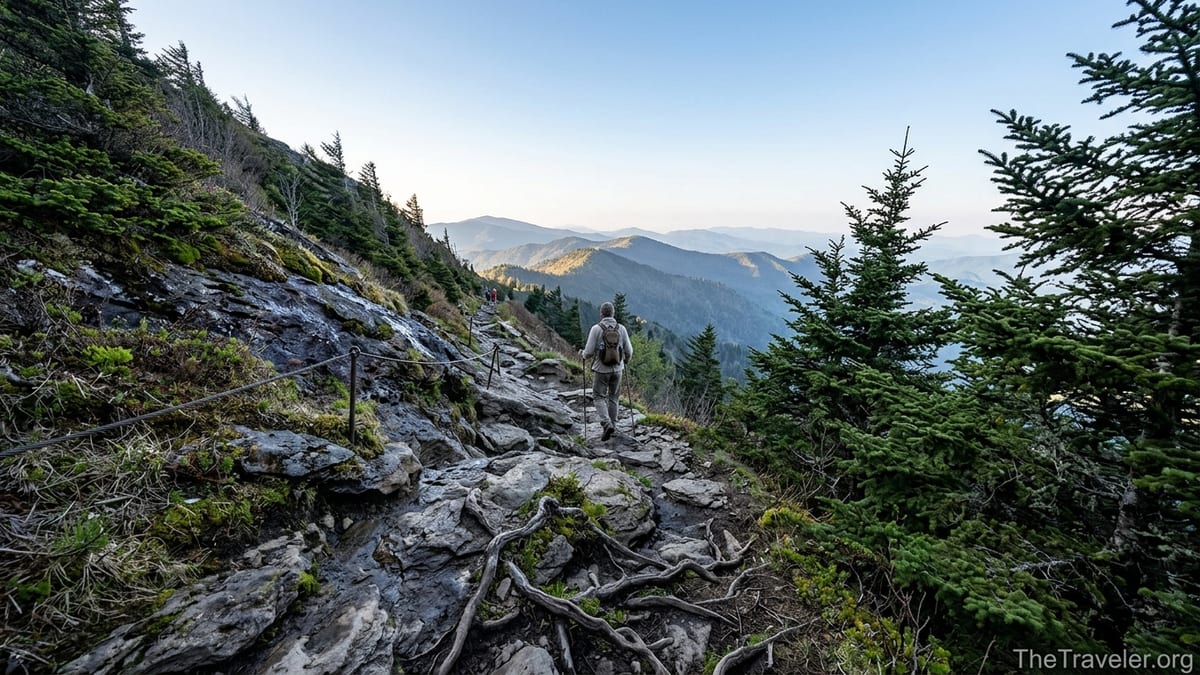
In practical terms, Alum Cave feels like a classic Smokies “greatest hits” hike compressed into a half-day: dramatic bluffs, narrow cliff-side sections with cables, and sweeping views in a relatively short but strenuous package. Trillium Gap feels more like a full-day backcountry journey: deep forest, a waterfall highlight at Grotto Falls, longer stretches of solitude, and a steady, moderate climb that sneaks up to the summit.
Deciding which is “better” depends on what matters most to you. Shortest route? Alum Cave. Gentler grades and fewer crowds? Trillium Gap. Iconic landmarks and big views on the way up? Alum Cave again. In the sections below, we break down the decision by difficulty, scenery, logistics, and real-world use cases to help you choose with confidence.
Distance, Elevation, and Difficulty: How Hard Is Each Trail?
If you are comparing the trails purely by numbers, Alum Cave is the more efficient route to the top. The National Park Service lists it at about 10 miles round trip to the Le Conte area, while recent hiking maps and trackers commonly measure the full trip to High Top, Cliff Top, or Myrtle Point closer to 11 to 12 miles out and back. Elevation gain hovers around 2,700 to just over 3,000 feet from trailhead to summit, which puts it solidly into the “strenuous day hike” category for most visitors.
Trillium Gap stretches the effort over more miles. LeConte Lodge’s 2024 trail guide lists Trillium Gap at 6.7 miles one way and roughly 3,300 feet of climbing. The extra distance means the average grade tends to feel more forgiving, though there are sustained climbs in the upper sections. Day hikers routinely report total outing times of 8 to 10 hours depending on pace, stops, and whether they explore side destinations such as Brushy Mountain.
On the ground, many reasonably fit hikers can complete Alum Cave to the summit and back in 6 to 8 hours with breaks, but the trail can feel relentless in the upper half, especially between Alum Cave Bluffs and the lodge. There are several stretches of narrow, rocky tread where you may be using hand cables for security, which can be mentally tiring for those uncomfortable with heights.
Trillium Gap, by contrast, often feels more manageable for hikers who prefer a steady engine over short, steep pushes. The grade is moderate for long segments, particularly below Grotto Falls. However, the sheer duration can catch people off guard. A visitor who is comfortable with a 7 or 8 mile mountain hike might discover that 13 plus miles, even at a moderate grade, takes a bigger toll than expected, especially on the return leg when knees and feet are already fatigued.
Scenery and Trail Character: Views, Forest, and Landmarks
Alum Cave is famous because it packs a striking variety of scenery into a relatively short corridor. The lower section follows tumbling streams and passes through Arch Rock, a natural stone tunnel reached by rock stairs. As you climb, the forest transitions to high-elevation spruce-fir, and viewpoints like Inspiration Point open to sweeping Smokies ridges. At 2.3 miles you reach Alum Cave Bluffs, an 80-foot high overhanging cliff that feels like a vast rock amphitheater. Many casual visitors turn around here, but those continuing to the summit are rewarded with cliffside traverses and exposed viewpoints near the top.
Trillium Gap feels more subtle but rewards hikers who appreciate texture and mood. From its start near Roaring Fork, the trail passes through old-growth hemlock groves and lush, mossy forest that feels a world away from Gatlinburg just down the road. The headline feature early on is Grotto Falls, where the path literally goes behind the waterfall curtain. Families often hike the short section to Grotto Falls and turn around, but those continuing up the mountain enjoy long stretches of quiet woods, frequent wildflowers in spring and early summer, and occasional openings that reveal the surrounding ridges.
Closer to the top of Trillium Gap, the forest shifts into the same high, cool spruce-fir environment that characterizes the upper reaches of Alum Cave. The last miles to the lodge can feel enclosed and atmospheric rather than dramatic, with dense evergreens, mossy rocks, and the occasional fog bank rolling through. For some hikers, these hushed, almost Canadian-feeling woods are the highlight of the route. For others craving big vistas on the way up, Trillium Gap can feel like a long walk in the trees bookended by Grotto Falls at the bottom and views from Cliff Top or Myrtle Point at the top.
If your ideal Smokies hike includes photogenic rock formations and cliffside drama, Alum Cave almost certainly wins. If you are drawn to waterfalls, deep forest ambience, and a sense of being “away from it all,” Trillium Gap has the edge, especially once you are above the day-hiker traffic around Grotto Falls.
Crowds, Solitude, and Seasonal Considerations
Crowds are one of the most practical reasons hikers compare these two routes. The National Park Service openly warns that Alum Cave experiences extreme crowding and limited parking, and it remains one of the most popular hikes in the entire park. On busy weekends in April, May, June, October, and holiday periods, both parking lots along Newfound Gap Road can fill shortly after sunrise. It is common in summer for day hikers to arrive at 9 a.m. and find themselves parking along the road or turning around altogether.
Trillium Gap is not exactly secret, particularly because the short hike to Grotto Falls is heavily promoted, but overall traffic tends to be lighter the farther you get from the waterfall. The Roaring Fork Motor Nature Trail, which provides access, is itself a popular scenic drive, so mid-day sees plenty of visitors. However, compared with the constant stream of people climbing to Alum Cave Bluffs and beyond, the upper sections of Trillium Gap typically offer more opportunities for solitude, especially on non-holiday weekdays.
Season plays a big role. In July and August, Alum Cave can feel like a moving line of hikers, especially in the first two miles. Trillium Gap still has company near Grotto Falls but quiets significantly higher up. In late fall, when leaves peak and crowds spike across the park, both routes are busy, though Alum Cave generally remains the more congested choice. In winter, Alum Cave’s exposed cliff sections can ice over, making footing tricky and increasing the risk of falls, while Trillium Gap’s longer forested path can accumulate snow and feel more remote. In either season, traction devices and careful planning become important.
There is also a cultural element to the crowds. Alum Cave draws first-time Smokies visitors, family groups heading to the bluffs, and hikers checking a famous trail off their list. Trillium Gap tends to attract LeConte regulars and hikers specifically seeking a quieter ascent. If your idea of a perfect day in the mountains involves chatting with other visitors at overlooks and feeling the social energy of a popular trail, Alum Cave delivers. If you want to hear more wind and birds than human voices, Trillium Gap is more likely to feel “better.”
Parking, Shuttles, and Logistics
Logistics are another key factor in deciding which trail fits you best. Alum Cave’s trailhead sits on Newfound Gap Road between Gatlinburg and Cherokee, directly on one of the park’s busiest corridors. There are two main parking areas, but even those frequently reach capacity early in the day during peak seasons. Since 2023, the park has required a paid parking tag for vehicles parked longer than 15 minutes, so you will need to purchase and display a tag before leaving your car if you plan to hike to Le Conte.
Commercial shuttle services operate in and around Gatlinburg and can drop hikers at Alum Cave trailhead, which is especially useful for overnight guests at LeConte Lodge who want to avoid leaving a vehicle at the trailhead. Several shuttle companies also stop at Newfound Gap, allowing one-way itineraries such as hiking up Alum Cave and descending The Boulevard, or vice versa, though these plans require advance coordination and typically cost more than a simple out-and-back drive.
Trillium Gap’s trailhead sits along the Roaring Fork Motor Nature Trail, a one-way scenic loop accessed from Cherokee Orchard Road above Gatlinburg. The loop is usually open from spring through late fall, with winter closures depending on conditions. Parking at the Trillium Gap / Grotto Falls lot is much smaller than Alum Cave’s, with fewer than 20 spaces, and road shoulder parking is restricted in many areas of the park. This means you may need to time your arrival carefully, often before 8 a.m. during peak summer and fall weekends, or be prepared to circle and wait for a spot as day hikers come and go from Grotto Falls.
One subtle logistical advantage of Trillium Gap is that the drive from central Gatlinburg is shorter and involves less time on the highway-like sections of Newfound Gap Road. For visitors staying in downtown hotels or nearby cabin developments, it can feel easier and less stressful to navigate, though the one-way nature of Roaring Fork means you commit to the full loop once you’re on it. If you are combining an early-morning hike with an afternoon visit to Gatlinburg attractions, Trillium Gap can integrate more cleanly into your day.
Who Should Choose Alum Cave?
Alum Cave is arguably the best choice for strong day hikers who prioritize iconic scenery and want the shortest route to the summit. If you are reasonably fit, comfortable with 10 to 12 miles and a few thousand feet of climbing, and not especially fearful of heights, Alum Cave gives you high-return scenery for the effort. Its mix of creekside forest, Arch Rock, Inspiration Point, Alum Cave Bluffs, and exposed traverses near the top offers near-constant visual interest.
For first-time Le Conte visitors staying at LeConte Lodge, Alum Cave is often recommended by both lodge staff and experienced hikers as the “classic” way up. The route is well signed and heavily traveled, which can feel reassuring if you are nervous about remote mountain travel. Trail conditions are generally good, with boardwalks and stairs in key erosion-prone spots. Cell service is patchy, but the volume of fellow hikers means that help is more readily available in case of minor injuries or fatigue.
Alum Cave also fits travelers with tight schedules. For example, a family staying two nights in Pigeon Forge might drive to the trailhead early, complete the hike in 6 to 8 hours, and still have time for dinner in town. Compare that with Trillium Gap, where a 13 plus mile day at a moderate pace can easily consume 9 or 10 hours door to door, especially if parking and traffic on the Roaring Fork loop slow your start or finish.
However, Alum Cave is rarely the best choice for visitors with vertigo, small children beyond the bluffs, or anyone who genuinely dislikes hiking in crowds. The narrow cliffside segments, though equipped with hand cables, can feel exposed. And on busy weekends, you may find yourself waiting in line to cross tighter sections, pausing for descending groups, and negotiating around slower hikers for long stretches of the trail.
Who Should Choose Trillium Gap?
Trillium Gap tends to be a better match for hikers who value a smoother grade and quieter atmosphere over efficiency. If you are comfortable being on the trail longer, enjoy a deep-woods feel, and prefer fewer steep cliff-side traverses, Trillium Gap may genuinely feel “better” even though it is longer. Many repeat Le Conte visitors and lodge guests choose Trillium for exactly this reason.
This route is also attractive if you want a waterfall highlight on the way up or down. Families hiking to LeConte Lodge with older children sometimes use Trillium Gap because it offers a memorable early milestone at Grotto Falls and then settles into a predictable climb. The famous llama pack trains that resupply LeConte Lodge also travel Trillium Gap, and while schedules vary, catching a glimpse of the llamas is a unique Smokies experience that you will not see on Alum Cave.
For travelers prioritizing solitude, Trillium Gap may be the best compromise between popularity and remoteness. It is far from empty, but once past the waterfall spur traffic thins considerably. If you time your hike for a shoulder-season weekday, it is possible to spend long stretches walking in near silence, with only occasional encounters with other hikers and lodge guests.
The tradeoffs are real, though. Trillium Gap demands more time, more food and water, and a stronger focus on pacing. If you are visiting in July with afternoon thunderstorms in the forecast, a 13 to 14 mile forested round trip can mean several hours of potentially wet hiking. For some travelers, that extended commitment is a feature. For others, it makes Alum Cave feel like the more realistic and enjoyable choice.
The Takeaway
There is no single “better” trail to Mount Le Conte. Alum Cave and Trillium Gap are two distinct experiences leading to the same magical high-elevation destination, and the right choice depends on your priorities, hiking style, and timing. Alum Cave is shorter, steeper, more dramatic, and substantially more crowded. Trillium Gap is longer, more gradual overall, quieter higher up, and framed by deep forest and a signature waterfall.
If you are a relatively strong hiker visiting the Smokies for the first time, have one full day to spare, and want the most iconic route with big views on the way, Alum Cave is likely your best bet, provided you start early enough to secure parking and avoid the worst of the crowds. If you are a repeat visitor, an overnight guest at LeConte Lodge seeking a more peaceful ascent, or someone who values steady grades and forest solitude, Trillium Gap may well feel superior despite the extra miles.
Either way, both trails demand respect. Weather at 6,000 plus feet can change quickly, footing can be wet and rocky, and the combination of distance and elevation gain makes a Le Conte hike a serious undertaking. With realistic planning, early starts, and the right expectations, both Alum Cave and Trillium Gap can deliver one of the most rewarding day hikes in the eastern United States. The better trail is ultimately the one that best fits your group’s abilities, comfort level, and sense of adventure.
FAQ
Q1. Which trail to Mount Le Conte is shorter, Trillium Gap or Alum Cave?
Alum Cave is shorter, at roughly 5 miles one way from the trailhead to the Le Conte lodge area, while Trillium Gap is about 6.7 miles one way.
Q2. Which trail is easier for beginners, Trillium Gap or Alum Cave?
Neither is truly beginner-friendly, but moderately fit first-time mountain hikers often find Trillium Gap’s more gradual grade easier, while Alum Cave feels steeper and more intense.
Q3. Which route offers better views on the way up?
Alum Cave usually wins for mid-hike scenery, with Arch Rock, Alum Cave Bluffs, and exposed cliffside overlooks. Trillium Gap’s big views mostly come at the top near Cliff Top and Myrtle Point.
Q4. Is Trillium Gap less crowded than Alum Cave?
Generally yes. Grotto Falls near the bottom is popular, but above it the Trillium Gap Trail sees fewer hikers than the always-busy Alum Cave corridor.
Q5. Which trail is better if I am afraid of heights?
Trillium Gap is usually better for people uncomfortable with exposure. Alum Cave has narrow cliffside sections with cables and drop-offs that can feel intimidating.
Q6. How early should I arrive for parking at Alum Cave trailhead?
In peak seasons and on weekends, aim to arrive around sunrise or even earlier to improve your chances of finding a legal parking spot at Alum Cave.
Q7. Do I need a parking tag for either trail?
Yes. Great Smoky Mountains National Park requires a paid parking tag for vehicles parked more than 15 minutes, including at Alum Cave and Trillium Gap trailheads.
Q8. Is one trail better for staying at LeConte Lodge?
Many first-time lodge guests go up or down Alum Cave for the classic views, while returning guests often choose Trillium Gap for its quieter, more gradual ascent or descent.
Q9. Can I hike up one trail and down the other in a day?
It is possible but very demanding. Linking Alum Cave and Trillium Gap into a one-way hike adds distance and requires shuttle logistics or a second vehicle, so it suits experienced hikers.
Q10. Which route should families with older kids choose?
Active families with experienced hikers often choose Alum Cave for excitement and scenery. Those wanting a steadier, less exposed option sometimes prefer Trillium Gap, especially if the kids like waterfalls and forest.