


More news on this day
As a total solar eclipse sweeps across the North Atlantic and into northern Spain on August 12, Reykjavík and Bilbao are emerging as twin focal points for eclipse tourism, drawing skywatchers, cruise operators and last-minute opportunists into an unusually intense late-summer travel rush.
Get the latest news straight to your inbox!
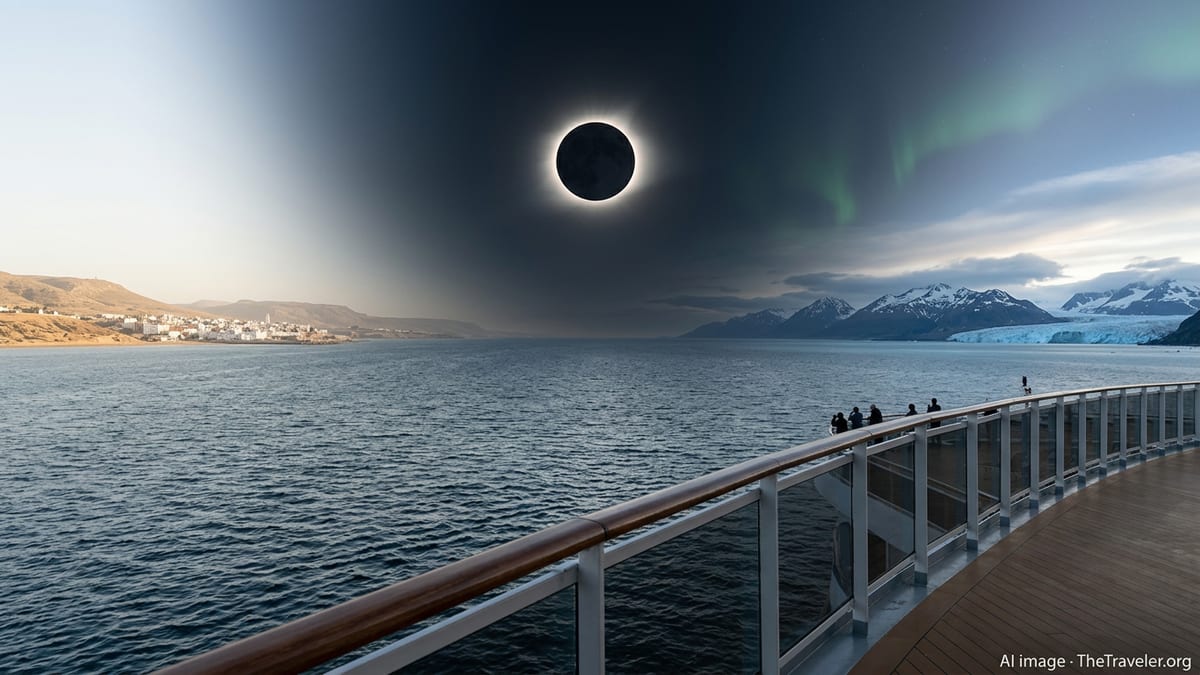
Astronomy Turns Two Secondary Gateways Into Global Stages
The 2026 total solar eclipse will begin over the Arctic Ocean before passing across eastern Greenland, western Iceland and northern Spain, placing Reykjavík and Bilbao close to the center of a path that will not return to either country for generations. Publicly available astronomical data shows that Iceland is seeing its first total solar eclipse since 1954, and its first centered on the capital region since the 15th century. In the Basque Country, regional information portals describe the event as the first total eclipse visible there in more than a century.
Travel guidance from Icelandic and Basque tourism agencies frames the eclipse as a continental occasion involving multiple destinations, from Greenland and the Westfjords to the Basque interior and the Atlantic coast of Cantabria. Yet Reykjavík and Bilbao stand out as rare urban centers directly under or near the path of totality, with sizeable airports, cruise-capable ports and established cultural brands that can quickly package an astronomical event into short-break itineraries.
Specialist tour programs, cruise charters and university-affiliated voyages are routing via Reykjavík and northern Spanish ports to intercept the eclipse, according to published itineraries. In both countries, national and regional authorities have also set up dedicated eclipse information hubs outlining safe viewing practices, suggested viewpoints and expected traffic disruptions, underscoring that the event has shifted from a niche astronomical curiosity to a significant tourism and mobility challenge.
Reykjavík’s Peak Season Gets an Extraordinary Overlay
Iceland already sits at the intersection of transatlantic air routes and adventure tourism circuits, with carriers reporting record passenger volumes in 2025 and continued growth into 2026. The eclipse falls directly into high season, adding an intense, time-specific demand spike to a market that is usually stretched by summer road-trippers, cruise calls and festival visitors.
Hotel and short-term rental capacity in and around Reykjavík has been under pressure for months. Booking platforms and visitor forums indicate that rooms anywhere close to the center of the path of totality on the Reykjanes and Snæfellsnes peninsulas, and in the capital region itself, have been largely sold out or repriced at several times typical August rates. Cruise lines and group tour operators have helped absorb some of the overflow by positioning ships and escorted coach tours to use Reykjavík as both a staging ground and a fallback viewing base in case travelers cannot reach more remote headlands.
Government portals dedicated to the total solar eclipse highlight that most residents in western Iceland will be able to experience totality close to home, which further concentrates attention on the capital area. Advisory notices emphasize road safety, congestion risks and the limited capacity of gravel routes in popular viewing areas beyond Reykjavík’s paved network. Travel planning resources encourage visitors to avoid last-minute relocations on eclipse day, to favor public transport where available and to treat the eclipse as one component of a broader Iceland itinerary rather than a stand-alone dash across the countryside.
Bilbao and the Basque Coast Seize a Northern Spain Moment
In Spain, the eclipse path cuts across the north of the country during the evening, with the Basque Country, Cantabria and parts of Castile and León among the most favored regions. Time-and-astronomy services indicate that Bilbao will experience a brief totality window just after sunset, positioning the city as a dramatic urban stage where the event coincides with the golden hour over the estuary and surrounding hills.
Basque tourism platforms have grouped Bilbao into a trio of eclipse zones that also highlight San Sebastián, Vitoria-Gasteiz and nearby natural parks, marketing the phenomenon as an excuse to combine stargazing with gastronomy, hiking and cultural sightseeing. Travel features and regional campaigns encourage visitors to link coast and interior, with Bilbao framed as both gateway airport and cultural anchor thanks to its museums, dining scene and established city-break profile.
The timing intersects with Spain’s traditional August holiday period, when domestic travelers already fill coastal resorts and inland rural stays. Early indicators from booking channels and regional media point to elevated demand across northern Spain’s accommodation market, not just in Bilbao’s core hotels but also in smaller guesthouses and campsites promoted as darker, less light-polluted vantage points. Authorities at national and regional level have created centralized eclipse portals that bundle safety advice with transport updates and event listings, reflecting expectations of heavy evening traffic along coastal motorways and popular overlooks.
Managing Crowds, Safety and Weather in Two Very Different Climates
Despite their shared eclipse moment, Reykjavík and Bilbao face different operational challenges. Iceland’s concerns revolve around limited road capacity, variable weather and the cumulative impact of yet another record tourism year. Public advisories stress that Iceland’s famously fast-changing conditions could obscure the eclipse in some locations, and that blindly chasing clearer skies along narrow coastal roads may be riskier than accepting suboptimal viewing in or near the capital.
Spanish and Basque guidance, by contrast, focuses on heat, wildfire risk and late-evening crowd management. Northern Spain is generally milder than the country’s interior, but August can still bring hot, dry spells that complicate access to rural vantage points and natural parks. Official materials circulated in recent weeks highlight the need for certified eclipse glasses, discourage traffic-heavy last-minute relocations, and warn against gathering in areas with limited parking or evacuation options.
In both cities, cultural institutions, science centers and local associations are organizing talks, viewing events and family activities in the days leading up to August 12, according to publicly advertised programs. These efforts position the eclipse as an educational opportunity and a community experience, rather than simply a spectacle for foreign visitors, even as local residents confront the trade-offs that come with large, short-lived surges in visitor numbers.
Longer-Term Tourism Questions After the Shadow Moves On
The eclipse has also become a test case for how destinations with very different tourism trajectories handle sudden, high-stakes peaks. Reykjavík, already debating the environmental and social costs of rapid visitor growth, is using eclipse planning to refine traffic-management playbooks, emergency procedures and messaging around responsible travel. Public-facing guidance emphasizes staying on marked roads, respecting protected landscapes and planning itineraries that distribute pressure beyond a few signature sites.
For Bilbao and the wider Basque Country, the event arrives at a moment when northern Spain is broadening its international reach beyond traditional summer beach tourism. Regional tourism campaigns increasingly spotlight climate-friendly seasons, cultural content and inland nature experiences. A successful eclipse week could reinforce Bilbao’s role as a northern gateway city that blends science, art and outdoor access, encouraging repeat visits outside the August peak.
Astrotourism specialists point out that total solar eclipses are, by definition, fleeting. The path that passes over Reykjavík and Bilbao in 2026 will not return in this configuration, and both destinations will revert to more familiar travel patterns within days. Yet the operational lessons, marketing experiments and community reactions unfolding around August 12 are likely to influence how Iceland and northern Spain prepare for future surges, whether triggered by celestial events, major sports fixtures or climate-driven shifts in where travelers choose to spend their summers.