


More news on this day
Italy’s Ferragosto holiday period is once again pushing Rome and Florence into peak travel mode, as mid‑August bookings, museum counts and transport demand signal one of the busiest stretches of the summer for the country’s two flagship art cities.
Get the latest news straight to your inbox!
Ferragosto crowds reshape August in Italy’s art capitals
Ferragosto, the national holiday on 15 August, has long been a turning point in the Italian summer, but recent data show it increasingly functions as a high‑intensity travel corridor rather than a quiet break. Tourism statistics describe Ferragosto as one of the key peaks in domestic and international travel within Italy, drawing visitors not only to coastal resorts but also to major cultural hubs such as Rome and Florence.
National figures released for 2024 indicate that Italy consolidated its position among Europe’s most visited destinations, with the country accounting for a significant share of total tourist stays in the European Union. Rome and Florence rank among the leading Italian municipalities by overnight stays, with Florence appearing in the top tier of destinations and Rome eclipsing many rivals in total visitor numbers over the course of the year. These structural trends set the backdrop for an intense mid‑August surge.
Sector analyses for 2024 and 2025 highlight how demand has spread across seasons but still spikes around major holidays. Travel observatories and trade associations reported that the August holiday period generated tens of millions of overnight stays nationwide, with hotel occupancy frequently surpassing 90 percent in popular locations. Mid‑August now functions less as an exception and more as a predictable, high‑volume phase of Italy’s annual tourism calendar.
Advance booking data for summer 2026, cited in industry outlooks, point to a continuation of this pattern. Operators in both Rome and Florence report strong reservations across the August week that includes Ferragosto, particularly in central districts near major monuments and museums. The result is a compressed period in which long‑term global travel growth and traditional Italian holiday habits collide in narrow historic streets and busy rail corridors.
Rome records surging arrivals around Ferragosto
Rome’s tourism portal has described August in recent seasons as a record‑breaking period, with the city emerging as a leading European destination for foreign arrivals. Reports on the 2024 Ferragosto week cited more than 600,000 arrivals and over 1.6 million overnight stays, with year‑on‑year increases in both indicators despite intense summer heat. These volumes confirm that Rome’s status as a global city of culture increasingly extends into weeks once associated with closures and empty boulevards.
Cultural visitation figures reinforce this narrative. Publicly available data from the Italian Ministry of Culture and coverage in national media show that on the Ferragosto holiday in 2024, the Colosseum archaeological park alone drew more than 22,000 visitors, while the Roman Forum and Palatine Hill received nearly 15,000. Museums and archaeological sites across the capital together welcomed well over 100,000 people over the holiday, making Ferragosto one of the busiest days of the year for Rome’s cultural infrastructure.
City‑level tourism analyses highlight the impact on accommodation and services. Hotel performance reports for 2024 and 2025 identify Rome as one of Italy’s strongest markets, with robust occupancy and rising average daily rates in the height of summer. The Ferragosto window concentrates demand in central neighborhoods, increasing pressure on public transport, taxi supply and restaurant reservations. Visitors arriving without pre‑booked services face limited availability, particularly on the evenings immediately before and after 15 August.
Travel forums and on‑the‑ground reports from recent summers add qualitative detail to these trends. Travellers frequently describe August in Rome as a combination of intense heat and heavy foot traffic around the Colosseum, Vatican Museums and Trevi Fountain, with early morning time slots and skip‑the‑line arrangements selling out weeks in advance. The emerging picture is of a city that remains fully open to tourism in mid‑August, but one where flexibility is reduced and careful planning is increasingly essential.
Florence’s art tourism hits peak intensity at mid‑August
Florence, already one of Italy’s most visited cities relative to its size, experiences a particularly sharp concentration of visitors during Ferragosto. National statistics office data for 2024 place Florence among the top Italian municipalities by tourist presence, underscoring its central role in the country’s cultural tourism economy. This structural popularity becomes even more visible in the narrow streets of the historic center when mid‑August crowds arrive.
Published figures from the Ministry of Culture and regional media coverage show that Florence’s flagship museums registered notable spikes on 15 August 2024. The Uffizi Galleries reported more than 10,000 visitors on the Ferragosto holiday, slightly above the already high totals recorded a year earlier, while overall entries to state cultural sites in the city approached 30,000 for the day. These numbers illustrate how the Ferragosto travel boom translates directly into queues outside galleries and congested piazzas around the Duomo and Ponte Vecchio.
Hospitality sector documents for 2024 and 2025 describe Florence’s hotel market as one of the strongest in Italy, with high occupancy reinforced by premium room rates in peak periods. August remains a key revenue month, and the Ferragosto interval often sees central properties operating close to full capacity. The combination of compact geography and intense demand means that crowding effects can feel particularly pronounced compared with larger urban areas.
Travel accounts from recent years point to a city that remains operational but stretched at mid‑August. Visitors report packed trains arriving from Rome, busy platforms at Santa Maria Novella station and long waits at popular gelaterie and trattorie. For many, the experience underscores both the enduring appeal of Florence’s Renaissance heritage and the growing challenge of managing visitor flows during a compressed holiday surge.
National holiday patterns, heat and infrastructure challenges
The Ferragosto travel boom in Rome and Florence fits into a broader national pattern in which Italian public holidays generate pronounced spikes in movement. Tourism studies on Italy note that liberation, labour and republic holidays in spring, as well as Ferragosto and other religious dates, consistently mark peaks in both domestic and international flows. The mid‑August break stands out among these, combining summer beach travel with strong interest in cultural city breaks.
Weather conditions add another layer to this dynamic. Recent summers have brought prolonged heatwaves to central Italy, with Rome and Florence frequently recording daytime highs above seasonal averages during August. Tourism‑sector commentary stresses that these temperatures have not significantly reduced arrivals, but they do influence visitor behaviour, encouraging early morning and late evening activity and placing extra demand on shaded public spaces and indoor, air‑conditioned attractions.
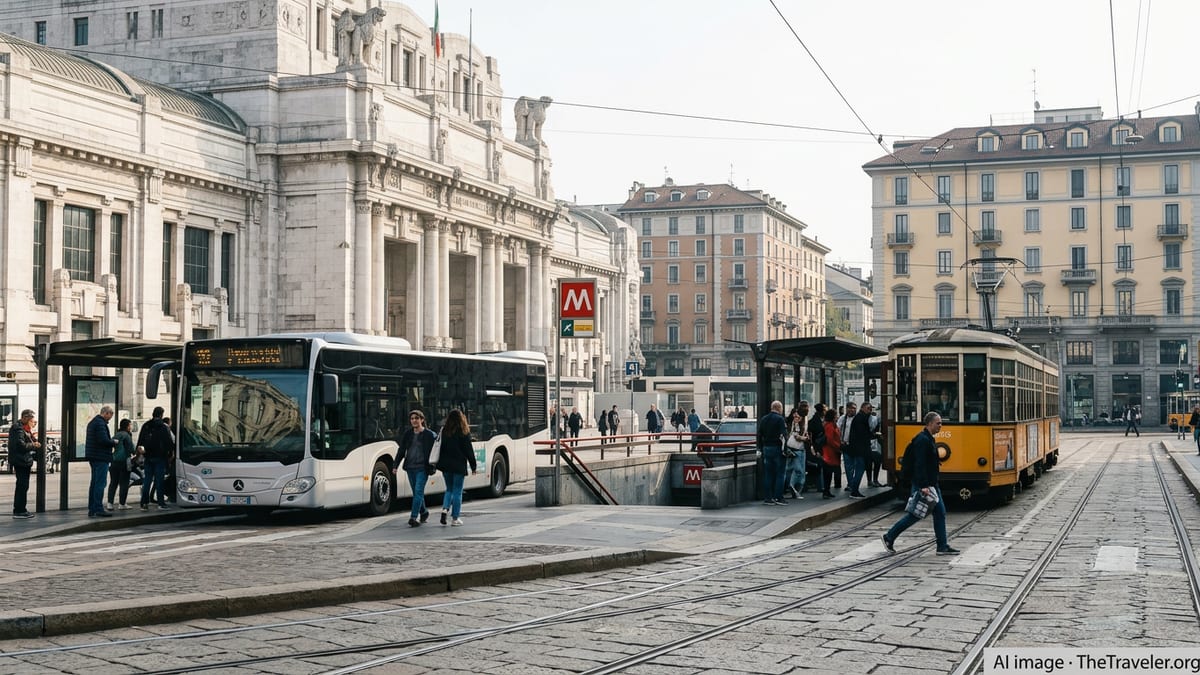
Infrastructure and mobility systems are also tested by the Ferragosto rush. Rail operators typically schedule enhanced high‑speed services along the Rome–Florence corridor in summer, but peak‑day trains still fill quickly, and travel advisories regularly recommend advance booking for mid‑August journeys. Urban transport networks face similar pressures, with metro lines, buses and trams in both cities carrying large volumes of passengers despite adjusted schedules around the holiday.
Debates over so‑called overtourism continue to shape policy discussions at municipal and national level. Rome and Florence have both explored regulatory measures and visitor‑management strategies in recent years, from ticketing reforms at major monuments to experiments with crowd control in sensitive historic districts. Although Ferragosto is only one part of a longer high season, its condensed traffic often serves as a testing ground for these approaches and a visible indicator of how Italy’s tourism model is evolving.
What mid‑August travellers can expect in 2026
Forward‑looking tourism outlooks for 2026 point to continued strength in Italy’s inbound and domestic travel markets, suggesting that Rome and Florence are likely to see another intense Ferragosto period. Industry forecasts draw on recent booking patterns, inflation trends and air and rail capacity projections, which together indicate sustained demand for cultural city breaks even as some travellers diversify toward lesser‑known destinations.
For visitors planning a mid‑August trip this year, publicly available travel advice paints a consistent picture. Hotel reservations in central Rome and Florence are recommended well in advance for stays that include 15 August, particularly for properties near major sights. Pre‑booking time‑slotted entries to headline attractions such as the Colosseum archaeological area and the Uffizi Galleries is now treated as standard practice rather than a discretionary extra, especially around the holiday.
Travellers can also expect a mixed business landscape in both cities during Ferragosto. While many smaller, family‑run shops and some restaurants take a summer break, most tourism‑facing services stay open, including museums, larger retail outlets and transport links. The result is a city environment that feels simultaneously festive and operational, as local holiday customs intersect with the demands of a global visitor economy.
As Italy moves through another record‑setting tourism cycle, the Ferragosto travel boom in Rome and Florence encapsulates the opportunities and strains of high‑season travel. Packed piazzas, crowded museums and full trains capture the current moment in which the country’s historic appeal continues to draw ever‑larger audiences to its art capitals, particularly in the heat and intensity of mid‑August.