


Luxury tour companies are masters at turning complicated itineraries into seamless, high-touch journeys. Abercrombie & Kent is one of the most famous names in this space, but many travelers quietly ask the same question before they book: just how expensive is A&K compared with other luxury tour operators, and what do you truly get for the premium price tag? Looking at real itineraries and sample prices across several brands helps clarify where Abercrombie & Kent sits on the luxury spectrum and when it may, or may not, be worth paying more.
Get the latest updates straight to your inbox!
Where Abercrombie & Kent Sits in the Luxury Landscape
Abercrombie & Kent operates firmly in the high-end segment of the guided travel market. Its portfolio spans escorted small-group journeys, private tailor-made itineraries, luxury safaris, expedition cruises and ultra-premium private jet trips. The company is known for using upscale or luxury-level hotels, high-end safari camps and lodges, and for bundling in a great deal of on-the-ground support, from resident tour directors to local specialists.
Independent advisors who regularly work with the brand often describe A&K as a “top tier but not the absolute top of the pyramid” when it comes to price. At one end of the scale, you have upper-premium tour operators that run high-quality trips with good hotels at lower per-day rates. At the very top are ultra-bespoke outfits and safari specialists charging eye-watering amounts for highly personalized service and extremely exclusive properties. Abercrombie & Kent tends to slot in just below those ultra-bespoke prices, yet noticeably above most mainstream escorted tour companies.
As a rough orientation point, travel writers tracking the market report that many Abercrombie & Kent small-group journeys often start around the high four figures to low five figures per person. One analysis of luxury small-group operators noted that A&K itineraries generally run from about 8,000 US dollars per person and up for a week-plus trip, depending heavily on the region and season. That already places the brand far above mass-market tours, which might advertise Europe packages in the low thousands, but in line with top-end competitors.
The brand’s pricing is also shaped by the type of product. A small-group journey that includes domestic flights, high-end hotels and most meals will sit at one price point. A tailor-made safari built around exclusive tented camps and private charters will be another level entirely. And at the top, its private jet journeys, which can easily run well into six figures per person, occupy a niche comparable to luxury cruise world voyages and round-the-world expeditions offered by only a handful of operators globally.
Concrete Price Examples: Safaris and Small-Group Journeys
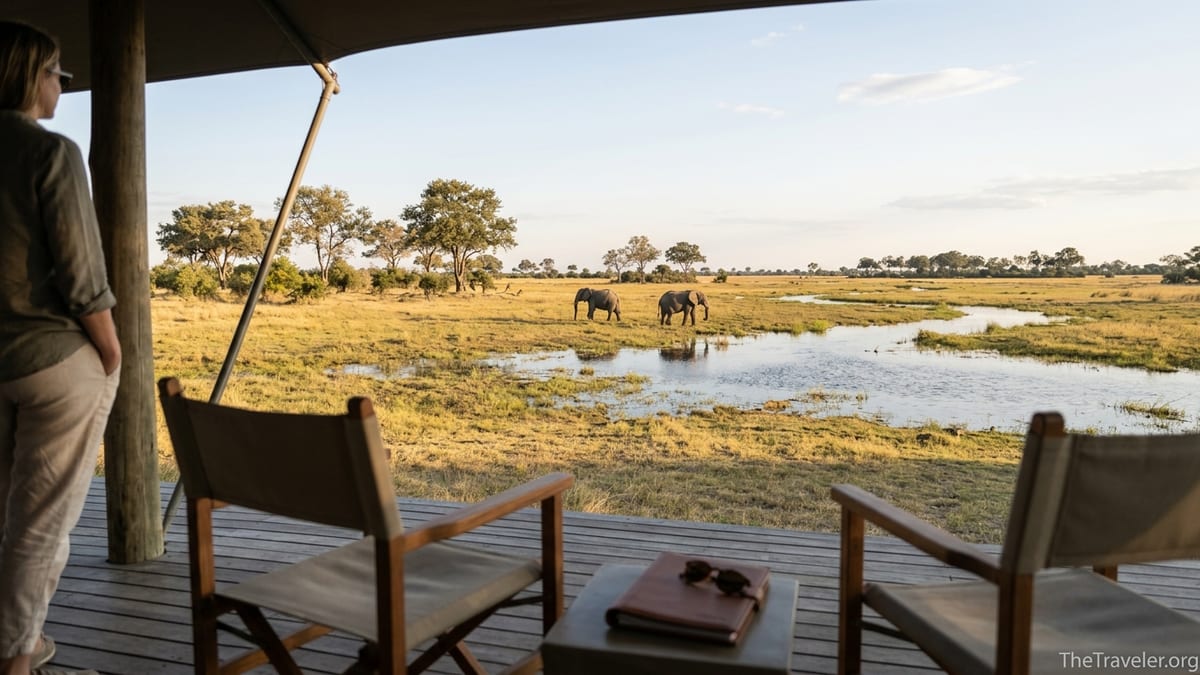
Safaris are one of the clearest ways to compare luxury tour pricing, because the basic components are broadly similar across operators: charter flights, park fees, guiding and high-end camps. Abercrombie & Kent’s own brochures for its luxury small-group safaris give a sense of where it lands. A 10-day “Botswana Safari in Style” small-group itinerary limited to around 16 guests, featuring time at top-end properties such as Sanctuary Chief’s Camp in the Okavango Delta and a mix of game drives, bush walks and river safaris, is published at just under 15,000 US dollars per person for select departures in a recent season, excluding international flights.
Looking at a current pricing grid for a similar Botswana small-group program, a more recent brochure aimed at the Australia market lists a 10-day Botswana “Safari in Style” itinerary from just over 23,000 Australian dollars per person. While currency and year-to-year changes matter, numbers at this level are representative of what travelers can expect from A&K for a high-end, fully escorted African journey with limited group size. Daily rates frequently reach into the 1,200 to 1,800 US dollars per person range once you include internal flights and premium camps in peak season.
Beyond Africa, recent A&K small-group journeys in Asia show similar positioning. A 14-day “Mountains and Myths” tour through China and Tibet, introduced to the small-group lineup, entered the market at a price in the low five figures in British pounds for two weeks, again putting the per-day cost firmly in the top luxury tier. Travelers on that itinerary visit headline sights such as the Great Wall, Yunnan’s alpine scenery and Lhasa’s Potala Palace, staying in upscale city hotels and well-regarded lodges, with domestic flights and ground logistics fully handled.
These sample prices demonstrate that Abercrombie & Kent’s escorted trips are not outliers compared to other luxury brands, but they do sit well above premium coach tours. While a mainstream operator might sell a 9-day national parks itinerary in the United States for roughly 5,000 to 7,000 US dollars per person including some meals, luxury-focused itineraries like A&K’s often cluster closer to the 8,000 to 12,000 US dollar bracket or more for similar durations, especially when every hotel, transfer and activity is positioned at the high end.
How Abercrombie & Kent Compares to Other Luxury Brands
To understand whether Abercrombie & Kent is “more expensive than everyone else,” it helps to compare it with several well-known names in the same space. Tauck, for example, is a long-established premium and luxury tour operator that runs land tours, river cruises and small-ship sailings. A 9-day “Yellowstone & the Tetons” itinerary with Tauck, marketed as a high-end American safari experience, typically prices in the mid four-figure range per person for standard groups, with small-group departures costing more. That per-day cost is high compared with mainstream motorcoach tours but often a bit lower than the more intensely curated itineraries offered by A&K in Africa or Asia.
Meanwhile, active-travel specialists such as Butterfield & Robinson sit in a similar, and sometimes higher, band than Abercrombie & Kent on a per-day basis. A 9-day small-group biking trip in New Zealand with Butterfield & Robinson is currently advertised from just under 18,000 US dollars per person, while a 6-day walking and hiking trip in Sicily runs from around 8,500 US dollars per person. Those figures indicate daily rates comparable with, or higher than, many A&K cultural journeys, though the inclusions differ, emphasizing top-tier boutique hotels, high-end meals and intensive guiding on the trail.
At the ultra-luxury end of the market, extended expeditions can surpass even A&K’s high prices. Butterfield & Robinson’s 60-day around-the-world journey, for instance, is priced at about 85,000 US dollars per person not including some flights. On the A&K side, private jet journeys circling the globe or linking several continents in three to four weeks typically run in the low-to-mid six figures per person. In other words, at the absolute top of this market, most major brands compete in a similar high-altitude price band.
It is also worth noting that some safari specialists focused solely on Africa, such as boutique operators that design fully private itineraries built around ultra-exclusive camps, can match or exceed A&K’s tailor-made safari pricing. Where Abercrombie & Kent distinguishes itself is in combining a wide geographic footprint with that level of service and access, so its prices across regions are often more uniform at the top end than smaller niche companies that may be cheaper in some destinations and more expensive in others.
What Drives A&K’s Premium Pricing
Several consistent factors help explain why Abercrombie & Kent often costs more than broadly similar itineraries with less famous names. The first is the level of service baked into the trips. A&K’s escorted journeys are built around resident tour directors who stay with the group and have deep local expertise, supported by local guides, dedicated drivers and a back-office operations team. Travelers are typically met at airports, assisted with luggage, and insulated from the sort of logistical headaches that independent travelers accept as part of the adventure.
The second major cost driver is accommodation. Abercrombie & Kent tends to favor luxury or upper-upscale properties in each destination: well-regarded safari camps with prime wildlife viewing locations, beachfront resorts with larger rooms and stronger service reputations, and city hotels belonging to global luxury brands or distinctive independent properties. For example, on some Botswana itineraries the company uses Sanctuary Chief’s Camp in the Okavango Delta, a property that commands very high nightly rates even when booked independently. Building a group journey around such flagships inevitably lifts the overall price.
Third, inclusions matter. Many A&K small-group journeys include most meals, internal flights and a dense program of touring and special activities. A two-week cultural tour in Asia might bundle domestic flights, curated dining experiences, private museum visits or after-hours access to major sights. On a safari, charter flights between remote airstrips, park fees and twice-daily game drives are included. When you compare brochure prices, it is critical to factor in these inclusions. An itinerary that looks cheaper at first glance may require travelers to add expensive domestic flights or most meals out-of-pocket.
Finally, there is the brand premium itself. Abercrombie & Kent has been selling luxury travel for decades and has built up a strong “trust” factor with many repeat guests and travel advisors. That reputation allows the company to command higher margins in exchange for the reassurance that operations are well-tested and that there is 24/7 support if something goes wrong. For some travelers, that alone justifies paying more than they might with a newer or less globally recognized luxury operator.
Value for Money: When Is A&K Worth the Price?
Determining whether Abercrombie & Kent is “worth it” depends less on the absolute number and more on what matters most to you as a traveler. If you place a high value on not worrying about details, having an experienced resident tour director and staying in reliably upscale properties, then the premium often makes sense. Consider a 10-day Botswana safari costing around 15,000 US dollars per person through A&K versus a 10-day trip you assemble yourself using high-end camps and charter flights. By the time you factor in internal flights, guides, transfer logistics and the nightly rates of comparable camps, the difference may be far smaller than it appears at first glance.
For complex destinations where safety, logistics or language barriers are significant, such as parts of East Africa, Central Asia or remote corners of South America, the peace of mind that comes with a large, well-resourced operator has a value that is harder to quantify. An A&K small-group Galapagos and Ecuador journey, for instance, combines a curated cruise component with land arrangements, internal flights and a specialist guiding team. Compared with assembling separate bookings for a cruise, hotels in Quito, domestic flights and guides, some travelers prefer a single premium price that covers everything.
Abercrombie & Kent’s strongest value proposition is often for travelers who are both time-poor and expectation-rich. A high-earning professional who can travel only once a year for two weeks may decide that paying several thousand dollars more than a mid-range option is acceptable if it significantly reduces the risk of a disappointing hotel, a missed connection or a subpar guide. Conversely, well-traveled guests who enjoy trip planning and are comfortable with a few rough edges might achieve similar experiences by booking directly with lodges and using local outfitters at a lower overall cost.
In short, Abercrombie & Kent delivers good value for people who want high reassurance, strong curation and one-stop support. It is less compelling value for travelers primarily motivated by price or those who view the planning process as a rewarding part of the journey.
Ways to Manage Costs With Abercrombie & Kent
For travelers who like the A&K style but are concerned about the price, there are several ways to manage costs while still benefiting from the company’s infrastructure. Choosing small-group journeys rather than fully private tailor-made trips is usually the single biggest lever. A set departure to Botswana, Egypt or Japan with up to 18 guests spreads the cost of guides, buses and some activities across more people, leading to a lower per-person rate than having a private vehicle and dedicated guide throughout.
Being flexible on dates and cabin or room categories also makes a difference. Shoulder-season departures for safaris, for example, can be noticeably cheaper than peak-season dates while still delivering excellent wildlife viewing. On expedition cruises or Galapagos journeys, booking a lower cabin category rather than a suite can reduce the total cost significantly without changing the core itinerary or guiding quality. Travelers who do not require the biggest room or highest floor can preserve most of the experience at a lower rate.
Some Abercrombie & Kent offers, such as limited-time solo traveler promotions or early-booking discounts, can soften the price. For instance, there are periodic offers waiving or reducing the single supplement on selected small-group departures in destinations like Botswana or Peru, bringing the solo cost closer to what couples pay on a per-person basis. While such promotions come and go, a travel advisor who tracks A&K’s release cycles can sometimes align your preferred itinerary with a more favorable price window.
Finally, mixing and matching styles can work well. A traveler might book a 7-night A&K small-group journey in a country such as India, focusing on busy cities and complex logistics, then add a week of independent beach time at the end in the Maldives or Goa using hotels booked directly. This approach uses A&K where its strengths are most valuable and keeps costs down where you are comfortable managing things yourself.
The Takeaway
Abercrombie & Kent sits near the top of the luxury tour market in both price and positioning. Typical small-group journeys often start around the high four figures to low five figures per person, with safaris and private jet trips rising far higher. When compared with peers like Tauck or Butterfield & Robinson, A&K’s pricing is rarely an outlier; it is usually in line with, or slightly below, the most bespoke operators, yet clearly above mainstream premium tour brands.
What you pay for with Abercrombie & Kent is a combination of strong destination operations, high-end accommodations, intensive inclusions and a level of support that many travelers find deeply reassuring. For those who want to maximize comfort and minimize uncertainty on complex, long-haul trips, the additional cost may be justified. Others, particularly independent travelers who enjoy planning and are willing to accept more variability on the ground, can often achieve similar itineraries for less by working directly with local specialists.
In the end, the key is not whether Abercrombie & Kent is “too expensive” in absolute terms, but whether its particular blend of service, access and brand security aligns with your priorities. Understanding how its prices compare with other luxury tour operators, and where there is flexibility to adjust inclusions or timing, will help you decide if A&K belongs on your shortlist for a future dream trip.
FAQ
Q1. Is Abercrombie & Kent more expensive than most luxury tour companies?
In many cases Abercrombie & Kent is priced similarly to other top luxury operators, and often above mainstream premium tour brands but below the most ultra-bespoke specialists.
Q2. How much does a typical Abercrombie & Kent small-group tour cost?
Many A&K small-group journeys run in the high four figures to low five figures per person, with per-day rates often between roughly 700 and 1,500 US dollars depending on destination.
Q3. Are Abercrombie & Kent safaris worth the higher price?
For travelers who value seamless logistics, top-end camps and strong guiding, A&K safaris can be good value. Price-sensitive or highly independent travelers may find better deals with smaller local operators.
Q4. How does Abercrombie & Kent compare to Tauck on price?
Tauck is generally a premium-to-luxury brand, sometimes pricing slightly below A&K on similar cultural itineraries, though differences narrow on complex or remote trips.
Q5. How does Abercrombie & Kent compare to Butterfield & Robinson on price?
Butterfield & Robinson often has comparable or even higher per-day prices, especially on intensive active trips like biking in New Zealand or walking in Europe that feature top-tier boutique hotels.
Q6. Are private jet journeys with Abercrombie & Kent unusually expensive?
Private jet journeys with A&K sit in the same very high price band as round-the-world or grand expedition trips offered by a handful of other ultra-luxury operators.
Q7. Can I reduce the cost of an Abercrombie & Kent trip?
Yes. Choosing small-group departures, traveling in shoulder seasons, selecting lower room categories and watching for solo or early-booking offers can all bring the price down.
Q8. Is it cheaper to book luxury hotels and safaris myself instead of using A&K?
Booking directly can be cheaper, especially if you enjoy research and accept some risk, but you may lose the bundled support, curated guiding and leverage A&K provides when things go wrong.
Q9. Does Abercrombie & Kent overcharge for hotels and local services?
A&K adds a margin for coordination, expertise and support, so its package rate is higher than the sum of raw hotel and activity costs, but that uplift funds the overall service and infrastructure.
Q10. Who is the ideal traveler for Abercrombie & Kent?
The ideal A&K guest is a traveler who prioritizes comfort, expert guidance and worry-free logistics, and is willing to pay a premium to reduce uncertainty and maximize overall trip quality.