


Choosing between Backroads and G Adventures is less about which company is “better” and more about which one matches the way you actually like to travel. Both are respected names in small-group adventures, both have loyal repeat customers, and both can deliver an unforgettable trip. But the on-the-ground experience in terms of comfort, activity level, group demographics, and price can feel very different. Here is how these two operators really compare, with concrete examples to help you decide which one fits your travel style better.
Get the latest updates straight to your inbox!
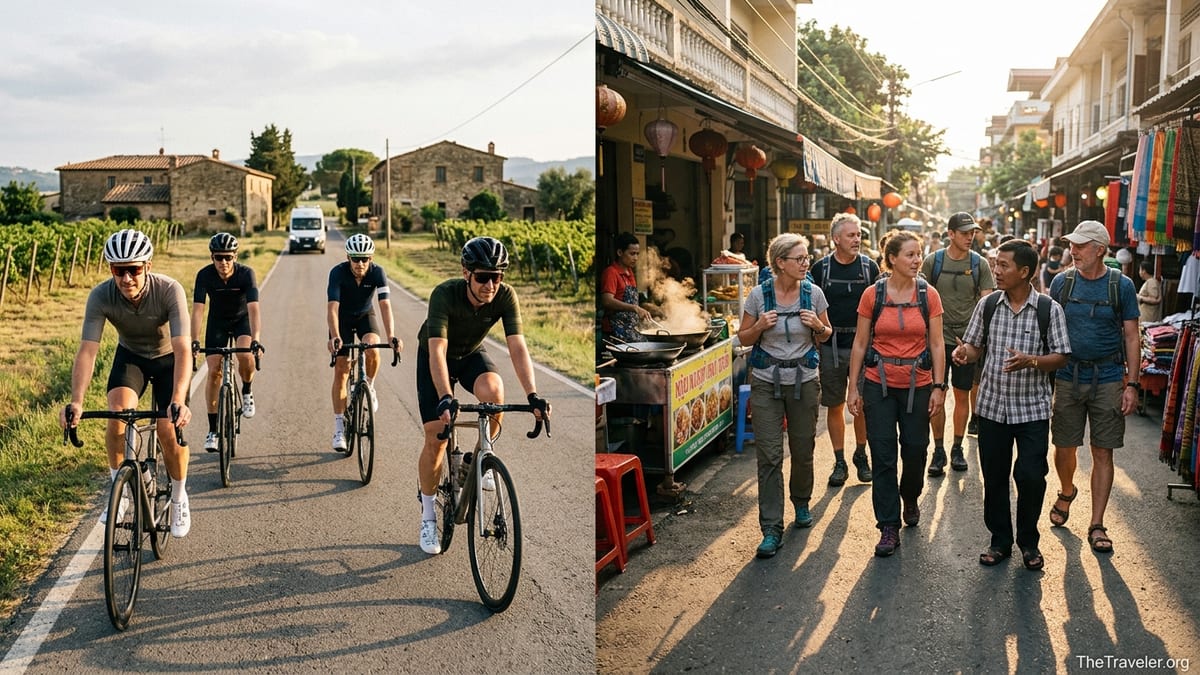
Company DNA: What Each Brand Is Really Built For
Backroads was founded in 1979 as an active travel company built around biking and hiking trips and has grown into a premium operator known for high-touch service, polished logistics, and top-tier equipment. On a typical Backroads cycling itinerary in California Wine Country or the San Juan Islands, your days revolve around well-supported rides with a dedicated van, custom titanium bikes included in the price, and carefully chosen boutique hotels at day’s end. The emphasis is on active exploration with a high comfort level rather than rugged adventure.
G Adventures, created in the early 1990s, grew up in the backpacker space and is now one of the largest small‑group adventure companies in the world. Its core promise is immersive, locally focused travel that makes far-flung destinations easier and more affordable to reach. A classic G Adventures itinerary in Peru or Morocco usually involves simpler hotels or guesthouses, public or private local-style transport, and a mix of structured activities with significant free time to explore on your own.
In practical terms, this means Backroads tends to serve travelers who are willing to pay more for comfort, seamless logistics, and physically active days, while G Adventures is designed for budget-conscious or midrange travelers who prioritize cultural immersion, flexible itineraries, and social small-group experiences.
If you imagine your ideal trip as a week of point-to-point cycling through Tuscany, returning each afternoon to a pool and a glass of Chianti, Backroads is speaking your language. If you picture taking overnight trains in Vietnam, trying street food with a local guide, and splitting a beer with backpackers from six countries, G Adventures is closer to your travel DNA.
Itineraries & Destinations: Where They Shine
Backroads has built its reputation on premium active trips in regions that lend themselves to scenic cycling and hiking. In the United States, you will see dense offerings in places like Sonoma and Napa, the Santa Fe and Taos area, Glacier and Yellowstone, and the San Juan Islands, with typical 4- to 6-day biking tours priced from roughly 3,500 to 5,500 dollars per person before flights, depending on hotel category and season. Internationally, you will find highly curated trips in classic active regions such as Provence, Tuscany, the Dalmatian Coast, and New Zealand, often with carefully planned daily mileage and multiple route options for different fitness levels.
G Adventures casts a wider global net, covering over 100 countries and offering hundreds of itineraries, from short 4- or 5-day city breaks to multi-week overland adventures. Their catalog is organized by “travel styles,” including Classic cultural trips, 18-to-Thirtysomethings youth-oriented itineraries, Active hiking and trekking, Marine small-ship cruises, Family journeys, and premium lines such as National Geographic Journeys and the newer Geluxe Collection. While they do offer some cycling and trekking trips, many itineraries are primarily cultural and exploratory rather than intensely active.
To see the difference in practice, compare a one-week Backroads bike tour in Italy’s Puglia with a one-week G Adventures Classic tour in Italy. With Backroads, each day is mapped in detail: say 20 to 40 miles of cycling, support van access, a wine estate stay, and arranged dinners. With G Adventures, the focus is more on highlights like Rome, Florence, and Venice using trains or coaches, walking tours with local guides, and optional activities such as cooking classes or museum visits, with free evenings and time to make your own choices.
If your travel wish list centers on national-park cycling, coastal hiking, and point-to-point routes that maximize time outdoors, Backroads usually has more focused options. If you want to knock out bucket list regions like Southeast Asia, East Africa safaris, or multi-country South America expeditions without planning every detail yourself, G Adventures gives you more geographic range and diversity of styles.
Comfort, Accommodation & Group Size
Backroads positions itself in the upper midrange to luxury space. Many itineraries use “premier” hotels, which can mean well-rated boutique properties, vineyard inns, or upscale mountain lodges. It is not unusual to finish a day of cycling in California or the Loire Valley and arrive at a historic property with a spa and notable restaurant. Rooms are generally private, with the option to share with a companion if you are traveling together. The overall feel is closer to a high-end resort-based active holiday than a backpacking adventure.
G Adventures sits in the budget to moderate comfort band, though its National Geographic and Geluxe lines nudge into a more comfortable category. On a standard Classic tour, expect clean but simple hotels, locally run guesthouses, or occasionally homestays. Bathrooms may or may not be ensuite depending on the destination and price point, and air conditioning can vary. Dorm-style or multi-share rooms are more common on specific travel styles such as 18-to-Thirtysomethings or certain low-cost adventures. Upgrades to private rooms are often available, but solo travelers should expect to pay a supplement if they want guaranteed single accommodation.
Group size also feels different. G Adventures groups typically average around 12 travelers, with some capped slightly higher or lower depending on the style and destination. That size allows for a strong social dynamic and the ability to use local transportation. Backroads groups are also small but are further defined by activity pacing and support structure, often with two or more leaders, a support van, and pre-arranged logistics that keep the experience feeling curated and attentive.
In simple terms: if you want crisp sheets, wine-paired dinners, and structured support after a day of physical effort, Backroads is likely to feel more aligned. If you are comfortable with basic but clean stays and you care more about the shared experience than the thread count, G Adventures will probably suit you just fine.
Activity Level & Daily Pace
Backroads is intentionally built for travelers who want active days. On a typical cycling tour in the United States, for example, you might ride 20 to 40 miles per day on rolling roads, with longer optional loops for stronger riders. Their hiking trips might involve 6 to 10 miles of walking with elevation gain on certain days. Although e-bikes and route options can make trips more accessible, you will spend a large portion of each day physically engaged, and the van support is there mainly as a safety net and for flexibility.
G Adventures offers a range of activity levels, but many of its Classic and 18-to-Thirtysomethings tours are less physically demanding and more focused on seeing a lot within a limited timeframe. You may walk several miles a day on city tours or moderate hikes, but transport between destinations is often by train, private coach, or local buses. Its dedicated Active trips, such as trekking the Inca Trail, climbing Kilimanjaro, or hiking in Patagonia, can be strenuous, yet the emphasis is still on the overall adventure rather than refined athletic performance.
To visualize the contrast, think about a week in Costa Rica. A Backroads itinerary might have you cycling between coffee plantations and coastal towns, kayaking mangroves, and hiking in national parks, racking up daily exercise before returning to a comfortable lodge. A G Adventures itinerary might include white-water rafting, zip lining, and walks in cloud forests, but also several long transfers by private vehicle to link destinations, plus free afternoons in small towns.
If you feel grumpy without several hours of movement every day and love the rhythm of repetitive motion, Backroads fits naturally. If your ideal day alternates between activity and relaxed wandering or café time, a G Adventures style trip may be more your pace.
Cost, Inclusions & Value for Money
Backroads trips are generally priced at the higher end of the guided-tour spectrum. A 4-day biking getaway in Santa Fe may start around the mid-3,000s per person, while a week-long international cycling trip can run well over 5,000 dollars per person, depending on destination, hotel category, and season. These prices typically include high-end bikes or hiking gear support, most breakfasts and several dinners, vehicle support, luggage transfers, and many included activities. Alcoholic drinks, some lunches, and independent activities during free time are usually extra.
G Adventures is positioned as more affordable. A one-week Classic tour in Thailand, for example, can sometimes be found for well under 1,500 dollars per person before flights, particularly during promotions, while more remote or complex itineraries such as Galapagos or Antarctica cruises can be many times that. Inclusions on G Adventures vary by travel style, but often cover accommodation, some breakfasts, key local experiences, and the services of a Chief Experience Officer guide. Many lunches and dinners, optional excursions like cooking classes or extra museum visits, and tips are usually not included.
On a practical level, Backroads can be a strong value for travelers who prioritize convenience, comfort, and seamless active support and who would otherwise book high-end hotels and private transfers on their own. The higher upfront cost covers many of the variables and hidden expenses that can quickly add up independently. For G Adventures, the draw is the lower base price, which allows travelers to enter destinations such as Peru, Egypt, or Vietnam with a structured plan and local guidance while still leaving leeway to control spending through day-to-day choices.
If your budget is flexible and you are comfortable investing in a premium, hassle-light trip where nearly every detail is handled, Backroads will feel worth the splurge. If you are balancing student loans, saving for a house, or trying to travel longer on the same funds, G Adventures will almost always stretch your money further.
Group Vibe & Traveler Demographics
Backroads groups often skew toward couples, groups of friends, and families with older children or teens, especially on summer departures and school holidays. You will find a mix of ages, but many guests sit in the 40-to-70 range and are reasonably fit, with enough disposable income to afford a premium active holiday. The social tone tends to be friendly but not rowdy, with conversation over wine at dinner and shared stories from the day’s ride or hike.
G Adventures groups vary depending heavily on travel style. The 18-to-Thirtysomethings line is designed for younger travelers, often featuring dorm-style accommodations and a faster pace, which can mean more nightlife in certain destinations. Classic tours usually draw a wide age range, from late twenties to retirees, with a mix of solo travelers, couples, and friends. Specialized trips such as Family or Wellness itineraries target more specific demographics.
Solo travelers will feel particularly at home with G Adventures, as many join alone and quickly form temporary travel communities. You might share a room with another solo traveler of the same gender unless you pay a supplement for your own space. With Backroads, solo travelers are certainly welcome but are a smaller proportion of the group, and single supplements are typically significant. The atmosphere might feel more curated and low-key, with less late-night socializing and more emphasis on daytime activity.
If you crave a social environment with fellow independent travelers and do not mind basic rooms or sharing, G Adventures hits that sweet spot. If you prefer a quieter, more polished environment with travelers who are equally committed to the physical side of the trip, Backroads is likely a more comfortable fit.
Who Should Choose Backroads vs G Adventures?
Backroads is an excellent match for travelers who want their trip to feel like a high-end active retreat. Picture a couple from San Francisco who cycle every weekend and decide to celebrate an anniversary riding through Provence: they want high-performance bikes ready on arrival, luggage waiting in a charming inn each night, and guides who know the best scenic detours and family-owned wineries. Or imagine a multi-generational family planning a national parks hiking week with varied fitness levels. Backroads can design daily options so the strongest hikers tackle longer trails while others take shorter walks and enjoy the lodge.
G Adventures fits travelers who want adventure and cultural immersion without the stress of planning every detail, and who are comfortable with simpler lodgings and local-style transport. A 29-year-old solo traveler might join an 18-to-Thirtysomethings trip through Central America to meet peers, share hostel rooms, and stretch a limited budget while still having a guide handle buses and border crossings. A couple in their forties with limited vacation time might pick a Classic itinerary in Japan or Jordan to cover key highlights efficiently with some built-in free time.
There is also overlap. A fit, budget-conscious traveler might choose a G Adventures trekking trip like the Inca Trail or Everest Base Camp because the focus is on the mountain rather than the hotel. Conversely, a traveler who usually books comfortable independent trips might join a Backroads cycling week to have a dedicated support vehicle and expert route planning while still enjoying premium comforts they would choose anyway.
The key is to be honest about what matters more to you: elevated comfort and structured daily activity, or lower cost and flexible cultural immersion. Both companies can deliver a memorable experience, but the feel of your days will be very different.
The Takeaway
If you close your eyes and picture your ideal vacation day, the differences between Backroads and G Adventures become stark. Backroads is for travelers who light up at the idea of a long ride or hike followed by a glass of wine beside a pool, who prefer boutique hotels to hostels, and who are willing to pay for polished logistics and gear. It is the right choice if physical activity is central to your enjoyment and you want an active trip that still feels like a reward.
G Adventures, on the other hand, is for travelers who care more about reaching distant corners of the world and sharing them with a small group than about how fancy the hotel is at night. It is ideal if you want someone else to solve the planning puzzle for destinations like Peru, Vietnam, or Egypt, you are comfortable with basic to midrange comfort, and you like the idea of traveling with a diverse group of mostly independent-minded people.
Neither company is universally better. Instead, each excels for a certain type of traveler. If you value comfort, high-touch service, and ambitious daily activity, Backroads is likely to fit your style better. If you value budget, social connection, and global breadth of destinations, G Adventures will probably be the better match. Decide what a “perfect day” on the road looks like to you, and the right logo on your luggage tag will quickly become obvious.
FAQ
Q1. Is Backroads more expensive than G Adventures?
Yes, Backroads is typically significantly more expensive than G Adventures, reflecting its premium hotels, higher level of service, and included high-quality cycling or hiking support.
Q2. Which company is better for solo travelers?
G Adventures is generally better for solo travelers because many guests join alone, room sharing is common, and the social dynamic is designed to help people connect quickly.
Q3. Are Backroads trips suitable for beginners who are not very fit?
Some Backroads itineraries are accessible to newer cyclists or hikers, especially with e-bike options, but you should still be comfortable with several hours of activity most days.
Q4. What kind of traveler usually books G Adventures?
G Adventures often attracts budget-conscious or midrange travelers who want small-group structure, cultural immersion, and social interaction without the cost of luxury hotels.
Q5. Can I get a private room on either Backroads or G Adventures?
Yes, both companies offer private rooms, but solo travelers usually pay a single supplement, especially on G Adventures where sharing is the default on many trips.
Q6. Which is better for a family vacation with teens?
Both can work, but Backroads is particularly strong for active families who want biking or hiking with comfortable hotels, while G Adventures offers specific family itineraries focused on cultural and wildlife experiences.
Q7. How do I choose between an Active G Adventures trip and a Backroads trip?
If you prioritize challenging hikes or treks on a tighter budget and are fine with simple lodging, an Active G Adventures trip fits. If you want structured daily rides or hikes plus premium comfort, Backroads is a better match.
Q8. Are tips included in the tour price?
No, for both companies tips for guides, drivers, and local staff are generally not included, so you should budget extra cash for gratuities.
Q9. Which company focuses more on local culture?
Both highlight local experiences, but G Adventures places particular emphasis on community-based tourism, local guides, and using locally owned accommodation and services.
Q10. If I usually travel independently, will I feel restricted on these tours?
You may feel more structured days than on a solo trip, but both companies build in free time. G Adventures typically offers more flexibility and unscheduled hours, while Backroads is more fully programmed around daily activities.