


Ramada by Wyndham sits in the broad middle of the hotel world: not a bargain-basement roadside motel, not a polished luxury tower either. For many travelers, it pops up in search results with tempting nightly rates but widely mixed reviews. That leaves a fair question: how expensive is Ramada in real terms, and when is it actually worth the price you pay?
Get the latest updates straight to your inbox!
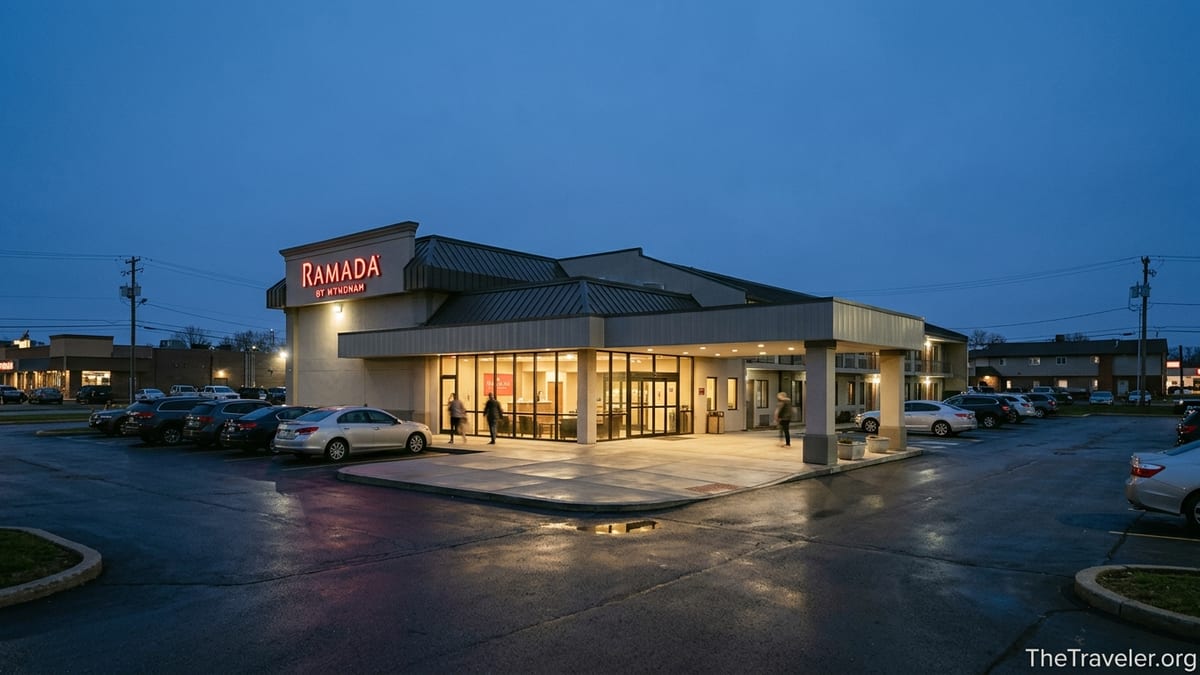
Where Ramada Sits in the Hotel Price Spectrum
Ramada is positioned as a midscale brand within the Wyndham portfolio, alongside competitors like Holiday Inn from IHG and Hampton by Hilton. In practice, that means Ramada properties are intended to offer more comfort and amenities than economy brands such as Super 8 or Days Inn, but at a lower price point than full-service upscale hotels. Franchise and development documents describe Ramada as a value-focused midrange option, which matches what most travelers see when they compare prices in booking engines.
Average pricing varies by country and city, but recent analyses of Ramada’s global performance put its average daily rate in the midrange bracket, above budget competitors yet below classic upscale brands. In concrete terms, in many secondary US cities a standard Ramada might price between roughly 90 and 150 US dollars per night before tax on a typical weeknight, while nearby economy siblings from Wyndham might be 20 to 40 dollars cheaper. In Western Europe and East Asia, where some Ramada hotels are closer to upscale, nightly rates can climb into the 130 to 220 dollar range, particularly in business hubs and resort locations.
What complicates the picture is that the Ramada label covers a wide variety of properties. Some are older roadside inns that have been renovated over the years; others are modern high-rise or resort-style hotels built to updated standards. As a result, two Ramadas priced at 140 dollars per night can deliver very different experiences. Understanding what sort of hotel you are looking at, not just the brand name, is key to deciding whether the price makes sense.
Typical Nightly Rates in Real-World Destinations
To understand how expensive Ramada really is, it helps to look at current examples. In and around Orlando and Kissimmee in Florida, which are extremely competitive markets near major theme parks, Ramada properties frequently advertise base rates in the 70 to 140 US dollar range for standard rooms on non-peak dates. For instance, a Ramada-branded hotel and water park in the Kissimmee area has recently shown lead-in rates under 100 dollars on some weeknights, yet the overall bill rises once resort fees and taxes are included. In that market, competing midscale brands such as Holiday Inn, Fairfield Inn or Hampton will often run between 120 and 200 dollars on similar dates, depending on proximity to the parks and whether breakfast is included.
In major Northeastern US cities, Ramada’s pricing creeps higher but typically remains in the middle of the pack. In the New York City metro area, Ramada-branded properties in outer boroughs or New Jersey suburbs often price around 140 to 220 dollars per night for advance, flexible rates on standard rooms, compared with 90 to 150 dollars for basic motels and 250 to 400 dollars or more for centrally located higher-end hotels on the same dates. In practice, Ramada often serves as a compromise option for travelers willing to trade a longer commute to Manhattan for a lower nightly cost.
Outside the United States, Ramada sometimes aims a bit higher on the quality spectrum while still keeping midrange prices. In business cities in Eastern Europe or South Asia, you may find a recently built Ramada with a full-service restaurant, bar and pool pricing at roughly 90 to 160 dollars per night, while nearby luxury international brands run closer to 200 to 350 dollars. In those markets, Ramada can feel more like an affordable business hotel than a basic roadside stop, and the midscale pricing can look particularly attractive to travelers used to big-city US rates.
Understanding Hidden Costs: Resort Fees, Taxes and Extras
The base rate you see for a Ramada room very rarely matches the final amount on your credit card statement. As with most hotel chains, the final cost is affected by local taxes and a growing list of mandatory and optional fees, especially at properties near theme parks or beach destinations. Travelers should pay attention to resort fees, parking charges and incidentals, because these can change the value equation significantly.
Several Ramada properties in resort-heavy markets now charge nightly resort or amenity fees. For example, a Ramada hotel and water park in the greater Orlando area lists a mandatory resort fee of roughly 30 US dollars per night, on top of the advertised room rate. Another Ramada near major attractions in Kissimmee has been documented with a resort fee just above 20 dollars per night, plus a refundable deposit of around 50 dollars per stay. These fees may bundle access to pools, water slides, shuttle buses, fitness centers or other amenities, but they are charged whether or not you use those facilities.
On top of resort fees, guests should anticipate city and state lodging taxes, which commonly add 10 to 15 percent in the United States and vary widely overseas. Parking is another frequent extra; airport and suburban Ramadas often include complimentary self-parking, but urban or resort locations may charge daily parking fees that can approach 20 to 40 dollars. Breakfast policies also differ. Some Ramadas include a simple hot breakfast in the rate, while others run full restaurants where breakfast might cost 10 to 20 dollars per person.
When comparing Ramada to another hotel, always calculate the “all-in” nightly cost. A Ramada with a 95 dollar room rate, a 25 dollar resort fee and 15 percent tax can easily end up at roughly 138 dollars per night. Meanwhile, a competing midscale hotel that advertises 125 dollars with no resort fee and includes breakfast might produce a very similar or even lower total cost, yet feel more straightforward and better value.
Quality, Consistency and What You Actually Get for the Money
Price only tells half the story. Travelers are often surprised at how inconsistent Ramada properties can be, especially within the United States. Some locations are well maintained with fresh guest room decor, modern bathrooms and reliable housekeeping. Others show their age with worn carpets, dated furniture and mixed reviews about cleanliness. This variance stems from Ramada’s largely franchised model and the brand’s long history: older converted motels sit in the same portfolio as newly constructed hotels.
Outside North America, particularly in parts of Europe, the Middle East and Asia, the Ramada name is sometimes attached to more polished, full-service hotels that include multiple restaurants, spas or resort-style pools. For example, a Ramada resort property on the coast of East Africa promotes extensive leisure facilities and a beachfront setting yet often prices below nearby luxury beach resorts that carry more prestigious flags. In those situations, travelers can feel they are getting a near-upscale stay at a midscale price.
Within the United States, the return on your money at Ramada often comes down to how recently the hotel was renovated and how strong its guest reviews are. A renovated Ramada near a state university in Pennsylvania, for instance, can provide solid value for families attending campus events: indoor and outdoor pools, on-site dining and large parking areas for a nightly rate that stays under many competing full-service properties. Conversely, an older Ramada set on a busy highway outside a major city might charge over 130 dollars on a busy weekend while offering a very basic, tired product that does not feel much better than a budget motel.
Because of this unevenness, Ramada’s midscale pricing can sometimes feel like a bargain and sometimes feel steep. Before deciding whether the brand is worth it in a given city, it is wise to look beyond the logo and compare recent guest photos, star ratings and descriptions of room types and amenities for that specific property.
Comparing Ramada to Competing Midscale Brands
When you place Ramada alongside similar midscale chains, its pricing is usually competitive, but not always the cheapest. In many US highway and suburban locations, price comparisons on popular booking sites show Ramada clustered with Holiday Inn, Best Western, Comfort Inn and sometimes Hampton by Hilton. The gaps between them on a random night might be as small as 10 to 20 dollars. What often matters more than tiny price differences is what you get for that money in terms of breakfast, parking and overall condition.
As an example, consider a business traveler choosing between a Ramada and a Hampton in a midsize Midwestern city. If the Ramada is 135 dollars per night with paid breakfast and the Hampton is 155 dollars with a substantial complimentary breakfast and a slightly newer building, the Hampton may feel like better value despite the higher sticker price. On the other hand, if the Ramada includes parking and a modest breakfast while a downtown competitor charges for both, the Ramada’s total bill might easily come out lower by 25 to 40 dollars per night.
Internationally, Ramada’s competitive set shifts depending on the region. In some Asian capitals, Ramada competes more directly with brands like Novotel or Park Inn. There, it may undercut those names by 20 to 50 dollars per night while still delivering comparable room sizes and amenities, which makes it attractive for cost-conscious business travelers or tour groups. In other markets, particularly where older properties carry the Ramada name, budget chains and independent hotels may underprice Ramada substantially, leaving the brand reliant on loyalty benefits and name recognition to justify its rates.
Overall, Ramada rarely commands a premium over the midscale competition, but it also does not consistently undercut it. The brand’s value proposition tends to rely on a balance of moderate rates, fair amenities and the backing of the larger Wyndham loyalty ecosystem rather than rock-bottom pricing.
Maximizing Value at Ramada: Discounts, Rewards and Smart Booking
For many travelers, Ramada becomes “worth it” only when layered with discounts or loyalty benefits. As part of Wyndham Rewards, Ramada participates in a points program that allows members to earn on paid stays and redeem free nights starting at relatively modest point levels, depending on the property. In practical terms, a traveler who stays frequently at midscale Wyndham brands can use accumulated points for a free or heavily discounted night at a Ramada in a more expensive city, dramatically improving the perceived value of the stay.
Ramada properties also regularly participate in rate promotions aimed at advance purchase, weekday business, or specific traveler groups. Senior discounts, corporate rates, government and military pricing, and seasonal sales can bring nightly costs down by 10 to 20 percent compared with the best flexible public rate. For example, a room listed at 150 dollars might drop to around 120 to 135 dollars with the right combination of early booking and eligible discount. Over a four-night stay, that can add up to meaningful savings, especially when visiting pricey cities.
Booking strategy matters as much as brand choice. Travelers comparing Ramada to competing hotels should examine cancellation terms, check whether breakfast is bundled, and read the fine print on resort or amenity fees before locking in a prepaid, nonrefundable rate. In some cases, a Ramada rate that looks attractive at the outset ends up less compelling once all charges are factored in. Conversely, there are situations where a Ramada offers a flexible rate close in price to a competitor’s restrictive advance purchase offer, which can make Ramada the safer choice for travelers whose plans might change.
Travelers who are sensitive to price should also pay attention to how Ramada’s cost fluctuates around large events. Near convention centers, stadiums or theme parks, Ramada rates can rise sharply on peak dates. Being willing to shift your stay by a day or two, or to book a Ramada in a neighboring town instead of right at the gate of a major attraction, can yield significant savings without changing brands.
When Is Ramada Worth the Price, and When Is It Not?
Ultimately, deciding whether Ramada is “worth it” comes down to matching the particular hotel you are considering to your expectations. Ramada often represents good value in markets where it operates as a solid, full-service midscale hotel: think recently built or renovated properties with on-site dining, a pool, fitness facilities and decent soundproofing, priced clearly below nearby upscale brands. In those cases, paying around 120 to 170 dollars per night can feel justified, especially if you are earning or spending Wyndham Rewards points and taking advantage of included amenities like breakfast or airport shuttles.
Ramada is also frequently a reasonable choice for road trips and overnight stopovers where your main priorities are safe parking, a clean room and easy highway access. In many such locations, Ramada’s slightly higher price than a no-frills motel is offset by better bedding, stronger Wi-Fi and more generous public spaces, like lounges or lobbies with staff on duty around the clock.
On the other hand, Ramada can feel overpriced in several scenarios. If you encounter an older property with dated furnishings, visible wear and persistent negative reviews about cleanliness or service, even a nightly rate under 100 dollars may not be worthwhile compared with a newer budget hotel nearby. Likewise, in destinations where Ramada charges steep resort or amenity fees that push the total nightly cost close to genuine upscale resorts, value quickly erodes unless you plan to make heavy use of the included facilities, such as water parks or shuttle services.
Travelers who prefer a consistent, brand-standard experience may also find Ramada frustrating. Because of the brand’s variability across regions and individual properties, it does not offer the same predictability you might get from tightly controlled chains. If consistency matters more to you than squeezing out the lowest price, you may be happier paying slightly more for a chain whose hotels look and feel almost identical from city to city.
The Takeaway
Ramada by Wyndham occupies a broad slice of the midscale market, with prices that can feel fair or inflated depending on the individual property and destination. In many cities, a well-reviewed Ramada offers a comfortable, full-featured stay at a nightly cost noticeably below that of nearby upscale chains, especially once discounts and loyalty points are factored in. In those situations, the brand can represent solid value for both leisure and business travelers.
Yet the wide variation among Ramada properties, combined with the growing prevalence of resort and amenity fees in certain locations, means travelers cannot rely on the name alone as a guarantee of good value. A careful comparison of total cost, recent guest feedback and the specific facilities you will actually use is essential. When the numbers add up and the hotel’s condition matches your expectations, Ramada can be a budget-conscious choice that still feels like a step above basic roadside lodging. When they do not, it pays to look across the midscale landscape before you book.
FAQ
Q1: Is Ramada generally considered a budget or midrange hotel chain?
Ramada is positioned as a midscale brand. It usually prices above true budget motels but below upscale full-service hotels, with amenities that match that middle ground.
Q2: How much does a typical Ramada room cost per night in the United States?
In many US cities, standard rooms often run around 90 to 150 US dollars per night on regular dates, with higher prices in major metros or during peak events.
Q3: Do Ramada hotels charge resort or amenity fees?
Some Ramada properties, especially near theme parks or in resort areas, add nightly resort or amenity fees of roughly 20 to 30 dollars, while others do not charge any.
Q4: Is breakfast usually included in the Ramada room rate?
It varies by property. Certain Ramadas include a complimentary breakfast, while others operate full-service restaurants where breakfast is an extra charge per person.
Q5: How does Ramada pricing compare with brands like Holiday Inn or Hampton?
Ramada often prices in a similar band to other midscale chains. On a given night it may be slightly cheaper or more expensive by 10 to 20 dollars, depending on location and demand.
Q6: Are Ramada hotels consistent in quality from one location to another?
Quality can vary noticeably. Some Ramadas are newly built or renovated and feel close to upscale, while others are older roadside properties with more basic rooms and dated decor.
Q7: Can I use Wyndham Rewards points to book Ramada stays?
Yes. Ramada participates in Wyndham Rewards, allowing members to earn points on paid stays and redeem points for free or discounted nights at participating hotels.
Q8: When is paying extra for a Ramada worth it over a cheaper motel?
Paying more often makes sense when a Ramada offers better cleanliness, security, on-site amenities like pools or gyms, and more comfortable rooms than nearby low-cost options.
Q9: How can I tell if a specific Ramada is good value before booking?
Compare the total price including taxes and fees, check recent guest reviews and photos, and weigh what is included, such as parking, Wi-Fi and breakfast, against nearby alternatives.
Q10: Is Ramada a good choice for international travel?
In many countries, Ramada properties are modern midrange or near-upscale hotels priced below luxury competitors, making them a strong value if the location and reviews fit your needs.