


In an era of lifestyle boutiques and hyper-luxury resorts, some classic hotel names quietly keep filling rooms night after night. Ramada is one of them. Now operating as Ramada by Wyndham, the red-signed brand remains a familiar sight along highways, near airports and increasingly in fast-growing cities across Asia, the Middle East and Europe. For travelers, that consistency is not an accident. It is the result of a clear midscale positioning, a huge global footprint and the backing of one of the world’s largest hotel groups. Together, they explain why Ramada still holds a strong place in the global hotel market.
Get the latest updates straight to your inbox!
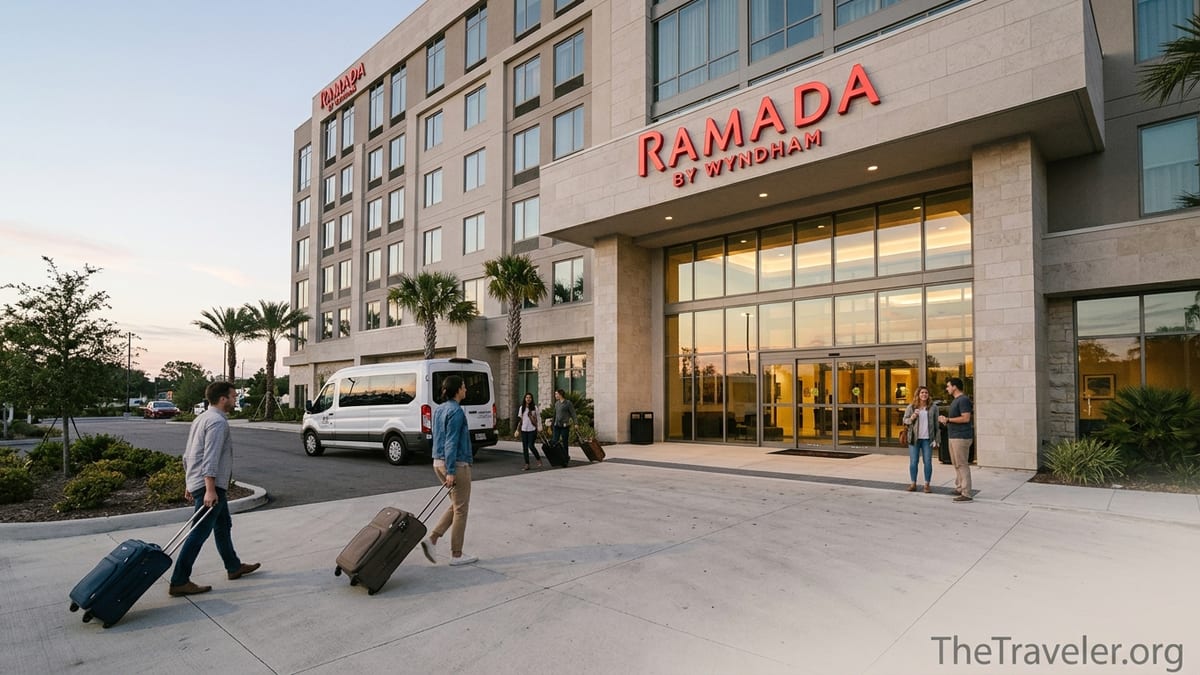
A Heritage Brand Reinvented for Modern Travelers
Ramada traces its roots back to the 1950s in the United States, when road trips and motor courts were transforming how Americans traveled. Over the decades the brand evolved from roadside motels into a diversified international hotel chain. Today it sits within Wyndham Hotels & Resorts, which operates more than 9,000 properties globally across multiple brands. Ramada has been rebranded in most markets as Ramada by Wyndham, signaling its connection to that wider ecosystem while keeping the recognizable Ramada name on the sign.
As of recent corporate disclosures, Ramada by Wyndham counts nearly 850 full-service hotels in more than 60 countries, stretching from North America and Europe to the Middle East, Africa and Asia Pacific. In practical terms, that means a traveler can fly from Chicago to Istanbul, on to Dubai and then to Bangkok and find a Ramada option in or near each major gateway. That geographic spread is a key reason the brand continues to matter: it offers a common denominator of comfort and services in very different markets.
In the last decade Ramada has also diversified into several sub-brands, including Ramada Plaza, Ramada Resort, Ramada Hotel & Suites, Ramada Residences and Ramada Encore. A Ramada Plaza in a business hub like Bucharest or Jeddah typically feels more like a traditional city hotel with extensive meeting space, while a Ramada Resort in coastal Turkey or Goa focuses on pools and leisure facilities. This tiering lets the brand serve both business and holiday travelers without losing its midscale DNA.
That heritage, refreshed with contemporary branding and tied to a powerful parent company, gives Ramada both recognition and reassurance. For guests planning a trip to a second- or third-tier city they have never visited before, seeing the Ramada by Wyndham flag often signals that at least a baseline level of comfort, safety and service will be in place.
Midscale Positioning That Matches How People Actually Travel
Ramada competes squarely in the midscale and upper-midscale segments, alongside brands such as Holiday Inn, Hampton by Hilton, Novotel, Park Inn and Clarion. In industry terms, that means its typical guest is seeking a balance of price and comfort rather than fashion-forward design or five-star pampering. For real travelers, it often means getting a decent bed, reliable Wi-Fi and a proper breakfast without blowing the trip budget.
On many real itineraries this midscale sweet spot matters more than travelers admit. A consultant flying into Frankfurt for a trade fair may splurge on a boutique hotel once a year, but for most business trips their company is happy if the nightly rate stays around a moderate level. In cities such as Frankfurt, Madrid or Warsaw, Ramada hotels often undercut full-service upscale properties by 20 to 30 percent while still offering on-site restaurants, a bar and meeting rooms. That gap becomes even more compelling in emerging markets where room rates at international chains can spike during peak events.
For leisure travelers, especially families, Ramada’s positioning offers predictability. A family of four road-tripping across the United States might book a Ramada near an airport or highway exit for around a mid-range nightly rate instead of an upscale downtown property that could cost twice as much before adding parking. In places like Orlando or Anaheim, a Ramada with a pool and free or low-cost shuttle services can make the difference between staying inside budget and overspending before the theme park tickets are even purchased.
This value equation has become even more relevant as inflation and higher airfares squeeze travel budgets. Wyndham’s own reporting highlights that midscale and above segments remain a strategic focus because they are holding up relatively well compared with more price-sensitive economy brands. Ramada sits at the heart of that strategy, catching travelers who want to trade a basic roadside inn for something with a bit more polish, but who are not ready to pay for luxury.
A Truly Global Footprint With Local Flavor
One of Ramada’s strongest selling points is just how global the brand has become. According to Wyndham’s corporate materials, Ramada now counts properties in over 60 countries, with particularly dense coverage in Europe, the Middle East and Asia. That scale puts it among the most internationally dispersed midscale brands, making it a familiar option whether you are landing in Madrid, Muscat or Manila.
In Europe, Ramada has built a presence not just in capitals but also in business suburbs and secondary cities. The opening of Ramada by Wyndham Madrid Getafe, south of the Spanish capital, is a good example. Instead of competing directly with high-priced hotels in central Madrid, this property serves corporate parks and residents in the Getafe area, as well as travelers arriving by car who prefer easier parking and access to the motorway network. Similar patterns can be seen in German, Italian and Eastern European markets, where Ramada often appears in logistics hubs, university towns and airport districts that larger luxury brands overlook.
In Asia and the Middle East, Ramada’s reach has grown alongside regional travel booms. In China, Wyndham has pursued aggressive expansion over the last decade, positioning Ramada in fast-growing provincial capitals and industrial cities where domestic business travel is surging. In India, investors have announced Ramada-branded hotels in places such as Darbhanga, a city in Bihar that is seeing new demand from returning migrants and domestic tourists. For international travelers who may not recognize the local independent brands in such destinations, Ramada provides a familiar port of call.
Crucially, many Ramada hotels adapt their design and services to local tastes. A Ramada in Lucknow or Jaipur might serve elaborate vegetarian breakfasts and offer large banqueting halls geared to weddings and festivals, while a Ramada in Bodrum or Langkawi leans into resort-style amenities like marina access, beach clubs and sunset bars. This balance between a global standard and local expression helps the brand feel grounded rather than generic, which in turn encourages repeat stays.
Airport Proximity and Roadside Reliability
Another reason Ramada continues to punch above its weight is its strategic focus on travel nodes. Wyndham highlights that Ramada has more hotels near airports than many competing midscale brands, positioning it as a go-to option for layovers, early-morning departures and airline crew stays. Pick almost any major airport from Istanbul to Toronto and there is a decent chance a Ramada sits within a short shuttle ride.
For travelers, this translates into practical advantages. A Ramada near London Gatwick or Chicago O’Hare often provides free or low-cost shuttle services, on-site bars that stay open late to accommodate delayed arrivals, and breakfast service that starts early enough for dawn departures. Business travelers on tight schedules value the ability to land, check in within 20 minutes, hold a quick meeting in a small conference room and still catch a flight without navigating city traffic.
Ramada also retains a strong presence along highways and in suburban areas, particularly in North America and parts of Europe. For drivers covering long distances, the red Ramada sign is often a recognizable beacon when fatigue sets in. A typical roadside Ramada might bundle free parking, a basic fitness room, a simple breakfast and sometimes a modest indoor pool for kids. These are not headline-grabbing amenities, but they meet the needs of families in minivans, touring sports teams and small business owners alike.
That presence in transit-heavy locations keeps the brand top of mind. A traveler who first encounters Ramada at an airport on a stressful weather-delayed night may later choose the same brand on a family road trip precisely because the experience, while unremarkable, was reliably adequate. In a world where many travelers just want things to “work” during those functional nights on the road, this reliability is a major commercial asset.
Backed by Wyndham’s Scale, Systems and Loyalty Engine
Ramada’s strength cannot be separated from Wyndham Hotels & Resorts, which bills itself as the world’s largest hotel franchising company by number of properties. Being part of this portfolio brings several advantages that directly affect guests. Chief among them is access to the Wyndham Rewards loyalty program, which has been repeatedly recognized in industry rankings for its simple earning structure. Members can earn points at Ramada in one country and redeem them at very different brands in another, from budget roadside hotels to upscale urban properties.
For frequent road warriors who may not always be traveling on premium corporate accounts, this simplicity is attractive. A sales representative who spends three nights at Ramada properties in provincial Chinese cities can easily see those points add up to a free night at a Wyndham Grand in a larger hub such as Shanghai or Istanbul. This sense of tangible value at the midscale level has helped Wyndham Rewards maintain momentum even as some rival programs have become more complex.
Wyndham’s centralized systems also help keep Ramada competitive behind the scenes. Shared technology platforms for reservations, revenue management and digital marketing let individual hotels in the chain tap into global distribution channels they could not easily build alone. This, in turn, supports a steady pipeline of new conversions, where independent hotels or smaller local chains adopt the Ramada by Wyndham flag to gain access to the global booking ecosystem.
For travelers, the result is a growing number of Ramada options in places that once had only unbranded hotels or domestic chains that did not participate in international loyalty programs. In practice, that might mean a midscale business hotel in a city like Tbilisi or Surabaya reflagging as a Ramada, upgrading some of its soft furnishings to meet brand standards, and immediately appearing in the search results of travelers filtering by “Wyndham Rewards” or “international chain” when planning trips.
Balancing Consistency With Variable Quality on the Ground
No global brand is immune to criticism, and Ramada is no exception. Online reviews reveal a broad spectrum of experiences, from glowing write-ups of waterfront Ramada resorts in Malaysia to harsh warnings about aging properties in certain North American cities. Because Ramada operates primarily as a franchise brand, the quality of maintenance and service can vary significantly between individual hotels.
For travelers, this means Ramada’s strength in geographic reach and price value must be balanced with due diligence. A Ramada near Boston, for example, has drawn pointed criticism from some guests for issues ranging from dated décor to concerns about the surrounding neighborhood. At the same time, other Ramada properties in Europe or Asia that have been built or renovated recently can feel fresh and contemporary, with stylish lobbies, modern bathrooms and strong housekeeping standards at very competitive rates.
The variation reflects the realities of midscale franchising. Properties in high-cost urban markets may struggle to fund full-scale renovations on tight margins, while newly built Ramada hotels in growth markets often open with up-to-date design standards. Wyndham attempts to manage this through regular inspections and brand-standard requirements, but travelers still see a wide range of outcomes.
In practical terms, the best way to benefit from Ramada’s strong position while avoiding its weaker links is careful property-level research. Checking recent guest photos, sorting reviews by “newest” rather than “most helpful,” and looking specifically for comments on cleanliness and noise can reveal whether a particular Ramada is a smart choice. When you find a well-run Ramada that suits your needs, it can become a reliable anchor in your personal travel map. When reviews signal chronic issues, the same global competition that Ramada thrives in means alternatives are usually nearby.
The Takeaway
Ramada’s enduring strength in the global hotel market is not about being the flashiest brand or the most luxurious stay. It is about sitting in the sweet spot where most real travelers actually live: midscale budgets, functional needs and a desire for some consistency across borders. With nearly 850 hotels in more than 60 countries, a strong presence at airports and along highways, and the support of Wyndham’s loyalty ecosystem, Ramada remains a workhorse brand that quietly moves millions of people every year.
For travelers, the brand is most powerful when used thoughtfully. In a secondary city where international options are limited, a Ramada by Wyndham can offer reassuring standards at a fair price. Near major airports, Ramada often delivers the practical features that matter on stressful travel days: shuttle buses, early breakfasts and 24-hour front desks. In emerging destinations, a new Ramada can be a sign that business travel is taking off and that international standards are arriving with it.
At the same time, Ramada’s franchise model means travelers must remain selective, separating well-maintained properties from those that have fallen behind the curve. When you combine that selectivity with the reach and rewards of the broader Wyndham system, Ramada continues to justify its strong position in the hotel landscape. In a market increasingly crowded with niche concepts and lifestyle branding, its straightforward promise of solid midscale comfort still resonates.
FAQ
Q1. What type of traveler is Ramada best suited for?
Ramada is best suited for value-conscious business and leisure travelers who want full-service basics like a restaurant, bar and meeting space at midscale prices.
Q2. How does Ramada compare with other midscale hotel brands?
Ramada generally competes with brands like Holiday Inn, Hampton by Hilton and Novotel, offering similar comfort levels but with particularly strong airport and roadside coverage.
Q3. Is Ramada considered a luxury hotel brand?
No. Ramada sits in the midscale to upper-midscale segment. Some Ramada Plaza or resort properties feel more upscale, but the brand is not positioned as luxury.
Q4. Can I earn and redeem loyalty points at Ramada hotels?
Yes. Ramada by Wyndham participates in Wyndham Rewards, so you can earn points on eligible stays and redeem them at Ramada and other Wyndham brands worldwide.
Q5. Why do some Ramada hotels have very different reviews?
Most Ramada hotels are franchised, so individual owners handle upkeep and service. This can lead to variations in quality, making it important to check property-level reviews.
Q6. Are Ramada hotels good for airport layovers and early flights?
Often yes. Ramada has a strong presence near major airports, and many locations offer shuttle services, flexible check-in times and early breakfast options.
Q7. Is breakfast usually included at Ramada hotels?
Breakfast policies vary by property and country. Some Ramada hotels include breakfast in the room rate, while others offer it as a paid add-on, so it is worth checking your booking details.
Q8. Are Ramada hotels suitable for families?
Many Ramada properties cater well to families, with larger rooms, connecting options and amenities like pools or kids’ menus, especially in resort and roadside locations.
Q9. How can I tell if a specific Ramada is recently renovated?
Look at recent guest photos and reviews that mention renovation dates or updated rooms, and check the hotel’s official description for notes on refurbishment or new openings.
Q10. Is Ramada expanding into new destinations?
Yes. Developers continue to open Ramada-branded hotels in emerging business and tourism markets, particularly in Asia, the Middle East and smaller European and North American cities.