


Standing on its rocky hill above central Athens, the Acropolis is compact, but it is not a quick “run in and out” sight. Ticket time slots, heat, crowds and the optional Acropolis Museum all change how long you actually need. Whether you only have two hours between flights or a full day in the city, a little planning will help you see the Parthenon properly instead of rushing through sweaty queues.
Get the latest updates straight to your inbox!
Key Timing Basics: Tickets, Hours and Visitor Caps
The Acropolis is open year-round, but hours and conditions change with the seasons. In summer 2026, the official schedule has the site generally opening at 8:00 and closing between 17:00 and 20:00 depending on the month, with last entry 30 minutes before closing. From April through October the site can stay open as late as 20:00 at the height of summer, while in winter it usually closes around 17:00, which naturally shortens late-afternoon options.
Tickets are sold in timed slots, typically two-hour windows, in order to manage the daily visitor cap of around 20,000 people. In practice this means you pick a specific entry time, such as 8:00 to 10:00 or 16:00 to 18:00, rather than just turning up whenever you like. On peak days in July and August, morning slots between 8:00 and 10:00 and late afternoon slots often sell out first on the official booking platform, so you should secure them several days ahead, especially if you are coordinating with a guided tour.
The standard Acropolis ticket in 2026 costs around 30 euros for adults in high season, with reduced prices and free entry for some EU youth and on official free days like March 6, April 18, May 18, the last weekend of September and October 28. These free dates attract heavier crowds and longer lines at security, so even though you save money you should plan extra time, especially if you are combining the visit with the Acropolis Museum the same day.
One important detail is that your Acropolis ticket does not include the Acropolis Museum. The museum has its own opening hours and admission, typically around 15 euros in high season, and stays open later into the evening on some days. That flexibility makes it a good candidate for an afternoon or evening add-on after a cooler early-morning climb to the hilltop site.
How Long You Really Need: From Whirlwind to Relaxed Visits
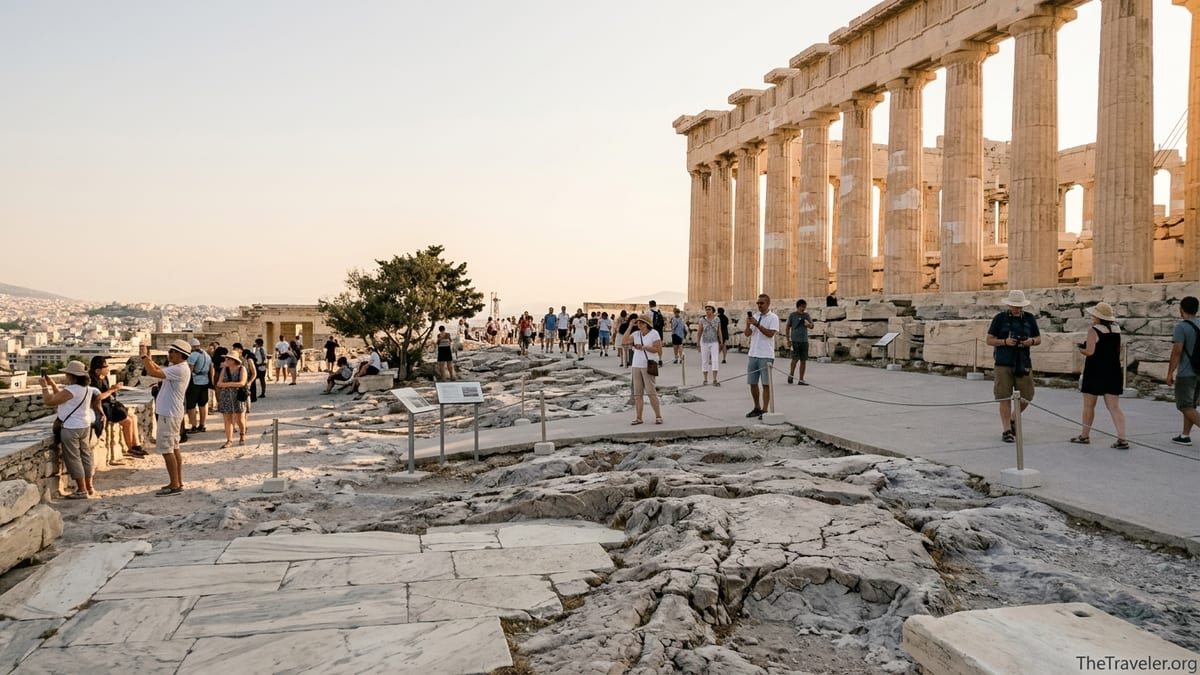
For a bare-minimum, self-guided visit to the Acropolis itself, you should allow at least 90 minutes from the moment you pass the ticket checkpoint. This covers the uphill walk of about 15 to 20 minutes from the entrance, enough time to circle the Parthenon, look out over Athens, and glance at the other major structures such as the Erechtheion and the Propylaea before making your way back down. Visitors who try to do this in under an hour typically find themselves hurrying and skipping photos or viewpoints.
A more realistic “normal” visit for most independent travelers is around two to two and a half hours on the hill. That gives you time to pause at the viewpoints looking toward Mount Lycabettus and the Panathenaic Stadium, walk through the ruins at a comfortable pace, and take meaningful photos without constantly checking the time. If you enter via the south slope, you can also linger at the Theater of Dionysus and the Odeon of Herodes Atticus without feeling rushed.
For a relaxed visit that includes breaks for shade and sitting, plan about three hours at the Acropolis site. This is the sweet spot for families with children, travelers visiting in hot weather, or anyone who enjoys reading information panels and watching restoration work in progress. You might spend 45 to 60 minutes just at the summit plateau moving between the Parthenon and Erechtheion, 30 to 40 minutes admiring the slopes and theaters, and the rest on the approach and descent plus short rest stops in the limited shaded spots.
If you want to add the Acropolis Museum on the same day, factor in at least another two to three hours. A focused visit that concentrates on the Parthenon Gallery and the Archaic Gallery might be squeezed into 90 minutes, but many visitors easily spend half a day between the site and the museum, especially if they break it up with a coffee in the museum’s cafe or a quiet lunch in the Plaka district below.
Guided Tours: Typical Durations and What They Cover
Most stand-alone Acropolis guided walking tours last around two to three hours and include your time on the hill itself. A common format advertised by local operators is a “2-hour Acropolis and Parthenon highlights tour,” which meets near the south entrance by the Acropolis metro station. The first half-hour is often spent walking past the Theater of Dionysus and the Odeon of Herodes Atticus while the guide explains the historical context, leaving roughly 90 minutes at the summit for detailed commentary and photos.
Combo tours that include both the Acropolis and the Acropolis Museum generally run for four to five hours. A typical morning might start at 8:00 with a two-hour hilltop tour, followed by a short coffee break and then a two-hour museum visit with the same guide. Some Athens-based companies advertise a “skip-the-line Acropolis & Museum with licensed guide” around this length, which suits visitors who want structured storytelling and are happy to devote most of the day to classical history.
There are also extended city tours that fold the Acropolis into a longer program. For example, a small-group “Athens city and Acropolis” tour might last from 9:00 to 15:00, combining a guided climb on the hill with bus or walking stops at Syntagma Square, the Panathenaic Stadium, and the Temple of Olympian Zeus. In these cases your time on the Acropolis itself is usually closer to two hours, so if you are passionate about ancient architecture, you may prefer a dedicated Acropolis-focused tour instead of a broad overview.
For travelers with mobility concerns or who are sensitive to heat, some companies offer shorter, later-starting tours, such as 17:00 to 19:00 visits that aim to catch lower sun and slightly cooler temperatures outside peak summer heat. While these can be very pleasant in May, September or October, in July and August the hottest hours often stretch until at least 18:00, so even afternoon tours still require hats, water and rest breaks.
Best Time of Day, Heat Breaks and Photo Stops
The most sought-after time slots at the Acropolis are the first hour after opening and the last 60 to 90 minutes before closing. Entering around 8:00 generally gives you gentler temperatures and a bit of space before mid-morning groups arrive from cruise ships and coaches, which usually surge in from about 10:00 until early afternoon. Late entry between roughly 17:30 and 18:30, when available depending on season, can also bring softer light, thinning crowds and better photographs looking west.
Heat is the single biggest factor in how long your visit feels. The summit is exposed, with little shade and reflective pale stone underfoot. On summer afternoons, temperatures regularly push into the mid-30s Celsius, and during heatwaves the site may even close temporarily in the early afternoon. To cope, build micro-breaks into your schedule: pause in the short stretches of shade near the Propylaea gateway, sit briefly on the low walls where permitted, and drink water regularly. Many travelers underestimate how long these pauses add; a 90-minute walk can easily stretch to two hours simply because you need to rest and cool down.
Photographers should budget extra time for positioning and waiting for clear shots. Classic angles, such as the Parthenon framed against Mount Hymettus or the Caryatids on the Erechtheion’s south porch, often require patience to avoid other visitors in the frame. If you care about golden light, a late afternoon or early evening slot in spring or autumn can be ideal, whereas in high summer sunrise-like conditions at opening time may produce the cleanest images and most comfortable temperatures.
Even in cooler months, stone surfaces can be slippery after rain, which slows the pace of both you and everyone ahead of you. This is another reason to give yourself a margin rather than planning down to the minute. If you hope to climb, take photos, and still make a timed lunch reservation in Plaka or a booked taxi to Piraeus Port, add at least 30 minutes buffer to whatever duration you think you need.
Adding the Acropolis Museum: How Much Time to Allow
The Acropolis Museum sits a short walk downhill from the archaeological site and is air-conditioned, bright and spacious. A concentrated visit that focuses on the Parthenon frieze on the top floor, plus the main Archaic sculpture galleries, takes at least 90 minutes for most travelers who enjoy art and history. Visitors who like to read labels carefully, or who spend time watching the short films and animations explaining the building phases, often use two and a half to three hours without realizing it.
Many travelers pair an early-morning Acropolis climb with a relaxed museum visit over the midday hours. For example, you might book an 8:00 ticket, spend two to two and a half hours on the site, walk down to the museum around 10:30 or 11:00, and then enjoy the museum’s cafe or restaurant for lunch overlooking the glass floor and excavations. That kind of schedule fills the bulk of your day but never feels rushed, even if you also fit in a stroll through Plaka afterward.
Another effective pattern, especially on very hot summer days, is to reverse the order depending on your arrival time. If your flight lands in Athens late morning, you might check into your hotel, visit the Acropolis Museum mid-afternoon inside the air conditioning, and then use a late-entry slot for the hilltop itself once the worst heat subsides. In winter, when daylight is short but evenings are long, it can be more pleasant to visit the outdoor site in the late morning and save the museum for the early evening when it often stays open later than the hill.
If you are joining a combined guided tour that includes both the Acropolis and the museum, expect the total duration to be around four to five hours including short breaks. On DIY itineraries, however, you have more flexibility: some travelers find it less mentally tiring to split the two over separate days, spending one morning on the Acropolis and another afternoon in the museum, which also gives you a chance to revisit the hilltop views independently if you want.
Sample Itineraries: From Two Hours to a Full Day
With only two to three hours in total, such as during a tight cruise stop or an airport layover, your focus should be the Acropolis itself. Book the earliest possible entry time, head straight up from either the main western gate or the south slope entrance, and limit your stops on the way up. Once at the summit, prioritize a lap around the Parthenon, views over Athens from both the north and south sides, and a short look at the Erechtheion and its Caryatids before heading back down. You will not have time for the museum on the same short visit, but you will still feel you have genuinely stood on the Sacred Rock.
For a half-day in Athens, such as a single morning before an afternoon ferry, aim for a three to four hour Acropolis-focused block. One workable plan could be an 8:00 entry, two and a half hours on the hill including a few photo stops and rest breaks, followed by a slow walk down through the Anafiotika lanes and Plaka. You might finish with an early lunch in a taverna near the Acropolis Museum without actually visiting the museum, which can be saved for a future trip or a separate afternoon if you stay in the city longer.
With a full day at your disposal, you can comfortably combine both the Acropolis and the museum without feeling rushed. A popular pattern is to start at 8:00, finish on the hill around 10:30, walk down for coffee, then spend roughly 11:30 to 14:00 in the museum. After that, you still have time to rest at your hotel, explore the Monastiraki flea market, or climb Areopagus Hill or Philopappos Hill at sunset for panoramic views back toward the illuminated Acropolis.
If you are staying several days in Athens and want an even more relaxed rhythm, consider doing the Acropolis one morning and the museum on another day combined with other indoor sites such as the National Archaeological Museum. Spreading the major sights out like this avoids “ruin fatigue” and lets you respond to weather conditions: choose the coolest forecast morning for your Acropolis climb and move the museum to whichever day is forecast to be hottest or rainiest.
Practical Tips to Keep Your Schedule on Track
A well-timed Acropolis visit starts before you even leave your hotel. Check same-day weather forecasts and any heat advisories broadcast locally, especially from June to September. If an extreme heat warning is in effect, authorities sometimes adjust opening hours or close the site for a few hours in the afternoon. Building flexibility into your plan means you can shuffle your Acropolis visit to early morning or another day and switch a planned museum visit into the hottest part of the day.
Arrive at the entrance gate at least 15 to 20 minutes before your ticketed time on busy days. Security lines, ID checks for discounted tickets, and simple crowd flow can all add unexpected delays. Wearing shoes with good grip, a hat, and light clothing will also keep you moving more comfortably, especially on the smooth marble steps through the Propylaea where visitors often slow down.
Consider which entrance works best for your itinerary. The south slope entrance near the Acropolis Museum and Acropolis metro station is often less congested than the main western gate and allows a more gradual uphill walk past theaters and shrines. If your hotel is in Koukaki or near Syngrou Avenue, using this entrance can save you 20 to 30 minutes of additional city walking or taxi time. For those already exploring central Syntagma or Monastiraki earlier in the morning, the main western entrance might be more straightforward.
Finally, give yourself recovery time after your visit. Even in spring or autumn, the exposed hill can be tiring. Planning a shaded lunch in Plaka or a break in the National Garden after your climb is not just pleasant; it also means you are less likely to cancel later plans like an evening food tour or sunset walk in Anafiotika because you overexerted yourself earlier in the day.
The Takeaway
Although the Acropolis looks small on a map, it rewards time and patience. A very quick visit can be done in about 90 minutes on the hill, but most travelers are happier with two to three hours to walk, photograph and rest. Adding the Acropolis Museum comfortably turns the experience into a half or full day, particularly in hot weather when indoor breaks are welcome.
By thinking about timed tickets, heat, and your own pace in advance, you can match your schedule to your style of travel. Whether you choose a quick self-guided climb, a detailed four-hour guided tour with the museum included, or a leisurely multi-day approach, planning when and how long to visit is the key to making the Acropolis a highlight rather than a hurried box to tick.
FAQ
Q1. How long do I need for a basic Acropolis visit without the museum?
Most visitors should plan about two hours on the Acropolis hill itself, which allows time for the uphill walk, a lap around the Parthenon, views over Athens, and a few short photo or shade breaks.
Q2. Can I see both the Acropolis and the Acropolis Museum in one morning?
It is possible but will feel rushed for many travelers. A typical combined visit takes at least four to five hours, so if you start at 8:00 you may not finish both comfortably before early afternoon.
Q3. What is the best time of day to visit the Acropolis to avoid heat and crowds?
The first hour after opening, around 8:00, usually offers the coolest temperatures and fewer crowds, while the last 60 to 90 minutes before closing can also be pleasant outside high summer.
Q4. How much extra time should I allow for photos at the Acropolis?
If photography is important to you, add at least 30 minutes to your planned duration. Waiting for clear views of the Parthenon and other highlights can take longer than expected in peak season.
Q5. Is a guided tour slower or faster than going on my own?
Guided tours are typically structured around two to three hours on the hill. They move at a steady pace, so you may cover the site efficiently but spend more time listening and less time lingering exactly where you please.
Q6. How long should I spend inside the Acropolis Museum?
A focused visit to the main galleries takes about 90 minutes, but many travelers enjoy two to three hours if they read displays carefully, watch videos and take a break in the cafe.
Q7. What if I only have two hours total in Athens?
With just two hours, concentrate on the Acropolis hill. Go straight up from the entrance, prioritize the Parthenon and main viewpoints, and accept that you will need to move briskly and skip the museum.
Q8. Do I need extra time on free-entry days?
Yes. On official free days the site is noticeably busier, so lines at security and slower movement through narrow sections can easily add 30 to 45 minutes to a typical visit.
Q9. How does the summer heat affect how long I should stay?
In summer, heat and sun exposure often mean more frequent stops in what little shade there is. A visit that might take 90 minutes in spring can easily stretch to two hours or more in July or August.
Q10. Should I plan the Acropolis and other major sites on the same day?
You can, but it is wise to avoid stacking too many outdoor ruins in a single day. Pair the Acropolis with indoor sites like the Acropolis Museum or a relaxed neighborhood walk instead of several more exposed archaeological sites.