


More news on this day
The United Kingdom continues to flag Italy for civil unrest, with its latest official guidance highlighting violent riots, looting and a reinforced security presence in Milan, raising fresh concerns for travellers heading into the busy late‑autumn and early winter period.
Get the latest news straight to your inbox!
UK advice highlights unrest and security build-up
The Foreign, Commonwealth and Development Office (FCDO) is maintaining a specific warning about unrest in northern Italy following waves of demonstrations that began in mid-October 2026. The official Italy travel advice, updated in late October and still current as of 2 November 2026, notes recent demonstrations across northern cities and reports of violent riots and looting, particularly in Milan.
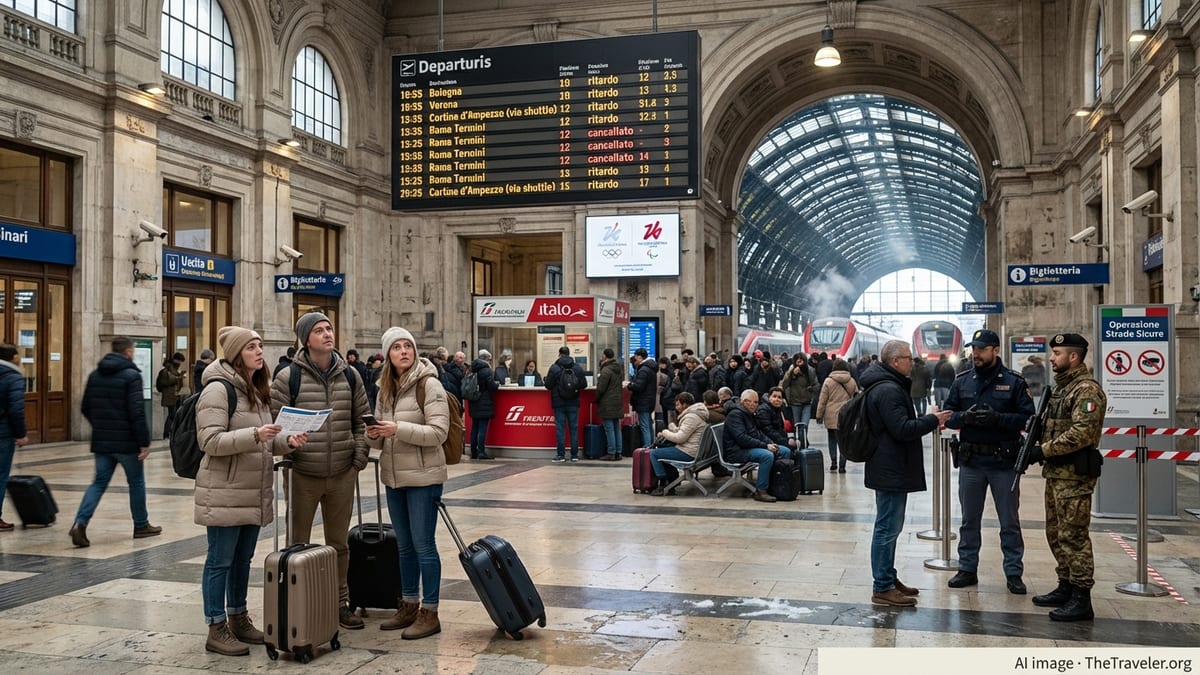
Publicly available information shows that security has been strengthened in and around Milan, with a visibly increased presence of police and military personnel in central districts and at key transport hubs. The move follows disturbances linked to broader social and economic protests, which have periodically spilled over into clashes and damage to property in parts of the city centre.
The UK guidance does not advise against travel to Italy but urges visitors to avoid protests, political gatherings and marches, and to monitor local news for information on planned demonstrations or disruptions. The wording places Italy in a category where trips can continue, but where travellers are expected to exercise increased caution and plan around the risk of civil unrest.
Recent international coverage echoes the UK government’s language, emphasising that unrest has been concentrated in specific urban areas and time periods, rather than spread evenly across the country. Milan, Turin and Bologna are frequently cited as focal points for student-led and cost-of-living protests, while tourist-heavy regions such as Tuscany and the Amalfi Coast have seen fewer direct effects.
Milan at the centre of Italy’s 2026 unrest
Milan has emerged as one of the key flashpoints in the 2026 Italian unrest, a rolling series of demonstrations, strikes and clashes that began in mid-October. Chronologies compiled by international media and open-source observers describe large gatherings in Piazza Duomo and other central locations, with some events giving way to vandalism, shop break-ins and confrontations with riot police.
Reports indicate that, after a weekend of particularly intense disturbances in mid-October, the Italian government moved to reinforce security in Milan with several hundred additional military personnel. Images and video shared by broadcasters and wire services have shown armoured vehicles and heavily equipped officers deployed around major squares, transport interchanges and government buildings.
The protests are linked to a mix of grievances, including rising living costs, youth unemployment and criticism of public spending priorities. Student groups and loosely organised networks have used social media channels to coordinate simultaneous actions in Milan and other northern cities, sometimes giving only limited notice of meeting points and march routes. This has complicated efforts by local authorities to predict where and when disturbances might occur.
While many gatherings have remained peaceful, accounts from the ground describe a pattern of smaller, fast-moving groups breaking away from larger marches, sometimes blocking roads or tram lines and clashing with police. This has contributed to a perception that conditions in Milan can change quickly over the course of a day, even when mornings begin calmly.
Impact on transport and events for visitors
Alongside the security warning, the UK travel advice has highlighted industrial action and demonstrations that can interfere with travel plans. A nationwide strike in late October affected rail and air services, taxis, local public transport and some government offices, and further sector-specific walkouts remain possible as talks over wages and working conditions continue.
In Milan, visitors arriving through Malpensa and Linate airports have been advised in international travel updates to allow extra time for security checks and possible delays, particularly on days when protests or strikes are announced. Urban transport operator information shows that tram and bus routes running through the historic centre have been among the most affected during major demonstrations, with diversions and short-notice closures used to keep crowds away from certain streets.
The unrest has coincided with a busy events calendar in the city, including trade fairs and cultural festivals in November. Travel industry briefings note that large exhibitions and conferences have mostly continued to operate, but participants have faced changing security cordons and, at times, difficulty reaching venues at peak hours. Hotels in central districts report mixed conditions, with some streets remaining quiet while others see sudden surges in police activity when marches pass nearby.
For rail passengers, European travel platforms and national operator notices have pointed to isolated delays and cancellations on services into and out of Milan, especially around days of wider industrial action. High-speed links connecting Milan with Rome, Florence and Venice have generally continued running, but travellers are being encouraged to check departure boards closely and keep flexible margins when connecting to flights or time-sensitive tours.
How the UK stance compares with other advisories
The UK position on Italy is broadly in line with that of several other countries, which also advise travellers to exercise increased caution due to the potential for protests and disruption. Guidance from authorities in nations such as Australia, Canada and the United States similarly underlines that demonstrations and strikes are a regular feature of public life in Italy and can escalate without much warning.
None of the major advisories currently categorise Italy as a high-risk destination or recommend postponing non-essential travel nationwide. Instead, the emphasis is on situational awareness in larger cities, steering clear of protest areas and planning around possible transport interruptions. Milan and Rome are repeatedly referenced as locations where visitors may notice a heavier police and military presence than in previous years.
Travel risk and insurance providers have adjusted their assessments of civil unrest in Italy to reflect the events of October and early November, often assigning the country a moderate risk level for demonstrations and strikes. Their reports point out that, despite headline-grabbing images from a small number of incidents, most visits to Italy continue without serious safety problems, provided travellers avoid direct engagement with protests and remain alert to fast-changing local conditions.
Industry commentary suggests that tour operators are closely tracking developments in Milan but have largely kept itineraries in place, sometimes substituting less central hotels or adjusting walking routes to stay away from expected gathering points. Some companies are reminding customers to ensure their travel insurance includes cover for missed connections or additional accommodation costs arising from civil unrest or strikes.
Practical guidance for travellers considering Milan
For those with upcoming trips, the UK government’s continued warning translates into a call for careful planning rather than cancellation. Travellers are being encouraged by publicly available guidance to register for updates on official advisory pages, review policy conditions with airlines and accommodation providers, and build extra time into connections, especially when routing through Milan’s airports or main railway stations.
Security advice from multiple governments and travel risk services converges on a few consistent points: avoid all demonstrations and political gatherings, move away quickly if crowds begin to build, and follow any instructions given through public address systems at stations or event venues. Visitors are also advised to keep identity documents secure and be mindful that increased spot checks may occur in areas with a heightened security presence.
Experiences shared in online travel forums by visitors recently in Milan describe a mixed picture on the ground. Many report calm conditions in popular tourist areas for most of the day, punctuated by short-lived road closures, louder police sirens or detours when marches pass through central streets in the late afternoon or evening. Some contributors suggest staying in neighbourhoods slightly outside the historic core and using regional trains to enter and leave the city if disturbances are expected.
With the unrest and related political debates still unresolved, there is no clear timeline for when the UK might relax its current language on Italy. For now, the message to British travellers is to continue visiting while staying informed, remaining flexible and treating Milan’s civil unrest as a planning factor alongside more familiar considerations such as weather, crowding and seasonal event schedules.