


More news on this day
A residential cruise ship that abruptly ended its “cruise for life” voyage in Cambodia, forcing hundreds of long-term passengers to disembark, has finally sailed from Sihanoukville after securing fuel and supplies.
Get the latest news straight to your inbox!
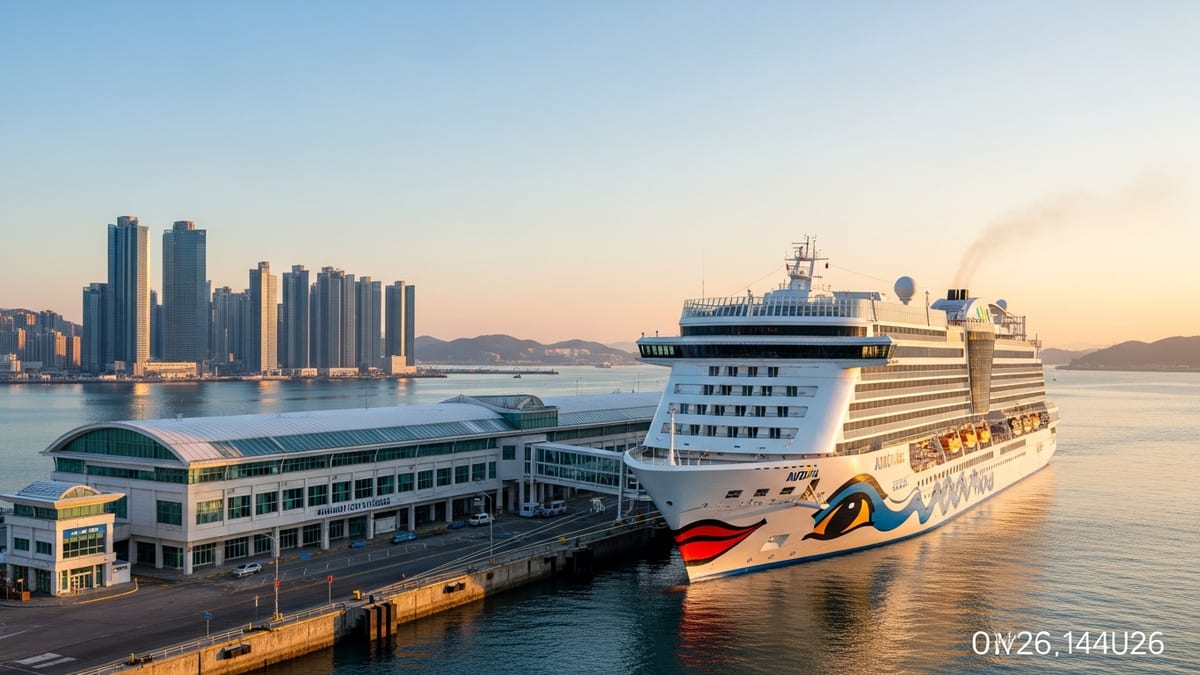
Ship departs Sihanoukville after two-week layover
The MV Odyssey, operated by Florida-based Villa Vie Residences, departed the Cambodian port city of Sihanoukville early on Wednesday 4 November 2026, following an extended layover triggered by a shortage of funds for fuel. According to recent local tourism statements and international coverage, the vessel refueled at the deep-sea port before getting under way, ending nearly two weeks of uncertainty over whether it would remain laid up indefinitely.
The ship arrived in Sihanoukville on 23 October 2026 from Thailand as part of a three-and-a-half-year global voyage marketed as a residential “endless cruise.” Publicly available information from Cambodian and international outlets indicates that by 27 October the operator had told residents that soaring fuel costs made it impossible to continue the scheduled itinerary, and that they would need to pack up and leave the vessel.
The Odyssey is reported to have been carrying just over 200 long-term passengers and more than 150 crew members when operations were halted. While crew remained aboard to maintain essential services and prepare for refueling, most paying residents were obliged to disembark and find accommodation on shore in Sihanoukville or onward travel out of Cambodia.
The vessel’s departure does not mean the voyage will resume as originally sold. Coverage of the incident consistently describes the movement out of Cambodia as a repositioning step rather than a restart of the multi-year journey that began in 2024.
Fuel price shock ends a three-and-a-half-year dream
The Odyssey’s troubles have been closely linked in news reports to a spike in marine fuel costs across parts of Asia following the recent conflict involving Iran. Villa Vie Residences has said in public statements that monthly fuel expenses per cabin, which it previously estimated at around 1,800 dollars, have climbed into a range of 6,000 to 8,000 dollars on certain legs, undermining its financial model.
The ship originally departed from Belfast in October 2024 after a prolonged refit, offering passengers the chance to purchase cabins as full-time or long-stay homes while the vessel circled the globe. Marketing materials promoted the experience as a “never-ending” or “cruise for life” concept, appealing to retirees and remote workers seeking a floating residence with regular port calls.
Over its two-year run, the Odyssey visited ports in Europe, the Americas and Asia. However, reports indicate that the combination of rising operating costs, previous itinerary changes, and questions about the company’s finances had already led some residents to step off the program before the Cambodia incident. The rapid escalation of fuel prices in 2026 appears to have been the decisive factor that brought the voyage to a halt.
Analysts following the niche residential-cruise sector note that such products rely on stable long-term pricing and predictable access to fuel and port services. The Odyssey’s experience is being cited in industry commentary as an example of how quickly external shocks, such as geopolitical conflict and energy-market volatility, can upend extended voyage plans.
Hundreds forced ashore with hours’ notice
Passengers who had been treating the Odyssey as their home received only a few hours’ notice to leave the ship once Villa Vie Residences determined that it could not purchase enough fuel to continue sailing. Multiple outlets report that residents were informed early on 27 October and instructed to have their luggage packed and ready to disembark that same afternoon.
Accounts gathered by international and regional media describe a hurried and stressful departure. Some residents were reportedly on excursions away from the port when the instructions were issued, complicating efforts to return in time to retrieve belongings. Others described being transported into central Sihanoukville by bus with limited guidance on accommodation options or next steps.
Published coverage indicates that the company arranged hotel stays for an initial period and offered assistance with paperwork and limited transport. However, many travelers still found themselves responsible for booking flights out of Cambodia and covering longer-term lodging and onward travel at their own expense.
The abrupt nature of the disembarkation has prompted debate among travel specialists about passenger protections for long-term residential cruise products. Commentators have questioned how clearly the financial and operational risks were communicated to buyers entering multi-year contracts that, in practice, depend heavily on future market conditions.
Cambodia’s role and local tourism response
Cambodia, and Sihanoukville in particular, became an unexpected focal point in the story as the Odyssey’s layover stretched on. The port city in Preah Sihanouk province is a growing hub for regional cruise and cargo traffic in the Gulf of Thailand, and its infrastructure allowed the ship to dock safely while the operator sought a solution.
Statements from provincial tourism officials cited in Cambodian media emphasized that authorities coordinated with the operator on port services, security and basic support for visitors who suddenly found themselves stranded. Local hotels and guesthouses in Sihanoukville saw an influx of last-minute bookings from former passengers, many of whom had planned to remain at sea for years rather than searching for rooms on short notice.
For local businesses, the unplanned arrival of hundreds of new guests brought a brief but noticeable uptick in demand for accommodation, dining and transport. At the same time, there was recognition in local reporting that many of the affected travelers were dealing with financial uncertainty, limiting the extent to which they could treat their time in Cambodia as a normal holiday.
The Odyssey’s eventual departure from Sihanoukville followed confirmation that fuel had been sourced and paid for. Public information has not yet clarified the ship’s next long-term destination, but reports indicate that it is leaving Cambodian waters without passengers, effectively ending its presence in the country’s tourism landscape for now.
What the saga means for residential cruising
The Odyssey case has raised broader questions about the viability of residential cruising, a small but highly publicized segment of the travel industry. Unlike conventional voyages, these ships sell multi-year or even open-ended stays, positioning themselves as alternatives to land-based retirement communities or global digital-nomad lifestyles.
Industry observers note that the business model depends on balancing stable long-term revenue from residents with fluctuating costs for fuel, crew, maintenance and port fees. The sharp increase in fuel prices reported in 2026 exposed how thin that margin can be. Once marine fuel in the region tripled from historical levels, continuing the advertised itinerary without drastic changes appears to have become untenable for Villa Vie Residences.
The experience is likely to influence how future projects of this kind are structured and regulated. Travel-law specialists and consumer advocates are already pointing to the episode in discussions about clearer financial disclosures, stronger contingency plans, and more explicit explanations of what happens if a multi-year voyage is cut short mid-route.
For travelers considering similar long-duration cruises, publicly available commentary now emphasizes the importance of examining refund terms, insurance coverage, and the operator’s access to capital. The Odyssey’s departure from Cambodia, with its former residents scattered across hotels and airports rather than enjoying the continuous journey they were promised, has become a cautionary example of how even well-marketed “life at sea” dreams can be derailed by forces far beyond the ship’s rail.