


The Acropolis dominates the Athens skyline, but the most memorable photographs are rarely taken inside the archaeological site itself. They are made from the hills, terraces and side streets that frame the Parthenon against the city, the sea and the Attic sky. This guide focuses on the most rewarding Acropolis viewpoints for photography, sunset watching and free city panoramas, with practical tips rooted in real locations that travelers can use today.
Get the latest updates straight to your inbox!
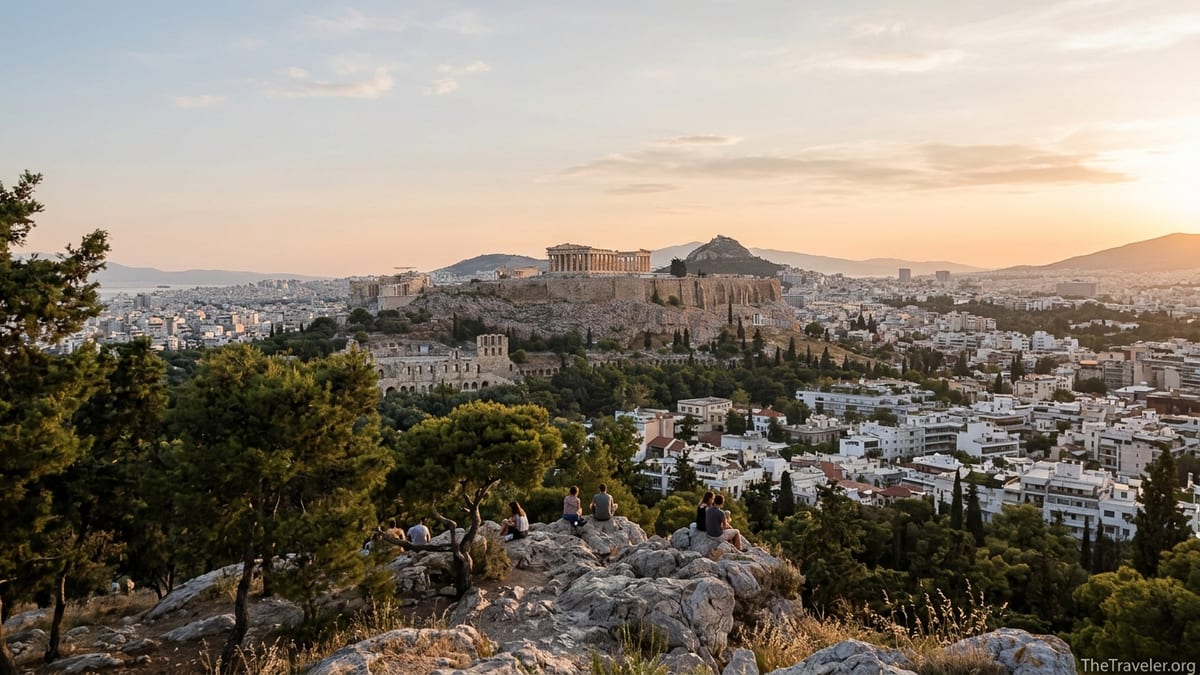
How to Choose the Right Acropolis View for Your Photos
Before racing up the nearest hill, it helps to be clear about the kind of shot you want. Some viewpoints put you almost eye level with the Parthenon for detailed architectural images. Others pull back to show the Acropolis as a small crown above a vast city, ideal for moodier skyline photos. Distances vary from a five minute stroll from the Acropolis exit to a funicular ride up the highest hill in central Athens.
Time of day matters just as much. Around Athens, the classical postcard angle of the Acropolis is usually lit from the west in late afternoon, which works well from Areopagus and Philopappos. Lycabettus Hill, on the other hand, is about the overall sunset and blue hour over the city, with the Acropolis glowing in the middle distance. In summer, sunset can be close to 20:45, while in winter it can drop to about 17:15, so always check the exact time on the day of your visit.
Finally, think about crowds and physical effort. Areopagus Hill is the closest and most dramatic but can be very busy at sunset, with people sitting shoulder to shoulder on the rock. Philopappos Hill is a gentler walk with more space to spread out, while Lycabettus requires either a fairly steep climb or a short paid funicular ride. Rooftop bars and hotel terraces give easy access and comfortable seating, but in return you will need to buy at least a drink or a light meal.
Areopagus Hill: Classic Postcard View at Arm’s Length
Areopagus Hill, also called Mars Hill, is the rocky outcrop immediately northwest of the Acropolis, just below the main western gate. From the entrance area it takes around five minutes to reach the base of the hill by following the stone steps down toward the pedestrian street, then turning right up the metal staircase to the rock. Once you step onto the plateau you are rewarded with one of the most famous views in Athens: the Parthenon slightly above eye level, framed by pines and the city falling away behind you.
This is a superb spot for close compositions that fill the frame with the Acropolis. With a standard zoom lens in the 24 to 70 millimeter range, you can capture detailed shots of the Parthenon’s colonnades without needing an extra-long telephoto. Many photographers choose golden hour here, about 30 to 60 minutes before sunset, when the marble takes on a warm honey color and the sky often turns pastel. At night the Acropolis is floodlit, so a small travel tripod and a mid-range focal length can yield classic night skyline shots.
The trade off is the crowd. On summer evenings the top of the rock can be packed with tour groups, street musicians and local students. The rock surface is polished by centuries of footsteps and can be extremely slippery, especially after rain, so good shoes are essential. For a quieter experience with almost the same angle, walk down to the lower ledges on the northern side of the hill, where you can sit among the scrub and frame the Acropolis between foreground rocks or pine branches.
Areopagus is entirely free and always accessible, which makes it convenient after a late afternoon visit to the Acropolis itself. One common routine is to exit the site just before closing time, walk directly down to the hill and stay for sunset. If you do this in July or August, be prepared for intense heat radiating from the rock until the sun is low, and bring water picked up earlier from a kiosk on Dionysiou Areopagitou, the main pedestrian boulevard below.
Philopappos Hill: Wide Panoramas and Quieter Golden Hour
Philopappos Hill lies just southwest of the Acropolis and is reached via the same pedestrian network that encircles the site. From the Acropolis museum area, most visitors follow Dionysiou Areopagitou toward the Odeon of Herodes Atticus, then continue along Apostolou Pavlou. Near the small church of Agios Dimitrios Loumbardiaris, a signposted path climbs through pine trees to the Philopappos Monument at the summit, roughly a 15 to 20 minute walk for most people.
From the platform near the monument you gain one of the most balanced views of the Acropolis in the city. The hill is far enough away that you can include the entire rock and its slopes in the frame, yet close enough that architectural details still register clearly. Photographers often work with wider focal lengths here, from 20 to 35 millimeters, to include both the Acropolis and layers of whitewashed buildings spilling toward Piraeus and the sea. On a clear late afternoon you may see the Saronic Gulf shimmering beyond the rooftops.
Philopappos is also attractive because it spreads people out over several viewpoints. Even in high season it is usually possible to find a quiet rock ledge away from the main monument, especially if you start your climb about an hour before sunset. Locals often bring simple picnics rather than buying food on the hill, since there are no kiosks once you leave the main promenade. It is wise to bring water and a snack purchased earlier from the small minimarkets around Thissio station or near the Acropolis museum.
For photographers, one useful trick is to stay past the actual sunset into the blue hour. As streetlights flicker on and the Acropolis lighting intensifies, the sky deepens to cobalt behind the Parthenon, creating a strong contrast with the golden stone. At this stage, a compact tripod or a camera with good high ISO performance pays off. Even smartphone cameras can make atmospheric handheld images here if you brace yourself against a rock and use the phone’s night mode.
Lycabettus Hill: Full City Skyline and Big-Sky Sunsets
Lycabettus Hill is the highest hill in central Athens and sits northeast of the Acropolis, rising to roughly 277 meters above sea level. The summit is crowned by the small white Chapel of Saint George and a terrace that looks directly across the city toward the Acropolis and the Saronic Gulf. Compared with the intimate closeness of Areopagus, this is about scale: the Acropolis stands out as a bright centerpiece amid the sprawl of Athens.
You can reach the top either by walking or by funicular. The funicular departs from the Kolonaki neighborhood, running roughly every 30 minutes in the evening, with tickets priced in the low single digits in euros for a round trip. Many visitors choose to walk up one way and ride down after dark. The walking paths are steep but well trodden, with sections of steps and shaded stretches through low pine and scrub. Allow 30 to 40 minutes for a relaxed ascent from Kolonaki Square if you are reasonably fit.
For photography, Lycabettus is most rewarding around sunset and the following blue hour. From the terrace railing, a moderate telephoto in the 70 to 200 millimeter range allows you to compress the scene, making the Acropolis appear larger against the layered rooftops. A wider lens captures the full curve of the coastline and, on clear days, the outlines of Salamina and Aegina islands on the horizon. It is also a good place for time lapse sequences as the city lights come on.
Expect crowds at peak times, especially in July and August, when both locals and tour groups converge on the summit and the small chapel. There is a café and restaurant at the top where drinks are priced higher than in the city center, but many travelers consider a single coffee or glass of wine a fair trade for the view and a comfortable seat after the climb. If you prefer a quieter experience, aim for a winter sunset or arrive at least an hour before the sun goes down to secure a spot along the railing.
Rooftop Bars and Hotel Terraces: Easy Access, Big Views
Athens has embraced rooftop culture in the past decade, and today there are dozens of bars and hotel terraces with direct Acropolis views. These range from laid back, plant filled rooftops with casual seating to polished hotel restaurants with multi course menus. The Official Athens city guide highlights several rooftops in the historic center that look almost directly across to the illuminated Parthenon, while local tourism sites publish updated shortlists each year.
Most rooftop bars with clear Acropolis views sit in and around Monastiraki, Plaka and the southern edge of Syntagma. Many hotels open their top floor bars to non guests in the late afternoon, operating on a first come basis. Expect to pay slightly higher than average prices: a simple cocktail might run from around 10 to 15 euros, with draft beers and glasses of house wine in the 6 to 8 euro range, depending on the location and the season. Some higher-end hotel rooftops that position themselves as destination restaurants can charge 50 euros or more per person for a three course dinner with a view.
The advantage, of course, is comfort and stability. Camera users can rest elbows on sturdy railings, keep gear bags safely by their feet and take their time as the light changes. On breezy evenings rooftops also tend to feel cooler than the streets below. If you plan to shoot serious photos, phone ahead or check recent traveler reviews to confirm that tripods are allowed. Some venues restrict larger tripods during busy hours but permit compact tabletop supports that sit on the bar or railing.
For a memorable yet budget conscious experience, many photographers choose a rooftop for an early evening drink, then head back down to street level for dinner in Psyrri or around Agias Irinis Square, where tavernas and casual restaurants offer more modest prices. This two part evening gives you the Acropolis views without committing to an entire high end rooftop meal.
Plaka Streets, Museum Cafés and Lesser Known Free Vantage Points
Not every great Acropolis shot requires a climb. The streets of Plaka and nearby Anafiotika, the tiny whitewashed neighborhood clinging to the northern slopes of the Acropolis, offer countless small compositions where the Parthenon appears between tiled roofs, over bougainvillea or above narrow stairways. In early morning, when delivery vans and café staff are just setting up for the day, lanes like Mnisikleous Street or the steps near the church of Agios Nikolaos Ragavas can be almost empty, giving you space to work.
Another option that many visitors overlook is the view from museum cafés and terraces. The Acropolis Museum has a restaurant level with large windows that frame the Parthenon almost directly across the way. While seating policies sometimes change, it is often possible to access the café with a museum ticket and sit for a coffee while photographing through the glass. Shots from here work best on bright days when reflections are minimal and the sky behind the Acropolis is clear or only lightly clouded.
At ground level, the pedestrian boulevard of Dionysiou Areopagitou provides a softer, more atmospheric perspective, especially just after sunset when streetlights come on and buskers begin to play. Looking back toward the Acropolis from near the Odeon of Herodes Atticus entrance, you can frame the illuminated rock above the trees and the strolling crowd. A fast prime lens or a phone with a good low light mode works well here, because light levels are lower than on the hills.
Lesser known hills such as the Pnyx and the Hill of the Nymphs, near the National Observatory, also provide free views with fewer people than Areopagus. The angles are slightly different and the Acropolis appears a little further away, but that extra distance can be artistically useful, allowing you to include more foreground rock and vegetation or wider slices of the skyline. These spots are good choices if you want a reflective sunset without the dense crowds of the most famous rock.
Planning for Light, Angle and Season
Understanding where the sun sets in relation to the Acropolis helps you position yourself. In high summer the sun drops to the northwest, so from Areopagus and Philopappos you are generally looking slightly away from the sun, which creates strong side lighting on the Parthenon’s columns. This side light emphasizes texture and relief, perfect for detailed architectural photos. From Lycabettus, the Acropolis sits left of the main sunset point, so you get a wider skyline composition with warm light on the city and a more silhouetted distant coastline.
In winter months the lower sun and earlier sunset change the feel entirely. Skies can be clearer after rain, giving sharper long distance views from high points like Lycabettus. Cooler air also makes afternoon hikes more comfortable, and hills that feel crowded in August can be almost empty on a sunny January weekday. The trade off is shorter opening hours for museums and archaeological sites and the need to bring an extra layer for windy hilltops.
For photographers, carrying at least a small microfiber cloth and lens hood helps when shooting toward the sun, particularly on hazy days when flare is more likely. Polarizing filters can deepen blue skies and cut glare from the white buildings of the city, especially from mid afternoon onward. Many travelers today rely mostly on smartphones, and modern devices handle dynamic range fairly well, but switching to an HDR mode can help keep both the bright marble of the Acropolis and the darker foreground properly exposed.
Safety is straightforward if you follow basic precautions. The main risks on the hills are slippery stone surfaces and occasional loose gravel, not crime. Good footwear, a torch or phone light for the walk down after dark and awareness of your footing will go a long way. As in any large city, keep your camera bag zipped and in front of you in crowded sunset spots, but routine pickpocketing is more common on packed public transport than on the open rocks of Areopagus.
The Takeaway
No single viewpoint can claim to be the definitive way to see the Acropolis. Areopagus Hill gives that tight, dramatic postcard angle almost within touching distance. Philopappos offers broader, calmer panoramas and room to sit in the pines as the city lights flicker on. Lycabettus lifts you high above Athens for big sky sunsets and full skyline scenes. Rooftop bars, Plaka alleyways and museum cafés round out the picture with urban and intimate perspectives.
For a short stay in Athens, a practical strategy is to pair one close hill and one elevated overview. For example, photograph the Parthenon up close from Areopagus after an afternoon on the Acropolis, then devote another evening to Lycabettus for the full cityscape. In between, wander Plaka and Anafiotika early in the morning for quieter street-level compositions, and if your schedule permits, pause at a museum café to capture the Acropolis framed by modern glass.
Whatever combination you choose, the most important ingredient is time: give yourself at least an hour in each place so you can watch the light evolve rather than racing from point to point. Athens rewards patience. The Acropolis will always be there, but the way it appears at a particular moment on a particular evening is yours to keep.
FAQ
Q1. What is the single best free viewpoint of the Acropolis for first time visitors?
The most convenient and dramatic free viewpoint for a first visit is Areopagus Hill, just below the western gate of the Acropolis. It combines a short walk with a close, iconic angle that matches many classic postcard images, and you can easily visit it right before or after touring the archaeological site.
Q2. Is Philopappos Hill or Areopagus better for sunset photos?
Areopagus feels more intense and crowded at sunset, with the Acropolis filling much of the frame and people gathering shoulder to shoulder on the rock. Philopappos sits a little farther away, which gives a wider, more relaxed panorama with more space to sit and set up a tripod. If you want atmosphere and people in your shots, choose Areopagus. If you prefer quieter golden hour landscapes, choose Philopappos.
Q3. Do I need to pay anything to visit Lycabettus Hill for the view?
The hill itself is free to access if you walk up, but many visitors use the funicular railway from Kolonaki, which charges a small ticket fee in the low single digits in euros for a round trip. At the summit the terraces are open to the public, while the café and restaurant expect you to buy at least a drink or snack if you occupy a table for sunset.
Q4. Can I see the actual sunset behind the Acropolis from these hills?
From most central hills such as Areopagus and Philopappos, you do not see the sun drop directly behind the Acropolis. Instead, the monument is lit from the side while the sun sets off to one side of your frame. Lycabettus offers more of a classic skyline sunset where the sun drops over the wider city and sea, with the Acropolis glowing off center beneath the changing sky.
Q5. Are tripods allowed at the Acropolis viewpoints?
On public hills like Areopagus, Philopappos and Lycabettus, small travel tripods are generally fine, though you should avoid blocking paths or setting up on very crowded rock surfaces. Inside the Acropolis archaeological site itself, tripod rules are stricter and can change, with staff sometimes asking photographers to put them away. Rooftop bars and hotel terraces may restrict larger tripods during busy hours, so compact supports or handheld shooting are more practical in those venues.
Q6. What is the safest way to walk down from the hills after dark?
The main paths down from Areopagus, Philopappos and Lycabettus are well used in the evening, especially right after sunset. To stay safe, wear shoes with decent grip, use a phone flashlight on steeper or uneven sections and avoid shortcuts through unlit scrub. Walking down with the general flow of other visitors rather than leaving long after everyone else adds an extra layer of reassurance.
Q7. Are there good Acropolis views for travelers who prefer not to hike?
Yes. Rooftop bars and hotel terraces in neighborhoods like Monastiraki, Plaka and Syntagma offer excellent views with minimal effort; you reach them by elevator and pay for a drink or meal. Museum cafés, such as the restaurant level at the Acropolis Museum, also provide comfortable seating with large window views, though you may need a museum ticket for access on busy days.
Q8. When is the best season to photograph the Acropolis from these viewpoints?
Spring and autumn strike a good balance between comfortable temperatures, softer light and moderate crowds. In March, April, October and early November you can often hike hills like Philopappos and Lycabettus in the late afternoon without extreme heat, and skies after rain can be particularly clear. Summer brings long evenings and vivid sunsets but also higher temperatures and more people, while winter offers quiet viewpoints and crisp air if you are prepared for cooler, shorter days.
Q9. Can I combine an Acropolis visit with sunset views in a single afternoon?
Many travelers do exactly that. A common plan is to enter the Acropolis in mid to late afternoon, explore the monuments as the crowds thin, then exit via the western gate shortly before closing time and walk directly to Areopagus Hill for sunset. If you still have energy afterward, you can continue along the pedestrian promenade toward Thissio or a nearby rooftop bar to watch the Acropolis lighting deepen as night falls.
Q10. Are there quieter alternatives to the main hills for reflective views?
If you want a calmer atmosphere, consider the Pnyx Hill or the Hill of the Nymphs near the National Observatory, both within walking distance of the Acropolis. They offer slightly more distant but still rewarding perspectives with fewer people, especially on weekdays. Another gentle option is to stroll the Dionysiou Areopagitou promenade just after sunset, where you can look up at the illuminated rock from among trees and streetlife without climbing at all.