


Villefranche-sur-Mer, a pastel-colored fishing village tucked into one of the deepest natural bays on the Mediterranean, often appears in French Riviera itineraries as a quick stop between Nice and Monaco. In reality, how long you should stay depends on what you want from the town: a lazy swim at Plage des Marinières, a wander through the steep old streets, a base for exploring Cap-Ferrat, or a quiet alternative to busier Nice. This guide breaks down how much time you really need in Villefranche-sur-Mer to enjoy its highlights, with concrete examples to help you plan.
Get the latest updates straight to your inbox!
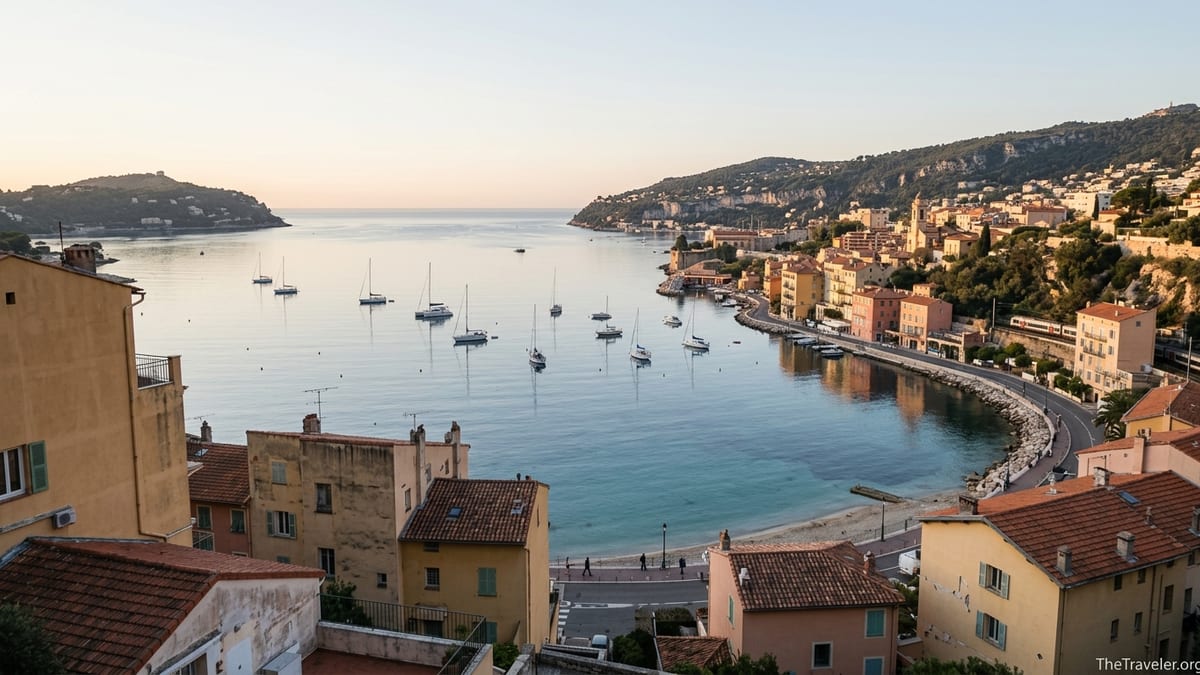
Understanding Villefranche-sur-Mer’s Scale and Character
Villefranche-sur-Mer is compact. The old town, seafront, and main beach sit in a narrow strip between steep hills and the bay, so many first-time visitors are surprised by how fast they can walk from one end to the center. From the train station at Plage des Marinières to the heart of the old town near the church of Saint-Michel takes roughly 10 to 15 minutes on foot at a relaxed pace. You can stroll the waterfront promenade, duck into a few alleys, and reach the Citadelle Saint-Elme in another 5 to 10 minutes.
This small size is a key reason many travelers successfully treat Villefranche as a half-day stop. For example, someone staying in Nice might catch a mid-morning TER train, spend a few hours on the beach, have a long seafood lunch by the port, wander the citadel and lanes, and still be back in Nice by sunset. Direct regional trains run frequently, with journey times reported at around 5 to 7 minutes from Nice-Ville station, and one-way adult tickets typically cost about 3 to 4 euros bought on the day, so popping over is very easy.
Despite its scale, Villefranche has distinct “zones” that each reward a bit of time: the broad crescent of Plage des Marinières under the railway arches, the dense ochre and terracotta old town rising up from the waterfront, the quiet stone corridors around the 16th-century Citadelle Saint-Elme, and the working port area with fishing boats and small tour boats. Deciding how long to stay is largely about how much time you want to sink into each of these rather than ticking off a long list of attractions.
Crucially, Villefranche is not a major museum or nightlife city. Instead, its appeal is atmosphere: late afternoon light on the facades along the quai, laundry hanging above narrow lanes, and the curve of the bay filled with small yachts and the occasional cruise ship at anchor. If you enjoy slowing down and simply sitting at a café watching tenders shuttle cruise guests ashore, you may appreciate a full day or more here, even though the map suggests you could “do” it in two hours.
A Few Hours: What You Can Realistically See on a Short Visit
If you have just three to four hours in Villefranche-sur-Mer, for instance on a tight French Riviera itinerary or during a cruise call, you can still see the essential highlights. Most travelers in this situation arrive either by tender directly to the waterfront or via train from Nice or Monaco. From the waterfront landing area, it is only a couple of minutes’ walk to the line of cafés and gelato stands facing the bay, and from there roughly five minutes to the stone entrance of the citadel.
On a short visit, a practical sequence is to walk first through the old town lanes, where you can step into the baroque church of Saint-Michel and descend through the vaulted Rue Obscure, a covered medieval street that runs parallel to the waterfront. Then continue to the Citadelle Saint-Elme, where the ramparts offer views across the bay and back to the pastel houses. Entry to the citadel and its small municipal museums is generally free, so you can spend 30 to 60 minutes wandering the courtyards and bastions without worrying about ticket queues or fixed time slots.
You can then finish with a stroll along Plage des Marinières. From the old port area, allow about 10 minutes’ walk along the water to reach the main section of the beach. Even if you do not settle in for a swim, walking part of the curved shoreline gives a sense of how dramatically the hills rise behind the town. If you do want a dip, the pebble and sand mix shelves fairly gently, and there are usually small snack kiosks or beach restaurants where you can grab a quick coffee or soft drink for around 3 to 5 euros.
In practice, this “express highlights” circuit might look like this for a day-tripper from Nice: catch a late-morning train around 11:00, arrive in Villefranche before 11:15, wander the old town and Rue Obscure for 45 minutes, explore the citadel for another 45 minutes, then walk to Plage des Marinières for an hour of paddling or sunbathing before buying gelato back near the station and boarding a mid-afternoon train home. You will not see every side street, but you will have a real taste of the town’s atmosphere.
Half a Day: The Sweet Spot for First-Time Visitors
For many travelers, a half-day in Villefranche-sur-Mer, roughly four to six hours, is the ideal balance. This gives you enough time to see the key sights, pause for lunch or an aperitif, and still maintain a relaxed pace. It also works well when you are using Nice as a base and pairing Villefranche with another half-day outing, such as an evening stroll in Nice’s old town or a short hike on nearby Cap-Ferrat the same day.
With half a day, you can add two important elements to your visit: a proper meal and unhurried time by the water. Many visitors make lunch the highlight, sitting at a waterfront restaurant facing the bay. A main dish of grilled sea bream or moules marinières typically runs somewhere in the 20 to 30 euro range at mid-range spots, with a glass of local rosé at about 6 to 9 euros. Allow at least 90 minutes for a lingering lunch, especially in summer when service is relaxed and tables are in high demand.
You can also explore more of the old streets that wind up from the water. Instead of only walking the direct route between the port and the citadel, take your time to zigzag up the staircases that lead to small squares and viewpoints over the bay. This is when Villefranche can feel different from neighboring resort towns: streets are often quieter once you leave the immediate port area, and you may find small family-run shops, simple bakeries, or a local bar where a coffee costs closer to 2 euros than the waterfront premium.
For cruise passengers, a half-day can mean staying in Villefranche itself rather than rushing off to Monaco or Nice. From the tender dock you are only steps from the waterfront cafes, so there is little transit time. Many visitors report that a gentle loop of old town, citadel, beach, and back to the tender, with a sit-down lunch included, fits comfortably into a six- to eight-hour port call without feeling rushed. If your ship stays late, finishing the visit with an early evening drink as the lights come on across the bay creates exactly the kind of Riviera memory people imagine when they book this region.
A Full Day: Adding Beach Time, Coastal Walks, or Side Trips
Spending a full day in Villefranche-sur-Mer opens up more options, especially if you enjoy walking or want unstructured time on the beach. With sunrise often bright over the bay in summer, you might arrive on an early train, enjoy a near-empty Plage des Marinières before mid-morning crowds arrive, then transition into sightseeing as temperatures rise. A couple or family arriving near 9:00 can feasibly enjoy two to three hours of beach time, have a leisurely lunch, wander the old town, and still have time for a coastal walk or a café stop before heading back to base.
One popular way to use a full day is to combine Villefranche with nearby Cap-Ferrat or Beaulieu-sur-Mer. For example, some travelers take an early train to Villefranche, walk through the old town and citadel in an hour, then follow sections of the coastal path towards Beaulieu or around Cap-Ferrat, returning in the afternoon for a swim. Others split the day into morning in Villefranche and afternoon on Cap-Ferrat, visiting public beaches like Passable or Paloma after lunch. Public buses and coastal walking paths link these spots, so you can explore without a car, though you should allow extra time in high season for busy buses.
Boat trips are another option if you have a full day. In the height of summer, small operators often offer short coastal cruises from the bay, such as one- or two-hour loops that show you the villas on Cap-Ferrat and the cliffs around the bay from the water. Prices can vary, but it is common to see rates of a few tens of euros per person for group outings. Booking on the spot is often possible when the weather is stable, though in July and August it is wise to check availability earlier in the day.
A full day also suits photography or slower travelers. The light and mood change constantly in Villefranche: morning is softer and quieter, midday is busy and bright, late afternoon brings long shadows across the facades, and by evening the bay fills with reflections from restaurants and anchored boats. If you want time to capture those changes, or if you are traveling with young children and need more frequent breaks, one long day can feel just right. You can space out your visits to the beach, cafés, and viewpoints without watching the clock.
Staying Overnight: When Villefranche Makes Sense as a Base
While many visitors just pass through, Villefranche-sur-Mer can also work as a base for two or three nights, particularly for travelers who prefer a quieter setting than Nice but still want easy access to the regional train line. The town’s station sits on the coastal route served by regional TER trains, with frequent services running between Cannes, Nice, Villefranche, Monaco, and Menton. In practice, that means you can wake up overlooking the bay in Villefranche and still be on the Promenade des Anglais in Nice or in Monte Carlo’s casino square within a short train ride.
Choosing Villefranche as a base makes the most sense if your priorities are sea views and a more village-like feel. Many hotels, guesthouses, and apartments are set into the hillside, with balconies facing the bay. Rates fluctuate by season, but it is not unusual in summer to see simple double rooms starting from the low hundreds of euros per night, with higher prices for sea-view terraces. Apartments in the lanes of the old town can be more affordable than waterfront hotels but may involve climbing steep stairs and living closely alongside local residents.
From an overnight base, you can easily create a rhythm of slow mornings in Villefranche and afternoon excursions. One sample three-night plan might look like this: on day one, arrive and settle in, then swim and dine in Villefranche. On day two, take a morning train to Monaco and return by late afternoon to watch the sunset over the bay from your balcony. On day three, explore Cap-Ferrat’s coastal path and Villa gardens before returning for a final dinner by the harbor. Because trains between Nice and Villefranche are frequent and take only a few minutes, you can still pop into Nice for markets or nightlife without giving up the calm of sleeping in the smaller town.
The main trade-off is services. Compared with Nice or Cannes, Villefranche has fewer supermarkets, late-night venues, and shopping streets. After around 22:00, the town is usually relatively quiet apart from waterfront restaurants, and most nightlife options involve heading back to Nice. If you want clubs, broad shopping avenues, or a choice of dozens of bars, staying in Nice and visiting Villefranche as a day trip may be more practical. If your ideal Riviera evening is a long dinner with a view and an early night, Villefranche makes sense for a longer stay.
Seasonal Considerations and Practical Timing Tips
The amount of time you will want in Villefranche-sur-Mer shifts with the season. In July and August, when the bay is dotted with yachts and the beach fills up early, everything takes longer: finding a sunbed, getting served at busy cafés, and waiting for tables at popular waterfront restaurants. In these peak months, it is wise to add an extra hour or two beyond what you might budget in the shoulder seasons. A half-day plan can easily stretch into a full day simply because you move more slowly through crowds and may spend longer lingering in the shade.
In late spring and early autumn, you can often move faster and enjoy more space. A traveler visiting in late May or early October can usually walk into many restaurants at lunchtime without a reservation and find comfortable spots on the public sections of Plage des Marinières. In these shoulder periods, three to four hours can feel sufficient for a good first impression, while a full day becomes an indulgence rather than a necessity. The sea is often still swimmable in early autumn, though always check local conditions and your own comfort with water temperatures.
Winter brings a different rhythm. Many beach services close or reduce their hours, and there are fewer boat trips, but terraces in sheltered corners can still be pleasant around midday on sunny days. This is a time when you may only need a few hours to see the highlights, since long beach sessions and evening strolls in light clothing are less appealing. On the other hand, accommodation prices may be lower, and the free parking near the citadel, which is sometimes complimentary outside the main season, can make a quick visit by car easier and cheaper than in summer, when paid parking and blue-zone rules are more restrictive.
Regardless of season, plan your arrival and departure around the simple fact that sunset over the bay is one of Villefranche’s most beautiful moments. If your schedule allows, consider timing your visit so you can be on the waterfront or citadel ramparts in the hour before and after sunset. This might mean taking a late-afternoon train from Nice and returning after dinner, or, if arriving by cruise tender, being in town toward the end of your port call instead of rushing back onboard immediately after lunch.
Transport Logistics: Fitting Villefranche into a Wider Riviera Itinerary
Transport ease is one of the main reasons travelers can comfortably spend anything from a couple of hours to several days in Villefranche-sur-Mer. Regional TER trains along the coastal line link Villefranche with Nice, Monaco, Menton, and Cannes. Schedules vary by day and season, but recent timetables show many departures per hour in daytime between Nice and Villefranche, and journey times can be as short as five to seven minutes. Single tickets on this stretch are generally inexpensive, usually a few euros when bought at the station or via official apps on the day of travel.
If you are arriving by cruise ship, tender boats usually drop passengers close to the small port, where local signs clearly indicate the walking route into the old town and towards the citadel. From the tender pier, it is realistic to walk into town, see major sights, and be back well within a standard eight- to ten-hour port call. Many cruise-focused guides suggest that independent visitors can comfortably reach Nice, Monaco, or Eze by train from Villefranche during a single day in port, but this is only advisable if you are highly time-conscious and comfortable with public transport timetables.
Visitors arriving by car should be aware that parking in high season can be tight. Around the citadel, there are designated parking areas, some of which have different pricing or free periods outside the core summer months. In practice, drivers often need to allow extra time to locate a spot and walk back down to the old town, especially on weekends and during events. This extra buffer time matters when deciding how long you “need” in town: a planned three-hour stop might turn into four once you account for parking and walking.
When integrating Villefranche into a broader Riviera itinerary, consider spacing your visits to other coastal towns to avoid backtracking. One practical approach used by many travelers is to dedicate one day to the eastern stretch from Nice: combining Villefranche with Beaulieu-sur-Mer, Cap-Ferrat, or Monaco, and another day to the western side, visiting Antibes or Cannes. This way, if you have only a week on the Riviera, you can give Villefranche a relaxed half-day or full day while still covering the region’s better-known resorts.
The Takeaway
There is no single correct amount of time to spend in Villefranche-sur-Mer, but patterns emerge when you look at how real travelers use the town. If you are simply curious and already based in Nice, a three- to four-hour visit offers a satisfying taste: an unhurried walk through the old town, a stop at the citadel, and a stroll on Plage des Marinières. Many visitors leave after such a visit feeling they have “seen” Villefranche, especially outside the peak of summer.
If you want to feel the rhythm of the place rather than just look at it, a half-day to full day is ideal. This gives you time for a proper meal along the waterfront, a swim or sunbathing session, and perhaps a short coastal walk or small boat trip. Beach lovers, photographers, and slow travelers often find that a whole day slips by quickly, especially when they include a side trip to nearby Cap-Ferrat or Beaulieu-sur-Mer.
For those who prioritize quiet sea views and a village atmosphere over big-city services, two or three nights in Villefranche can be very rewarding. The frequent, short train rides to Nice and Monaco make it easy to explore the wider Riviera while returning each evening to a calmer bay. Ultimately, whether you stay for a few hours or a few days, planning around your interests and the season, rather than a fixed formula, will ensure you enjoy Villefranche-sur-Mer’s highlights in a way that fits your own style of travel.
FAQ
Q1. Is Villefranche-sur-Mer worth visiting if I only have a few hours?
Yes. In three to four hours you can walk the old town, visit the Citadelle Saint-Elme, stroll Plage des Marinières, and enjoy a drink or quick meal by the water.
Q2. How long should I stay in Villefranche-sur-Mer if I am based in Nice?
Most visitors based in Nice find that a half-day to full day in Villefranche is ideal, using the short regional train ride to come for lunch, beach time, and a wander.
Q3. Can I combine Villefranche-sur-Mer with Monaco or Eze in one day?
Yes, but it makes for a busy schedule. It is realistic to spend a morning in Villefranche and an afternoon in Monaco or Eze if you keep sightseeing focused and use trains or buses efficiently.
Q4. How much time do I need for the beach in Villefranche-sur-Mer?
If you only want a quick swim and a look at the bay, one to two hours at Plage des Marinières is enough. For a full beach day with sunbathing and a long lunch, plan four to six hours.
Q5. Is one full day in Villefranche-sur-Mer too much?
Not if you enjoy slow travel. A full day lets you combine a few hours on the beach, a relaxed meal, exploration of the old town and citadel, and possibly a short coastal walk or boat trip.
Q6. Should I stay overnight in Villefranche-sur-Mer or just visit from Nice?
If you like a quiet village atmosphere and sea views, two or three nights in Villefranche work well. If you want more nightlife and shopping, staying in Nice and visiting as a day trip is usually better.
Q7. How much time should cruise passengers plan in Villefranche-sur-Mer itself?
Cruise passengers can comfortably spend four to six hours in Villefranche, enough for the main sights, lunch, and some beach or café time without rushing back to the tender.
Q8. Do I need extra time in summer compared with spring or autumn?
Yes. In July and August, crowds slow everything down. Add at least an extra hour or two for queues, busy beaches, and relaxed restaurant service compared with shoulder seasons.
Q9. Is Villefranche-sur-Mer suitable for a quick winter visit?
In winter, a two- to three-hour visit is usually sufficient, as beach time and boat trips are limited. You can still enjoy the old town, citadel views, and a café stop on a sunny day.
Q10. How early should I arrive to enjoy Villefranche-sur-Mer without crowds?
Arriving by mid-morning, around 9:00 to 10:00, generally gives you a quieter experience on the beach and in the old town, especially outside the absolute peak of summer.