


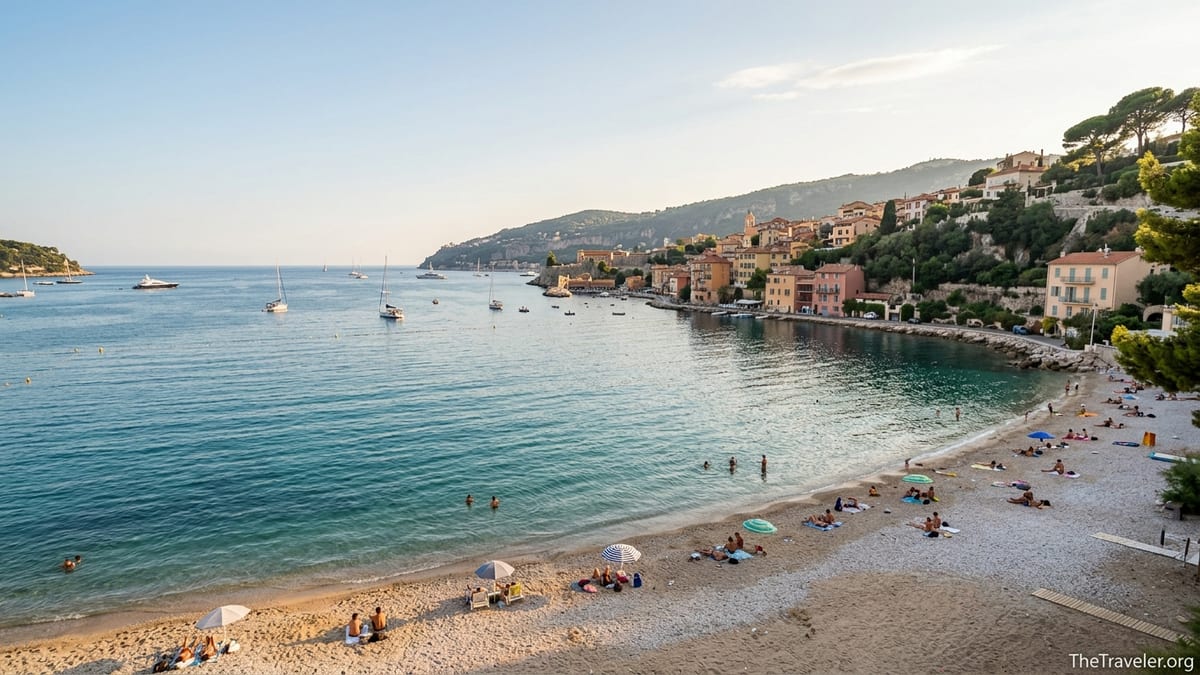
Villefranche-sur-Mer is one of the most photogenic corners of the French Riviera, with its deep natural bay, pastel facades and a sweep of beach that sits just below the train line from Nice. Yet the experience you have here changes dramatically depending on when you visit. Come in August and you will find a lively resort atmosphere, packed restaurant terraces and pricey hotel rooms. Arrive in late spring or early autumn and you may still swim in clear, warm water, but with space to breathe on Plage des Marinières and quiet evenings in the old town. Choosing the right moment is the single best way to enjoy the beaches, the views and a calmer side of this small coastal village.
Get the latest updates straight to your inbox!
Understanding Villefranche-sur-Mer’s Seasons
Villefranche-sur-Mer has a classic Mediterranean climate, with hot, generally dry summers and mild winters. In peak summer, from late June through August, afternoon highs often sit in the upper 20s Celsius, roughly the low 80s Fahrenheit, while the bay stays warm well into the evening. In winter, daytime temperatures frequently hover in the low to mid teens Celsius, about the mid 50s Fahrenheit, which is pleasant for walking the seafront but far too cool for most people to want to swim for long.
The sea itself warms more slowly than the air. Along this stretch of coast, sea temperatures usually climb above the comfortable swimming mark in late May and stay pleasant through late September. That means the shoulder months of June and September can offer nearly the same beach conditions as August, but with far fewer visitors than high summer school holiday weeks. This lag between air and sea temperatures is a key detail if you are deciding between, for example, early May and late September for a swim-focused trip.
Rain is relatively infrequent, but there is a noticeable uptick in showers in late October and November. On a practical level, that means spring and early autumn typically give you more reliable blue-sky days to enjoy the pastel lanes of the old town or a long lunch facing the bay. Winters can be crisp and bright, but windy days are more common, and the narrow waterfront promenade can feel exposed when the mistral or other local winds funnel through the bay.
Because Villefranche-sur-Mer is small, seasonal swings in visitor numbers are very obvious. A handful of cruise ships still anchor in the bay in the shoulder seasons, bringing a half-day rush into the citadel and old streets, but the packed sun lounger lines and fully booked restaurants are largely a summer phenomenon. The same village can feel like a busy resort in July and a languid seaside town in March.
For Beach Time With Fewer Crowds: Late May to Late June
If your priority is to spend long days on the sand with fewer people on the towel next to you, the sweet spot generally runs from late May to late June. By the second half of May, the sun is already strong and days are long, but European school holidays have not fully started. On Plage des Marinières, the main beach, you will see locals swimming before work and families coming down after school, but you can usually still find plenty of space even near the waterline.
This is also when seasonal services start gearing up. The private beach concession on Plage des Marinières typically operates from early June through late September, with sun loungers, umbrellas and table service directly on the sand. Booking a pair of loungers and an umbrella for a day in June often costs noticeably less than at the height of summer, and availability is higher, so you are not forced into the first or last row by the water. Showers and snack kiosks along the promenade are usually open by this time too, making it easy to spend a full day on the shore without heading back into town.
Realistically, the sea in late May can still feel brisk for some swimmers, especially in the morning, but by early June many visitors find it comfortable enough for unhurried swims, particularly inside the sheltered bay. A common pattern is to explore during the cooler early hours, perhaps walking the coastal path toward Beaulieu-sur-Mer, then settle on the beach from mid afternoon when the sun is high and the water has warmed. Toward the end of June, evening swims become especially appealing, with the sun setting later and the hills above the bay glowing soft gold.
From a budget perspective, late May and early June hotel and apartment rates in Villefranche-sur-Mer are typically lower than in July and August. That can make a noticeable difference if you prefer a balcony room overlooking the bay or an apartment close enough to the beach that you can walk down in flip-flops. Trains from Nice and Monaco are usually less crowded too, which matters if you are staying in Villefranche but planning day trips along the coast.
September: Warm Water and Softer Light
September is arguably the single best month for combining beach days, iconic views and a calmer atmosphere. The Mediterranean has had all summer to warm up, so the water is often at its most inviting just when the peak-summer crowds are going home. On a typical early September afternoon, you can still swim for long stretches off Plage des Marinières without feeling chilled, and many locals continue to treat the sea as their daily workout well into the month.
The mood in town also changes after the main August holiday weeks. Restaurant terraces along the waterfront remain busy at dinner, but you are more likely to snag a sea-facing table at short notice, even at popular spots on the quai. In the early evening, the bay often turns mirror-still, with the colored houses of the old town reflecting in the water and just a few paddleboarders or kayakers gliding across. Photographers often prefer this time of year because the light is softer and less harsh than in high summer, making views from the citadel walls or from the road up toward the Col de Villefranche even more striking.
On the beaches themselves, you will notice more space between towels and parasols compared with July. The private area on Plage des Marinières usually still operates through most of September, so you can combine a quieter feel with the comfort of reserved loungers and food service. If you prefer a more local, low-key experience, the small rocky Plage de la Darse on the other side of the port tends to stay peaceful even in early September, especially on weekdays, though water shoes are useful on the stones.
Practicalities also tilt in your favor. Train carriages between Nice, Villefranche-sur-Mer and Monaco are less packed, which makes short hops up and down the coast more relaxed. Daytime temperatures cool just enough that climbing the steps between the beachfront and the old town is less of a slog, but it is still warm enough for dinner outdoors most evenings. Accommodation prices start to ease off their peak too, so you may be able to upgrade to a room with a bay view for roughly what a more modest room would have cost in early August.
When to Avoid Peak Crowds and Heat
There are still reasons to choose the height of summer, especially if you rely on school holidays or you love a buzzy, social beach atmosphere. In July and August, Villefranche-sur-Mer has a holiday energy that some travelers seek out: late-night gelato queues in the old town lanes, full tables at seafront restaurants and a mix of languages on the beach. The sea is at its warmest, and almost every seasonal business is open, from kayak and paddleboard rentals on Plage des Marinières to evening boat tours of the bay.
However, this period also brings the densest crowds and the highest prices. From mid July through late August, it can be difficult to find parking near the waterfront, and trains along the coastal line often feel standing-room-only at peak times. On the main beach, towels line up almost edge to edge by midday, and the private beach section can book out several days in advance. For travelers who want views, tranquility and space to swim, that intensity can feel overwhelming.
The heat is another factor. Although temperatures here are moderated by the sea, a string of hot days in August can still push afternoon temperatures into the upper 80s Fahrenheit. The old town’s narrow alleys provide some shade, but the walk along the bay to the far end of Plage des Marinières or the uphill climb toward the Corniche roads can feel draining at midday. If you are sensitive to heat or traveling with young children, you may find it harder to enjoy longer, unhurried walks to viewpoints or along the coastal paths.
For many visitors who value the beaches and views as much as a relaxed atmosphere, the most sensible strategy is to avoid these peak weeks unless you have a strong reason to visit then. The same places that feel crowded and hot in late July often feel spacious and pleasantly warm in mid June or mid September, with virtually identical scenery.
Cooler Months for Views, Walks and Quiet
If swimming is secondary and you are more interested in the scenery, village atmosphere and nearby excursions, late autumn through early spring can be rewarding. From November through March, the bay is often very quiet, with only a handful of people walking the waterfront promenade or sitting on benches facing the water. On sunny days, the low winter light can be beautiful, picking out the pastel tones of the facades and the stone of the citadel walls in soft detail.
Accommodation prices in this period tend to be at their lowest, and you may find excellent value on apartments with sea views or small hotels in the old town that would be beyond budget in August. It is not unusual in winter to have entire rows of balcony railings along the hillside apartments with no one on them, which speaks to how different the occupancy levels are compared with summer. For a traveler who likes quiet streets and empty viewpoints, that can be a major draw.
The trade-offs are real, though. The sea is at its coldest, so any dip is likely to be a brisk plunge rather than a languid swim. Some beachfront services, such as kayak rentals or the private beach sections with loungers, do not operate in the winter months. Outdoor dining on the quayside remains possible on milder days, thanks to heaters and sheltered terraces, but you should expect more meals indoors than in summer.
Still, for certain experiences, winter or very early spring can be ideal. Walking the path toward Saint-Jean-Cap-Ferrat, exploring the citadel’s museum spaces, or taking the short train ride to Nice for a day of city wandering are all more comfortable without the summer heat. If your idea of enjoying Villefranche-sur-Mer’s views involves coffee on a quiet terrace, reading a book while watching the few boats in the bay and wandering back streets without bumping shoulders, consider dates between January and March.
Planning Around Beaches: Local Spots and Their Rhythms
The character of Villefranche’s beaches changes slightly with the seasons, and understanding those rhythms can help you choose your dates. Plage des Marinières, stretching along the inner curve of the bay just below the train tracks, is the main draw. In early summer and early autumn, mornings here tend to be calm, with mostly locals swimming or paddleboarding and only a few visitors spread out on the sand and pebbles. By midday in peak season, this same strip becomes a lively ribbon of towels, umbrellas and people heading back and forth to the snack kiosks and cafés on the promenade.
At the far end of the same shoreline, closer to Beaulieu-sur-Mer, the atmosphere is usually slightly quieter. Travelers who come in June or September often walk beyond the main central section of Plage des Marinières to find more personal space, while still being just a few minutes on foot from the station if they want a quick hop to Nice or Monaco. In shoulder seasons, you may have entire pockets of the beach almost to yourself midweek, especially in the late afternoon when many day trippers have headed back.
On the opposite side of the little peninsula, Plage de la Darse offers a more secluded, local feel. This small, rocky beach sits below the historic port and is beloved by residents who prefer to avoid the main strip. In July and August, even La Darse sees a noticeable increase in visitors, but it rarely feels as crowded as Marinières. In the cooler months, you might share the rocks with only a handful of people, some reading, some fishing and a few hardy swimmers. Water shoes are recommended year round because of the stones, and the entry to the sea is steeper than on Marinières.
Because the bay is so sheltered, the water here can be calmer than on more exposed stretches of the Riviera, which makes Villefranche-sur-Mer attractive for stand-up paddleboarding and kayaking. Rental operations tend to set up on or near Plage des Marinières during the main season. If these activities matter to you, aim for a window from early June to late September, when you are most likely to find boards and kayaks for hire directly on the beach rather than needing to arrange them in nearby towns.
Finding the Best Views With Smaller Crowds
Beyond the beaches, Villefranche-sur-Mer’s appeal lies in its viewpoints: the way the bay curves, the houses cascade down the hill and the anchored boats sit in the deep water. These views are available year round, but the experience of enjoying them with fewer people nearby depends a lot on timing. The walls of the Citadelle Saint-Elme, for example, offer wide panoramas across the harbor and old town. In peak summer afternoons, you will usually share those outlooks with tour groups and cruise passengers. Come on a clear morning in late September or in March, and you may find you have the ramparts almost to yourself.
The road and walking paths climbing toward the Corniche above town provide another classic angle on the bay. In hot months, the uphill sections can be punishing in the midday sun, which understandably puts some travelers off. If your trip falls in late May, early June or October, you can tackle these viewpoints in the late morning or early afternoon without the same heat stress. Taxi or bus rides along the upper roads between Nice and Monaco also pass several scenic pull-outs, and drivers are generally more relaxed about brief stops when traffic volumes are lower outside July and August.
Light matters too. In high summer, the sun can be harsh and overhead for long periods, flattening some of the color on photographs taken in the middle of the day. In shoulder seasons, by contrast, the sun sits lower for more of the day, casting gentler shadows on the facades and creating a longer golden hour in the evening. If you care about photography or simply about soaking in the view, that can be another reason to favor late spring or early autumn dates over the core of summer.
Even the simple pleasure of an evening drink overlooking the bay benefits from less crowded periods. Terraces that are packed at every table in late July might have several empty seats in mid June or at the start of October. You will have more choice of where to sit, less noise around you and a greater chance to linger without feeling rushed, all while watching the same lights of the village reflect on the water below.
The Takeaway
The best time to visit Villefranche-sur-Mer for beaches, views and fewer crowds is usually in the shoulder seasons: late May to late June and September into early October. In these windows you get warm, often swimmable water, long daylight hours and fully functioning beach services, yet the narrow streets, citadel ramparts and stretches of Plage des Marinières remain far from the saturation you see in late July and August.
If you prioritize a calmer atmosphere and scenic walks over time in the sea, consider the cooler months from November through March. You will trade away easy swimming and some seasonal businesses but gain quieter lanes, less busy trains along the Riviera and attractive off-season accommodation prices. For those tied to school holidays or who love a festival-like energy, high summer still holds appeal, but it is worth being realistic about the heat, crowds and costs that come with that choice.
Ultimately, the right timing depends on how you want to use Villefranche-sur-Mer. If you picture yourself floating in warm water near Plage des Marinières with space around you, target June or September. If your ideal moment is sitting on a near-empty promenade bench on a crisp February afternoon, watching a handful of boats move across a quiet bay, the low season may be perfect. With a little planning around the rhythms of the year, this small Riviera village can feel like exactly the escape you had in mind.
FAQ
Q1. When is the best month to visit Villefranche-sur-Mer for swimming and fewer crowds?
Late June and September are often ideal, with warm sea temperatures similar to August but noticeably fewer people on the main beaches and streets.
Q2. Is May warm enough to swim in Villefranche-sur-Mer?
Early May can feel cool for long swims, but by late May many visitors start swimming, especially in the afternoons when the sea has had time to warm during the day.
Q3. How busy does Villefranche-sur-Mer get in July and August?
In high summer, beaches, trains and seafront restaurants can feel very crowded, especially from mid July to late August, and prices for accommodation are at their highest.
Q4. Are restaurants and shops open in winter?
Most essential services, cafés and restaurants stay open year round, though some beach-focused businesses and seasonal terraces may close or reduce hours between November and March.
Q5. What is the weather like in Villefranche-sur-Mer in winter?
Winters are generally mild, with many sunny days and daytime temperatures often in the low to mid teens Celsius, comfortable for walking but too cool for most beachgoers.
Q6. When do the private beach clubs operate on Plage des Marinières?
Private beach areas with loungers and food service typically operate from early June through late September, aligning with the main swimming season.
Q7. Is September still beach season in Villefranche-sur-Mer?
Yes, September is very much beach season, with warm water, active beach services and generally fewer families and tour groups than in August.
Q8. Are there cruise ship crowds to consider?
Some days in spring, summer and autumn see cruise ships anchored in the bay, bringing short bursts of visitors to the old town, but beaches are usually less affected than central streets.
Q9. What is the best time of day for views and photography?
Early morning and late afternoon provide the softest light, with particularly attractive golden light in September and October when the sun sits lower in the sky.
Q10. If I cannot avoid August, how can I escape the worst crowds?
Arrive early to the beach, favor the quieter end of Plage des Marinières or the rocky Plage de la Darse, and plan walks and viewpoints for early morning or evening when it is cooler and less busy.