


More news on this day
A new report on the emerging concept of a "SETI Cruise" suggests Chile and Peru are poised to anchor a future generation of voyages that merge deep-sky science with expedition-style tourism, drawing on South America’s dark skies and growing space governance ambitions to turn the region into a launch pad for space-themed travel.
Get the latest news straight to your inbox!
From Dark Skies to Deep Space Concepts
The SETI Cruise idea sits at the intersection of science tourism and the long-running search for extraterrestrial intelligence, using a cruise ship format as a platform for observation, public education and data sharing. While still at the conceptual stage, recent analysis of astro-tourism trends points to South America’s Pacific coast as a natural hub for such itineraries, with Chile and Peru emerging as key partners.
Chile already markets itself internationally as the world’s astronomy capital, backed by the Atacama Desert’s extremely dry, clear skies and limited light pollution. Publicly available information shows that the country hosts a dense concentration of major observatories and has been working to expand astro-tourism offerings, from stargazing tours to public outreach centers tied to professional facilities.
Peru, traditionally associated with archaeological tourism and Andean trekking, is moving to strengthen its role in both air connectivity and space governance. Government releases highlight new air service agreements between Peru and Chile aimed at boosting cross-border tourism, as well as Peru’s active role in multilateral space forums. Those developments, analysts note, help create the regulatory and logistical environment that a science-focused cruise concept would require.
Industry-facing reports on tourism investment in the Pacific Alliance point to astronomy and nature-based experiences as priority areas, suggesting a convergence between national development plans and the privately driven SETI Cruise vision. That alignment is encouraging cruise operators and destination planners to look at how sea routes, observatory access and educational programming could be stitched together into multi-country journeys.
Chile’s Atacama Desert as a Natural Laboratory
Any space-focused itinerary in the region is likely to be anchored in northern Chile, where the Atacama Desert provides some of the clearest skies on Earth. Scientific literature and tourism promotion materials describe Atacama as a unique natural laboratory, with more than 300 clear nights per year and altitudes that favor both optical and radio astronomy.
Recent coverage of Chile’s astrotourism strategy emphasizes that Atacama is consolidating its role as a benchmark destination for astronomy-based travel, integrating observatory visits, community-led storytelling and dark-sky conservation. Initiatives such as regional astro-tourism expos, “star parties,” and thematic festivals are presented as pilots for experiences that could be adapted to a cruise audience arriving through Pacific ports and then traveling inland.
Planners exploring the SETI Cruise framework are also taking note of Chile’s experience in regulating and protecting dark skies near major facilities. Academic work on light pollution control and dark-sky policy in Chile highlights the importance of coordination between local communities, scientific institutions and tourism operators. That experience is considered relevant for any future effort to bring cruise passengers into sensitive astronomical zones while maintaining scientific integrity.
Observers point out that the Atacama’s existing network of guides, small observatories and astronomy-focused tour companies could form the backbone of shore excursions for a SETI Cruise. Instead of a conventional sightseeing stop, passengers could engage in guided observing sessions, data collection activities and workshops explaining how professional observatories search for faint signals and exoplanets.
Peru’s Space Governance and Connectivity Push
While Chile brings established astronomy infrastructure, Peru offers expanding air and port connectivity alongside a growing profile in space governance. Official communications from Peru’s trade and foreign ministries in 2026 refer to new memoranda of understanding with Chile and other partners to liberalize air routes and encourage tourism flows, with particular emphasis on long-haul markets.
Separate foreign affairs releases describe Peru’s participation in United Nations space committees and regional coordination bodies, with language that frames space activities as an emerging pillar of national policy. Analysts interpret that stance as a signal that Peru is open to collaborations that blend science, education and commercial activity, including space-themed tourism products.
For a potential SETI Cruise itinerary, Peru’s coastal ports and nearby highland sites could serve as additional nodes in an astro-tourism network. While Peru does not yet match Chile’s concentration of observatories, it offers high-altitude plateaus and dark-sky regions attractive for night-sky experiences, as well as cultural narratives that connect astronomy with pre-Columbian traditions.
Travel industry briefs suggest that combining Chile’s established astro-tourism with Peru’s broader cultural attractions could help distribute visitor flows more evenly and extend trip length. A cruise itinerary marketed around the search for life in the universe could, for example, offer passengers land-based extensions to archaeological sites aligned with solstices and celestial events, expanding the narrative from modern telescopes to ancient skywatching.
Multi-Country Partnerships Around Astro-Tourism
The emerging framework for a SETI Cruise builds on a wider regional trend in collaborative astro-tourism. Documents circulating among tourism and astronomy networks describe efforts to create a South American “dark skies corridor” that would link sites in Chile, Peru and neighboring countries through shared standards on light pollution, visitor management and community participation.
Academic work on planetary science in the Puna and Atacama regions points to both the scientific value of these landscapes and the need for stronger local involvement in space-related projects. The SETI Cruise concept is being discussed in this context as a potential catalyst for more inclusive models, where coastal communities, indigenous groups and small tourism operators could participate in design and delivery of experiences.
Industry analysts note that cross-border partnerships are also being shaped by environmental concerns. Discussions at recent astro-tourism summits in Chile have highlighted the importance of limiting the ecological footprint of new tourism ventures, particularly in fragile desert ecosystems. For cruise concepts, this translates into pressure for smaller vessels, lower emissions and strict caps on visitor numbers at night-sky sites.
There is also growing interest in integrating citizen science into tourism offerings. Organizers of international astro-tourism exchanges report that visitors increasingly want to contribute to data collection, whether through simple sky quality measurements or participation in coordinated observing campaigns. A SETI-themed cruise could leverage that trend by inviting passengers to assist with radio-quiet surveys, meteor monitoring or exoplanet transit observations in collaboration with regional institutions.
Outlook for Space-Themed Cruises and South American Tourism
Although a full-scale SETI Cruise has not yet entered commercial service, the pieces of the puzzle are gradually taking shape. Chile’s sustained investment in astronomy infrastructure, Peru’s push on connectivity and space governance, and the broader Pacific Alliance focus on value-added tourism all point toward a regional environment more receptive to science-driven travel concepts.
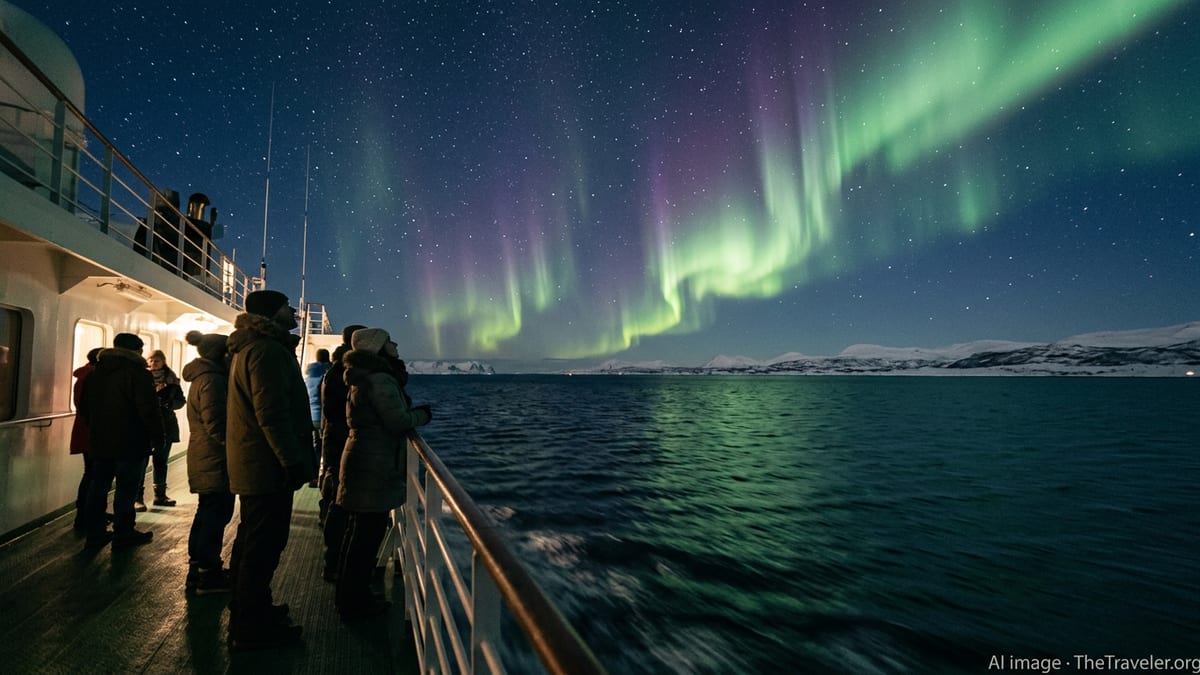
Market research on cruise and expedition travel indicates rising demand for itineraries that combine adventure, learning and sustainability, especially among younger and higher-spending segments. Space-themed cruises, including those centered on eclipses or aurorae, have tested this demand in other regions. Observers see South America’s Pacific rim as well positioned to host the next wave, focused on deep-sky observation rather than specific celestial events.
For Chile and Peru, partnership around a SETI Cruise model could support broader strategic goals: diversifying tourism beyond traditional circuits, drawing attention to scientific capabilities, and encouraging international collaboration in astronomy and space policy. At the same time, researchers stress that governance frameworks, community engagement and environmental safeguards will need to keep pace with commercial innovation.
In the coming years, the viability of a dedicated SETI Cruise will depend on how quickly stakeholders in government, science and tourism can translate high-level concepts into detailed operational plans. If that coordination advances, the Pacific coast of South America may soon offer travelers not only some of the world’s darkest skies, but also one of the most ambitious attempts yet to blend cruise travel with the frontier of space exploration.