


More news on this day
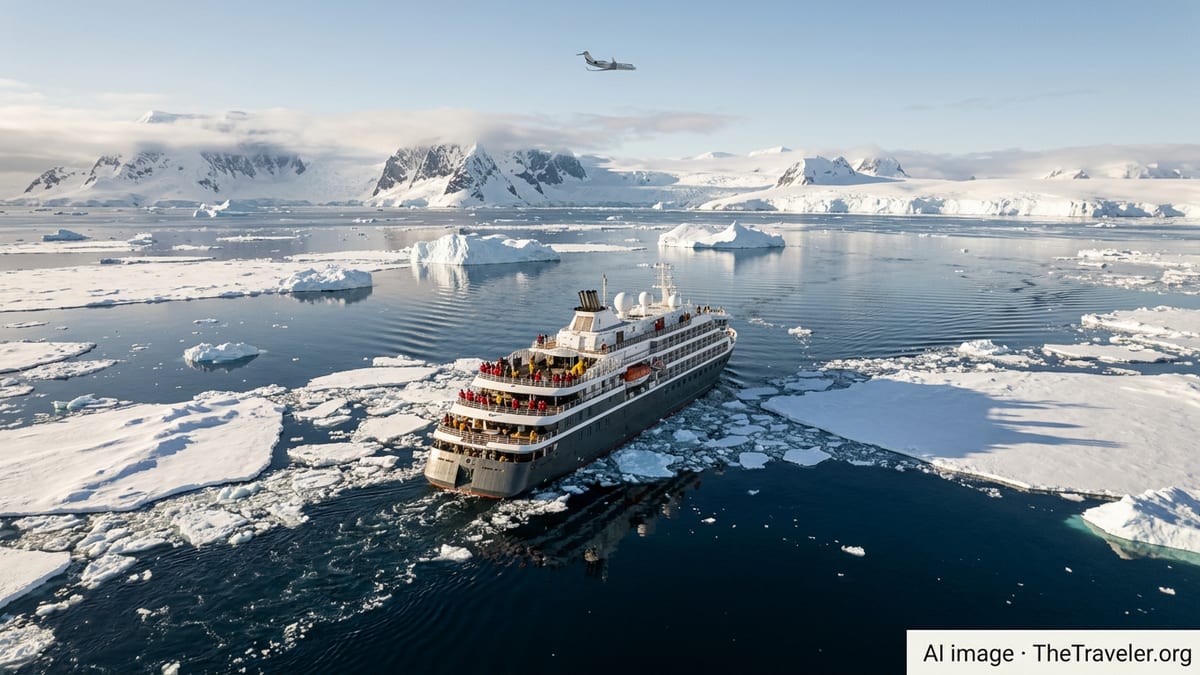
Chile is strengthening its role as a gateway to Antarctica by partnering more closely with Argentina and other regional countries, just as specialist operator Secret Atlas prepares to run a new 36‑guest expedition yacht on micro‑scale cruises to the White Continent.
Get the latest news straight to your inbox!
Regional Gateways Align Around Antarctica Tourism
Publicly available policy papers and industry coverage indicate that Chile and Argentina are increasing coordination on Antarctic access, building on their long‑standing roles as primary departure points for expeditions. Ushuaia in southern Argentina and ports in Chilean Patagonia are central staging hubs for vessels, charter flights and logistics supporting tourism, science and supply missions bound for the frozen continent.
Recent Antarctic Treaty documentation and operator updates highlight how both countries are working alongside other states to improve monitoring of yacht movements, environmental compliance and search‑and‑rescue readiness in the Southern Ocean. This growing framework is seen as a response to rising visitor numbers and the diversification of vessels, from large cruise ships to smaller expedition yachts and micro‑cruise operators.
Within this context, Chile’s airport infrastructure in Patagonia and its proximity to key embarkation points complement Argentina’s established cruise port in Ushuaia. Analysts note that this dual‑gateway model, increasingly used by operators, gives travelers multiple routes to reach Antarctica while spreading the economic benefits of tourism across several regions.
Sector observers add that cooperation is gradually extending beyond pure logistics. Joint initiatives on ports, maritime safety and visitor management are increasingly framed as a way to uphold strict Antarctic standards while allowing for innovation in how small vessels and yachts access sensitive coastal areas.
Secret Atlas Brings Micro Cruises to the White Continent
Against this backdrop, Secret Atlas, a company that promotes what it calls Expedition Micro Cruises, is stepping into the Antarctic market with a program centered on carrying just 36 guests per voyage. According to company information, its model focuses on small groups, flexible itineraries and long days ashore, contrasting with conventional ships that often transport several hundred passengers.
Secret Atlas materials describe itineraries across the Antarctic Peninsula, South Georgia and the Falkland Islands, as well as voyages that push south toward the Antarctic Circle. All Antarctica programs are set to operate on a single, purpose‑built expedition yacht, offering private cabins, open deck space and a high ratio of guides to guests.
The operator positions its 36‑guest scale as a key differentiator, noting that International Association of Antarctica Tour Operators guidelines allow up to 100 people ashore at one site at a time. By staying well below that threshold, Secret Atlas states that every guest can disembark together, minimizing rotations and waiting times and increasing the chance to respond quickly to changes in ice or wildlife conditions.
Industry commentators view this kind of micro‑cruise concept as part of a wider trend toward smaller ships and more targeted experiences in polar travel. These vessels are often able to maneuver into narrower bays, launch Zodiac boats more rapidly and linger longer at landing sites, although they also rely heavily on regional port and aviation links to make itineraries viable.
New 36-Guest Antarctica Yacht Focuses on Air-and-Sea Links
Key to the new offering is Secret Atlas’s use of an expedition yacht configured for just 36 guests, operating on a combination of sail and fly itineraries. Company brochures describe voyages where passengers sail to or from Antarctica and then fly the opposite leg, reducing the time spent crossing the Drake Passage and freeing more days for landings along the peninsula.
In the latest published program, the operator outlines air connections that use Patagonia as a gateway, with reference to a base in Puerto Natales in southern Chile for its fly‑and‑cruise routes. From there, guests connect by charter flight to airstrips in the South Shetland Islands, where the 36‑guest vessel is positioned to begin or end the sea portion of the journey.
This hybrid model depends directly on cooperation between Chile’s aviation and tourism infrastructure and Argentina’s long‑standing role as a maritime hub for Antarctic voyages. Public information on itineraries shows departures and arrivals tied to both countries, underlining how multi‑state coordination underpins what, for guests, appears as a seamless journey between Patagonia and the Antarctic Peninsula.
Secret Atlas also promotes the yacht’s high guide‑to‑guest ratio, with at least five or six polar specialists on board, including naturalists and expedition leaders. Observers of the polar cruise market point out that such staffing levels are notably higher than averages on larger ships and can help deliver more in‑depth briefings on safety, wildlife and regional geopolitics.
Environmental Scrutiny Shapes Small-Vessel Operations
The rise of small expedition yachts in Antarctica is taking place amid growing international scrutiny of the environmental footprint of polar tourism. Papers submitted to recent Antarctic Treaty Consultative Meetings outline concerns about increased yacht traffic, potential disturbances to wildlife and the risk of incidents in remote areas where rescue resources are limited.
Those documents also note that Chile and Argentina, which see heavy traffic through their southern ports and airstrips, play a critical role in monitoring departures, promoting best practices and sharing information on vessel movements. The focus is increasingly on ensuring that even very small operators align with established environmental protocols, including strict biosecurity rules and limits on visitor numbers at sensitive sites.
Secret Atlas states in its public materials that it operates with no fixed day‑by‑day itinerary, instead adjusting routes based on ice, weather and wildlife conditions. Travel analysts say this flexible approach, common among smaller expedition operators, can support more responsible decision‑making in rapidly changing environments, though it also depends on close coordination with national authorities and adherence to international guidelines.
Market observers add that the company’s choice to cap guest numbers at 36 inherently reduces the cumulative impact per landing compared with larger ships, but it does not remove the need for rigorous environmental management. As the micro‑cruise sector grows, regulators and destination countries are expected to keep refining rules that apply equally to large cruise vessels and boutique yachts.
Competition Heats Up in the Boutique Antarctica Segment
The arrival of Secret Atlas’s 36‑guest yacht into Antarctica adds new competition in a segment already seeing investment from established expedition brands. Several operators have announced or deployed smaller vessels and yacht‑style ships in recent seasons, positioning them as premium options with quieter onboard atmospheres and more personalized service.
Travel trade reports underline that this shift is being closely watched by ports and tourism boards in both Chile and Argentina, which are keen to attract higher‑value, lower‑volume visitors. For local economies in Patagonia, micro‑cruise operations can translate into extended hotel stays, pre‑ and post‑tour trips to national parks and increased demand for local guiding services.
Industry analysts note that, as more companies move into the boutique space, differentiation may hinge on how closely operators align with regional partners and how effectively they communicate environmental credentials. Chile’s efforts to position its southern cities as sustainable gateways, combined with Argentina’s experience hosting high volumes of Antarctic cruise departures, create a competitive but complementary framework for new entrants.
For travelers, the combination of closer ties between gateway countries and the launch of ultra‑small vessels such as Secret Atlas’s 36‑guest yacht signals a more diversified Antarctic market. Choice is expanding between traditional expeditions on larger ships and slower, more intimate voyages that attempt to pair comfort with a lighter footprint at the edge of the world.