


More news on this day
Ryanair is turning once-optional extras like checked bags, seat selection and in-flight snacks into a core revenue engine, reshaping how European travelers experience low fares and what they ultimately pay to fly.
Get the latest news straight to your inbox!
Ancillary Revenue Now Rivals the Ticket Price
Public filings show that Ryanair’s business model increasingly depends on what passengers buy beyond the basic fare. In the financial year to 31 March 2026, the airline reported ancillary revenue of about €4.99 billion, equal to roughly €24 per passenger, on traffic of more than 208 million travelers. According to those figures, extras now account for just under one third of total revenue, up from about 19 percent in the late 2000s.
Industry analysis from ancillary revenue specialists indicates that Ryanair’s add-on income has grown faster than its base fares over the past decade. Studies of the carrier’s 2023 performance estimate total group revenue above €13 billion, with ancillary sales contributing a significant share alongside ticket income. That pattern reflects a deliberate shift: keep headline fares aggressively low while building a dense ecosystem of chargeable services around the journey.
The result is a fare structure where the advertised price is only part of what many passengers end up spending. For travelers who add bags, preferred seating and onboard purchases, Ryanair’s per-passenger revenue can rise far above the initial fare, helping to support expansion and aircraft investment while maintaining the airline’s low-cost positioning in Europe.
Baggage Rules Designed to Drive Paid Upgrades
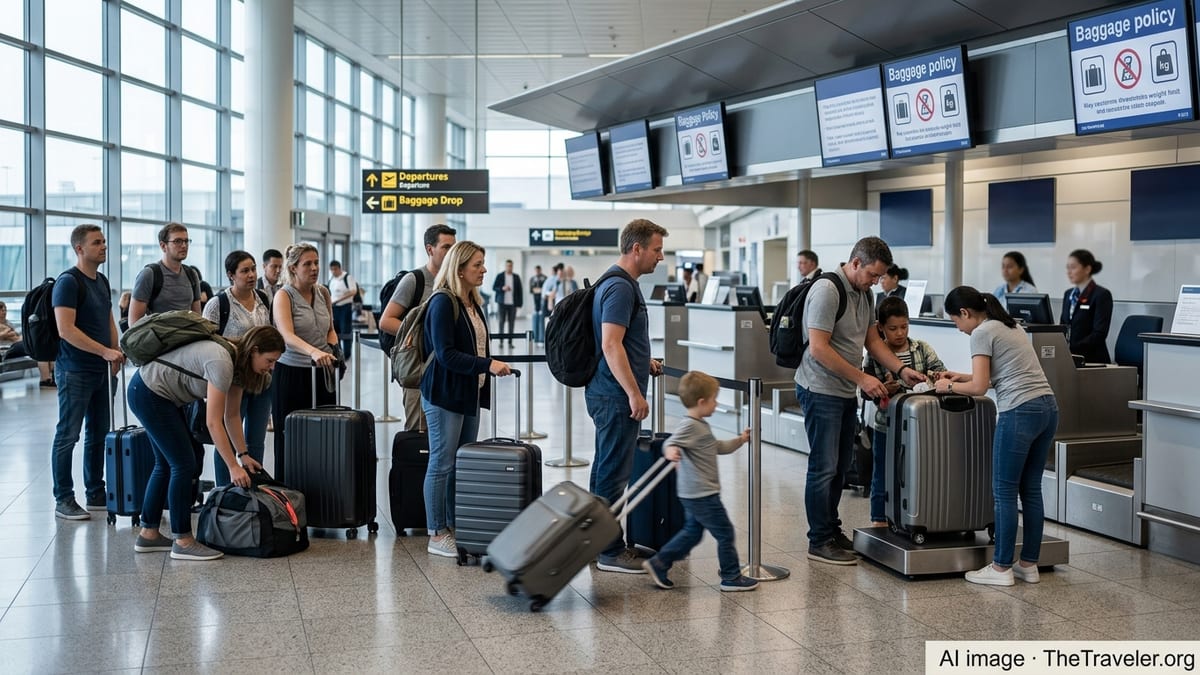
Ryanair’s baggage policy has become one of its most powerful tools for generating ancillary income. According to publicly available terms, every passenger is entitled to bring one small personal bag onboard free of charge, typically up to 40 x 30 x 20 centimeters, which must fit under the seat. Any larger cabin bag or checked luggage usually requires a paid option, such as the “Priority & 2 Cabin Bags” product or a 10 kg or 20 kg checked bag.
The carrier’s conditions of carriage detail a sliding scale of fees for baggage depending on route, season and booking channel. A 10 kg check-in bag and larger 20 kg checked bags are cheaper when bought online in advance, and more expensive when added through call centers or at the airport. The airline also sets high gate charges for oversized or undeclared bags, turning last-minute compliance into a substantial revenue source on busy leisure routes.
Recent commentary and consumer reports suggest that stricter gate checks and clearly signposted size limits encourage travelers either to travel extremely light or pay for extra capacity. Observers note that Ryanair has defended its model in court, including a 2026 Brussels ruling that confirmed the legality of its cabin baggage policy, which guarantees a free underseat bag but allows charges for larger items. That legal clarity effectively secures the carrier’s ability to keep using baggage as a key ancillary lever.
Seat Selection and Boarding as Tiered Products
Beyond luggage, Ryanair has unbundled the cabin itself. Passengers can still allow the airline to assign a random seat, but a growing share choose to pay for specific locations, from extra-legroom rows to front-of-cabin seats offering rapid disembarkation. The airline groups many of these perks into branded bundles such as “Regular,” “Plus” and “Flexi Plus,” which combine seat choice with options like priority boarding and additional baggage.
Public materials show that priority boarding and “Priority & 2 Cabin Bags” are priced on a dynamic basis, often starting in the single digits of euros and rising with demand and route popularity. The product effectively monetizes access to the overhead bins and a faster boarding experience, appealing in particular to weekend city-break travelers carrying only cabin baggage.
This tiered seating and boarding structure also helps Ryanair fine-tune its revenue management. By separating the cabin into multiple price points instead of a simple free or paid distinction, the airline can adjust fees in response to load factors and seasonal peaks, using ancillary income to smooth earnings even when fares come under pressure from competition or macroeconomic headwinds.
Onboard Sales and Partnerships Extend Spending Beyond the Seat
Ryanair’s ancillary strategy extends into the cabin and beyond the flight itself. Its buy-on-board program covers food, drinks and a rotating selection of retail items, replacing the traditional free meal with a menu priced to capture impulse purchases on short- and medium-haul routes. Travelers who once expected complimentary snacks now factor in the cost of buying onboard or bringing their own provisions.
According to industry yearbooks, the carrier also generates revenue through car rentals, hotels, insurance and ground transport marketed through its website and app. These services, provided in partnership with specialist brands, are typically booked alongside flights, allowing Ryanair to earn commissions without taking on the operational complexity of running those businesses directly.
Digital distribution has made these extras more prominent. The airline’s booking flow is structured so that customers encounter offers for seats, baggage, fast-track security and destination services in a series of steps. Each prompt represents an incremental opportunity to increase the value of a single booking, turning a bare-bones ticket into a multi-product travel package curated within the Ryanair ecosystem.
What This Means for European Travelers
For passengers across Europe, Ryanair’s focus on ancillary revenue redefines what “low cost” means in practice. Travelers who are willing to adapt to the strictest version of the model, carrying only a small underseat bag and accepting random seating, can still access some of the region’s lowest airfares between major and secondary cities.
For many others, the experience is more nuanced. Families wanting to sit together, business travelers needing cabin space for laptops and frequent leisure flyers packing heavier bags often face a series of trade-offs between convenience and cost. The additional fees can significantly increase trip budgets, especially on popular summer and holiday routes where baggage and seat prices tend to spike.
From the airline’s perspective, the approach appears to be working. Recent annual reports describe rising revenue per passenger and robust traffic growth, supported by an expanding fleet and capacity constraints among competitors. As long as regulators continue to allow unbundled pricing and demand for budget travel remains strong, Ryanair’s strategy of turning baggage, seats and meals into a core revenue stream is likely to remain a central feature of European aviation.