


More news on this day
Alderney Airport’s long-awaited runway resurfacing has been pushed back to spring 2028, as revised design work and a fresh procurement process extend the construction timetable for the Channel Island’s key air link.
Get the latest news straight to your inbox!
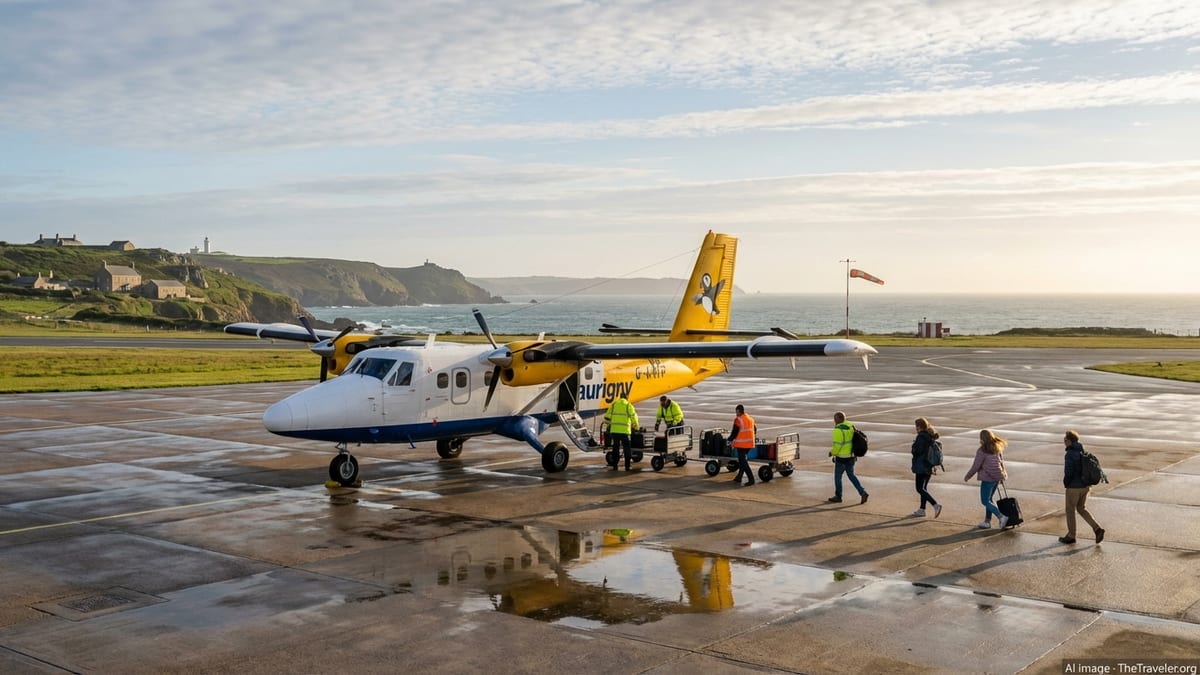
Revised plans move work beyond original schedule
Published coverage in Guernsey and Alderney indicates that the runway upgrade, initially targeted to begin much sooner, will not see major construction activity for at least 18 months. A January 2026 policy letter for the wider airport rehabilitation program had pointed to a 2027 construction window, but updated timelines now show work slipping into 2028.
Reports highlight that the schedule change is linked to a significant design revision. Earlier plans envisaged widening the runway, a move that required more extensive civil engineering and regulatory work. That widening element has now been removed, prompting engineers and advisers to rework the technical design to reflect a narrower scope focused primarily on resurfacing and safety-critical improvements.
The States Trading Supervisory Board, which oversees the project, has indicated that drawing up the new design package will take several months. Once that is completed, the work must still go through a competitive tender process to appoint a contractor. This additional sequence of design finalisation and procurement is cited as a key factor in pushing main construction into spring 2028.
According to recent local news summaries, the revised timeline means the project will now run beyond earlier expectations set out in policy documents. For residents and businesses that rely on Alderney’s fixed‑wing connections to Guernsey and the UK, the shift from a 2027 to a 2028 construction start represents another year of waiting for a modernised airfield surface.
Safety maintenance to bridge the gap until resurfacing
Publicly available information shows that, despite the delay, Alderney’s runway is expected to remain operational through a program of ongoing maintenance. Local coverage notes that Guernsey authorities have committed to continue “patching” the existing tarmac to manage surface deterioration until the full resurfacing can begin.
This bridging strategy is designed to safeguard day‑to‑day operations on a runway that is exposed to salt air, heavy rain and seasonal temperature shifts. Regular inspection and targeted repairs aim to prevent small defects from developing into structural issues that could disrupt commercial flights or compromise safety margins.
Airport users are likely to experience periodic short‑term works while this maintenance regime continues. However, no extended closure has yet been indicated for the period prior to 2028. The intention, according to recent reports, is to time any more disruptive phases of construction within the eventual resurfacing contract, rather than during the interim patching period.
The maintenance commitment underlines how critical the airfield is for Alderney, where air services provide essential passenger, business and medical links that are difficult to replicate by sea in adverse weather. Ensuring that the runway remains safe and usable until the full project starts has become a central part of the updated delivery plan.
Cost, scope and design choices reshape the project
Earlier in the planning process, public debate in the Channel Islands focused on whether Alderney’s runway should be widened to accommodate a broader mix of aircraft. Reports indicate that the decision to step back from widening and concentrate on resurfacing reflects a combination of cost, operational and fleet considerations.
Removing the widening requirement is understood to reduce some of the most complex civil works, but it also obliges the project team to revisit assumptions about pavement strength, drainage, lighting and navigational aids under the narrower scope. That redesign work is cited in recent articles as a principal reason for the new 18‑month lead‑in before construction can realistically begin.
The change in scope also has implications for long‑term connectivity. A focus on resurfacing within the existing runway footprint is intended to protect current services by ensuring a reliable, regulations‑compliant surface, rather than transforming the airport into a substantially different category of facility. Airlines operating smaller regional aircraft are therefore expected to remain the primary users, at least in the medium term.
At the same time, the project remains a significant capital undertaking for a small jurisdiction. Earlier estimates for Alderney’s broader runway and airport upgrade scheme have been reported at around £24 million, and although the exact post‑redesign cost profile is still being refined, the delayed start gives decision‑makers more time to align funding with updated engineering requirements.
Local concerns over connectivity and resilience
News coverage and public commentary around Alderney’s runway timetable emphasise concerns about resilience. Islanders have previously expressed unease over flight cancellations during poor weather, aircraft availability, and the reliability of the existing infrastructure. The prospect of waiting until 2028 for a full resurfacing raises questions about how well the current runway can absorb another two winters of heavy use.
To date, reports suggest that the responsible agencies are seeking to manage those risks through intensified inspections and targeted repairs, rather than major interim construction. That approach balances the need to maintain operations with the desire to avoid sinking substantial extra funds into a surface that will soon be replaced in its entirety.
Business groups and tourism interests are following the project closely, given Alderney’s reliance on visitors in peak seasons. While the delay postpones the benefits of a renewed runway, it also means that any extended closure or more disruptive works are less likely to affect the next two summer periods, assuming the main construction window in 2028 can be aligned with shoulder seasons and favourable weather conditions.
Experience at other regional airports suggests that carefully sequenced construction, combined with early engagement with airlines and ground handlers, can minimise disruption once work does begin. Observers will be watching for updated phasing plans and indicative closure dates as the redesign advances toward tender.
Part of a wider pattern of shifting airport timelines
Alderney’s revised runway schedule sits within a broader context of airport projects facing shifting timelines worldwide. Sector reports and planning documents from agencies such as the United States Federal Aviation Administration describe multiple runway and airfield schemes whose start dates or completion targets have been moved in response to design refinements, funding cycles and procurement delays.
Examples range from regional runway reconstructions planned for 2027 and 2028 in North America to major greenfield airports and expansions in Europe, Africa and the Asia‑Pacific region where completion dates have been adjusted to 2028 or beyond. In several high‑profile cases, updated demand forecasts, environmental review requirements and contractor availability have all contributed to revised milestones.
Industry analysis points out that complex airfield projects often operate within tight seasonal windows to take advantage of favourable weather and to avoid peak travel periods. Missing a single window can add a full year to a schedule, particularly in locations where winter conditions limit heavy construction. That dynamic appears to be a factor in Alderney, where the move to spring 2028 aligns with a fresher construction season after the redesigned project is ready to proceed.
For passengers, the pattern underscores a familiar tension between short‑term disruption and long‑term gains. While the delay to Alderney’s runway works defers the benefits of a fully renewed surface, the intent behind the redesign and rescheduling is to deliver a more tightly scoped, financially sustainable project that can support the island’s connectivity needs well into the next decade.
Airport runway project delayed until 2028
18 months before work can begin on resurfacing Alderney's runway