


More news on this day
Palau’s strategy to grow high-value, low-impact tourism is gaining a new showcase as Four Seasons Explorer, the brand’s 11-cabin liveaboard “floating resort,” highlights itineraries reaching Kayangel, a tiny atoll on the country’s northern edge that is increasingly positioned as a castaway-style luxury escape.
Get the latest news straight to your inbox!
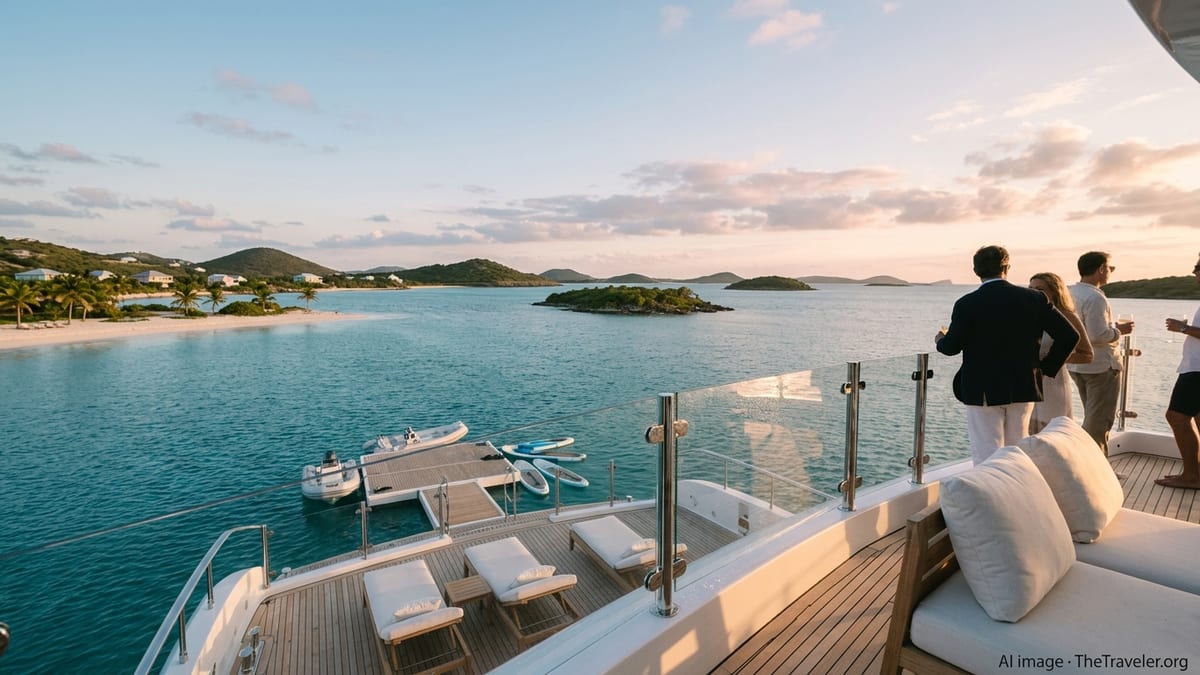
Floating Luxury Extends Palau’s High-End Tourism Push
Publicly available information shows that Palau has been steering its tourism model toward high-spend, low-volume visitation to balance revenue with environmental protection. Analysis by international institutions notes that new luxury projects, including forthcoming branded resorts, are central to that shift, alongside efforts to attract upscale yachts and small expedition vessels.
Four Seasons Explorer, which arrived in Palauan waters in late 2023 after two decades operating in the Maldives, is emerging as one of the most visible examples of this strategy. The 39-metre, three-deck yacht carries just 22 guests across 10 staterooms and one suite, positioning it closer to an intimate hotel than a conventional cruise ship and aligning with Palau’s emphasis on controlled visitor numbers and higher per-capita spending.
Reports from travel media describe the vessel as an advance element of Four Seasons’ wider plans in the country, testing what a full-scale resort presence might look like while immediately adding high-end capacity. With flexible boarding and disembarkation around Koror, and daily changing routes across the archipelago, the yacht enables guests to explore a wide spread of protected marine territory without relying on large onshore infrastructure.
According to destination coverage, this approach supports Palau’s economic aims by lengthening stays and encouraging premium pricing, while also keeping group sizes small at fragile reefs and beaches. The emergence of a headline-grabbing Kayangel experience on the Explorer’s roster further bolsters Palau’s positioning as a frontier destination for affluent, sustainability-minded travelers.
Kayangel: A Remote Atoll Recast as “Hidden Paradise”
Kayangel sits at the far northern tip of Palau, a ring-shaped atoll of around 1.4 square kilometres that is home to some of the country’s whitest sand and clearest shallows. Promotional material from Four Seasons describes the islet as hosting Palau’s best beaches, suitable for “Crusoe-inspired” picnics on powder-soft sand, with reef-protected turquoise waters and minimal development.
Travel planners and diving specialists increasingly frame Kayangel as a counterpoint to the more frequently visited Rock Islands closer to Koror. While the southern lagoon is famous for its mushroom-shaped islets and blue holes, Kayangel offers a sense of remoteness and open-ocean exposure, with its outer reefs dropping quickly into deep water rich in pelagic life when conditions allow access.
Reaching the atoll traditionally required chartering smaller boats or arranging bespoke excursions, which limited access and kept visitor numbers low. By incorporating Kayangel into a curated yacht-based itinerary, Four Seasons Explorer packages that remoteness into an easily bookable experience, while still maintaining strict caps on daily visitors through the vessel’s limited capacity.
This development dovetails with Palau’s broader narrative as one of the Pacific’s most conservation-focused nations, where new upmarket offerings are expected to deliver disproportionate economic benefits from a relatively small number of guests. In that context, the Kayangel route is framed as both a luxury upgrade and a tool to keep tourism volume in check at one of the country’s most sensitive fringes.
Onboard Experience: Liveaboard Comfort Aimed at Non-Divers Too
According to the operator’s published details, Four Seasons Explorer is structured as a hybrid between a liveaboard dive vessel and a boutique hotel. Three decks house a PADI 5-Star dive center, shaded outdoor lounges, an indoor-outdoor restaurant, bar, library and a small wellness area, in addition to the 11 guest accommodations. Staterooms are described as bright, with large windows or portholes, and the single Explorer Suite offers approximately double the space of standard cabins.
Daily life on board follows a resort rhythm more than a fixed cruise schedule. Travel features note that itineraries are adjusted to guest preferences and prevailing sea conditions, with opportunities for up to three or four dives per day on dedicated dive-heavy sailings, or a slower tempo built around snorkeling, kayaking, stand-up paddleboarding and shore excursions on mixed-interest departures.
Dining, as outlined in publicly available menus and marketing material, emphasizes à la carte breakfasts and multi-course lunches and dinners drawing on Palauan seafood and international cuisine. The limited guest count allows for high staffing ratios and personalized service, including private beach set-ups on remote sandbars or islands such as Kayangel when weather and permits allow.
Crucially for Palau’s diversification goals, the Explorer is marketed not only to committed divers but also to small multigenerational groups and non-diving partners. The flexible format, where guests can embark or disembark on different days thanks to speedboat connections from Koror, encourages stays that combine time on the yacht with nights in land-based hotels, spreading economic impact across multiple operators.
Conservation Framing and “Low-Footprint” Luxury
Palau’s government has consistently promoted conservation as a core pillar of its tourism identity, from the creation of one of the world’s largest marine sanctuaries to visitor pledges that emphasize respect for reefs and local culture. Recent strategy documents highlight a pivot toward “quality over quantity,” seeking fewer visitors who stay longer and spend more, in contrast with pre-pandemic package-tour volume from regional markets.
Within this framework, Four Seasons Explorer is presented as an example of low-footprint luxury: a single small vessel distributing guests across wide stretches of ocean and numerous small anchorages, rather than concentrating hundreds of visitors in one coastal resort zone. Itineraries typically span the UNESCO-recognized Rock Islands Southern Lagoon and outlying areas such as Kayangel, balancing tourist presence between high-profile and lesser-known sites.
Tourism analysts note that such products can help justify robust marine protections by channeling revenue into park fees and operator-led conservation programs, while also setting expectations among guests for responsible behavior. The yacht’s own materials foreground citizen science-style experiences, such as learning about shark and manta ray research or viewing fragile coral nurseries, which align with Palau’s longstanding branding as a destination where environmental stewardship and leisure are intertwined.
However, observers also point out that the success of this model hinges on careful management. Sensitive locations like Kayangel face pressures from climate change, including stronger storms and coral bleaching, making limits on anchoring, group sizes and shore infrastructure especially important even at the ultra-luxury end of the market. The way products like the Explorer’s Kayangel route evolve over the next few years is likely to serve as a test case for Palau’s ambition to grow earnings without sacrificing its reefs.
Palau’s Positioning in the Global Luxury-Sea Travel Market
Palau occupies a niche in global travel as a remote Micronesian republic known primarily within diving circles, yet it is receiving renewed attention from mainstream travel media as new high-end products launch. Recent coverage in international magazines has highlighted Four Seasons Explorer as one reason the archipelago is appearing on “where to go next” lists, particularly for travelers seeking alternatives to better-known Indian Ocean or Caribbean islands.
Industry observers suggest that the arrival of a major luxury brand at sea, with promised onshore properties to follow, signals increasing confidence in Palau’s appeal beyond specialist markets. The Kayangel-focused experiences marketed by Four Seasons, with imagery of empty sandbars and translucent shallows, play into broader post-pandemic demand for privacy, space and nature-forward itineraries reached by smaller vessels rather than mega-ships.
At the same time, competition is rising as other Pacific and Indian Ocean destinations expand their own boutique-yacht and expedition-cruise offerings. For Palau, the Explorer’s Kayangel route offers a chance to stand out by combining world-class diving, a strong conservation story and access to an atoll that remains firmly off the mass-tourism map. How travelers respond to this blend of elements will influence not just one yacht’s booking patterns, but also the trajectory of Palau’s wider luxury tourism experiment over the rest of the decade.
Four Seasons Explorer Palau official site
Condé Nast Traveler review of Four Seasons Explorer Palau