


Nice rewards travelers who slow down. The city’s best moments happen somewhere between its famous seafront, its backstreet bistros and its hilltop viewpoints. With a bit of planning, you can see the big-name sights like the Promenade des Anglais and Castle Hill while still enjoying lazy café stops, swims off the pebbly beach and unhurried wanders through neighborhood streets. This guide shows you how to structure your time so you do not miss the highlights, but you also come away feeling you have genuinely experienced Nice.
Get the latest updates straight to your inbox!
Get Your Bearings on the Promenade des Anglais
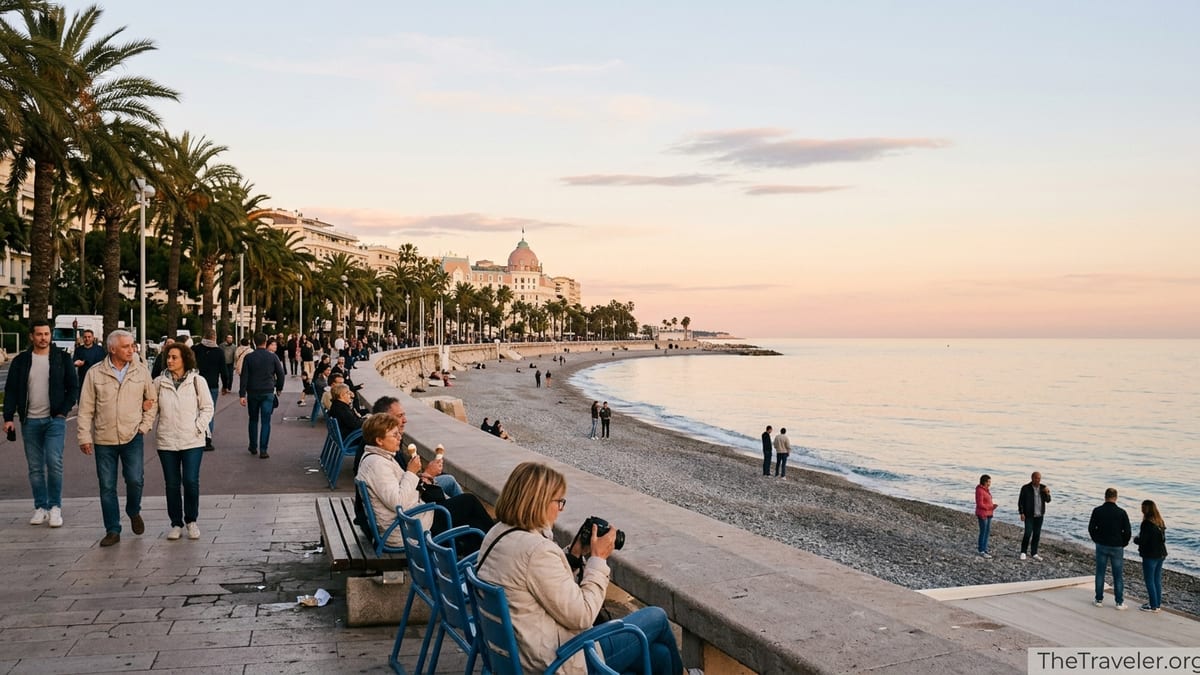
Start any first day in Nice on the Promenade des Anglais. This wide seaside walkway runs for several kilometers along the Baie des Anges and gives you an instant feel for the city’s rhythm: joggers at dawn, families in the afternoon, locals walking tiny dogs at sunset. A relaxed first stroll from the Jardin Albert 1er to the Negresco Hotel area lets you see many of the landmarks you have probably seen in photos, from the trademark blue chairs to the Belle Époque facades.
If you want to sit right on the water without worrying about your bag, book a sunbed at one of the private beach clubs that line the promenade. Prices vary, but in 2025 many central clubs charge roughly 20 to 30 euros per day for a standard lounger and umbrella, with first-row or extra-wide beds costing more. At one popular central spot, expect to see something like 23 to 25 euros for a regular chair and around 60 euros for a large bed in high season, plus about 6 to 7 euros if you need a towel. Staff will bring drinks and simple dishes like niçoise salads or grilled fish directly to your chair.
Budget travelers can enjoy the same sea and view for free. The public sections of beach between the clubs are open to everyone, though the rounded pebbles can be uncomfortable. Many locals bring inexpensive foam camping mats or thick towels. There are a few public showers and changing cabins scattered along the promenade; treat them as a quick rinse rather than a full facility and keep a lightweight travel towel handy.
The promenade is also the perfect place to time your first sunset. Aim to be near the curved section by the I Love Nice sign or slightly up toward the Colline du Château staircase around 30 minutes before sunset. From there you can watch the bay glow orange while planes approach the airport in the distance, which gives a surprisingly beautiful backdrop as their lights curve over the water.
Master Transport So You Do Not Waste Time
Nice is compact enough to walk much of the time, but understanding the tram and bus network will save you precious hours and help you reach outlying highlights like Cimiez or nearby coastal towns. The Lignes d’Azur system runs the trams and buses across the metropolitan area. A standard single ticket remains one of the better-value fares in Western Europe, and day passes are designed for visitors who plan to hop on and off several times.
If you are spending a full day exploring within the city limits, a 1-day Lignes d’Azur pass, which in 2026 costs about 7 euros, usually pays for itself by your third or fourth ride. It gives you unlimited travel for 24 hours on tram and urban buses from the time of first validation. A 7-day pass around 20 euros works well if you are staying in Nice for a week and expect to move around daily, for example riding the tram from the airport, then buses up to Cimiez, and evening trips to the harbor and back.
For travelers planning day trips along the coast to places like Antibes, Cannes, Menton or Monaco, look into the regional Pass Sud Azur Explore, which offers unlimited use of most local buses, trams and regional TER trains in the Alpes-Maritimes for several consecutive days. Recent offers have priced a 7-day version at around 50 euros, which becomes excellent value if you are riding trains almost every day. You usually buy it at major train stations or partner ticket offices, then load it onto a reusable smart card.
In practice, this means you might use a Lignes d’Azur 1-day pass on your first full day just inside Nice, then switch to a 3 or 7-day regional pass for your coastal excursions. Whichever ticket you choose, always validate it each time you board. Ticket inspectors are frequent, and fines on the spot can be far higher than the cost of the pass itself. The small extra habit of tapping in will keep your trip stress-free.
Combine Old Town, Markets and Castle Hill in One Perfect Circuit
Nice’s Old Town, or Vieux Nice, is where many visitors fall in love with the city, but it is also where crowds concentrate. To experience its atmosphere without feeling overwhelmed, plan to arrive early. On most days the Cours Saleya market begins to buzz around 8:00 in the morning, with flower stalls, seasonal fruit and vegetable vendors and stands selling socca, the local chickpea pancake. By 10:30 in high season the lanes can be shoulder-to-shoulder, so an early start pays off.
A good pattern is breakfast and a quick browse at the market, then a loop through the Old Town’s side streets. Walk up Rue Pairolière and Rue du Collet to see everyday shops where locals buy cheese, spices and household items. Duck into a small café on a backstreet for a noisette rather than sitting at one of the highest-priced terraces on the main square. Prices for a coffee can easily double between a tourist-facing spot on Cours Saleya and a café two blocks away.
By late morning, head toward the eastern end of the Old Town and climb to Castle Hill, or Colline du Château. You can take the public elevator from near the Quai des États-Unis or walk up via the Bellanda Tower staircase. The climb looks steep but only takes about 10 to 15 minutes for most people. Once at the top, you are rewarded with sweeping views over the Promenade des Anglais, the rooftops of Vieux Nice and the port side with its colorful boats. The park is free, and its main gates generally open around 8:00 in the morning, closing in the early evening depending on the season, so mid-morning or late afternoon are ideal.
Many visitors rush through Castle Hill, snap one photo and leave. To get the best of it, plan to linger. There is a man-made waterfall, a playground if you are traveling with children, and plenty of shaded benches for a picnic lunch bought earlier at the market. From the far side of the park you can descend toward the harbor, creating a satisfying circuit that brings you back to sea level in a quieter part of town.
See the Art Without Overloading on Museums
Nice has more museums than most people realize, from contemporary art to archaeology. If you try to see them all in two days, you will spend more time indoors than by the sea. A better approach is to pick two or three that match your interests and group them by neighborhood, using public transport to link your visits efficiently.
The Matisse Museum in Cimiez is a strong candidate for almost any itinerary. Set in a red Genoese-style villa surrounded by olive trees, it holds works from the artist’s long relationship with Nice and the Riviera. You can combine it easily with the nearby Roman ruins and the Monastery of Cimiez, which has a peaceful garden with views back over the city. A standard admission ticket is modest by European capital standards, and there are often reduced combined tickets or city card options that group several municipal museums together.
Back in the city center, the Museum of Modern and Contemporary Art, often known as MAMAC, appeals to travelers interested in bold architecture and 20th century art. Its rooftop terraces give yet another angle on Nice, and you can walk to it from the Old Town in about 10 minutes. If you have limited time, consider visiting MAMAC late in the afternoon when outdoor sightseeing is less pleasant due to the sun, then emerge onto Place Garibaldi for an early apéritif.
Before buying individual museum tickets, check current offers from the local tourist office. In some years a multi-museum pass or broader French Riviera card includes free or discounted entry to several Nice museums along with attractions in neighboring towns. These packages change frequently, but they can represent real savings if you enjoy galleries and plan to visit two or more in a short period.
Eat Like You Live Here: Markets, Bistros and Seafront Treats
Nice’s food scene is a highlight in itself, and eating well does not have to mean formal, expensive meals. Start with the city’s street specialties. Socca, the paper-thin chickpea pancake baked in a wood-fired oven, is a must-try. Many locals grab a portion at a counter in the Old Town, sprinkled with pepper and eaten with fingers straight from the paper. Pissaladière, an onion tart topped with anchovies and olives, is another traditional snack you will see in bakery windows.
For lunch, a classic niçoise salad can be both a tourist staple and a genuine local dish if you choose the right place. Look for brasseries one or two streets back from the seafront or in the areas around Place Garibaldi and Rue Bonaparte where you will see office workers eating alongside visitors. Expect to pay something like 14 to 18 euros for a substantial salad in 2026, depending on location. At many restaurants, the plat du jour, a daily special written on a chalkboard, still offers the best value and a glimpse into what is currently in season.
To experience Nice’s food culture more deeply without committing to a long, heavy dinner every night, mix sit-down meals with market picnics. Pick up local olives, sun-dried tomatoes, cheese and a baguette at Cours Saleya or the Liberation market, then eat in a small square or on a bench above the port. Many apartments and some hotels have small refrigerators, which makes it easy to stock yogurt, fruit and snacks so you can avoid overpriced emergency meals when you are tired.
Reservations are increasingly important in high season, especially for popular bistros and wine bars. If you have your heart set on a specific place you have read about in a newspaper or guide, try to book a day or two ahead, particularly for Friday and Saturday nights. Otherwise, a flexible attitude serves you well. Walk a couple of blocks away from the busiest squares and look for shorter menus, which often signal fresher, more carefully prepared food.
Plan Smart Day Trips Without Diluting Your Nice Experience
One of Nice’s biggest advantages is its location on the Riviera rail and bus network. In under 30 minutes by regional train you can reach Villefranche-sur-Mer or Antibes; within an hour you can be in Cannes or Menton. It is tempting to schedule a new town every day, but doing so can make your Nice stay feel rushed and fragmented. A more rewarding pattern for a four or five day trip might be two or three full days in Nice itself and one or two day trips.
For a first visit, a classic combination is Villefranche-sur-Mer and Saint-Jean-Cap-Ferrat. You can ride a short train from Nice-Ville station to Villefranche, swim from the sandy bay, then either walk or take a bus to the peninsula paths around Cap Ferrat. Another obvious choice is a day in Monaco, reachable in about 20 to 25 minutes by train, where you can tour the old quarter, the Oceanographic Museum and the harbor before heading back to Nice for dinner.
If you have more time or have already seen these spots, look inland. Buses link Nice with hill villages like Saint-Paul-de-Vence or the perfume town of Grasse. These routes are often included in wider passes like the Pass Sud Azur, and the bus rides themselves offer sweeping views over the hinterland. Just keep an eye on the return timetable, since evening frequencies can be lower, especially outside the peak summer months.
The key to not missing Nice’s own highlights is to avoid stacking heavy day trips back-to-back. If you spend a long day walking hills in Eze on Tuesday, keep Wednesday in Nice with a slow morning at the beach, a relaxed wander through the Old Town and perhaps just one museum in the afternoon. Alternating intense excursion days with unstructured city days keeps both kinds of experiences enjoyable.
Balance Seasons, Crowds and Budget
The way you experience Nice changes significantly with the season. July and August bring long swimming days and a festival atmosphere but also full beaches and higher prices. Hotel rates close to the Promenade des Anglais often peak in these months, and you may find that mid-range properties that cost one amount in late spring are substantially more in high summer. Restaurants near the seafront can be busy until late at night, and spontaneous same-day bookings are harder.
Late April to early June and late September to October offer a gentler compromise. The sea can be warm enough for a swim, trams and buses are crowded but manageable, and it is easier to find space on a public stretch of beach without arriving at dawn. In these shoulder seasons you can still enjoy al fresco dinners but may want a light jacket for late evenings, especially if you are sitting on a terrace directly by the water where the breeze is stronger.
Winter in Nice is milder than in much of Europe. On some days in January or February you might walk the promenade in just a sweater at midday. This off-season is ideal for museum-hopping and long city walks without the heat. Many private beach clubs close or reduce services, but the seafront remains open, and you can see why Nice first became famous as a winter resort town.
Whatever your season, booking accommodation close to a tram line often matters more than being directly on the water. For example, staying near a stop on tram line 2, which links the airport to the city, can mean reaching your hotel in under 30 minutes and riding straight through to the port area without changing. Over several days, that convenience can feel as important to your experience as a partial sea view.
The Takeaway
Getting the best experience in Nice is less about ticking off every attraction and more about combining a few essential sights with everyday pleasures. Walk the Promenade des Anglais at different times of day, climb Castle Hill for its views, and spend unhurried time in the Old Town’s lanes. Use the efficient tram and bus network to reach neighborhoods like Cimiez and to launch one or two well-chosen day trips, but avoid over-scheduling yourself.
Eat where the menus change with the seasons, browse a market before most of the group tours arrive, and leave space in your days for spontaneous swims or café stops. With this balanced approach, you will leave Nice having seen its highlights, but also feeling you have touched the quieter, more local side of the city that many rushed visitors miss.
FAQ
Q1. How many days do I need in Nice to see the main highlights?
For most visitors, three full days in Nice is enough to see the seafront, Old Town, Castle Hill and one or two museums, with time left for leisurely meals and a swim. If you want to add two or more day trips, consider staying five or six nights.
Q2. Is it worth getting a public transport pass in Nice?
Yes, if you plan to use trams and buses more than a few times a day. A 1-day Lignes d’Azur pass is typically good value for intensive city sightseeing, while a longer regional pass can pay off if you are taking several coastal train trips in the same week.
Q3. Can I visit the beach in Nice without paying for a private club?
Absolutely. Much of Nice’s shoreline is public, and you can swim and sunbathe for free. Private beach clubs simply add conveniences like sunbeds, umbrellas, changing cabins and food service, which some travelers find worth the extra cost for a full day by the water.
Q4. When is the best time of year to visit Nice for a balanced experience?
Late spring and early autumn usually offer the best mix of pleasant temperatures, manageable crowds and reasonable prices. July and August are great for long beach days but busier and more expensive, while winter is quieter and good for museum visits and city walks.
Q5. Do I need to rent a car to explore around Nice?
Most travelers do not. The combination of trams, local buses and regional trains covers the main coastal towns and several inland villages. A car can be useful for exploring more remote hilltop villages on your own schedule, but it also adds parking costs and city driving.
Q6. Is the Old Town of Nice safe to walk around at night?
The Old Town is generally lively and feels safe in the evening, especially around popular squares and main streets. As in any city, keep normal precautions in mind: watch your belongings, avoid very quiet alleys late at night and use licensed taxis or well-lit tram stops when returning to your accommodation.
Q7. How early should I arrive at Cours Saleya market to avoid crowds?
Arriving between 8:00 and 9:00 in the morning usually gives you enough time to browse stalls and take photos before the largest tour groups arrive. By late morning, particularly in summer, the lanes fill up and it becomes harder to move slowly and talk with vendors.
Q8. What should I wear for walking on Nice’s pebbly beaches?
The pebbles can be hard on bare feet, so many locals use simple rubber water shoes or sandals that can get wet. Bringing a thicker towel or a thin foam mat also makes lying on the stones more comfortable, especially if you plan to stay for several hours.
Q9. Are museums in Nice open on Mondays?
Opening days vary. Some museums close on Mondays, others on Tuesdays, and some operate daily in high season. It is wise to check the current schedule of any museum you really want to see and plan your visit to avoid its weekly closure day.
Q10. Can I see Monaco as a day trip from Nice?
Yes. Regional trains run frequently between Nice and Monaco, and the journey usually takes under half an hour. Many travelers spend the day visiting the old town, the palace area and the harbor, then return to Nice in time for dinner on the seafront or in the Old Town.