


Few European cities manage to be both a glamorous Riviera resort and a lived-in Mediterranean town quite as convincingly as Nice. Long a favorite of aristocrats, artists and sun-seekers, the capital of the French Riviera still draws millions of visitors each year, from weekend city-breakers flying in from London to long-haul travelers pairing it with Paris or Provence. Recent investments in transport, a growing calendar of major events and a renewed focus on sustainable, higher-quality tourism have only reinforced its status as one of Europe’s most popular coastal travel choices.
Get the latest updates straight to your inbox!
A Riviera Icon That Keeps Reinventing Itself
Nice’s enduring appeal starts with its setting. Wedged between the Baou hills and the intensely blue Baie des Anges, the city offers an amphitheater of pastel facades, church domes and palm trees that seems purpose-built for slow promenades and long lunches. Unlike many purpose-built beach resorts, Nice is a real city of around 340,000 residents, with a port, university, tram network and year-round cultural life. That mix of postcard scenery and urban energy keeps visitors coming back in every season, not only in summer.
Tourism numbers reflect this resilience. Local tourism bodies report that the wider Nice Côte d’Azur area welcomed strong visitor growth through 2023 and 2024, powered by a rebound in international travel and high-profile events such as the Tour de France finale and the Paris 2024-related festivities along the coast. Hotels in and around Nice recorded rising occupancy in shoulder seasons like October and November, a sign that the city is successfully stretching beyond the classic July and August rush.
Nice has also positioned itself as a gateway to the Riviera rather than a simple beach stop. Within an hour by regional train or bus you can be walking the ramparts in Antibes, tasting rosé in tiny hill villages like Saint-Paul-de-Vence, or riding the coastal train to Menton on the Italian border. Many visitors now book a week in a Nice rental apartment and treat the city as a base for day trips, making it a practical alternative to more isolated resorts like Saint-Tropez.
At the same time, Nice has consciously shifted away from mass-packaged tourism toward what local officials call “quality over quantity.” Instead of competing only on sun and sea, the city promotes its museums, markets, gastronomy and green spaces, appealing to travelers who are willing to spend a bit more on authentic experiences and stay longer. This strategy helps explain why visitor spending in the Alpes-Maritimes region significantly outpaces domestic averages, with tourism representing a major share of local private-sector jobs.
Effortless Access and Easy Getting Around
For many travelers, the convenience of arrival is a deciding factor, and here Nice has a clear advantage. Nice Côte d’Azur Airport is France’s second-busiest airport after Paris, handling more than 15 million passengers a year and offering direct flights to dozens of European cities along with seasonal links to North America and the Middle East. For a London couple, a peak-summer flight might take under two hours, meaning they can leave after breakfast and be on the Promenade des Anglais in time for lunch.
Once landed, the transfer into town is strikingly simple and comparatively affordable. Tram line 2 connects both airport terminals to downtown stops such as Jean Médecin and Garibaldi in roughly 25 to 30 minutes, with trams usually running every 6 to 8 minutes during the day. A standard public transport ticket costs only a few euros and can be purchased at platform machines or via the Lignes d’Azur mobile app, making it accessible even for budget travelers. For those staying in neighborhoods like Old Nice or the port, the tram gets them within an easy walk of their hotel without navigating traffic or expensive taxis.
Within the city, the tram and bus network reduces the need for a car, which is increasingly important to younger travelers conscious of cost and carbon footprint. Visitors can ride from the airport-adjacent business district of Grand Arénas to the hilltop neighborhood of Cimiez, or from the central station to the stadium and shopping zones, using the same ticketing system. A day pass priced in the range of a modest café lunch allows unlimited rides, helpful for families zigzagging between beach, markets and museums.
Rail connections extend Nice’s reach even further. Intercity and regional TER trains link the city to Marseille, Cannes, Monaco and the Italian Riviera, with advance-purchase fares between Nice and Cannes or Monaco often comparable to a single cocktail at a beachfront bar. This rail connectivity allows visitors to choose Nice over smaller resort towns without feeling they are missing out on the wider coast. For many, it is the combination of a car-free city break and easy day trips that tips the balance in Nice’s favor compared with island destinations that require ferries or domestic flights.
Beaches for Every Kind of Traveler
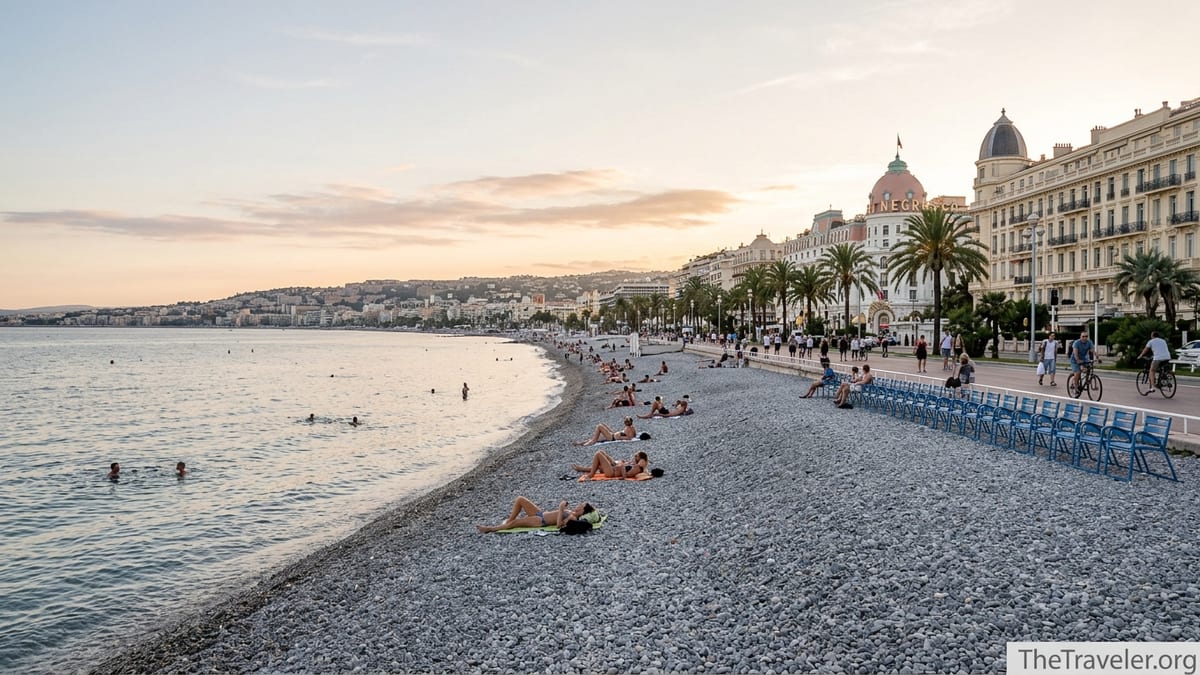
Ask most people what first comes to mind when they think of Nice, and the answer will likely be its seafront. The famous Promenade des Anglais, with its dedicated bike lanes, palm-lined benches and views onto the pebbled shore, remains one of Europe’s most recognizable urban beaches. Unlike sandy stretches elsewhere, Nice’s smooth grey pebbles mean crystal-clear water, particularly on calm mornings when locals slip in for a quick swim before work.
Along the seafront, visitors can choose between public sections and a string of private beach clubs. Public beaches such as Opéra, Beau Rivage and Le Voilier are free to access; travelers typically budget a few euros for a rental umbrella from nearby shops or simply bring sandals and a towel. Those seeking added comfort might reserve at a private beach like Beau Rivage, Ruhl Plage or Castel, where a full day on a sun lounger with mattress, parasol and waiter service for drinks might run from around 25 to 40 euros in high season, depending on front-row placement.
Families often gravitate to stretches where lifeguards operate in summer and showers and toilets are available, such as the area near the Lido section of the promenade. Here, it is common to see a mix of local children building pebble towers, older residents chatting on the blue chairs that line the promenade, and visitors testing the Mediterranean in the late afternoon when the sun softens. Teenagers might rent a paddleboard or join a parasailing session, while others simply wander to one of the kiosks for an ice cream or a cold citron pressé.
For those willing to explore beyond the city limits, Nice’s position opens up a string of contrasting beaches by short train or bus rides. Eastward, the small inlets around Villefranche-sur-Mer offer sandy strips and sheltered water ideal for nervous swimmers. Westward towards Antibes and Juan-les-Pins, broad sandy bays attract families who prefer not to navigate pebbles. Many visitors base themselves in Nice where restaurant and nightlife choices are broader, then spend one or two days on these neighboring shores, returning in the evening to the bustle of the city.
Cuisine That Goes Beyond the Obvious Riviera Glamour
Food is another area where Nice’s everyday life enhances its touristic charm. This is not a resort where menus are dominated by anonymous “international” dishes. Instead, even casual spots proudly serve Niçoise and Provençal specialties that reflect the region’s mix of French and Italian influences. Travelers quickly discover that dishes like socca, a wood-fired chickpea pancake sold for a few euros a portion, are as emblematic of Nice as any high-end tasting menu.
In the narrow streets of Vieux Nice, long-time institutions such as Chez Pipo or family-run socca counters draw both locals and visitors who stand at wooden barrels or simple stools, tearing off pieces of hot, peppery socca and washing them down with a glass of rosé. Markets such as Cours Saleya tempt passersby with pissaladière (a caramelized onion tart topped with anchovies and olives), pan bagnat (a sandwich version of salade niçoise) and crates of sun-ripened tomatoes and peaches. Budget-conscious travelers often assemble lunch from these stalls, spending under 15 euros for a picnic that tastes distinctly of the region.
At the other end of the spectrum, the city supports a growing collection of upscale bistros and Michelin-starred tables. Tasting menus in the Old Town and around the port showcase Mediterranean fish, locally grown vegetables and olive oil from nearby hills, often at prices that undercut big-name Riviera addresses in Monaco or Saint-Tropez. A three-course lunch menu at a well-regarded bistro might cost between 25 and 35 euros, making fine dining more accessible than many visitors expect in such a coveted coastal location.
Wine and aperitif culture also add to Nice’s appeal. Early evening, café terraces along boulevards like Jean Médecin and in neighborhoods such as Place Garibaldi fill with people sipping spritzes, local rosé or a glass of pastis. Many bars offer “happy hour” pricing on drinks and snacks, allowing travelers to enjoy the Riviera atmosphere without committing to a long or expensive meal. For food-focused visitors, it is this combination of humble street snacks, colorful markets and serious cooking that makes Nice feel more layered than some competitors where dining revolves almost exclusively around hotel restaurants.
Culture, Events and Everyday Life by the Sea
Nice’s cultural scene is another reason it stands out among coastal destinations. Historically a winter resort for European elites, the city attracted artists like Matisse and Chagall, who found inspiration in its light and Mediterranean colors. Today, visitors can see that legacy in institutions such as the Musée Matisse in Cimiez, the Musée Marc Chagall with its biblical paintings, and the contemporary art museum overlooking Place Garibaldi. Entry tickets typically fall well below the cost of a boat excursion, making culture an accessible alternative on cloudy days.
The city’s events calendar has become busier and more international. Nice Carnival in February, with its illuminated floats and flower battles along the seafront, now draws hundreds of thousands of spectators and is often paired with short hotel breaks promoted in major European markets. Summer brings open-air concerts in the Théâtre de Verdure, jazz performances, and cultural festivals in neighboring towns, while major sporting events periodically fill hotel rooms and restaurant terraces. The historic decision to host the final stage of the Tour de France along the Promenade des Anglais, for example, created a global television postcard for the city and attracted large crowds along the waterfront.
Even outside headline events, visitors encounter a lived-in rhythm that many find more authentic than in purely seasonal resorts. On weekday mornings, office workers in suits join retirees and students at tram stops; children spill out of neighborhood schools; market vendors banter in Niçois dialect. Tourists sipping coffee on Place Masséna or in the Port district are as likely to be surrounded by locals discussing municipal news as by fellow travelers comparing guidebooks. For many repeat visitors, it is this sense of ordinary life unfolding by the sea that makes Nice feel welcoming and real.
Nightlife stays relatively balanced as well. While there are cocktail bars and late-night spots around Rue Bonaparte and the Old Town, Nice rarely feels as overwhelmingly party-focused as some Iberian or Adriatic coastal destinations. Couples in their 40s, solo travelers and families generally report feeling comfortable walking between restaurants and accommodation in the evening, particularly along the well-lit promenade and central squares, which contributes to Nice’s reputation as a safe, accessible urban beach destination.
Good Value for a Riviera Capital
By Riviera standards, Nice can represent good value, especially when compared with marquee neighbors like Monaco, Cannes or Saint-Tropez. Accommodation spans a wide spectrum, from simple family-run two-star hotels a few blocks back from the sea to refurbished Belle Époque palaces along the promenade. In high summer, a centrally located mid-range hotel might start around 150 to 220 euros per night, with rates often dropping significantly in shoulder months like April, May, late September and October.
Short-term rentals provide further options. Many visitors book small studios or one-bedroom apartments near the train station or in streets behind the promenade, trading a sea view for a fully equipped kitchen and lower nightly cost. This allows families or groups to prepare some meals at home using ingredients from local markets, bringing overall trip budgets down while still enjoying beach days and excursions. For digital nomads, monthly rentals outside peak season can be more affordable than in cities like Barcelona or Lisbon, particularly considering Nice’s compact size and access to nature.
Everyday expenses are also manageable with a bit of planning. A simple café breakfast of croissant and coffee at a bar counter might cost 4 to 6 euros, while a fixed-price lunch menu with starter, main and sometimes dessert can be found for under 20 euros in less touristy streets. Public transport tickets are inexpensive enough that visitors can cross the city several times a day without hesitating, and regional TER train fares to nearby coastal towns are often under 10 euros one way when bought in advance or during off-peak hours.
Of course, Nice still offers plenty of opportunities to splurge for those who wish to. Beach club cabanas, designer boutiques along the Carré d’Or, rooftop cocktails with sea views and private yacht charters are all readily available. Yet the key point is choice: unlike ultra-exclusive resorts where options at lower price points are limited, Nice accommodates both backpackers timing their supermarket visits and honeymooners arriving by private transfer. This flexibility helps the city maintain a wide and loyal visitor base.
The Takeaway
Nice’s place among Europe’s most popular coastal destinations is not simply a matter of history or reputation. It is the result of a specific blend of assets: a dramatic yet accessible seafront, efficient connections by air, rail and tram, a genuine urban culture alongside resort amenities, and a range of prices and experiences that can be tailored to many different kinds of travelers. Whether someone comes for three winter days of museum-hopping and market browsing or a two-week summer stay combining beach time and Riviera day trips, the city offers enough variety to fill the itinerary without feeling overwhelming.
As European travelers increasingly look for destinations that balance pleasure with practicality and sustainability, Nice’s evolution is instructive. Investments in public transport, pedestrian areas and cultural infrastructure have made it easier to enjoy the city without a car and without relying solely on sunbathing. At the same time, the enduring charm of the Promenade des Anglais, the taste of a just-baked socca and the sight of the bay at sunset continue to deliver the simple pleasures that have drawn visitors here for generations.
In a continent crowded with beautiful coasts, from the Greek islands to the Algarve and the Dalmatian shoreline, Nice stands out by offering not just a beach, but a complete city-by-the-sea experience. That combination of glamour and everyday life, framed by mountains and the Mediterranean, is why Nice remains, and is likely to remain, one of Europe’s favorite coastal travel choices.
FAQ
Q1. When is the best time of year to visit Nice for good weather and fewer crowds?
The shoulder seasons of late April to early June and mid-September to late October usually offer warm, sunny weather and noticeably fewer visitors than peak summer.
Q2. How long should I stay in Nice to see the main sights and enjoy the beach?
A stay of three to four nights allows time for the Old Town, museums, the Promenade des Anglais and at least one day trip, while a week lets you explore more of the Riviera.
Q3. Is it easy to get from Nice Airport to the city center without taking a taxi?
Yes. Tram line 2 runs from both airport terminals to downtown stops like Jean Médecin and Garibaldi in about half an hour, for only a few euros per ticket.
Q4. Are the beaches in Nice sandy or pebbly, and do I need special shoes?
Nice’s central beaches are mostly smooth pebbles, so many visitors bring or buy plastic beach shoes or sandals to make walking into the water more comfortable.
Q5. Is Nice a good base for exploring other towns on the French Riviera?
Very much so. Frequent regional trains and buses connect Nice to nearby destinations such as Antibes, Cannes, Villefranche-sur-Mer, Menton and Monaco for easy day trips.
Q6. Can I visit Nice on a budget, or is it only for luxury travelers?
While Nice has plenty of luxury options, budget-conscious travelers can stay in simpler hotels or apartments, use public transport and eat in local bistros and markets to keep costs down.
Q7. Do I need to rent a car to get around Nice and the surrounding area?
For most visitors, a car is not necessary. The tram, buses and regional trains cover the city and nearby coastal towns efficiently, though a car can help reach remote hill villages.
Q8. Is Nice safe to walk around at night for solo travelers?
Central areas such as the Promenade des Anglais, Place Masséna and the main tram corridors are generally busy and feel safe, though normal big-city precautions still apply.
Q9. What local dishes should I try in Nice that you will not easily find elsewhere?
Look for socca, pissaladière, pan bagnat and authentic salade niçoise made with local vegetables and olives, which showcase the city’s Mediterranean culinary identity.
Q10. Do many people in Nice speak English, or will I need French?
In hotels, restaurants and tourist services, basic English is widely spoken, but learning a few simple French phrases is appreciated and can make everyday encounters smoother.