


Choosing between Nice and Cannes can feel like deciding which version of the French Riviera you want to remember years from now. One is a lively Mediterranean city of grand boulevards, markets and museums. The other is a compact resort town where sandy beaches, luxury hotels and film festival glamour dominate the shoreline. Both are linked by a 30 minute regional train, yet they deliver very different first impressions. The question is not just where to stay, but which destination leaves a bigger mark on your trip.
Get the latest updates straight to your inbox!
First Impressions: City Buzz vs Resort Gloss
Arriving in Nice, most travelers step out of Nice-Ville station and immediately feel the pulse of a working city. The tram glides past Haussmann style buildings, everyday bakeries and local commuters. Walk ten minutes and you reach Place Masséna, a wide plaza framed by pink arcaded facades, where families, students and office workers share the space with visitors rolling suitcases toward the sea. Nice presents itself as a lived in Riviera capital first and a resort second, which appeals to travelers who want atmosphere that feels more local than stage set.
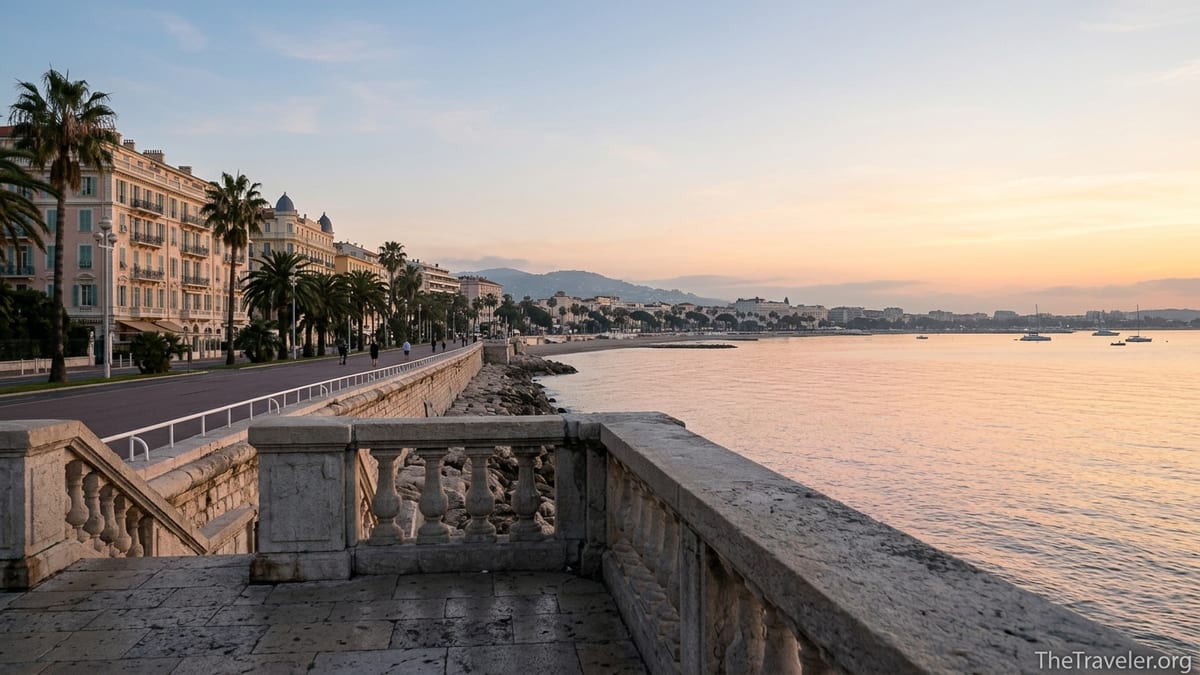
Cannes delivers a very different first impression. When you emerge near the seafront, your view is the line of palm trees along La Croisette, the string of five star hotels and a bay filled with yachts. The streets behind the waterfront are smaller in scale, with designer boutiques, polished cafes and brasseries geared to visitors. You are reminded quickly that this is a resort town shaped by the Cannes Film Festival and luxury tourism. For many, especially on a short holiday, that concentrated glamour is exactly the point.
In practice, Nice feels larger, busier and more varied by the hour of the day. Mornings start with the market in Cours Saleya and commuters heading to the tram. Evenings see the Promenade des Anglais crowded with runners, dog walkers and sunset strollers. Cannes, by contrast, feels calmer away from peak festivals and summer weekends. The compact center means you can walk almost everywhere in fifteen minutes, from the station to the old quarter of Le Suquet or the sandy beaches in front of the Palais des Festivals.
If you want to step out of your hotel and feel like you are in a small city, with neighborhood bakeries, schools and supermarkets side by side with tourist sights, Nice usually leaves the stronger early impression. If you want your first glance to be sea, sand, palm trees and grand hotels with concierge staff in tailored jackets, Cannes is designed to deliver exactly that.
Beaches and Waterfront: Pebbles or Sand
The Mediterranean is central to both cities, yet the waterfront experience is strikingly different. Nice is built along a sweeping bay with a wide, car lined Promenade des Anglais and a long stretch of grey pebble beach. The water here is clear and a deep blue on sunny days, but the stones are large and slippery. Locals often recommend inexpensive plastic water shoes from sports shops on streets like Rue de France, since walking straight into the water barefoot can be uncomfortable. Public beaches are free, but renting a lounger at a private beach club commonly starts from around 25 to 35 euros per day in high season, including a mattress and umbrella.
Cannes offers the sandy beach experience most travelers picture when they think of the Riviera. Along La Croisette and further west toward Cannes la Bocca, the sand is soft and golden, and walking into the sea is much easier. Public sections are interspersed between private beach clubs that set up neat rows of loungers, parasols and beach restaurants. Day bed rentals here are generally higher than Nice, especially at the most prestigious stretches in front of the big hotels, with prices that can start around 40 euros and climb above 70 euros during the film festival period or peak August days.
Atmosphere on the waterfront also differs. In Nice, the promenade is a shared public living room where cyclists, families and teenagers all mingle, often with street musicians on summer evenings. In Cannes, La Croisette feels more curated, with manicured flower beds, designer storefronts and terrace bars attached to high end hotels. Off season, the beaches in both cities can be wide open and peaceful. In winter, you might see locals in Nice having a picnic on the pebbles in sweaters, while in Cannes people walk dogs on the sand and enjoy the low sun over the bay.
For a visitor whose idea of a memorable Riviera day means sand between their toes and swimming without water shoes, Cannes usually wins. For others, the sweeping view from the raised pebble banks in Nice, with the curve of the bay and aircraft making their final approach over the sea, becomes the lasting image.
Culture, Food and Nightlife
Nice tends to offer more formal cultural depth. The city has an opera house, several major museums and galleries, and historic neighborhoods like Vieux Nice and Cimiez. Travelers can move from the narrow Baroque lined streets of the old town to the Marc Chagall National Museum or the Matisse Museum in a single afternoon. Ticket prices are generally moderate by Western European standards, and a city wide museum pass can make multiple visits more affordable. Food wise, Nice is known for local specialties such as socca, a chickpea pancake often sold from simple counters for a few euros, and pan bagnat, a tuna and vegetable filled sandwich that makes an inexpensive takeaway lunch.
Cannes leans more toward events and entertainment than classical culture. The Palais des Festivals hosts the film festival along with conferences and trade shows throughout the year. The town does have smaller art spaces and a pleasant old quarter with a church and museum on the hill of Le Suquet, but most visitors spend their time between the beachfront, shopping streets like Rue d’Antibes and the ferry departures to the nearby Lérins Islands. Dining in Cannes revolves around waterfront brasseries, hotel restaurants and compact bistros in the backstreets, many of which price dishes at a premium compared with inland towns.
Nightlife follows this divide. In Nice, there is a broad mix of wine bars, pubs, cocktail spots and late opening bistros, especially around the old town and near the port. Prices for a glass of house wine often start around 4 to 6 euros in less tourist heavy streets, and student bars can be busy during the academic year. In Cannes, nightlife clusters along the seafront and around the festival palace, with chic hotel bars and clubs that focus on champagne, cocktails and bottle service. Cover charges and drink prices reflect the international resort crowd, particularly around major events.
Travelers who want a strong sense of local food culture and neighborhood bars often come away with more vivid memories of Nice. Those who enjoy dressing up in the evening, people watching along La Croisette and perhaps planning a splurge dinner or two are more likely to feel that Cannes has left the bigger impression on their trip.
Costs, Crowds and Practicalities
On paper, both Nice and Cannes can be visited on a range of budgets, but real world patterns are clear. Accommodation, beach services and restaurant menus in Cannes tend to skew more expensive, reflecting its reputation as an upscale resort. During the Cannes Film Festival in May, and other major events, hotel prices can rise sharply and availability drops quickly. Even outside festival dates, a midrange hotel a block or two behind La Croisette usually costs more per night than a comparable property in a residential neighborhood of Nice.
Nice, as a larger city, offers more diversity in both price and style. Travelers can find everything from basic two star hotels and apartment style rentals near the station to boutique properties on or just off the Promenade des Anglais. Eating costs can be moderated with takeaway socca, bakery sandwiches or set lunch menus in local bistros. In both cities, simple cafe breakfasts of coffee and croissant typically run under 10 euros, while a sit down dinner with a main course and drink easily reaches 25 to 35 euros per person in central areas.
Crowds behave differently too. Nice draws a mix of tourists, cruise visitors and residents year round, so the center always feels active. Trams and buses can be crowded at rush hour, and the main pebble beaches fill quickly in July and August. Cannes, when no major festival is underway, can feel comparatively relaxed, with wide pavements and a quieter old town once you walk a few blocks in from the sea. Yet during events like the film festival or large trade fairs, the town swells with delegates and barricades appear around the red carpet area, changing the character of the center entirely for a couple of weeks.
From a practical standpoint, both cities are connected by frequent regional TER trains that take around 30 to 35 minutes between Nice-Ville and Cannes stations, with standard one way fares commonly under 10 euros for an adult ticket booked locally. That means travelers do not have to treat the decision as absolute. Staying in Nice and taking a day trip to Cannes, or basing in Cannes and visiting Nice for museums and markets, is straightforward. However, your base will still shape the mood of your mornings and evenings, and those are often what people remember most strongly.
Best For Day Trips and Wider Exploring
Nice positions itself naturally as a hub for exploring the wider Riviera. The city’s central train station, tram network and regional buses make it easy to reach coastal towns like Villefranche sur Mer, Antibes and Menton, as well as hilltop villages such as Èze or Saint Paul de Vence. Many visitors base themselves in Nice for three or four nights and use public transport to see a different part of the coast each day. The combination of regular services, clear signage and English spoken at most ticket counters helps first time visitors move around without renting a car.
Cannes, while smaller, also works well as a base, especially for those who prioritise a calmer evening atmosphere. Trains link Cannes westward to Antibes, Juan les Pins and Saint Raphaël, and eastward to Nice and Monaco. Buses and local services connect inland to villages like Mougins and Biot, which appeal to travelers seeking quieter, food focused or artsy excursions. One particular advantage of Cannes is its proximity to the Lérins Islands. Ferries from the harbor run regularly to Île Sainte Marguerite and Île Saint Honorat, where pine forests, coves and walking paths offer an easy day out in nature without long travel times.
For long term stays, Nice’s broader public transport network, including the tram link to the airport, usually makes life smoother. If your plan is a week of beach time with just one or two simple excursions, Cannes’ compact layout and sandy shoreline may be more appealing. In either case, the fact that the two cities are so close means you can design an itinerary that samples both, even in a short trip.
In terms of lasting impressions, travelers who pack their days with multiple small trips and spontaneously hop on local trains often find Nice more memorable as a base. Those who value slowing down on a single beach, taking a short boat ride to an island and enjoying relaxed dinners within walking distance of their hotel may remember Cannes more fondly.
Who Each City Suits Best
Over time, certain traveler profiles repeat themselves in the feedback you hear. Nice tends to suit visitors who enjoy urban energy, culture and variety. Solo travelers, city lovers and people on longer stays often choose Nice because there is plenty to do even if the weather turns. You can spend a rainy morning in the Chagall Museum, an afternoon wandering neighborhood markets and an evening listening to live music in a bar near the port without feeling you have “run out” of the city.
Cannes attracts a different emphasis. Couples on short romantic breaks, honeymooners and groups of friends who value a more polished, resort like environment often speak highly of their time here. The combination of sandy beaches, smart seafront promenades and intimate, restaurant lined streets behind La Croisette creates a focused atmosphere of leisure. For some, that sense of curated escape leaves a stronger emotional imprint than the messier, everyday life feel of Nice.
Families can go either way. Those with younger children may appreciate Cannes’ sandier beaches and manageable size, where walks from hotel to sea usually take minutes and crossing big roads is less of an issue. Families with teenagers or with a strong interest in museums, markets and urban exploration may find Nice more stimulating. Accessibility also matters. Travelers arriving on late flights often choose Nice simply because the tram from the airport delivers them to the city center quickly, while reaching Cannes from the airport involves either a direct coach, a taxi or a combination of tram and train.
In the end, the city that leaves the bigger impression often aligns with your travel personality. If you regularly choose large European cities and enjoy their layers of normal life, chances are Nice will fit your memory better. If on past trips you have preferred classic resort towns with concentrated comfort and beauty, Cannes may well be the place that lingers in your imagination.
The Takeaway
Nice and Cannes sit less than an hour apart on the same coastline, yet they represent two distinct ways of experiencing the French Riviera. Nice offers a broad, urban canvas: pebble beaches, long promenades, layered neighborhoods and a transport network that makes it an easy base for wider exploration. Cannes condenses the Riviera ideal into a walkable resort: sandy beaches, palm lined boulevards, a harbor full of yachts and an undercurrent of festival driven glamour.
Neither city is inherently better. The question is which setting will resonate with you when you look back. Travelers who want to mix beach time with museums, markets and day trips, and who enjoy watching ordinary city life unfold around them, usually find that Nice leaves the deeper impression. Those seeking a refined, beach led break with a sense of occasion, where evenings are spent strolling La Croisette or taking a boat to a nearby island, often remember Cannes far more vividly.
Because trains between Nice and Cannes are cheap and frequent, you do not have to commit entirely. A practical approach is to choose the city that best matches your hotel budget and preferred daily rhythm, then schedule at least one full day in the other. Walk Nice’s Promenade des Anglais at sunset, then another day wander Cannes’ La Croisette as the lights of the bay come up. The comparison in real time will likely answer the question for you far more than any guide can.
Whichever you choose as your base, the Riviera’s particular mix of sea light, coastal hills and Mediterranean pace has a way of staying with travelers long after the details of hotel names and restaurant bills have faded. The bigger impression comes less from the city’s marketing image and more from how its streets and shoreline line up with the way you personally like to live, even for a few days.
FAQ
Q1. Is Nice or Cannes better for a first time visit to the French Riviera?
For most first time visitors, Nice is a better base because of its larger choice of hotels and restaurants, easy airport access and convenient public transport for day trips, while Cannes works well as a second stop if you have extra days.
Q2. Which city is cheaper, Nice or Cannes?
Overall, Nice tends to be slightly cheaper, especially for midrange hotels and casual dining, while Cannes often commands higher prices for beachfront accommodation, beach clubs and some seafront restaurants.
Q3. Where are the beaches better, Nice or Cannes?
Nice has long pebble beaches with clear water and a dramatic bay view, while Cannes offers softer, sandy beaches that are more comfortable underfoot and often easier for children and less mobile travelers.
Q4. Can I stay in one city and easily visit the other?
Yes, frequent regional trains connect Nice and Cannes in around 30 to 35 minutes, with affordable fares, so day trips in either direction are practical even on a short stay.
Q5. Which city is better for nightlife?
Nice has a broader range of nightlife, from casual pubs to cocktail bars and live music, while Cannes focuses more on upscale hotel bars and clubs clustered around the seafront and festival area.
Q6. Is either city better for families with children?
Cannes can be easier for families with younger children thanks to its sandy beaches and compact center, whereas Nice offers more varied activities and bigger parks but pebble beaches that may be less comfortable for small kids.
Q7. Which is more convenient for airport access?
Nice is more convenient because the city is directly served by Nice Côte d’Azur Airport, linked to the center by tram and buses, while reaching Cannes usually involves an additional train, coach or taxi journey.
Q8. Where will I find more authentic local atmosphere?
Nice, as a larger working city, generally offers more everyday local life in its markets and neighborhoods beyond the seafront, while central Cannes feels more focused on visitors and resort services, especially near La Croisette.
Q9. Which city is better for a short romantic break?
Cannes often suits romantic breaks thanks to its walkable seafront, sandy beaches and intimate, resort style ambiance, though Nice can be equally romantic if you enjoy city views, hilltop lookouts and lively evening streets.
Q10. If I only have two days, should I split time between Nice and Cannes?
With only two full days, it is usually better to stay in one city and take a single day trip to the other, so you avoid repeated packing and transfers and have time to enjoy at least one place at a relaxed pace.