


North of the Arctic Circle in Finnish Lapland, Pallas–Yllästunturi National Park offers one of Europe’s most approachable ways to experience fells, tundra-style plateaus and quiet boreal forests. With well-marked trails, public wilderness huts and villages that cater to hikers, it is a rare place where Arctic landscapes, wildlife and genuine remoteness are accessible even to first-time visitors. This guide explains how to explore the park on foot, what to expect from the terrain and seasons, and how to do it all responsibly.
Get the latest updates straight to your inbox!
Getting Your Bearings in Pallas–Yllästunturi
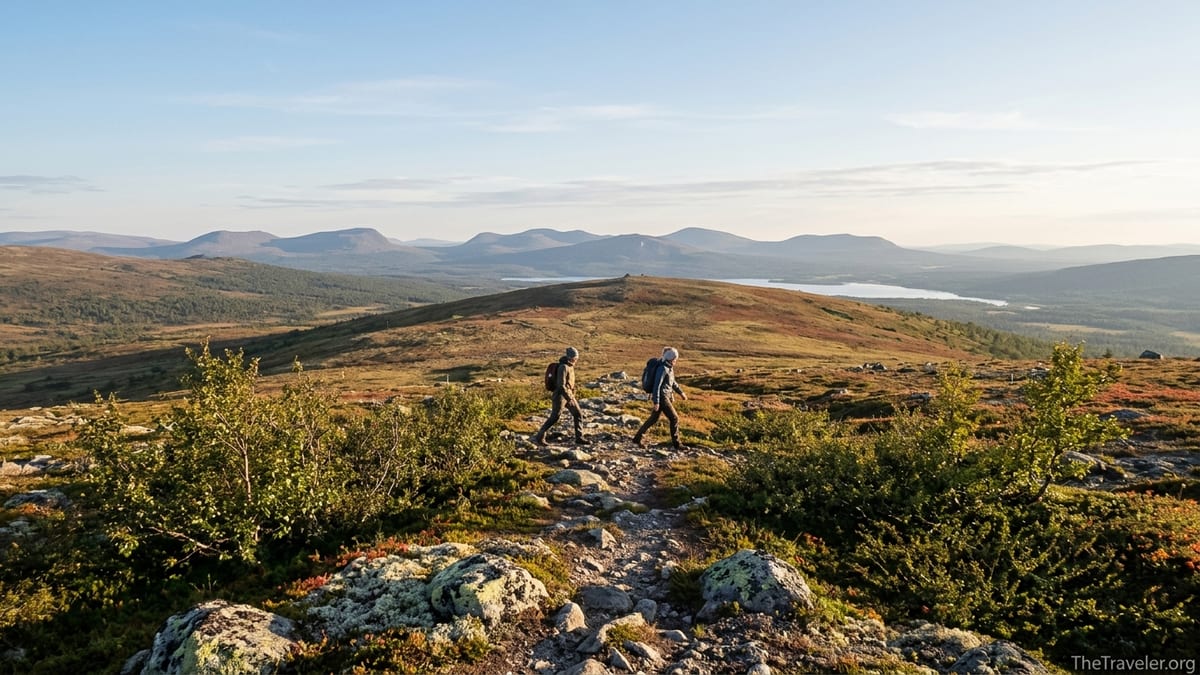
Pallas–Yllästunturi is Finland’s third largest national park, stretching roughly 100 kilometers across Fell Lapland between the ski resorts of Ylläs in the south and Hetta in the north. The landscape is dominated by rounded fells, or tunturi, such as Taivaskero in the Pallas massif, interspersed with lake-filled valleys, mires and mountain birch forest. Elevations are modest by alpine standards, with Taivaskero rising to about 809 meters, but the treeline is low, so you quickly reach wide open views that feel distinctly Arctic.
For most hikers the park is approached from four main bases. Ylläs has two adjacent villages, Äkäslompolo and Ylläsjärvi, with supermarkets, equipment rentals and a visitor centre at Kellokas. In the central section, the Pallas Fell Hotel area acts as a trailhead with direct access to the famous fell chain. On the northern side, the village of Hetta is the classic starting or finishing point for the multi-day Hetta–Pallas route, supported by the Fell Lapland Visitor Centre. Smaller trailheads and car parks dot the minor roads between these hubs, giving access to shorter day hikes.
Reaching the area from southern Finland is straightforward, though distances are long. From Helsinki many visitors take the overnight train to Kolari or Rovaniemi, then continue by bus or rental car to Ylläs, Pallas or Hetta. In winter there are usually seasonal flights from Helsinki to Kittilä, about an hour’s drive from Ylläs. Once in Lapland, local buses and taxis connect the villages, but frequencies can be limited, so it is wise to check timetables in advance and allow buffer time if you are lining up public transport with a multi-day hike.
Unlike truly remote Arctic wilderness, Pallas–Yllästunturi feels intentionally visitor-friendly. Waymarked summer and winter trails leave directly from village edges and visitor centres, with clear signage and maps. At the same time, once you walk a few hours away from the main hubs, the sense of space and quiet can be striking, especially outside the short peak periods of mid-summer and autumn foliage.
Signature Hiking Routes and Fell Experiences
The classic hike in Pallas–Yllästunturi is the Hetta–Pallas trail, roughly 50 to 55 kilometers depending on starting point. Laid out in the 1930s, it is considered Finland’s oldest marked hiking route and still one of its most beloved. Most walkers take three to four days, sleeping in a mix of free open wilderness huts, reservable huts or tents at designated campgrounds. The route strings together two fell groups, Ounas and Pallas, with long sections above the treeline and panoramic views, especially in clear weather.
A typical Hetta–Pallas itinerary might begin with a short boat ride across Lake Ounasjärvi from Hetta, followed by a steady climb to the first fells and an overnight at Sioskuru or Pyhäkero hut. On the second and third days hikers traverse rolling fell tops and saddles, passing huts such as Hannukuru and Nammalakuru, before descending toward Pallas Fell Hotel with its café and bus connections. The gradients are rarely steep, but daily distances of 15 to 20 kilometers, changeable weather and sections of rocky trail require basic fitness and good footwear.
If you prefer day hikes, Ylläs is especially convenient. From Äkäslompolo you can walk straight from the village to the Yllästunturi Visitor Centre Kellokas, then follow well-marked paths such as the popular Varkaankuru nature trail, a three kilometer loop through a stream-carved ravine. For a longer outing, trails lead to the top of Yllästunturi fell, where on a clear day you can see a chain of rounded summits fading into the distance. Near the Pallas area, shorter circuits like the Palkaskero loop provide a taste of open fell landscapes without committing to an overnight trip.
More experienced hikers seeking quieter corners might head to Aakenustunturi in the south of the park. Reached by trail from the Ylläs side, Aakenus offers broad fell plateaus with fewer crowds and a wilder feel, especially outside high season. Another option is to link sections of the park’s longer trails into your own loop, using wilderness huts as anchors. For example, a four-day circuit might start near Ylläs, cross over several fells via Kotamaja and Aakenustunturi, then return on a lower level trail that passes lakes and mires rich in birdlife.
Wildlife, Nature and Arctic Light
Pallas–Yllästunturi is one of the best places in Finland to combine relatively easy hiking with opportunities to observe northern wildlife. Semi-domesticated reindeer are a near-constant presence in summer, grazing along fell slopes and occasionally ambling across roads and ski tracks. Their hoofprints crisscross the sandy trails, and hikers frequently share picnic spots with quietly browsing animals that are largely indifferent to human visitors.
More elusive residents include willow grouse, Siberian jay and golden plover on the open fells, as well as capercaillie, elk and wolverine in the forests, though the latter are rarely seen. Birdwatchers visit in early summer for the dawn chorus around mires and lakes, where species such as red-necked phalarope and various waders may be spotted from duckboards. In winter, tracks in fresh snow often give away the presence of animals that remain unseen, turning a simple snowshoe walk into a lesson in mammal tracking.
The park lies firmly in the Arctic light zone. From late May to mid-July, the midnight sun means you can hike at any hour, with soft golden light over fell tops long after conventional bedtime. Some visitors plan an evening ascent from Ylläs or Pallas to watch the sun circle low across the horizon without setting, then descend in the quiet hours when even popular trails fall almost silent. In contrast, from late autumn through early spring, polar night brings very short days, deep blue twilight and excellent conditions for northern lights, especially on clear, cold nights away from village lights.
Seasonal shifts transform the landscapes nearly beyond recognition. In June, snowfields linger in high hollows while birch leaves and bilberry shrubs emerge. By late August and early September, the ground cover turns red, orange and gold in a phenomenon known locally as ruska, drawing many Finns north for one or two weeks of peak color. Later in September or October, frosty mornings and the first dustings of snow on fell tops can make trails slippery, but also offer crystalline air and intense views for those prepared for colder conditions.
When to Go and What Conditions to Expect
Choosing the right season is central to enjoying Pallas–Yllästunturi. The main snow-free hiking season typically runs from late June to late September, though exact timing varies year by year. In early June, some higher trails and duckboards can still be snow-covered or very wet, and river crossings may be swollen by meltwater. By July, most routes are fully accessible, temperatures range from about 10 to 20 degrees Celsius by day, and many services such as trail cafés and bus connections operate on their summer schedule.
August and early September combine relatively stable weather with fewer insects than high summer. Many multi-day hikers aim for this window on the Hetta–Pallas route, accepting cooler nights in exchange for more comfortable walking and the possibility of northern lights toward the end of the period. The ruska foliage season usually peaks at some point in September and can be very busy on popular day routes near Ylläs and Pallas, so booking accommodation well in advance is advisable if you plan to stay in hotels or commercial cabins.
Winter, roughly from December to April, brings a different type of exploration. Instead of hiking trails, you will find groomed cross-country ski networks extending for hundreds of kilometers, as well as marked snowshoe and winter walking routes near villages. Temperatures can drop well below freezing, so this is best suited to visitors with solid cold-weather gear. Many people choose a base in Ylläs or Hetta, combine half-day skis on maintained tracks with gentle fell ascents in good weather, and then retreat to saunas and cozy lodges when conditions turn harsher.
Regardless of season, weather in Fell Lapland is changeable. A sunny morning can shift to fog, wind and rain within hours, especially on exposed fells. On the Hetta–Pallas trail it is common to experience several seasons in a single day. Even for day hikes you should carry a waterproof layer, insulating mid-layer, hat and gloves, along with spare socks and some emergency food. Sturdy trekking shoes or light boots are recommended; low trail runners can work in the driest part of summer but may be uncomfortable on rocky sections or in lingering snow patches.
Accommodation, Huts and Practical Logistics
Pallas–Yllästunturi is particularly well set up for independent hikers thanks to Finland’s network of wilderness huts and the country’s long-standing outdoor culture. Along major routes like Hetta–Pallas you will find a combination of open huts, which are free to use and cannot be reserved, and reservable huts where you secure a bunk in advance for a modest fee through the park authorities. These simple log buildings usually provide sleeping platforms, wood-burning stoves and an outdoor compost toilet, but you must bring your own sleeping bag, food, stove fuel and headlamp.
Designated campfire sites and lean-to shelters are scattered along trails, typically near water sources. Under Finland’s everyman’s rights, wild camping is broadly permitted on uncultivated land, but in national parks the rules are more specific, and visitors are encouraged to use marked campgrounds to minimize impact. In practice, most multi-day hikers on popular routes pitch their tents close to huts or at official sites, where firewood, a fireplace and sometimes a simple cooking shelter are provided.
For those who prefer more comfort, the villages around the park offer a wide range of options. In Äkäslompolo and Ylläsjärvi, for example, you can choose between self-catering cabins with private saunas, traditional guesthouses and larger hotels that primarily serve the winter ski season but also welcome summer hikers. Prices vary widely depending on season and level of comfort, but a small self-catering cabin with sauna might cost somewhere in the mid-range for Nordic destinations during summer, with higher rates in school holiday weeks and during ruska. In the Pallas area, the fell hotel commands an especially scenic position, allowing you to step directly from the lobby onto fell trails.
Food logistics are relatively straightforward compared with more remote Arctic regions. Supermarkets in Ylläs and Hetta stock typical Finnish staples suitable for hiking, such as rye bread, cheese, tinned fish, instant porridge, packets of dried soup and chocolate bars. Some hikers fly into Helsinki with lightweight freeze-dried meals and gas canisters purchased at outdoor retailers in the capital, then top up with fresh items like bread and fruit after arriving in Lapland. In summer, simple cafés at visitor centres or trailheads often sell soups, pastries and hot drinks, though opening hours can be limited outside peak weeks.
Respecting Rules, Everyman’s Rights and Local Culture
Finland’s concept of everyman’s rights gives broad access to nature, including the right to walk, ski and pick berries on most land regardless of ownership, as long as you act responsibly. In national parks such as Pallas–Yllästunturi, these general rights are partly restricted to protect sensitive environments. The park’s regulations, managed by Metsähallitus, usually specify where camping and fires are allowed, which areas are off-limits for seasonal bird protection, and any restrictions on activities like mountain biking or drone flying.
A practical rule of thumb is to stick to marked trails in the most sensitive areas, use designated camping spots and fire sites, and always check local fire warnings. During dry periods, even official fire pits may be temporarily off-limits due to forest fire risk, and gas stoves might be the only permitted cooking option. Drone use is restricted in many parts of the park, particularly near bird nesting cliffs and quiet zones; if you plan to fly one, make sure to check current guidance rather than assuming it is allowed simply because the area feels remote.
The region is also part of the Sámi homeland, and reindeer husbandry is an important livelihood. Fences and reindeer herding buildings that you encounter along trails are working infrastructure, not attractions. Leaving gates as you find them, keeping dogs strictly leashed and giving reindeer space to move are simple ways to show respect. When you pass through villages, you will likely see Sámi handicrafts such as duodji for sale in small shops and visitor centres; buying directly from local artisans is a meaningful way to support the culture whose traditional lands you are visiting.
Environmental etiquette is straightforward but crucial in a sub-Arctic ecosystem that recovers slowly from damage. Staying on paths in wet areas prevents erosion of fragile tundra vegetation. Carrying out all rubbish, including food scraps and toilet paper, protects wildlife and keeps lean-tos and huts pleasant for everyone. If you need to go to the toilet away from facilities, move well off the trail, dig a small hole where the soil is not waterlogged, and cover it carefully afterwards. These small practices cumulatively help preserve the park’s reputation for cleanliness and give future visitors the same feeling of unspoiled nature.
Planning a Sample Trip: From First Fell to Last Campfire
To see how the pieces fit together in practice, imagine a week-long summer trip built around hiking, wildlife and Arctic scenery. Two travelers fly into Helsinki, spend a night in the capital to pick up gas canisters and additional gear, then board an overnight train to Kolari in sleeper compartments. Early the next morning they catch a scheduled bus to Äkäslompolo, arriving around midday and checking into a modest cabin with a kitchenette and sauna for two nights.
On their first full day they walk from their cabin to the Yllästunturi Visitor Centre Kellokas, pick up a detailed trail map and advice on conditions, then head out on the Varkaankuru nature trail. They extend the loop up toward a nearby fell shoulder for broader views, stopping at a lean-to shelter to make coffee on their stove while watching clouds drift across the Ylläs fell. Back in the village they shop for supplies, pack food for four days and confirm the latest information on the Hetta–Pallas route, including any temporary restrictions or hut maintenance closures.
The next day they take a bus north to Hetta, visit the Fell Lapland Visitor Centre and then cross Lake Ounasjärvi by boat shuttle to the official trailhead. Over four days they hike the Hetta–Pallas route, staying one night in a reservable hut and the others in their tent at designated hut surroundings. Each evening they share campfire rings and stories with Finnish families and other international hikers, learning how locals read the weather and where cloudberries might be ripening. On the final day they descend to the Pallas Fell Hotel area, treat themselves to hot drinks and a restaurant meal, then continue by bus back to Ylläs for a last sauna and a quiet evening watching the midnight sun from the shore of Lake Äkäslompolo.
A different traveler might visit in March instead, basing themselves entirely in Ylläs. They rent cross-country skis from a local shop, ski prepared tracks through snow-laden forests by day and take a guided evening snowshoe trip onto a nearby fell to look for northern lights. Wildlife sightings are mostly tracks in the snow and ravens overhead, but the combination of crisp air, pastel skies and deep silence gives them the Arctic feeling they were seeking, all without needing advanced winter expedition skills.
The Takeaway
Pallas–Yllästunturi is a rare national park that offers both ease of access and a genuine taste of Arctic landscapes. The rounded fells, quiet birch forests and wide skies are dramatic without being intimidating, and well-developed infrastructure means that even first-time visitors can attempt multi-day routes like Hetta–Pallas with sensible preparation. Whether you base yourself in Ylläs for day hikes, link wilderness huts on a longer traverse, or visit in winter to ski under the northern lights, the park rewards slow travel, flexible planning and a willingness to step just a little beyond the beaten path.
At the same time, its fragile tundra vegetation, Sámi cultural landscape and hardworking reindeer herders rely on visitors behaving thoughtfully. By learning the basics of everyman’s rights, using huts and campgrounds respectfully and treading lightly on the fells, you become part of a long tradition of outdoor life in Lapland rather than just a spectator. In return, Pallas–Yllästunturi offers something hard to find elsewhere in Europe: a feeling that the Arctic is not only a faraway frontier, but a living, walkable landscape you can inhabit for a few unforgettable days.
FAQ
Q1. Do I need a guide to hike in Pallas–Yllästunturi National Park?
Guides are not mandatory, and many visitors hike independently using marked trails and good maps. However, hiring a local guide can be valuable if you are new to Arctic conditions, traveling in early season when snow may linger, or visiting in winter for off-trail snowshoeing and northern lights trips.
Q2. What is the best time of year to hike the Hetta–Pallas trail?
The most reliable period is usually from late June to mid-September, when most snow has melted and services are running. Many hikers favor August and early September for cooler temperatures, fewer insects and the possibility of autumn colors, accepting that nights can be chilly and weather more variable.
Q3. Can beginners manage the Hetta–Pallas route, or is it only for experienced hikers?
Fit beginners who are comfortable carrying a pack for several days, navigating clear waymarked trails and camping or using simple huts can manage the route with preparation. It is not technically difficult, but the daily distances, exposure to weather and basic facilities mean you should build up some day-hike experience and test your gear before committing.
Q4. Are there dangerous animals in the park that hikers should worry about?
There are large carnivores in Lapland, but encounters with hikers are extremely rare and they usually avoid people. The animals you are most likely to see are reindeer and various birds. In summer, insects such as mosquitoes and blackflies are usually more of a nuisance than wildlife, so packing effective repellent and suitable clothing is important.
Q5. How cold does it get at night in summer on the fells?
Even in July and August, night temperatures on the fells can drop close to freezing during clear weather, particularly early or late in the season. A sleeping bag and clothing system rated for a few degrees below zero Celsius is a sensible choice for multi-day trips, and you should always be prepared for colder snaps than the forecast suggests.
Q6. Is it possible to drink water from streams and lakes while hiking?
Many local hikers drink from clear flowing streams on the fells, especially high up and away from grazing areas, and report no problems. Visitors with more cautious stomachs often choose to treat or boil water, particularly from lowland lakes and slow-flowing sections. Carrying some form of purification, such as tablets or a compact filter, is a practical compromise.
Q7. Can I camp anywhere I like in the park under everyman’s rights?
Everyman’s rights are partly restricted in national parks, so you should follow the specific camping rules for Pallas–Yllästunturi. In practice that means favoring designated camping areas near huts and lean-tos, and checking current guidelines at visitor centres or online before you set out. Wild camping away from marked sites may be allowed in some zones but should be done discreetly and with minimal impact.
Q8. What kind of footwear and clothing are recommended for summer hiking?
Sturdy hiking shoes or light boots with good grip are suitable for most summer routes, as trails can be rocky and occasionally wet. Clothing should follow a layering system: a moisture-wicking base layer, insulating mid-layer and waterproof shell, plus hat and gloves. Even in warm spells, carrying rain gear and an extra warm layer is important because conditions on the fells can change rapidly.
Q9. How easy is it to reach Pallas–Yllästunturi using public transport?
Access is relatively good by Arctic standards. Many travelers take a night train from southern Finland to Kolari or Rovaniemi, then transfer to regional buses serving Ylläs, Pallas and Hetta. Schedules can be limited on some days, especially outside peak seasons, so it is wise to plan journeys in advance and allow flexible margins if you need to catch onward connections.
Q10. Are there opportunities to see the northern lights while visiting the park?
Yes. From roughly late August to April, when the nights are dark enough, northern lights are possible on clear evenings. Your chances are best during the colder months of autumn and winter, especially if you stay for several nights and are willing to step away from village lights onto nearby fell slopes or frozen lakes to watch the sky.