


High above the Arctic Circle in Finnish Lapland, Levi Ski Resort combines long, snow-sure winters with one of Europe’s most reliable Northern Lights seasons. For travelers, that means you can ski well into spring, pack your days with snow activities and still have a good chance of seeing the aurora in a single trip. This guide walks you through how to plan a visit to Levi for skiing, snow adventures and Northern Lights, with concrete examples of routes, budgets and on-the-ground choices to help you turn ideas into an actionable itinerary.
Get the latest updates straight to your inbox!
Choosing the Best Time to Visit Levi
Levi enjoys one of Finland’s longest winter sports seasons, typically running from early October, thanks to stored snow, through late April and often into May. In practice, that means you have a wide window to ski, but your experience will differ significantly between early winter, the peak of the polar night and the bright spring season. Early season from late October to late November is usually quieter, with a limited number of slopes and lifts open at first. It suits strong skiers keen to be on the earliest manmade and stored-snow runs, but beginners may prefer to wait until more pistes and services are operating at full capacity.
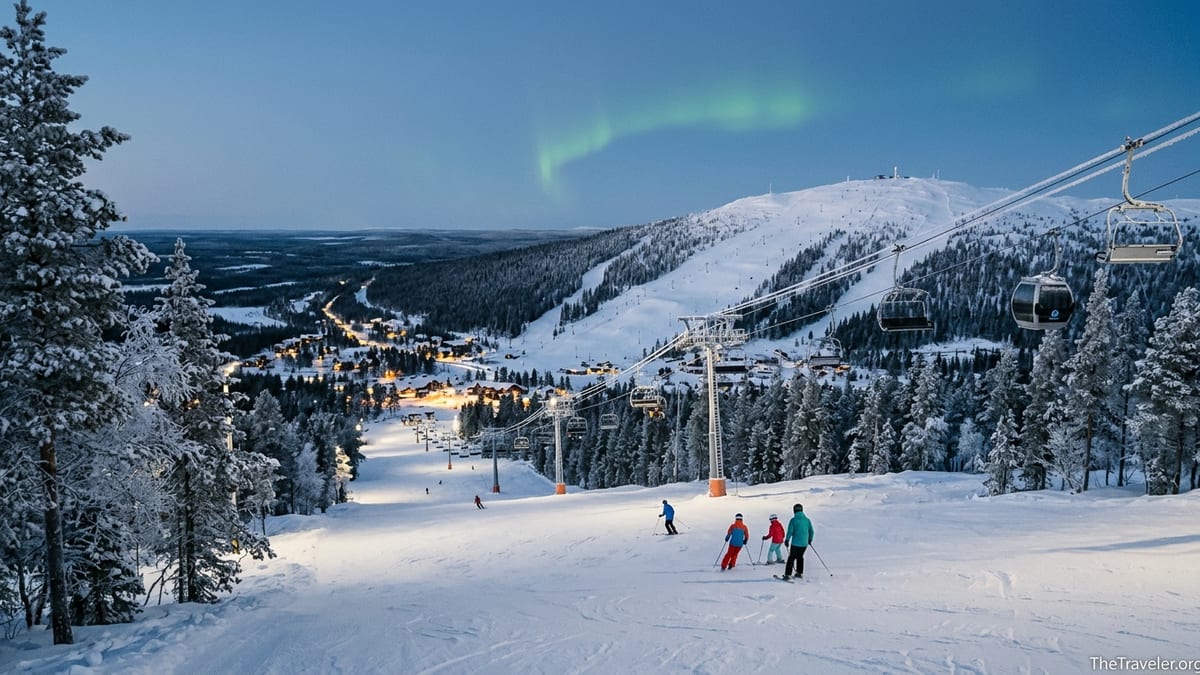
For most travelers who want a balance of good skiing, consistent snow cover and a high probability of Northern Lights, December through March is the prime window. In December and early January, Levi experiences very short days, with just a few hours of blue twilight at midday. Floodlit slopes and village lights create a distinctive Arctic atmosphere, but you will be skiing mostly in artificial light. By February, days lengthen noticeably, temperatures can remain well below freezing, and both ski runs and activity operators are fully up and running. March often brings sunnier, brighter days with good snow depth, popular with families who like longer daylight combined with strong aurora chances at night.
The Northern Lights season in Levi stretches roughly from late August, once the nights are dark again, through the end of April. In winter, you can realistically hope for aurora sightings on several nights during a one-week stay, provided skies are clear. There is never a guarantee, but planning your trip for mid-winter rather than the shoulder weeks of early October or late April improves your odds. If your main goal is skiing plus auroras, a practical sweet spot for many visitors is early February to mid-March, when the village is busy, snow conditions are settled and night skies are still properly dark.
When budgeting time, consider at least four nights in Levi if the aurora is a key priority. This gives you multiple evenings to join tours or head out independently, which matters because cloud cover and solar activity fluctuate. Many travelers combine three days of skiing with two nights focused on Northern Lights hunting and one night reserved for a non-ski activity such as a husky safari or snowmobile tour.
Getting to Levi: Flights, Trains and Transfers
Levi sits near the village of Sirkka in the Kittilä municipality of Finnish Lapland. For most international visitors, the simplest route is to fly to Helsinki and connect to Kittilä Airport, which is about 15 to 20 minutes by road from Levi village. In winter, Finnair and occasionally other carriers operate multiple daily flights between Helsinki and Kittilä, and some European holiday charters fly directly from hubs such as London or Manchester. Once at Kittilä, you can travel by airport bus, shuttle or taxi into Levi. Typical taxi fares for the short ride run in the region of 45 to 60 euros per car, which is economical if you are sharing as a group of three or four.
If you prefer rail travel, Finland’s VR overnight trains offer a memorable way to reach Lapland. The Aurora Borealis Express between Helsinki and Kolari is particularly popular with skiers. You board in the evening in Helsinki, sleep in a couchette cabin and arrive late morning in Kolari, roughly 80 to 85 kilometers from Levi. From there, bus services timed to train arrivals connect Kolari station to Levi and nearby resorts, so you can step off the train, load your skis on the coach and arrive in the village around an hour later. This route suits travelers who enjoy slow travel, want to avoid a domestic flight or are combining multiple stops in Finland.
Travelers coming from Rovaniemi, another key Lapland hub, can reach Levi by long-distance bus. In winter, companies operate routes between Rovaniemi and Levi or Rovaniemi and Kittilä, often coordinated with train arrivals from the south. If you plan to visit Santa Claus Village or spend time in Rovaniemi first, this bus leg can be an efficient way to continue on to Levi. As services can fill up in peak weeks, especially around Christmas and school holidays, it is wise to book bus tickets in advance once your train or flight times are fixed.
For maximum flexibility, some visitors rent a car in Kittilä or Rovaniemi. Winter tires are standard and roads are well maintained, but driving in Lapland requires comfort with snow, ice and low-light conditions. Rental rates vary, but a compact car can often be found in the range of 60 to 90 euros per day in high season, excluding fuel. A car allows you to reach outlying cross-country trails, quieter aurora viewing spots and neighboring fell areas such as Ylläs or Pallas on your own schedule, which can be appealing if you are experienced in winter driving and want to explore beyond Levi’s core slopes.
Where to Stay: From Slope-Side Hotels to Aurora Cabins
Levi’s accommodation ranges from classic slope-side hotels to self-catering apartments and glass-roofed igloos aimed at aurora watchers. Your choice will influence not only your budget but also how easy it is to get to the lifts and how you experience the Northern Lights. For first-time visitors focused on skiing, staying within or close to Levi village usually makes sense. Properties near the Front Slopes and Zero Point base area place you within easy walking distance of lifts, rental shops, restaurants and supermarkets. Mid-range hotels such as Levi Hotel Spa or modern apartment complexes near the gondola give you convenient access to both the slopes and the village’s bars and cafes.
Travelers whose priority is the Northern Lights often look at dedicated aurora accommodations just outside the main village. Northern Lights Village Levi, for example, offers cabin-style rooms with part-glass roofs that allow guests to watch the sky from bed when conditions cooperate. Package stays here can include full board and a bundle of activities such as reindeer sleigh rides, husky safaris and guided aurora hunts. Prices reflect the experience: a two- or three-night winter package with excursions and meals can easily climb to several hundred euros per person, so it is worth comparing the cost with booking a standard apartment in the village and joining separate tours.
Self-catering cabins and apartments are a practical option for families and groups. Many units come with private saunas and drying cupboards for ski gear, which become valuable comforts when temperatures drop well below freezing. If you book through local agencies or major holiday operators, note the exact distance to the nearest ski bus stop or lift. Some cabins lie within a 10 to 15 minute walk of the village center, while others are more remote and effectively require a car or strict reliance on ski buses. As a rule of thumb, if you want to pop back for lunch or a rest during the ski day, aim for accommodation no more than a few hundred meters from a main lift or gondola.
When planning, also check what is included in your rate. Breakfast buffets are standard in many hotels but not in apartments. At the same time, the ability to cook can significantly lower your daily spend in an expensive region. Supermarkets in Levi stock typical Finnish and international products, so cooking simple dinners on a few nights can offset the cost of one or two special meals out, such as sampling local reindeer dishes or dining at a slope-top restaurant reached by gondola in the evening.
Planning Your Skiing and Snow Activities
Levi offers a well-developed network of downhill ski runs, beginner areas and cross-country trails that together make it a versatile resort for mixed-ability groups. The fell itself is relatively modest in height compared with Alpine giants, but the runs fan out in multiple directions, so you can ski sunlit south-facing slopes on bright days or choose more sheltered aspects in windy conditions. The resort typically operates dozens of slopes and lifts at full maturity in mid-winter, with several dedicated beginner zones and covered magic carpets on the Front Slopes ideal for first-timers and children.
If you are new to skiing or snowboarding, factor lessons into your planning. Levi Ski School runs private and group classes for alpine skiing, snowboarding and cross-country, with special shorter sessions for young children. Private lessons for one or two people typically cost on the order of a few dozen euros per hour, with rates decreasing slightly as you add more hours or participants. Booking lessons in advance for your first or second day can set up the rest of your week, especially if you are hoping to progress from the easy green slopes to the longer blue runs that circle the fell.
Beyond downhill skiing, Levi is a strong base for classic Lapland experiences. Husky sled safaris take you out across frozen lakes and forest trails behind a team of eager dogs, with half-day tours commonly priced at a couple of hundred euros per adult including warm gear, guide and transfers. Reindeer farm visits and sleigh rides offer a slower-paced way to experience the snowy landscape, often paired with cultural explanations of reindeer herding traditions. Snowmobile safaris range from easy evening rides suitable for beginners to longer daytime expeditions that climb viewpoints on nearby fells, and require a driving license for those operating the machines.
Families and non-skiers in the group will find additional activities such as snowshoe walks, toboggan runs, ice karting and visits to small snow or ice structures that open in mid-winter. Many hotels and tour companies sell combination packages, for example three nights of accommodation with one husky safari, one Northern Lights hunt and one snowmobile tour bundled in. While packages can look expensive at first glance, doing the math against booking each activity separately often reveals only a modest price difference, and the convenience can be worth it if you are short on planning time.
Chasing the Northern Lights in Levi
Levi’s location within the auroral zone gives it a strong reputation as a Northern Lights destination, yet seeing the aurora still requires patience and a bit of strategy. From late August until roughly the end of April, the night skies are dark enough for displays, with mid-winter offering the longest windows of darkness. In practical terms, this means that on a February visit, you can begin scanning the sky from early evening, while in late March you may wait until later at night for full darkness. Activity waxes and wanes throughout the solar cycle and individual nights, so planning several potential aurora evenings during your stay is more effective than banking all your hopes on a single tour.
Many visitors choose to book at least one guided Northern Lights excursion. These range from simple minibus tours that drive out of the village to find clear skies, to snowmobile or snowshoe aurora safaris that combine light physical activity with sky watching. A typical minibus tour might cost in the region of 80 to 150 euros per adult, depending on group size and inclusions such as warm clothing, snacks or photography support. The advantage of a guided trip is local knowledge: experienced guides read weather forecasts and aurora data, know where to escape local cloud and light pollution, and can help manage expectations if conditions are marginal.
Independent aurora hunting is also viable if you are comfortable in Arctic conditions. On clear nights with strong activity, the aurora can occasionally be visible right from the village, reflected in the snow around the Front Slopes or across frozen ponds nearby. To improve your odds and reduce light pollution, walk a little way out of the center to darker open areas, or use a rental car to reach pull-outs on minor roads outside Levi. Dress far more warmly than you would for daytime skiing. Standing still at minus 15 degrees Celsius with a light wind can feel dramatically colder than moving on the slopes, so double up on socks, wear insulated boots and carry a thermos and extra layers.
If photography is a priority, bring a camera that allows manual settings, along with a sturdy tripod. Many modern smartphones can capture basic aurora shots in night mode, but a mirrorless camera or DSLR with a wide, fast lens (for example 24 mm at f/2.8) will produce clearer images. Expect to use long exposures between a few and 15 seconds, and be prepared to operate equipment with gloves or mittens. Some tour operators include photography guidance and will share their own high-quality images with the group afterward, which can be useful if you prefer to keep your hands in your pockets instead of on a camera.
Budgeting for Your Levi Ski and Aurora Trip
Compared with many mountain resorts, Levi offers a range of price points, but as with much of Scandinavia, costs can add up quickly. Airfares and long-distance train tickets vary widely with season, so it pays to book early for peak times like Christmas, New Year and school holidays in February and March. As a rough benchmark, winter return flights from major European cities to Kittilä via Helsinki can run from the low hundreds of euros per person in shoulder periods to significantly more in peak weeks, while overnight train sleeper cabins for two from Helsinki to Kolari are often priced in a similar broad range, depending on how far ahead you reserve.
On the ground, lift passes are a major line item for skiers. Levi’s pricing changes from season to season, but the resort typically offers flexible options from a few hours to multiple days. A multi-day adult ski pass for several consecutive days will generally cost in the low to mid hundreds of euros, with discounts for children and seniors. Recent seasons have introduced mobile lift tickets that you can load directly onto your phone, reducing queues at ticket offices. When planning, compare package deals from tour operators that bundle accommodation, flights and passes against booking everything separately. For a family of four, a package can sometimes undercut the cost of assembling the same elements on your own, especially from the United Kingdom or central Europe.
Accommodation prices span from budget-friendly hostel beds or simple cabins to premium glass-roof igloos and full-service spa hotels. In peak winter weeks, expect basic hotel rooms in Levi village to sit somewhere around the low to mid hundreds of euros per night, with self-catering apartments sometimes working out cheaper per person when shared among four to six travelers. Aurora cabins and all-inclusive adventure packages can rise into the high hundreds per night for two people. If you are flexible on exact dates, consider shifting your trip just outside local school holiday periods to reduce rates and avoid the very busiest slopes.
Daily spending on food and activities is another factor. A simple lunch of soup or pasta at a slope-side restaurant might cost around 12 to 20 euros, while a main course at a mid-range Levi restaurant often sits between 20 and 35 euros. Alcohol is relatively expensive, and nights out in Levi’s bars and clubs can quickly inflate a budget. To manage costs, many visitors eat breakfast in their accommodation, carry snacks on the mountain and cook some dinners themselves, saving restaurant splurges for a few memorable evenings. For activities, plan on allocating at least a couple of hundred euros per person if you want to sample husky sledding, snowmobiling and a guided aurora tour in addition to skiing.
Practical Tips for Weather, Clothing and Safety
Conditions in Levi can be significantly colder and darker than many visitors are used to, which makes preparation crucial. Winter temperatures routinely fall below minus 10 degrees Celsius and can occasionally drop to minus 25 or lower in cold spells. Wind on the fell amplifies the chill. Layering is key: start with a moisture-wicking base layer, add an insulating mid-layer such as fleece or light down, and finish with a windproof, waterproof shell. High-quality gloves or mittens, a warm hat that covers the ears, and a neck gaiter or balaclava are essential, particularly for night-time aurora outings or snowmobile rides.
For skiing, standard equipment rental packages in Levi typically include skis or snowboard, boots and poles, with optional helmets and sometimes goggles available at extra cost. Daily rental prices sit in the range you would expect from a large European resort, with discounts for multi-day packages. If you plan to book ski school, you can often add equipment rental when you reserve lessons. For non-ski activities, many operators provide thermal overalls, boots and mittens as part of the tour price, which lets you participate comfortably even if your own winter clothing is basic.
Daylight patterns change dramatically through the season. Around the winter solstice in late December, Levi sees only a faint, short-lived glow around midday, yet ski lifts and trails remain open thanks to extensive floodlighting. By March, days are much longer and you can enjoy strong sunshine on the slopes. Check sunrise and sunset times for your exact travel dates when planning your daily rhythm. Remember that even on bright days, sun can be low on the horizon and surprisingly strong at high latitudes, so good-quality sunglasses or goggles with UV protection are important.
Finally, keep general safety in mind. Stick to marked ski runs unless you have the skills and local knowledge for off-piste routes. Follow resort guidance on lift openings and closures, and do not venture far into forests or frozen lakes without understanding ice conditions and navigation. If you are aurora hunting independently, tell someone where you are going, carry a charged phone and avoid walking on rivers or lakes unless they are clearly marked and maintained winter routes. Used sensibly, Levi’s infrastructure makes Arctic experiences accessible, but respecting the elements is non-negotiable.
The Takeaway
Planning a trip to Levi Ski Resort for skiing, snow adventures and Northern Lights is ultimately about balancing your priorities within a generous Arctic season. Decide first what matters most to you: long, sunlit ski days in March, deep-winter blue light and festive atmosphere in December, or slightly quieter slopes in early winter. From there, you can choose the travel route that suits your style, whether that is a quick flight via Helsinki to Kittilä or a slower, scenic overnight train to Kolari followed by a bus into the fells.
On the ground, your main choices revolve around where to stay, how heavily to load your days with paid activities and how you want to chase the aurora. Slope-side hotels and central apartments maximize ski time and village convenience, while aurora cabins and remote chalets trade proximity for darker skies and immersive quiet. Guided tours remove logistical stress and pair you with local expertise, but independent exploration offers more freedom if you are comfortable with Arctic conditions.
With realistic budgeting, thoughtful packing and a flexible approach to weather, Levi rewards visitors with a rare combination of accessible skiing, rich snow-based activities and authentic Northern Lights potential. Build in enough nights to adapt to changing skies, mix active days on the slopes with slower evenings under the stars, and you will give yourself the best chance of leaving Finnish Lapland with both tired legs and unforgettable aurora memories.
FAQ
Q1. When is the best time to visit Levi for both skiing and Northern Lights?
The most balanced period is usually from early February to mid-March, when days are longer for skiing, snow conditions are well established and nights are still dark enough for frequent aurora displays.
Q2. How many days should I spend in Levi?
For a combined ski and aurora trip, plan at least four nights. This gives you enough time for two or three full ski days, one or two non-ski activities and several evenings to chase the Northern Lights.
Q3. Is Levi suitable for beginner skiers and families?
Yes. Levi has gentle beginner areas, covered magic carpets, a strong ski school and a wide choice of family-friendly accommodation, making it a popular first-time ski destination for children and adults alike.
Q4. Do I need a car in Levi?
You do not need a car if you stay near the village center or slopes, as lifts, shops and many activities are within walking distance or reachable by ski bus. A rental car is useful only if you want to explore surrounding areas independently.
Q5. How likely am I to see the Northern Lights in Levi?
Levi lies under the auroral oval, so chances are good over a multi-night stay in the dark season, but never guaranteed. Staying four to seven nights in winter, watching the forecast and joining at least one guided tour significantly improves your odds.
Q6. What kind of clothing do I need in winter?
Plan for very cold temperatures with layered clothing: thermal base layers, insulating mid-layers, windproof outerwear, warm boots, thick socks, gloves or mittens, a hat and a neck warmer. Many activity operators provide extra thermal overalls for tours.
Q7. Is it better to fly or take the night train to Levi?
Flying via Helsinki to Kittilä is faster and often convenient for short trips. The overnight train to Kolari followed by a bus to Levi is slower but more atmospheric and can be a highlight in itself for travelers who enjoy rail journeys.
Q8. Are activities like husky safaris and snowmobile tours suitable for beginners?
Most tours in Levi are designed for first-timers, with full instructions, guides and warm clothing provided. You should be reasonably fit and comfortable outdoors in cold conditions, and a valid driving license is needed to operate a snowmobile.
Q9. How expensive is Levi compared with Alpine resorts?
Lift passes and rentals are broadly comparable to many mid-range European resorts, but food and alcohol can be more expensive. Choosing self-catering accommodation and limiting restaurant and bar visits helps keep overall costs under control.
Q10. Can I visit Levi without planning everything through a package tour?
Yes. It is entirely feasible to book flights or trains, accommodation, lift passes and activities independently. However, during peak weeks, packages from major tour operators can offer good value and simplify logistics, especially for first-time visitors.