


Pallas–Yllästunturi National Park is often described as the place where Finland’s fell country really begins: wide open tundra, slow-curving ridgelines, quiet spruce forests and some of the cleanest air ever measured anywhere on Earth. But is it worth making the long journey up to northwestern Lapland just for this park, especially when there are so many Arctic destinations competing for your time and budget? This guide unpacks what travelers love most about Pallas–Yllästunturi, what to realistically expect on the ground, and who will get the most out of a visit.
Get the latest updates straight to your inbox!
Why Pallas–Yllästunturi Stands Out in Lapland
Pallas–Yllästunturi is Finland’s third-largest national park, spread across roughly a thousand square kilometers of fells, forest and wetlands in the northwest of the country, close to the Swedish border. It is also, by visitor numbers, one of Finland’s most popular national parks, a status it has held for several years. Travelers are drawn by the long chain of rounded fells that runs for almost 100 kilometers, the big-sky views and the sense of space that is hard to find in more built-up ski resorts.
The park has a long pedigree as a hiking destination. The original Pallas-Ounastunturi National Park was founded in 1938, which makes this one of Finland’s oldest protected fell areas. Today more than 500 kilometers of marked summer and winter trails crisscross the landscape, from short family-friendly loops near visitor centers to multi-day treks that cross exposed ridgelines. For many travelers, the combination of wild scenery with clearly waymarked routes, open wilderness huts and good safety standards is the key reason they choose Pallas–Yllästunturi over more remote Arctic regions.
The park also has a reputation for extraordinary air quality. At Sammaltunturi, on one of the fells, the Finnish Meteorological Institute monitors some of the cleanest air recorded anywhere, a fact that local tourism boards mention frequently. Travelers often describe the difference in very simple terms: stepping out of the car at a lay-by near Lake Pallasjärvi and realizing that the air smells only of snow, woodsmoke and dwarf birch. For visitors coming straight from European or North American cities, that immediate sensory contrast is part of the appeal.
Another factor that makes the park stand out is its accessibility compared with its wild image. From Kittilä Airport you can reach the southern Ylläs side in about 45 minutes by car or bus, and the Pallas and Hetta sectors in a couple of hours. This means travelers can stay in well-equipped villages such as Äkäslompolo, Ylläsjärvi or Muonio and still be on fell-top trails within an hour, an attractive balance of comfort and wilderness for many visitors.
Landscapes, Seasons and the Famous “World’s Purest Air”
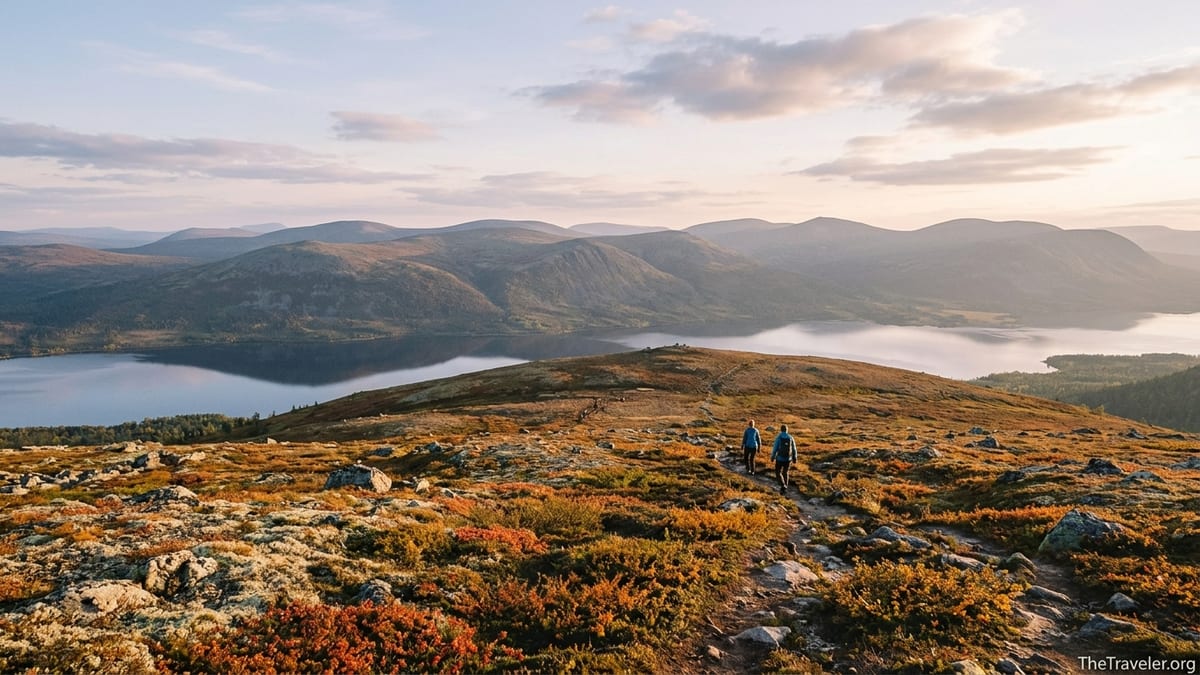
Travelers who love Pallas–Yllästunturi usually start by talking about the light and the views. The park’s landscape is all about soft curves rather than dramatic Alpine peaks: low, treeless summits, lichen-covered ground, and taiga forest filling the valleys. On a clear evening in September, for example, you might hike up from the Pallas Visitor Centre to the nearby fells and watch the sun set behind Lake Pallasjärvi, the water reflecting the silhouettes of the ridgeline in calm weather. In midwinter, the same scene is painted in pastel pinks and blues during the polar twilight.
Seasonality is central to whether the park is worth visiting for you. In summer and early autumn, roughly from late June to late September, the main draw is hiking and bikepacking on dry trails and boardwalks. Wildflowers, cloudberries and vast carpets of reindeer lichen color the landscape. By late August and September the birch forests turn yellow and orange, making day hikes from Äkäslompolo up to fells like Kukastunturi especially photogenic. Temperatures can still be mild by day, but nights start to bring frost and the first chances to see the northern lights.
From roughly November through April, the park transforms into a winter playground. Cross-country ski trails form dense networks around Ylläs and Pallas, with huts serving hot drinks, soups and pastries. Visitors staying at Lapland Hotels Pallas often step directly from the hotel door onto ski tracks leading into the national park. Snowshoeing routes and guided backcountry ski tours explore the quieter slopes. In clear winter weather, Pallas is known as one of Finland’s prime regions for aurora viewing, thanks to relatively low light pollution and often stable conditions.
The “world’s purest air” tagline, which is rooted in real measurements rather than just marketing language, shapes how many travelers talk about their stay. It underpins experiences like opening the door of a lakeside wilderness hut at dawn and seeing low fog drift over a frozen mire, or skiing in March sunshine with only the sound of your own skis. While it is impossible to “see” air quality, visitors often report better sleep, feeling unusually refreshed after long days outside, or simply a rare sense of quiet that keeps them returning.
Signature Trails and Experiences Travelers Rave About
The single most famous experience in Pallas–Yllästunturi is the Hetta–Pallas Trail. This 50 to 55 kilometer route, first laid out in the 1930s, is widely regarded as Finland’s classic multi-day hike. Walkers typically complete it in three to four days, staying in simple open or reservable huts along the way, or camping near designated fire sites. The trail starts either from the village of Hetta, where a short boat ride across Lake Ounasjärvi delivers you to the first fell, or from the Pallas side, near the hotel and visitor centre. Travelers praise the route for its continuous ridge walking, long views and well-spaced huts that make logistics straightforward even for first-time hut-to-hut hikers.
For visitors who do not have several days, there are plenty of shorter day hikes that still deliver the views the park is known for. One common choice on the Pallas side is a 7 to 10 kilometer loop starting and ending at the Pallas Visitor Centre, climbing steadily up onto the fells and then returning via a different route. Many recent traveler reviews mention completing this kind of loop in half a day, then warming up with hot chocolate or coffee back at the visitor centre or at the small hotel. On the Ylläs side, popular options include the Kukastunturi loop from Äkäslompolo and easy themed nature trails that start near the Yllästunturi Visitor Centre Kellokas.
Winter visitors often highlight the cross-country skiing. Around Ylläs, for instance, there are well over a hundred kilometers of machine-groomed ski tracks, some lit in the darker months, and many with cozy huts or cafes at strategic intervals. A typical winter day for a visiting couple might involve renting classic cross-country skis in Äkäslompolo, following a 15 kilometer loop through the forest and across open marshes, stopping at a wilderness cafe for salmon soup and cinnamon rolls, then returning to their cabin sauna before heading out again at night to look for auroras.
More specialized experiences are growing in popularity. Bikepackers use marked gravel loops around the park in summer, combining quiet roads and forest tracks. Guided snowshoe tours take visitors off the groomed ski routes into steeper slopes where they can experience deep, untouched snow safely. Cultural experiences are also part of what many travelers enjoy: the Fell Lapland Visitor Centre in Hetta, for example, has exhibits on Sámi culture and the history of reindeer herding in the region, helping visitors understand the living culture behind the landscape.
What Travelers Love Most: Quiet, Safety and Authenticity
When you read through recent trip reports and reviews, certain themes recur. One is the sense of quiet and space. Even though Pallas–Yllästunturi is popular by Finnish standards, it rarely feels crowded in the way that some national parks in Central Europe or North America do. Outside the busiest winter weeks and late-September color season, hikers often mention walking for an hour or more on the fells without seeing anyone except a few reindeer. For many travelers, especially those coming from busy cities, that feeling of near-solitude within a well-managed park is a major reason the trip feels worthwhile.
Another commonly praised aspect is safety and infrastructure. Trails are clearly signposted, bridges and boardwalks are maintained, and rest spots are frequent. Many routes, including the Hetta–Pallas trail, have basic open huts or reservable cabins with stoves, bunks and firewood supplies. This infrastructure allows visitors with moderate outdoor experience to taste multi-day trekking or winter touring without needing to carry expedition-level gear. Parents comment that they feel comfortable taking older children on fell-top hikes or ski days because there are clear routes and reliable maps available at visitor centers.
Authenticity also comes up often in traveler feedback. Compared with more commercialized Lapland resorts that focus heavily on packaged activities like reindeer rides and Santa experiences, Pallas–Yllästunturi tends to attract visitors who want to spend most of their time outdoors under their own steam. In Äkäslompolo, for example, many accommodation options are self-catering cabins where guests cook their own meals and plan their own excursions, perhaps booking a single guided aurora hunt or snowshoe trip rather than a full schedule of excursions. This slower, more independent style of travel feels closer to how Finns themselves use the area, which appeals to travelers seeking a more local experience.
Finally, travelers routinely mention the friendliness and knowledge of staff at the park’s three main visitor centers: Kellokas near Ylläs, the Pallastunturi Visitor Centre, and the Fell Lapland Visitor Centre in Hetta. These centers provide up-to-date information on trail conditions, re-routes due to maintenance work, fire restrictions and avalanche awareness where relevant. Being able to walk in, look at detailed maps and speak with staff who know the terrain well is reassuring, particularly for first-time visitors to the Arctic.
Who Will Get the Most Out of a Visit
Despite its many strengths, Pallas–Yllästunturi is not the perfect destination for everyone. Its greatest appeal is to travelers who genuinely enjoy being outdoors in variable weather and who are comfortable with at least moderate physical activity. If your ideal Lapland holiday centers on husky safaris, snowmobile tours and frequent restaurant meals with only short walks in between, you may find a more resort-style destination such as Rovaniemi or Levi better suited, though day trips into the national park are still possible from some of these bases.
On the other hand, if you already know that you like day hiking and are curious about trying a first multi-day trek, or if you prefer classic cross-country skiing and snowshoeing over downhill skiing, the park offers an excellent balance of challenge and accessibility. An example traveler might be a couple in their 30s who have done weekend hikes in the Alps or the Rockies, but who have never been north of the Arctic Circle. For them, planning a September trip to stay four nights in Äkäslompolo with day hikes plus a three-day hut-to-hut trek on the Hetta–Pallas route is a realistic and rewarding introduction to Lapland.
The park is also a strong choice for photographers and aurora hunters who value landscape variety. The combination of lakes, mires and low, rounded fells gives many different foregrounds for northern lights photography without needing technical mountaineering skills. For instance, photographers often base themselves in a cabin near Pallasjärvi or Äkäslompolo, where they can quickly reach an open shore or small fell in response to an aurora alert, then retreat indoors to warm up between displays.
Families can enjoy the park too, provided expectations are realistic. Short nature trails starting from visitor centers, with interpretive signs in several languages, are suitable for children, and many cabins and hotels have drying cupboards and saunas that make dealing with wet clothes much easier. However, very young children may struggle with the distances and weather, especially in winter, and parents should plan conservative itineraries rather than ambitious summit days. For a first family trip, basing yourselves near Ylläs with a rental car and focusing on short hikes, easy ski loops and occasional excursions deeper into the park typically works well.
Practicalities: Access, Costs and When to Go
Reaching Pallas–Yllästunturi usually involves flying to Kittilä Airport and then continuing by rental car or bus. In winter seasons there are typically direct charter or seasonal flights from several European cities to Kittilä, while in summer most international visitors connect via Helsinki. From Kittilä it is about 40 to 50 minutes by road to Ylläs villages such as Äkäslompolo, roughly an hour to Muonio and around two hours to Hetta and the northern parts of the park. Many travelers find renting a car gives them valuable flexibility, especially in winter when they may want to chase clearer skies for aurora viewing or use smaller trailheads.
Costs in Finnish Lapland are not low, but careful planning can keep a visit reasonably affordable. In winter 2026, for example, simple self-catering cabins around Ylläs and Äkäslompolo commonly run from approximately 100 to 180 euros per night for two to four people, depending on proximity to ski lifts and saunas. Hotel rooms at properties like Lapland Hotels Pallas typically cost more during peak winter weeks and can sell out months in advance. Eating out in restaurants is comparable to prices elsewhere in Finland, so many visitors self-cater most meals and treat themselves to a few dinners out for regional specialties like reindeer stew or Arctic char.
The good news is that park access itself is free. There are no entrance fees to Pallas–Yllästunturi National Park, and parking at main trailheads and visitor centers is generally free or modestly priced. Trail use, including most groomed ski tracks, is included, though certain private services, such as specific ski lifts or guided tours, carry separate fees. Overnight stays in open wilderness huts are typically free but basic, while reservable huts carry a nightly fee per person; both types are managed by Metsähallitus, the state enterprise that oversees Finland’s national parks.
Choosing when to go depends on your priorities. For long, relatively dry hiking days and minimal snow, late July through early September is the most reliable period. For autumn colors and the first consistent chances at northern lights combined with hiking, early to mid-September is ideal, though nights can already be frosty and trails may be wet. Winter conditions suitable for cross-country skiing and snowshoeing usually run from December into April, with the brightest days and best snow cover often in February and March. The darkest midwinter weeks in December and early January offer an intensely atmospheric experience with very short daylight, but outdoor activities are shaped by limited light and potentially severe cold.
How Pallas–Yllästunturi Compares to Other Lapland Parks
Travelers often weigh Pallas–Yllästunturi against other well-known Lapland destinations such as Urho Kekkonen National Park near Saariselkä, Riisitunturi near Ruka, or Pyhä–Luosto near the Arctic Circle. Compared with these, Pallas–Yllästunturi tends to feel a little wilder yet still accessible. The fell chain is longer and the sense of open tundra more sustained than in some more forested parks, while villages like Äkäslompolo remain small enough that the national park never feels far away.
If you are mainly interested in downhill skiing with some nature on the side, a resort like Levi or Ruka might be a stronger match, as they have larger lift systems and more extensive nightlife. By contrast, the Ylläs ski area on the edge of Pallas–Yllästunturi markets itself heavily to cross-country skiers and winter hikers, with downhill facilities that are good but not dominant. Visitors who choose Ylläs or Pallas often say they appreciated having downhill runs available for a day or two, but that their trip would have felt incomplete without time on fell-top trails or in the quieter forest zones of the national park.
Against extremely remote areas such as Sarek in Swedish Lapland, Pallas–Yllästunturi comes across as gentler and more forgiving. The fells are lower, weather can still be harsh but rescue and phone coverage are more accessible, and infrastructure like open huts and boardwalks reduces the need for advanced wilderness skills. For many travelers, this trade-off is precisely what makes it worth visiting: they can feel far from roads and crowds without needing full expedition gear or local guiding for every outing.
Where Pallas–Yllästunturi truly holds its own is in the combination of multi-day treks and four-season appeal. You can visit in July for a green, mosquito-filled but beautiful fell hike, return in September for ruska autumn colors and auroras, and come back yet again in March for high-sun skiing, all within the same core landscape that looks and feels entirely different each time. Few other Nordic destinations offer that level of repeat-visit variety in such a compact area.
The Takeaway
Pallas–Yllästunturi National Park is worth visiting if you are genuinely drawn to quiet northern landscapes and are willing to engage with them on their own terms. The park’s strengths lie in its extensive trail network, reliable safety standards, uniquely clean air and the way it balances wild scenery with accessible infrastructure. Travelers who come ready for changeable weather, with good boots or skis and a flexible mindset, tend to leave with a strong sense of having touched something essential in Lapland.
It is less likely to satisfy visitors who want dense resort services, nightlife or a packed program of organized excursions without much self-guided time outdoors. For those travelers, Pallas–Yllästunturi may feel too quiet and the distances between villages too wide. But for hikers, skiers, photographers and anyone whose ideal holiday involves long days outside and evenings in a cabin with a sauna, the park often becomes a place they return to repeatedly.
If you are considering whether the journey up to northwestern Lapland is justified, ask yourself how much you value big horizons, silence and the feeling of crisp, clear air in your lungs. If that vision resonates more than the idea of bar-hopping or shopping, then Pallas–Yllästunturi is not just worth visiting. It is likely to become one of those rare places that quietly redefines what you look for in a landscape.
FAQ
Q1. Where is Pallas–Yllästunturi National Park and how do I get there?
It is in northwestern Finnish Lapland, between the villages of Ylläs, Muonio, Pallas and Hetta. Most visitors fly to Kittilä Airport and continue by rental car or bus, reaching the park area in about 40 minutes to two hours depending on their chosen base.
Q2. What is the best time of year to visit Pallas–Yllästunturi?
For hiking, late July to early September usually offers the driest trails and longest days. For winter activities like cross-country skiing, snowshoeing and aurora watching, February and March are popular for their combination of good snow and increasing daylight.
Q3. Is Pallas–Yllästunturi suitable for first-time Arctic visitors?
Yes, provided you prepare properly. Clear trails, good maps, visitor centers and open huts make it friendlier than many remote Arctic areas, but you must still respect cold, wind and rapidly changing weather, especially in winter.
Q4. Do I need a guide to hike in the park?
Most marked summer trails and many winter routes can be followed independently by experienced hikers using proper maps and weather information. However, hiring a local guide is a good idea for off-trail adventures, winter backcountry tours or if you are not confident navigating in snow and low visibility.
Q5. Are there entrance fees to Pallas–Yllästunturi National Park?
No, there are no entrance fees to the national park itself, and most parking areas and trails are free to use. You only pay for services such as reservable huts, guided tours, equipment rental and private accommodation.
Q6. What kind of wildlife might I see?
Common sightings include semi-domesticated reindeer, willow grouse and various Arctic birds, plus occasional foxes and hares. Larger predators such as bears and wolverines exist in the wider region but are seldom seen by casual visitors.
Q7. Can I see the northern lights in Pallas–Yllästunturi?
Yes, in the darker months from roughly September to April the park is an excellent place for aurora viewing on clear nights. Low light pollution and open fell tops provide wide northern skies, though displays are always dependent on space weather and cloud cover.
Q8. Is the Hetta–Pallas Trail very difficult?
It is challenging rather than extreme. The route covers around 50 to 55 kilometers over several days, with repeated ascents and descents on exposed fells. Hikers with good fitness, proper gear and some previous trekking experience usually manage it well in summer conditions.
Q9. What accommodation options are available near the park?
You can choose from hotels such as Lapland Hotels Pallas, self-catering cabins and apartments around Ylläs and Muonio, guesthouses in Hetta, and simple wilderness huts managed by Metsähallitus for hikers on longer routes.
Q10. Is Pallas–Yllästunturi a good destination for families with children?
Yes, if you plan realistic activities. Short nature trails, easy ski loops and cabin stays with saunas work well for school-age children, but longer fell hikes or very cold winter conditions may be demanding for younger kids.