


More news on this day
Air travel regulators and airlines are tightening the screws on noisy, unruly behavior in the cabin, and many modern travelers are welcoming the shift toward a quieter, more orderly flying experience.
Get the latest news straight to your inbox!
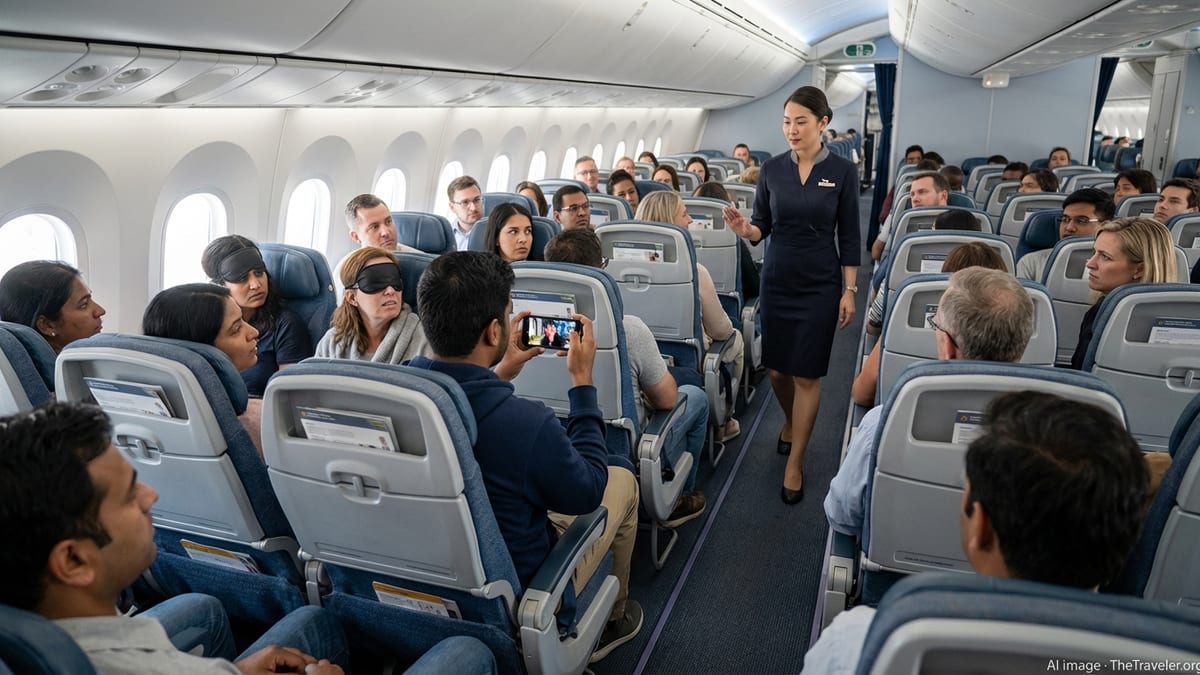
Zero Tolerance Policies Mature Into Everyday Deterrent
Publicly available information from aviation regulators shows that the era of softly handled disruptive passengers has largely passed, replaced by well-established zero tolerance policies that emphasize fines and legal action over warnings. In the United States, Federal Aviation Administration data indicates thousands of unruly passenger reports in recent years, with penalties that can reach tens of thousands of dollars per violation. Regulators have repeatedly highlighted that a single incident can trigger multiple counts, sharply raising the financial risk for anyone who disregards crew instructions or disturbs the cabin.
Industry observers note that this tougher posture is no longer a temporary response to pandemic-era tensions but a permanent feature of the travel landscape. Guidance material published by international bodies and national regulators frames disruptive behavior as a core safety threat rather than a mere customer service issue. That interpretation widens the definition of misconduct beyond violence to include sustained shouting, refusal to follow seating or seatbelt instructions, and other behavior that disrupts the calm needed for crews to manage emergencies.
Recent policy updates surrounding unruly behavior also align with broader safety reforms adopted in 2024 and 2025, reinforcing the message that the cabin is a tightly controlled environment. Advocacy documents circulating in Washington point to ongoing efforts to link serious misconduct with lifetime bans, enhanced information‑sharing between airlines, and coordinated referrals to criminal investigators. For rule‑abiding passengers, the practical result is a stronger expectation that loud, aggressive behavior will be dealt with quickly and decisively.
Hefty Fines, Bans and Legal Risks Reinforce Quiet Cabins
Across major aviation markets, financial penalties for disruptive behavior have climbed steeply, creating a powerful deterrent to noise and disorder on board. In the United States, official guidance notes that regulators can now seek civil penalties exceeding forty thousand dollars for each proven violation tied to an incident. One disruptive episode can involve several violations, meaning the total cost for an aggressive outburst or prolonged refusal to comply with crew instructions can be substantial.
European authorities are moving in a similar direction. Coverage from outlets including Euronews and other European media has highlighted national efforts to impose fines in the tens of thousands of euros and to pair them with temporary or long‑term flying bans. Some cases have involved overnight delays and hotel bills for hundreds of passengers when an aircraft was forced to divert or remain grounded because of a small number of disruptive travelers. In such situations, the cost to airlines and infrastructure is significant, further strengthening support for strict enforcement.
Industry groups such as the International Air Transport Association have underlined the global scale of the problem, citing tens of thousands of reported unruly incidents and a measurable rate of disruption per several hundred flights. Those figures capture a broad range of behavior, from verbal abuse to smoking or refusal to sit down, but loud, aggressive confrontations in the cabin remain a prominent trigger. For many passengers, the knowledge that fines, bans and potential criminal referrals are realistic outcomes is helping to restore confidence that flights will remain calm.
New Cabin Rules Target Everyday Noise, Not Just Extreme Cases
Beyond headline‑grabbing incidents of air rage, airlines are quietly rewriting onboard etiquette around day‑to‑day sources of disturbance. According to published coverage and airline advisories, a growing number of carriers have codified rules that prohibit voice and video calls during flight, regardless of whether they are made over cellular networks or Wi‑Fi connections. Flight attendants and frequent flyers describe “quiet flight” policies that treat loud speakerphone use, video chats and media played without headphones as violations of cabin rules rather than minor annoyances.
In parallel, the spread of high‑speed inflight connectivity is prompting a new wave of policy debates. Travel industry commentary in 2026 has noted that a few international carriers are experimenting with allowing inflight voice and video calls over satellite Wi‑Fi, sparking pushback from travelers who fear a return to noisy cabins. By contrast, many North American airlines publicly maintain that calls are not permitted and emphasize that any device capable of making voice calls must not be used that way while in the air. For passengers seeking peace, these restrictions are increasingly viewed as a feature rather than a limitation.
Cabin announcements and onboard literature now frequently spell out expectations for headphone use, volume control and respectful behavior toward neighboring travelers. Some airlines have introduced or expanded designated quiet zones on certain routes, especially overnight long‑haul flights where most passengers aim to sleep. While enforcement can vary, public feedback on aviation forums suggests that clear, written rules give crews more authority to intervene early when individual behavior threatens the overall sense of calm.
Global Rules and Industry Pressure Push Toward a Calmer Status Quo
International organizations are also exerting pressure for tougher, more consistent treatment of disruptive and noisy passengers. Briefing materials from the International Civil Aviation Organization and IATA emphasize that unruly behavior is not only a national issue but a cross‑border safety and legal challenge. Ratification of global agreements such as the Montreal Protocol 2014 is framed as a way to close jurisdictional gaps that previously allowed some offenders to escape meaningful consequences when incidents occurred on international routes.
At the same time, airlines and pilot associations are lobbying for tighter coordination between regulators, law enforcement agencies and carriers. Policy papers circulated in late 2024 and early 2025 describe proposals for task forces, shared watchlists and clearer standards on when to pursue civil, administrative or criminal action. Under these plans, repeat offenders who habitually disrupt cabins or ignore crew instructions could face faster bans across multiple airlines rather than only on a single carrier.
For travelers, the cumulative effect is a slow but noticeable cultural shift. Over the past decade, the image of the airline cabin has evolved from a sometimes chaotic shared space into an environment where expectations of quiet, order and mutual respect are more explicit. While disruptive incidents still occur, public data from regulators and industry groups indicates that sustained enforcement and the threat of significant penalties have helped to drive down the rate of severe cases from the peaks seen in the early 2020s.
Modern Travelers Embrace the Return of Peaceful Flights
Reactions captured in travel media, aviation forums and social networks show that many frequent flyers now view strict cabin rules as a necessary shield against rising frustration in other parts of the journey. With airport crowds, security lines and schedule disruptions all contributing to stress, the promise of a reasonably quiet seat at cruising altitude holds strong appeal. Passengers increasingly praise crews who act quickly when noise levels escalate, and they tend to support policies that prioritize the comfort of the many over the preferences of a noisy few.
Airlines, for their part, are positioning calm cabins as part of the premium they offer. Marketing materials highlight tranquil lighting, quieter engines and improved seat design, and these investments are amplified when behavioral rules keep shouting, loud music and confrontations to a minimum. Noise‑canceling headphones, white‑noise soundtracks and wellness‑focused inflight entertainment all reinforce the message that flying can once again be a restorative interlude rather than an ordeal.
While debates continue over the future of inflight phone calls and other emerging technologies, current rules, penalties and cultural expectations are all moving in the direction of greater quiet. For travelers hoping to read, sleep or simply gaze out the window without interruption, the tightening web of noise‑control measures feels less like a restriction and more like the long‑awaited restoration of peace at 35,000 feet.