


More news on this day
Ocean Advice is sharpening its focus on white-label cruise services by tying a growing shipbuilding pipeline to a turnkey platform aimed at brands seeking fast, low-risk entry into the ocean and expedition segments.
Get the latest news straight to your inbox!
White-label vision moves from management to newbuilds
Ocean Advice, part of the United Waterways group, has positioned itself in recent years as an independent white-label specialist in hotel, catering and operational management for passenger vessels. Publicly available company material describes the firm as providing cruise experiences that can be branded and marketed by client companies while Ocean Advice handles day-to-day delivery on board and ashore.
The model is an evolution of the group’s river-cruise heritage, where sister company River Advice built scale in managing ships that sail under a variety of third-party brands. Corporate information on River Advice notes that its expansion into ocean cruising, through Ocean Advice, was designed to extend this service-based approach from rivers to deep sea routes.
Reports in trade publications indicate that Ocean Advice’s white-label activity has already supported the launch of at least one French ocean cruise start-up using existing tonnage. That project relied on chartered hardware but applied Ocean Advice’s operational know-how, crew management and hotel concepts to create a distinct market identity for the client brand.
The next phase centers on linking that service proposition directly to newbuilds, allowing emerging or niche operators not only to outsource operations but also to step into purpose-designed hardware bearing their own brand from day one.
Shipbuilding program anchored by 2028 expedition vessel
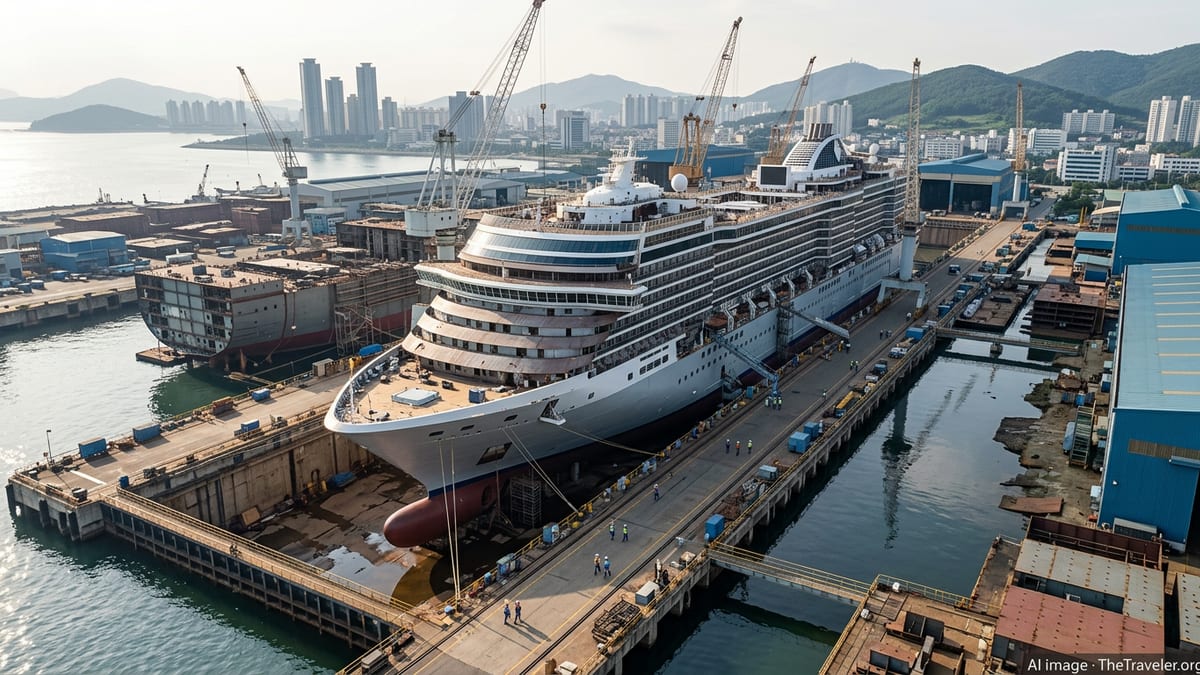
An April 2026 cruise orderbook compiled from industry data lists a 2028 delivery for an unnamed United Waterways and Ocean Advice ocean vessel at a Chinese yard, with a gross tonnage just under 10,000 and capacity under 200 lower berths. The project is classed in the expedition-size category, where demand for remote destinations and higher-yield itineraries has supported a wave of small-ship investment.
The order is one of the first clearly attributed to Ocean Advice and United Waterways in open orderbook summaries and is described there as a dedicated project rather than a simple refit or acquisition of existing tonnage. The price point reported in those documents puts the vessel toward the lower end of the current newbuild cost spectrum for expedition ships, reflecting its relatively modest size but also the efficiencies of a smaller platform.
Separate shipping and shipbuilding market reviews published in 2026 note that this newbuild forms part of a wider newbuild initiative linked to United Waterways’ passenger operations. These assessments describe the project as a strategic move to secure modern, efficient hardware that can be slotted into different brand concepts, whether operated directly by a United Waterways label or chartered out under Ocean Advice’s white-label framework.
The timing coincides with a gradual recovery in expedition and small-ship deployments after the pandemic-era slowdown, with several operators returning to orderbooks in 2025 and 2026. By moving now, Ocean Advice appears to be aiming at the intersection of improved yard pricing, available construction slots and growing demand for differentiated, low-impact itineraries.
From operating partner to turnkey cruise platform
Published presentations connected with Ocean Advice’s parent group describe a strategy of building a complete white-label platform that extends beyond hotel operations and technical management. The goal, according to these materials, is to offer a suite of services that can take a project from early market concept through ship selection or newbuild design, regulatory compliance, hotel product development and full deployment.
Industry coverage in specialist maritime media has highlighted that this approach is particularly attractive for financial investors and destination-focused brands that want to enter cruising without building internal marine and hotel expertise. In such cases, Ocean Advice can operate as a behind-the-scenes partner, with the passenger-facing identity and commercial strategy entirely controlled by the client brand.
Analysts writing in sector reviews argue that tying this platform to a controllable pool of tonnage, including the 2028 expedition ship, is a logical evolution. It gives Ocean Advice the ability to offer prospective partners defined hardware options, including ship layouts, capacity, sustainability features and crew concepts, alongside the broader operational package.
Some commentaries compare this to developments in other travel sectors, where aircraft lessors and hotel management companies have long provided hardware and operations that can be rebranded by airlines or hotel chains. In cruising, the white-label concept remains relatively new, and Ocean Advice’s shipbuilding program is seen as one of the more concrete attempts to formalize it.
Expedition-focused design and flexible branding opportunities
The 2028 vessel is listed in orderbooks as an expedition-size ship designed for fewer than 200 passengers, a configuration that typically allows for longer itineraries in remote regions and access to ports or anchorages that are off-limits to larger tonnage. Market reports suggest that such ships increasingly emphasize hybrid propulsion options, advanced waste treatment and hull and hotel designs that can support stricter environmental regulations in sensitive areas.
Sources following the orderbook describe the new Ocean Advice project as aligned with these trends, with an emphasis on efficient operation, adaptable public spaces and a high ratio of outside cabins or suites. The relatively intimate size is also associated with higher per-diem revenue potential, as expedition and small-ship products often command premium pricing based on destination access and personalized service.
For potential white-label partners, this type of design opens multiple branding routes. The same hull could be configured as a boutique luxury product, a soft-expedition adventure brand, or a destination-focused cultural offering, largely by changing interior design, programming and marketing rather than the underlying technical platform. Ocean Advice’s role would be to maintain the operational backbone while tailoring onboard delivery to the chosen market segment.
Analysts note that this flexibility is central to the white-label shipbuilding proposition. As consumer tastes shift or new source markets emerge, hardware that can be re-themed without extensive structural work offers a hedge against demand uncertainty, while still giving passengers the impression of sailing on a bespoke, tightly branded product.
Competitive dynamics and implications for emerging cruise brands
The expansion of Ocean Advice’s white-label shipbuilding program comes at a time when shipyards and established cruise lines are also refining their own strategies. Large mainstream operators increasingly commission series of sister ships with platform commonality, while some luxury and expedition brands pursue one-off or small-series builds tailored to specific experiences.
Within this landscape, Ocean Advice is effectively offering smaller or newer brands a route into the newbuild market that might otherwise be out of reach. By aggregating technical expertise, financing structures and operational capacity, the company can negotiate yard contracts and manage construction on behalf of partners that lack direct shipbuilding experience.
Commentary in shipping and finance circles suggests that this could lower the barrier to entry for regional or niche cruise concepts, especially in markets seeking to capitalize on coastal or polar tourism. Rather than chartering older tonnage or refitted vessels, new entrants could align themselves with Ocean Advice and secure access to modern ships under a white-label arrangement.
Whether the model scales beyond a limited fleet will depend on execution and market appetite. However, the combination of an active shipbuilding program, a defined expedition vessel for 2028 and a stated focus on white-label operations positions Ocean Advice as one of the more closely watched players in the evolving small-ship and expedition cruise segment.